
Business
We’ll Roll Over 2017 Capital Projects -Adeosun

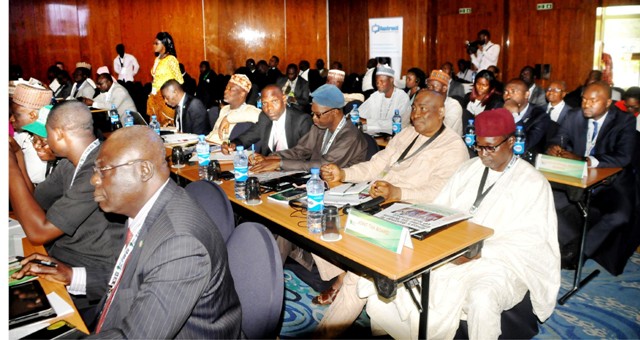
The Minister of Finance, Mrs Kemi Adeosun, has revealed Federal Government’s intention to roll over at least 60 per cent of 2017 capital projects to 2018 fiscal year.
Adeosun made this known when she appeared before the Senate Joint Committee on Finance and Appropriation in Abuja recently.
She was accompanied by the Minister for Budget and National Planning, Sen. Udoma Udoma, to give explanation on releases so far made on the implementation of the 2017 budget.
The minister noted that there was no stoppage in terms of capital releases and projects.
She explained that the decision to roll over 2017 projects to 2018 was based on advice of the Senate Committee on Appropriations and Finance to the executive on how to make the budget more implementable.
Adeosun said “we had a rollover from the 2016 to the 2017 budget. There was no stoppage in terms of capital spent as projects simply continued.
“In the way in which we allocated the fund, the prioritisation was according to the objectives of the economy and growth plan.
“We were focused on project completion. So, we prioritised projects that were nearer to completion that were critical in the first releases of capital.
“We need more of your support. We have a number of resolutions that we need to complete international borrowings.”
On his part, Udoma said that the Federal Government had been working to get the 2018 Budget to the Senate before the end of October.
“We intend to have discussions with you so that we can finalise that and take it to the Federal Executive Council so that we restore ourselves to the January to December fiscal year.
“This is to make it much easier to report on the performance of budgets,” he said.
Udoma also debunked the rumour that government had not released much funds for capital projects since January.
“That is not the case. Between January and June, we still had 2016 Budget in operation and we allowed it to flow unhindered.”
He said that in implementing the 2017 budget, it would be helpful if there was clarity in terms of virement because that would help in implementing the budget.
Earlier, Chairman of the joint committee, Sen. Danjuma Goje, had said that the two ministers were at the National Assembly to brief the committees as well as Nigerians on the implementation of the 2017 budget.
“It is very important bearing in mind that the budget was passed by the National Assembly in May and signed into law by the then Acting President Yemi Osinbajo on June 6, 2017.
“We are now four months into the implementation of the budget. Nigerians need to know how far we have gone and what we are going to achieve.
“We have heard from the Minister of Budget and National Planning that they intend to submit the 2018 budget this month.
“By implication, if they bring it this month, they will expect the budget to be approved before the end of the year,” he said.



Business
Jonathan, Diri, Others Laud Firm’s Milestone in Bayelsa …Says Project Will Drive Industrialisation, Create Jobs



-

 News3 days ago
RSG Targets Nine Million Residents in Mosquito Net Distribution Campaign
-

 Oil & Energy3 days ago
Aiyedatiwa Signs New Electricity Bill
-

 Oil & Energy3 days ago
NLNG Commissions Research And Innovation Centre In RSU
-

 Maritime3 days ago
Marine Minister Commends President Tinubu On NPERA Bill Assent
-

 News3 days ago
KenPoly Holds Eight Convocations, August 29
-

 News3 days ago
RSG Begins Another Phase of Projects Commissioning Today
-

 News3 days ago
RMAFC Completes Revenue Sharing Review, Proposes New Pay
-

 Maritime3 days ago
NAGAFF Petitions IGP Over Alleged Maritime Police Harassment