
Business
‘PMS, Priority For Nigerian Roads’

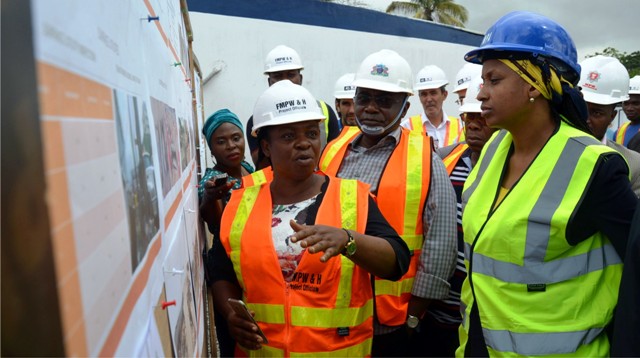
An expert in building and maintenance of roads, Engineer Benibo Basoene Joshua, says the adoption of Pavement Management System (PMS) in roads maintenance is what Nigeria needs to have durable roads.
Joshua, who stated this recently during the 2nd Rivers-Bayelsa Chapter of the Highway and Transportation Engineers Conference and Annual General Meeting (HTECAGM) of the Nigeria Institute of Highway and Transportation Engineers (NIHTE) in Port Harcourt, noted that the PMS approach was the best for Nigerian roads, particularly in the Niger Delta region.
In a paper titled, “Popular Participation in Promoting Pavement and Asset Management”, Joshua explained, however, that PMS was “a planning tool used to aid pavement management decisions”.
He said the system was preferred globally because “it Gives enhanced decision-making and management of the network assets, using multi-year performance, financial and economic analysis”.
According to him, “The information available to the system is extended and the resultant prediction models further refined and adjusted to reflect actual record with continuous data gathering in each year.
“Using the data gathered from the surveys, the PMS incorporates software specifically designed to use it in analysis and prediction tools for current and future condition, and remaining life prediction.
“Furthermore, modules to assist in evaluating whole life cost analysis for maintenance and construction, deterioration models, assessment of value to the asset, risk-based analysis, and prioritisation according to strategies and available budgets.
“Importantly, the PMS translates condition data to information management”, he said.
The former chairman of several engineering bodies, including Nigeria Society of Engineers (NSE), Port Harcourt Branch, stated further that road pavements in Nigeria, specifically the Niger Delta, do not have what it takes to fit into the PMS currently.
“The condition of our road pavements in the Niger Delta can hardly fit into the PMS model currently being used in advanced countries”, he said.
This, he explained, was because “Our roads lack a number of basic features required for application, and, more so, lack budgetary provision for effective maintenance funding as may be required”.
Beyond this, he stated that road pavements in the Niger Delta were neglected after construction with no road markings, and no minor improvement schemes.
To take care of this and other problems, Joshua, who was the “Distinguished Lecturer” at the occasion, proffered several solutions which should begin with required attention to roads.
“The network of roads in this country is a valuable asset. Therefore, we should give priority attention to maintenance before it deteriorates into poor state.
“Road pavements have a life span of 20 – 40 years, and we should adopt ‘clinical’ approach to prevent it from dying permanently”, he added.
Highlight of the AGM was the election of a new Executive, which saw the emergence of Engr Nwadike Jones as chairman, Engr Francis Oriakhi as vice chairman, and Engr Nwankwo Felix as general secretary.
Others are: Engr Uduak Asukuo (assistant general secretary), Engr Keka Timothy (financial secretary), Engr Onome Unuavwodo (treasurer), Engr. Oguzie Moses (technical secretary), Engr Uduak Anwankwo (assistant technical secretary), Engr Uzoigwe Paul (PRO), Engr Ezenekwe Obadiah (ex-officio), and Engr Emem Abasiattai (ex-officio).
Soibi Max-Alalibo



Business
Jonathan, Diri, Others Laud Firm’s Milestone in Bayelsa …Says Project Will Drive Industrialisation, Create Jobs



-

 News2 days ago
RSG Targets Nine Million Residents in Mosquito Net Distribution Campaign
-

 Oil & Energy2 days ago
Aiyedatiwa Signs New Electricity Bill
-

 Oil & Energy2 days ago
NLNG Commissions Research And Innovation Centre In RSU
-

 Maritime2 days ago
Marine Minister Commends President Tinubu On NPERA Bill Assent
-

 News2 days ago
KenPoly Holds Eight Convocations, August 29
-

 News2 days ago
RSG Begins Another Phase of Projects Commissioning Today
-

 News2 days ago
RMAFC Completes Revenue Sharing Review, Proposes New Pay
-

 Maritime2 days ago
NAGAFF Petitions IGP Over Alleged Maritime Police Harassment