
Editorial
Now That Buhari Is Back…

President Muhammadu Buhari, penultimate Saturday, returned to the country after spending 105 days on medical vacation in the United Kingdom. This is the second time the President would return from the UK after a scheduled medical vacation.
While away, the Vice President, Prof. Yemi Osinbajo took charge of the affairs of the nation in acting capacity. And within the 105 days he steered the ship of the Nigerian state as Acting President, bold improvements were made in many areas.
Specifically, Osinbajo made progress in addressing the 16-point Niger Delta demands, resulting in increased crude oil production and revenue earnings. The foreign exchange market witnessed reasonable stability, with the Naira initially appreciating to as high as N315 before hovering around N345-N360. The Capital Market also regained investors’ confidence as capitalisation rose to as high as N13.166 trillion.
Indeed, businesses showed signs of rebounding with improvement in economic indicators as reforms seem to have provided the much-needed fillip for recovery.
We recall that before the President’s second medical trip to London, the signs were quite ominous as the economy was yet to recover. The Naira had nosedived to a record low against major foreign currencies, hovering between N450 and N500 per Dollar. Capacity utilisation was starkly low. The Capital Market had plunged, with capitalisation stagnating between N6 trillion and N7 trillion. Although the downstream and midstream petroleum sector had been deregulated, it was yet to exert any positive impact on the nation’s economy.
To worsen issues, there was pervading insecurity with various ethnic nationalities making different demands. While the Indigenous Peoples of Biafra (IPOB) was agitating for secession, the militants in the Niger Delta threatened to cripple crude oil production except Buhari acceded to key demands anchored around resource control, significant investments in infrastructure development and greater share in political decision making at the highest level of government in the country.
It was amidst this tension that Osinbajo took charge as the Acting President. And within the short time he held forte for his boss, socio-economic indicators scored him high.
It is against this backdrop that The Tide welcomes back President Buhari and urge him to consolidate on the relative successes recorded on various fronts by Osinbajo.
Instructively, we exhort the President to confront the resurging conflagration of the Boko Haram sect which now threatens already recovered territories and communities in the North-East. We also task him to boldly tackle the threats to national unity, arising from pockets of agitations for secession, restructuring and resource control, as well as security concerns across the country driven by acts of criminality such as Fulani herdsmen and farmers’ clashes, kidnapping, armed robbery and brazen cult-related violence, among others.
The President surely has to address the Niger Delta question if the economy must fully recover and sustainable peace achieved in the region, and indeed, Nigeria. We hope that Buhari’s meeting, last Tuesday, with service chiefs will find lasting solutions to these security challenges.
On the economic front, The Tide urges the President to consolidate on the gains already made by Osinbajo, and pursue vigorously an integrated, progressive and competitive economic growth plan that offers robust opportunities for investors, creates windows for massive youth employment and empowerment, while providing social security valves for senior citizens and the elderly.
And in fact, there is no better way to calm frayed nerves than to ensure that the war against corruption is inclusive, total, and not targeted at a section of the country or opposition elements.
We appreciate the concerns raised by President Buhari in his last Monday’s broadcast to the nation, which focused pointedly on the challenges that had pervaded the nation while he was away.
We particularly note the President’s assurance on the unity of the country, as well as his promise to overhaul the security architecture of the country and rejig the economy.
We, however, insist that there is a need to restructure the country to resolve some imbalances that often lead to several agitations, and even secession, in some parts of the country.
Meanwhile, the Buhari administration must realise that the blame game should give way for good governance. This is the only way to give Nigerians hope that the social contract his government entered into with the electorate was worth the sacrifice.




President Bola Ahmed Tinubu’s approval of Nigeria’s first University of Public Relations and Leadership, announced by Vice-President Kashim Shettima at the World Public Relations Forum in Abuja, has been presented as a strategic investment in specialised education, research, and the grooming of a new generation of communication professionals. The proposed institution, to be located in Nasarawa State, is being portrayed as a lasting institutional legacy of Nigeria’s hosting of the international gathering and as part of a broader commitment to human capital development amid growing global challenges posed by misinformation and artificial intelligence.
Shettima rightly challenged the reductive international caricature of Nigeria as a country synonymous with internet fraud, insisting that the nation is “much bigger than 419”. He cited Nigeria’s entrepreneurial successes, its projected emergence as the world’s third-most-populous country by 2050, and the impressive educational achievements of Nigerian-Americans. These observations are valid and welcome. Nigeria’s soft-power potential is considerable, but remains largely underexploited.
However, the establishment of an entirely new university dedicated to public relations and leadership must be examined against the more pressing realities of Nigeria’s higher education landscape. In more advanced jurisdictions, the establishment of specialised institutions is generally guided by demonstrable labour-market demand and the economy’s capacity to absorb their graduates. Singapore’s carefully calibrated expansion of its university system, for instance, has been closely aligned with industrial policy and graduate employment prospects rather than ceremonial prestige.
Nigeria’s existing universities are already grappling with chronic underfunding, dilapidated infrastructure and a research culture that produces little of global significance. Nigerian degrees have steadily lost their domestic and international lustre, while the era when foreign students actively sought admission into the country’s universities has largely passed. Proliferating institutions without corresponding investment will only accelerate this decline.
Public relations, strategic communication and leadership studies are already taught in numerous departments across Federal, State and Private Universities. Establishing a stand-alone university will not automatically produce expertise that properly funded and adequately equipped faculties cannot deliver. The fundamental problem is not the absence of a specialised campus but the systemic neglect of institutions that already exist.
Funding remains the central constraint. The Academic Staff Union of Universities (ASUU) has repeatedly embarked on strikes over unpaid entitlements, inadequate research funding and infrastructure deficits. An economy still grappling with fiscal fragility is poorly positioned to finance another tertiary institution when more than 200 universities are already competing for inadequate resources.
Political considerations too often influence the location and announcement of new universities. Sound practice elsewhere treats the establishment of higher education institutions as a serious developmental decision, not an instrument of political patronage or conference diplomacy. Germany’s specialised universities of applied sciences, for instance, were developed in response to carefully assessed regional economic needs rather than a desire to accumulate institutional trophies.
If the Federal Government is genuinely committed to producing ethical leaders and competent communicators, the logical starting point should be the foundational stages of education. The reintroduction and effective enforcement of civic education in primary and secondary schools would do far more to instil values of accountability, critical thinking, and public service than the establishment of yet another specialised university.
Equally urgent is the rationalisation of the existing tertiary education system. Merging under-enrolled or poorly performing institutions, alongside stricter regulatory oversight of private universities, would help concentrate scarce resources and raise academic standards. Quality, not quantity, determines a nation’s educational standing.
The authorities should, therefore, redirect attention and funding towards rehabilitating existing universities, strengthening research capacity and ensuring that graduates acquire qualifications that command respect at home and abroad. Only then can specialised programmes in public relations and leadership deliver genuine value.
Nigeria’s demographic and entrepreneurial promise is considerable, but it will remain unrealised if higher education continues to expand for symbolic rather than substantive reasons. The true measure of educational statesmanship lies in strengthening existing institutions, not multiplying universities that the country lacks the resources to properly establish, fund, and sustain.
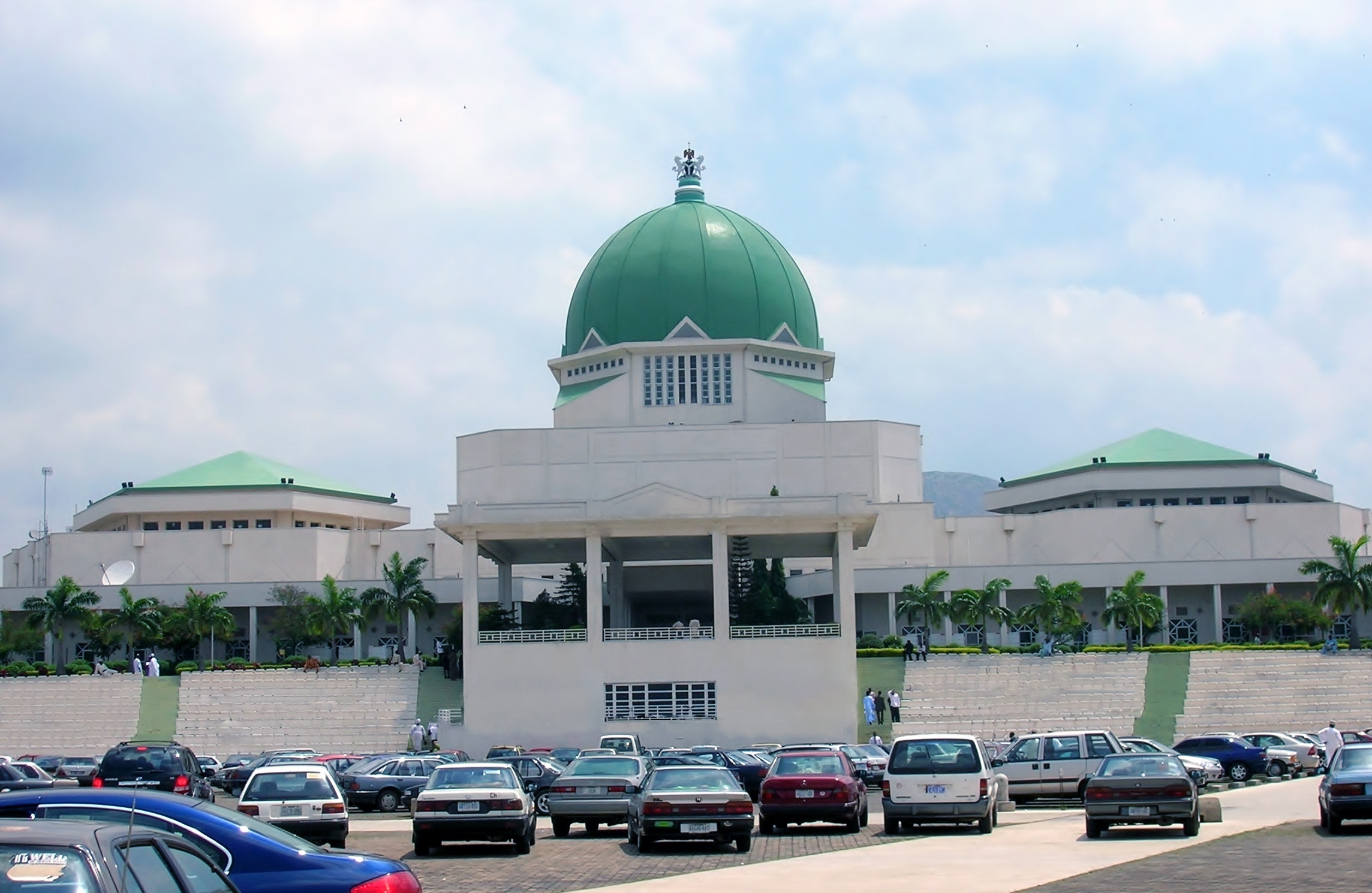
The proposal before the National Assembly to create 74 additional seats for women in the Senate and House of Representatives, with three more reserved in each State House of Assembly, deserves a welcome, albeit a cautious one. Women make up roughly half of Nigeria’s population, yet remain scandalously marginal in its legislative chambers, so, any serious attempt to correct the imbalance cannot be dismissed out of hand. It is an admission, at last, that the present system is not merely slow to reform but structurally hostile to women’s emergence. If the amendment succeeds, it will at least guarantee presence where persuasion and patience have failed.
But support must not blind us to the central question: what exactly does this proposal intend to cure? Numerical under representation and the conditions that produce it are not the same thing. Adding seats without dismantling the barriers that keep women out of politics treats the symptom while leaving the disease to fester. If the aim is merely to improve Nigeria’s standing in global gender rankings, the proposal may succeed. If it is to deepen democratic inclusion, numbers alone will not suffice.
The barriers are well known and brutally persistent. Party primaries are expensive, violent, and controlled by male-dominated structures that reward loyalty over competence. Nomination forms cost fortunes, and campaigns demand resources that most women, systematically excluded from economic power, do not possess. Add the cultural policing of ambition and the weaponisation of marital status, religion, and “respectability” against female aspirants. A reserved seat does nothing, by itself, to lower the price of a form, tame thuggery at a primary, or persuade a party chairman that a woman can win a governorship.
That is why Nigerians are entitled to ask the most practical question of all: how will the women for these special seats emerge? Will they be elected directly in specially created constituencies? Will they be chosen from party lists, and if so, who composes those lists? Or will they be nominated by governors, party leaders, and other power brokers who have long treated women’s wings as decorative appendages? The method of emergence will determine whether this reform empowers women or merely creates a new patronage pipeline for the wives, daughters, and loyalists of powerful men.
The danger of tokenism is real and must be confronted honestly. Nigeria has seen too many “women leaders” whose authority derived not from a mandate but from proximity to power. If these 74 seats become consolation prizes handed out by the same gatekeepers who shut the main door, they will produce legislators who owe allegiance to their benefactors rather than to the women they purport to represent. A reserved seat filled by selection rather than election would be democratic in form but feudal in substance.
A second, equally, troubling question is whether special seats mean women will no longer contest regular ones. Senator Opeyemi Bamidele, who presented the proposal, insists that existing representatives will not be displaced. That assurance is welcome, but it does not answer the deeper fear. Will parties quietly steer ambitious women towards the “women’s seats” and reserve the “real” seats for men? Will a woman who dares to contest a senatorial district election be told she is greedy, that she already has her quota? A reform meant to widen the path could, if carelessly designed, narrow it.
Other countries offer both encouragement and warning. Rwanda’s constitutional quota transformed its parliament and, in time, normalised women’s leadership. Yet, that success rested on direct election and a broader commitment to women’s participation at every level. Elsewhere, reserved seats have become ceilings rather than floors, marking women as a special category rather than full political equals. Nigeria must decide which path it wishes to follow.
For the proposal to be credible, it must therefore carry clear safeguards. The seats must be filled through competitive election, not appointment. The electoral mechanism must be transparent and subject to the same scrutiny as any other. Term limits or rotation provisions must prevent the seats from becoming personal fiefdoms. Crucially, the law must state explicitly that nothing in the amendment bars a woman from contesting any seat, regular or reserved.
Beyond the mechanics, the National Assembly must address the wider ecosystem. What of campaign finance reform? What of stronger penalties for violence against female candidates? What of internal party democracy that would let a woman without a godfather win a primary on merit? A constitutional amendment that creates seats while leaving party structures untouched is like building an annex onto a house with a cracked foundation. It may look impressive, but it will not hold.
Accountability is equally important. To whom will these women legislators answer? If they represent no defined constituency, and are elected on a statewide or zonal basis without clear ties to communities, they risk becoming legislators without a base and voices without voters. Representation without rootedness is a weak form of power. The design must give these women constituents to serve, promises to keep, and voters who can punish failure.
None of this is an argument for abandoning the proposal. On the contrary, it is an argument for taking it seriously enough to get it right. Nigeria cannot afford another well-intentioned reform that collapses under the weight of its own ambiguities. The under representation of women is a democratic failure, and democratic failures demand structural remedies. Reserved seats, properly designed, can be one.
The National Assembly should proceed, but with open eyes and honest debate. Let the public see the full text of the amendment. Let women’s groups, civil society, and constitutional lawyers interrogate the mechanism of emergence. Let the sponsors say plainly whether a woman in a reserved seat is equal in status, tenure, and power to her colleague in a regular seat. Only when those questions are answered can Nigerians embrace this proposal as a long-overdue correction to the nation itself.
The House of Representatives’ decision to concur with the Senate bill seeking to establish a Federal Medical Centre in Bonny Local Government Area of Rivers State deserves a warm welcome. Titled, “The Federal Medical Centre, Bonny, Rivers State and for Related Matters (SB 659)”, the bill has cleared an important legislative hurdle. In a country where good news from the National Assembly is rarer than it ought to be, this is a development worth celebrating.
Sponsored by Senator Ipalibo Harry Banigo, who represents Rivers West Senatorial District, the bill seeks to amend the relevant provisions of the Federal Medical Centres Act to provide a legal framework for the new institution. It is a modest piece of legislation with potentially far-reaching consequences. A hospital that exists only in politicians’ minds cannot treat a single patient; one backed by law can begin to take shape.
It must be stated, however, that the House’s concurrence is not the end of the matter. The bill must still pass through the remaining legislative and constitutional processes, including presentation to the President for assent, before becoming law. Nigerians have seen too many promising bills die quietly on the Executive’s desk or languish in procedural limbo. Vigilance must, therefore, continue until the President signs it into law.
The case for the FMC is compelling. Bonny is an island community, and its geography makes access to healthcare particularly challenging. Many patients requiring emergency or specialist attention must travel outside the area for treatment. Such journeys cost money and, in emergencies, can cost lives. A tertiary healthcare facility on the island would bring specialist care closer to those who need it and reduce delays that often turn treatable conditions into tragedies.
The benefits would extend beyond patient care. A federal medical centre would ease the pressure on existing hospitals in Rivers State, many of which are overstretched by the demands of a growing population. It would also reduce waiting times and ease the financial burden on families who spend heavily on transport and accommodation, while losing income, to seek treatment far from home.
There is also the question of training. A federal medical centre is not merely a place where the sick are treated; it is also where doctors, nurses, pharmacists, laboratory scientists and other health professionals are trained and mentored. By providing opportunities for professional development and capacity-building, the institution could help stem the exodus of skilled health workers and strengthen healthcare delivery across Rivers State.
The economic argument is equally compelling. A hospital of this stature would create jobs directly in clinical, administrative and support services, and indirectly through traders, transporters, caterers, landlords and contractors. Its construction would engage local labour and suppliers, while its eventual operation could stimulate small businesses, attract investment in housing and services, and contribute to the development of Bonny and neighbouring communities.
Senator Banigo deserves genuine commendation for this initiative. It is no secret that some federal lawmakers from Rivers State have served out their terms in Abuja and returned home with little or nothing to show for their representation. Constituents are often left with speeches and promises, but no roads, schools or clinics to attest to their representatives’ achievements. By sponsoring a bill capable of leaving a lasting legacy, Senator Banigo has set a standard others would do well to emulate.
Commendation, however, must be matched by cooperation. We urge all federal lawmakers from Rivers State and across the Niger Delta to support the bill wholeheartedly. The region has borne the environmental and social costs of oil and gas production for decades, yet its healthcare needs remain acute. Party and personal differences should matter little when the health of the people is at stake. This is not Senator Banigo’s project alone; it is a regional asset in the making.
The lawmakers’ responsibility must also extend beyond securing the bill’s passage. Enacting a law is one thing; providing the necessary funding is another. Nigeria is littered with abandoned and unfinished federal projects, established on paper but starved of funding. The region’s representatives must ensure that the centre receives adequate budgetary allocations, its construction is monitored, and it is properly equipped and staffed rather than left as an empty shell.
The proposed facility comes at a time when access to affordable and specialised healthcare remains a major concern for communities across the country. Bonny’s centre could become a model of purposeful legislative representation. The President should assent to the bill without delay, while Niger Delta lawmakers must sustain their commitment until the first patient is admitted. When that day comes, Bonny will have a much-needed hospital, and Rivers State will have proof that legislative representation can leave a lasting and worthwhile legacy.
-
News5 days ago
Bayelsa Boat Mishap: Tinubu Donates N250m As Death Toll Hits 29
-
News5 days ago
Odu Pays Tribute To Late Chinwah, Describes Him As Courageous, Selfless Academic
-
 Maritime4 days ago
Nigeria, Russia Customs Sign MOU To Trade Facilitations
-

 Sports4 days ago
World marathon champion gets three-year doping ban
-
 Maritime4 days ago
South-South Governors Urges To Shake Off Collective Lethargic To Embrace Blue Economy
-
 Maritime4 days ago
Oyetola Woos Investors With Nigeria’s Seabed Resources, Marine Biotechnology
-

 Business4 days ago
Moniepoint MfB transaction volume hits 1trn daily — CEO
-

 Sports4 days ago
RSG PLEDGES TO PARTNER SWAN FOR SPORTS PROMOTION, DEVELOPMENT