
Business
Afreximbank Opens Shareholding To Investing Public

Supranational Trade Finance Bank, African Export-Import Bank (Afreximbank), says it is opening its shareholding to the investing public with a 300 million dollars equity offering through the issuance of depositary receipts.
A statement by the bank’s Head of Communications, Mr Obi Emekekwue, yesterday said that the equity offering would be held under its Class “D” shares.
The Tide source reports that the bank’s Class “D” are fully paid shares which can be held by any investor.
The deal, whose listing has been approved on the Stock Exchange of Mauritius, subject to raising the funds by September 30, is being handled by SBM Group, a leader in the financial sector in Mauritius.
The equity offering is the first time a supranational bank is issuing depositary receipts through an African stock exchange.
The President of Afreximbank, Dr Benedict Oramah, said that the aim was to enhance the bank’s capitalisation in order to significantly narrow the trade financing gap in Africa currently estimated at 120 billion dollars annually.
Oramah said the seed funds would enable the bank meet its strategic objective of growing intra-African trade in all regions of the continent, including island economies.
He said the bank had chosen Mauritius because, it had conducive regulatory framework for this innovative equity offering.
“On the other hand, SBM possesses the competencies, investor contacts, and support capabilities for the issuance of the depositary receipts.
“The depositary receipts issuance represents an opportunity for Afreximbank to diversify its shareholder base by enabling investors in Africa and beyond, who have not yet invested in the bank to do so.
“It is also to strengthen Africa’s premier trade finance institution whose interventions in its various member countries have created acknowledged developmental impacts across the continent,” he said.
Oramah said he was optimistic that the novel issuance would further deepen Africa’s capital markets and pave the way for similar issuances by other multilaterals.
Kee Chong Li Kwong Wing, Chairman of SBM Holdings Ltd, said it was a privilege for SBM to have been saddled with the responsibility to execute such an important transaction.
Li said it was high time global investors tapped into Africa’s huge potential by investing in Africa.
Afreximbank shareholders are a four-tier mix of public and private entities with Class “A” consisting of African states, African central banks and African public institutions.
Class “B” is made up of African financial institutions and African private investors, while Class “C” consist of non-African investors mostly international banks and export credit agencies.
The bank’s two basic constitutive documents are the Establishment Agreement which gives it the status of an international organisation and the Charter which governs its corporate structure and operations.
Since 1994, it has approved more than $51 billion in credit facilities for African businesses, including about $10.3 billion in 2016.
Afreximbank had total assets of 11.7 billion dollars as at Dec. 31, 2016 and is rated BBB+ (GCR), Baa1 (Moody’s), and BBB- (Fitch). The Bank is headquartered in Cairo.



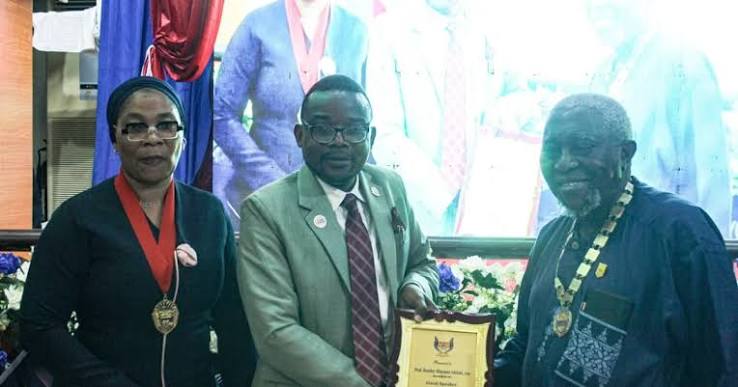
The NIM president also identified integrity, accountability, probity, honesty and efficiency as essential principles that needed to be strengthened in Nigeria’s workplaces and economy.
He argued that management failures extended beyond businesses to households and the wider society, making the promotion of sound management practices increasingly important.
Mustapha also renewed the institute’s call on the Federal Government to recognise 19 November as National Management Day, saying such recognition could strengthen its campaign for the United Nations to declare the date International Management Day.
The institute adopted 19 November for its annual celebration in 2016 to coincide with the birthday of Peter Drucker, widely regarded as the father of modern management.
Mustapha said the institute believed that official recognition by the Federal Government would strengthen its appeal to the United Nations to establish an international observance dedicated to the management profession.
The lecture featured Executive Director of the University of Lagos Business School, Prof. Sunday Adebisi, as guest speaker.
Other attendees included the Registrar and Chief Executive of NIM, Taiwo Olusesi, and a former president of the institute, Akinbayo Adenubi.

The Chief Executive Officer (CEO) of Moniepoint Microfinance Bank Babatunde Olofin, says transaction volume of the bank has hit one trillion naira daily.
Olofin said this at the unveiling of the bank’s North Central office in Abuja on Friday.
He said the bank also served a customer base of about 21 million and provided more than one million jobs in the country.
”Moniepoint is proudly Nigerian, owned by a Nigerian and managed by Nigerians.
?”With ?????????????????????our solid technologies and tailored-made products for businesses in Nigeria and retail customers as well, we are the bank to reckon with,” he said.
The CEO said the bank might be considering upgrade to a full-fledged commercial bank if the business required so.
According to him, this is a strategic decision which if the business requires it, we will communicate.
Fielding questions from newsmen, Edidiong Uwemakpan, the Vice-President Corporate Affairs of the bank, said the bank had been supporting agricultural activities to impact households.
”Moniepoint has always been hyper local and if you look at how we scaled our business, we understood how much Nigerians wanted to be able to interact with humans.
”From the very beginning, we built this distribution network of people that can be trusted, I think this is just an extension of our hyper-local strategy, getting closer to people,” she said.

-
News3 days ago
Parents Protest Scholarship Scheme Suspension At PAMO Varsity
-
 News3 days ago
US Hails Nigerian Military For Rescuing 125 Kidnap Victims
-
Business3 days ago
Reps Raise Alarm Over N2trn Agricultural Loan Diversion
-

 Featured3 days ago
Presidents Xi, Trump, Putin Commit To Global Stability, Denuclearisation
-
Politics3 days ago
ADC Faults INEC’s Alleged Limited Capacity To Upload Election Result On IREV
-
Politics3 days ago
Tinubu Expands 2027 Campaign Tour To 19 States
-
Politics3 days ago
Rivers INEC Set To Begin PVCs Distribution Amidst Residents’ Complaints
-
Business3 days ago
Ibom Airlines Hits 52 Percent Of N147.03billion Financial Year, -FAAN