
Business
FG To Export Processed Yam Products – Ogbeh


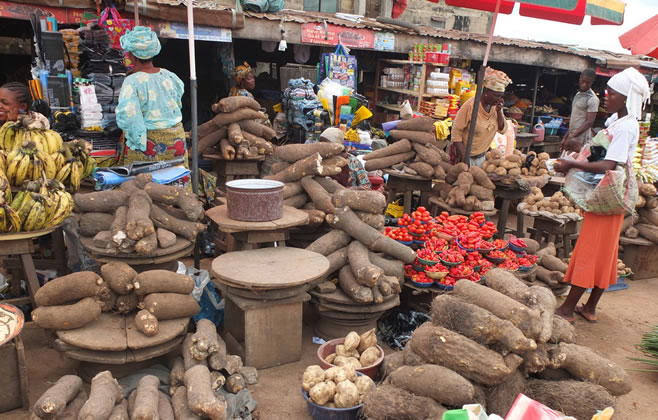
The Federal Government is planning to export processed yam products to Britain, the U.S. and the European Union (EU).
The Minister of Agriculture and Rural Development, Chief Audu Ogbeh, who disclosed this to The Tide source in Lagos, yesterday said that the exportation of fresh yam tubers had already started.
“The target markets are millions of Africans, especially Nigerians in the Diaspora, who want to buy and eat fresh yam.
“For those who will prefer yam flour and pounded yam, the ministry has identified five companies to process yam tubers into those products.
“We will get the UK certified standards for the exportation of those yam value chains.
“We will also put in our own checks and balances to ensure that every export meets the set standard.
“This is to ensure that the processed products are not rejected, once we start to export,’’ he said.
Ogbeh said that Nigeria was under great pressure to export roasted cashew nuts to Japan and all categories of beans and sesame seeds, among others, to India.
He identified lack of organisation and planning as the bane of the nation’s agricultural exports potential.
The minister, however, said that the ministry was working with relevant agencies to facilitate exportation activities in the agricultural sector.
According to him, the ministry is putting modalities in place to ensure that all agricultural products for export meet the highest global standards.
Ogbeh said that the ministry had been sensitising the Nigerian Ports Authority (NPA) to the salient processes involved in the export of agricultural produce and its processed products.
According to him, every Nigerian should support the Federal Government in its efforts to create jobs, wealth and make everybody happy.
He assured the citizens that the nascent yam exports would not in any way affect local consumptions, noting that most of the yams produced in the country often rot away before the harvest of new ones.
Ogbeh, nonetheless, underscored the need for the youth to engage in farming in order to boost the country’s agricultural production and enable it to meet the emerging demands in the new frontier of crop exportation.
He assured the youth that the government would provide the enabling environment that would facilitate their agricultural production.





-

 Education2 days ago
FCE Yola Graduates 3,555 Teachers , Seeks Upgrade to University
-

 Sports2 days ago
Nigerian Trio Target Titles At PFL Africa Finals
-

 Niger Delta2 days ago
Diri Restates Stance On Lagos-Calabar Coastal Highway
-

 Niger Delta2 days ago
C’River, NUJ Pay Tribute To Late Guardian Editor
-

 News2 days ago
NDLEA Recovers Tons Of Illicit Drug Consignments In Nine States
-

 Opinion2 days ago
Checking Voter Apathy In Nigeria’s Electoral Process
-

 Politics2 days ago
2027: DICKSON’S EX-ALLY VOWS TO WORK AGAINST NDC INTEREST IN BAYELSA
-

 Politics2 days ago
2027: GROUP PLEDGES 40,000 SUPPORTERS FOR COALITION CANDIDATES IN RIVERS