
News
…Congratulates NGE President, 15 Others


Rivers State Governor, Nyesom Ezenwo Wike has congratulated the Editor-In-Chief and Managing Director of New Telegraph, Mrs Funke Egbemode on her election as the President of Nigerian Guild of Editors (NGE).
The governor also congratulated a Director at The Tide Newspapers, Juliet Njiowhor and others who emerged victorious, during the 2017 edition of the NGE Biennial Convention.
Wike urged the NGE President and the new executives to work towards promoting media professionalism, objectivity and development of the country, and wished the NGE President a fruitful term in office.
The Nigerian Guild of Editors (NGE), late Saturday, inducted no fewer than 57 new members into the elite club of editors in the country.
The new members are the acting Editor, The Tide Newspapers, Donald Mike-Jaja; 18 from News Agency of Nigeria; eight from Federal Radio Corporation of Nigeria; three each from Nigerian Television Authority, The Guardian, and New Telegraph newspapers; two each from African Independent Television, Union Newspapers, and Voice of Nigeria; and one apiece from Channels Television, Leadership, Daily Times, SUN, PUNCH and National Mirror, among others.
Managing Director/Editor-in-Chief, New Telegraph Newspaper, Mrs Funke Egbemode, was returned unopposed as president, just as two Vice Presidents – East and North – Fred Fabor and Hajia Sani, General Secretary, Victoria Ibanga, and Social/Publicity Secretary, Ken Ugbechie, were also returned unopposed at the convention.
Other officers elected include Mr Suleiman Uba Gaya, who scored 97 votes to beat Ali M. Ali (96 votes), and Chooks Oko (69 votes), to emerge deputy president; Mustapha Isah scored 172 votes to beat Bolaji Tunji (78 votes), thereby emerging vice president, Weast.
The post of treasurer went to Ray Echebiri, who garnered 133 votes to defeat Sabastine Abu with 127 votes, just as Mary Atolagbe, retained her position by scoring 128 votes to beat two others – Sam Egbala (99 votes), and Casmir Igbokwe (21 votes).
For the seven Standing Committee positions, Juliet Njiowhor of The Tide warded off oppositions by scoring 140 votes to emerge winner, along with new entrant, Ikpong Essien-Udom, who scored 116 votes, to beat Ken Njoku (112 votes), and Eze Anaba (44 votes) for East, while Ibrahim Mamman and Catherine Agbo beat two others with 132 votes and 125 votes, respectively, to emerge representatives of the North.
Similarly, Austeen Elewodalu, Steve Osuji and Steve Nwosu scored 136, 135 and 127 votes to emerge Standing Committee members for West, beating four others in the keenly contested election.
The election committee led by veteran Journalist, Mr Ray Ekpu, supervised the hitch-free exercise, and declared the officers as winners.
In her acceptance speech, Egbemode said she would work hard to effect positive changes in the guild in two years.
“I regard this election as an investment and I will ensure that this confidence is treated with respect.
“I am truly humbled, lucky because of the numbers of editors that decided that one person is good and nobody should run against me,” she said.
The president assured that she would not disappoint her colleagues because they gave her an uncommon trust.
Inducting the new members during the dinner/gala night to round off the three-day 2017 Biennial Convention of the guild in Lagos, former president of Nigeria Union of Journalists and fellow of the guild, Bonnie Iwuoha, challenged the editors to maintain high level of integrity and discipline in the discharge of the professional duties, especially at this period of recession.
Nelson Chukwudi




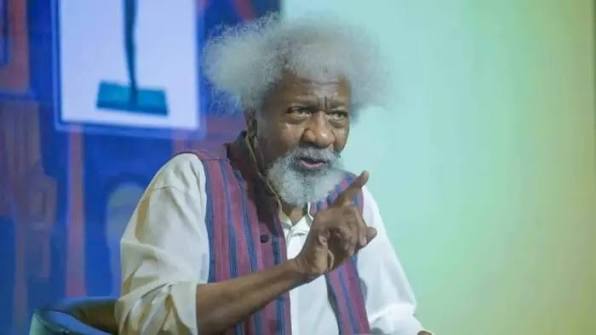
Nobel Laureate, Professor Wole Soyinka, has called on Nigerians to reject silence in the face of extrajudicial killings and other abuses of human rights.
Soyinka stressed that accountability and civic courage remain essential to rebuilding public confidence in the nation’s institutions.
He made the call during the 28th Wole Soyinka Lecture held in Port Harcourt, last Friday as part of activities marking his 92nd birthday.
The lecture, themed “Reclaiming the Nigerian State through Accountability, Justice and Civic Courage,” drew participants from different sectors of society.
The renowned playwright and human rights advocate said the country’s greatest tragedy was not only the unlawful killings carried out by state and non-state actors, but also the silence that often follows such incidents, allowing perpetrators to evade justice.
According to him, indifference by citizens to abuses of power and violations of fundamental human rights has contributed to the persistence of extrajudicial killings and other forms of injustice across the country.
Soyinka said he dedicated this year’s lecture to victims of unlawful killings, noting that the event was intended to honour individuals who had lost their lives as a result of failures within the justice system and society’s inability to protect the sanctity of human life.
He stressed that the lecture was dedicated to what he described as the basic unit of every society – the human being, and urged Nigerians to place greater value on human dignity irrespective of ethnicity, religion or social status.
The Nobel Laureate recalled several incidents of violence, including the fatal shooting and killing of a young man in Ugheli in Delta State by a police officer, and the mob killing of Deborah Yakubu in Sokoto State sometime ago, lamenting that many of those responsible are yet to face justice.
He expressed concern that some perpetrators of violent crimes had openly admitted their actions without fear of prosecution, describing such situations as evidence of serious failures within the nation’s justice system.
Soyinka maintained that when justice is delayed or denied, public confidence in state institutions continues to erode, thereby encouraging further violations of human rights.
Responding to critics who accuse him of promoting religious or ethnic divisions whenever he spoke on such issues, Soyinka dismissed the allegations and pointed out that his advocacy has always centred on the protection of human life and the rule of law.
He urged Nigerians to remain vigilant and continue demanding justice in cases of alleged extrajudicial killings, including the recent shooting of a young man by a police officer, stressing that every life deserves equal protection under the law.
The literary icon also recalled an earlier pledge by a past incoming president to make public the files relating to unresolved assassinations and extrajudicial killings, questioning the status of the promised investigations.
He challenged citizens to continue asking questions about unresolved cases, insisting that justice, accountability and respect for human dignity are indispensable to building a peaceful, democratic and inclusive Nigerian society.
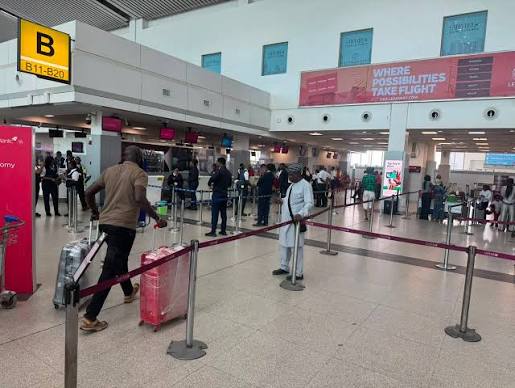
The Federal Airports Authority of Nigeria (FAAN) has clarified that there was no fire at Terminal 2 of the Murtala Muhammed International Airport, Lagos, contrary to its earlier advisory.
Earlier yesterday, FAAN had announced that a fire incident had occurred at Terminal 2 of the nation’s busiest airport, and assured that its Aerodrome Rescue and Firefighting Service had been deployed to contain the situation.
There were also reports that activities were briefly disrupted at the airport yesterday after smoke was seen inside parts of the terminal.
Videos circulating online showed passengers kept standing outside the terminal while firefighters responded to the incident.
However, in an update issued less than two hours later by the Director of Public Affairs and Consumer Protection, Henry Agbebire, and posted on FAAN’s official X handle, the authority said preliminary findings showed that the smoke seen at the terminal was caused by the discharge of the facility’s FM-200 fire suppression system.
“Further to our earlier advisory regarding the incident at Terminal 2 of the Murtala Muhammed International Airport, Lagos, the Federal Airports Authority of Nigeria (FAAN) wishes to provide the following update,” the statement read.
“Preliminary findings indicate that there was no fire at the terminal. The smoke observed within the affected area resulted from the discharge of the terminal’s FM-200 fire suppression system. The reason for the activation of the fire suppression system is currently being investigated,” FAAN stated.
The authority said normal operations had resumed at the terminal while investigations were ongoing to determine the cause of the incident.
“Normal operations have since resumed at the terminal, while detailed investigations are ongoing to determine the exact cause of the incident,” the statement added.
The authority thanked passengers, airlines, airport users and other stakeholders for their understanding and cooperation.
FAAN appreciated the understanding and cooperation of passengers, airlines, airport users and all stakeholders, and reiterated its commitment to the safety and security of all airport operations.