
Nation
THE STATES

FCT
The House of Representatives has stressed the need to strengthen the security structure in Aba, Abia State, and to address the gruesome murder of Aba residents.
This was sequel to the adoption of a motion by Rep. Prestige Ossy (Abia-APGA) at the plenary on Tuesday.
Moving the motion earlier, Ossy said that the entire security structure in Aba had practically collapsed.
He said the unfortunate turn of event had left the commercial city at the mercy of daredevil criminals, kidnappers and ritualists.
The lawmaker said that in the last couple of months, the undesirable elements who had infiltrated the city in large numbers had been ceaselessly unleashing mayhem, inflicting pains and untold sufferings on the people.
He said that on February 24, Chief Kalu Dieke, was kidnapped and gruesomely murdered by suspected kidnappers with his body dismembered and dumped around the notorious Orji Uzor bridge.
Jigawa
The Jigawa State Chamber of Commerce, Industry, Mines and Agriculture (JACCIMA) has approved the removal of its President, Alhaji Shehu Sanusi, from office.
The chamber’s Vice-President II, Alhaji Yahaya Ibrahim, confirmed the development in an interview with newsmen on Tuesday in Dutse.
Ibrahim said the removal was with immediate effect.
He, however, did not give reasons for the removal.
According to him, the JICCIMA’s Vice President I, Alhaji Muhammad Muktar, has taken over the affairs of the chamber, pending election of a substantive president.
The Tide recalls that Sunusi was elected on May 21 last year as president, while Muktar and Yahaya were elected as deputy president I and II.
Kano
The Kano/Jigawa Customs Area Command on Friday in Kano destroyed expired items worth millions of Naira.
This is contained in a statement signed by the Commands Public Relations officer, Mr Danbaba Isah and made available to newsmen in Kano.
According to the statement, the burnt items include expired foreign rice, computer scraps and expired bubble gum.
Others were harmful and expired drugs including Dizapam, Heragra, Tranadol tablets and 250 cartons of expired liquid Indo food.
According to the statement, the Command’s Area Controller, Mr Abutu Onaja led in the destruction of the expired items which took place in the premises of the command’s warehouse.
“The destruction of the expired materials was approved and directed by the Comptroller General of Customes, Retired Col Hameed Ali.
“The exercise was witnessed by relevant government agencies operating in Kano state,” he said.
Kaduna
The Bank of Agriculture says it has secured 1.118 million dollars grant from the African Development Bank (AfDB) for its capacity building and institutional strengthening projects.
In a statement made available on Tuesday in Kaduna, Oluremi Olaoye, the Corporate Communication Manager of the bank, said the projects would enable the bank to sufficiently serve the Nigerian rural dwellers’ financial needs.
According to Olaoye, AfDB will to provide 987,510.30 dollars, or 88.12 per cent of the amount, while the bank of would provide 130,997.03 dollars or 11.88 per cent as matching grant.
The grant would be used to finance programmes that would lead to the expansion of the bank’s target clientele, which is currently small due to low institutional capacity.
Kebbi
The Kebbi State Government has earmarked N898 million for the rehabilitation of the 4.5 million cubic litres capacity Dukku Water Works.
The state’s Commissioner for Water Resources and Rural Development, Alhaji Bala Kangiwa,signed the agreement with a Chinese company, Zhonghao/Brosino Investment, in Birnin Kebbi recently.
“The N898million contract was awarded to the Chinese firm and the project is expected to be completed within 18 months,” he said.
He said the rehabilitation was necessary in view of the ageing of the water works constructed in 1970.
“Some of the equipment were affected by erosion, and could not take high pressure to deliver water to the tanks for onward supply to the town.
” We will also rehabilitate our old water works in other areas in order to complement the Dukku Water Works, “he said.
Kogi
The Wife of Kogi State Governor, Mrs Rashida Bello, has urged wives of local government adminstrators in the state to initiate programmes that would have positive impact on the lives of women in the area.
Bello gave the advice at the grand finale of a three-day retreat organised for the wives of local government administrators and other women leaders in the state in Lokoja on Tuesday.
The governor’s wife further advised them to have understanding and adequate knowledge of their responsibilities to enhance their performance.
“This retreat is meant to create an atmosphere that will ensure the integration, cooperation and relationship between my office and wives of local government administrators.
“It is germane to the development of every family and by extension, the development of council areas, state and Nigeria as a nation.
Kwara
The Kwara State House of Assembly on Tuesday passed the N160.9 billion appropriation bill of the state.
The bill was passed at the plenary after the House Committe on Finance and Appropriation approved on the budget estimate.
The budget, which was presented by Governor AbdulFatah Ahmed on December 29, 2016, represents an increase of N25.6 billion or 18.9 per cent over the original proposed N135,264,529,461 estimate presented to the House by the governor.
The recurrent expenditure of the budget stands at N70.8 billion, while the capital expenditure is N90.1 billion.
Prior to the passage of the fiscal document, some amendments were made to the report of the Finance and Appropriation Committee.
Speaking after the passage of the budget, the Speaker, Dr Ali Ahmad, said the House jerked up the budget size above the figure tabled by the state governor to expedite action on some ongoing projects.
Lagos
The Acting President, Prof. Yemi Osinbajo, has said that the new Lagos- Ibadan standard gauge railway project would be completed in 2018.
Osinbajo said at the ground breaking ceremony of the Segment II Lagos- Ibadan standard gauge rail track on Tuesday in Lagos.
“The acting president said that it was important to have a viable self-sustaining and improving railway services.
“The development will cut across the country; the Federal Ministry of Transportation has completed the feasibility study for up to 13 routes across the country to identify state capitals and major commercial centres.
“We should begin to see significant activities in this regard very soon.
“The fast and efficient railway service is scheduled to be completed by December 2018,” Osinbajo said.
He added that it was part of the promises made by the president during the campaign period.
Nasarawa
A housewife, Mrs Felicia Akinshola, 34, has pleaded with a court in Nasarawa State to dissolve her marriage over alleged inability of her husband to pay her bride price.
Felicia, who is also a business woman also told the Upper Area Court in Mararaba, to dissolve the union because her husband, Mr Akin Akinshola, “is irresponsible”.
She informed the court that she had been living with Akin for more than six years and that the marriage was blessed with three children yet the man could not pay her bride price.
According to her, Akin, who is also a business man, has failed in his duty as a husband and father.
“Akin has not paid my dowry in accordance with Yoruba tradition and every effort put across to enable him pay has proved abortive.
Niger
The Niger State House of Assembly has cautioned Ministries, Departments and Agencies (MDAs) against extra budgetary spending without recourse to the House for approval.
The House Committee Chairman on Labour and Productivity, Mr Malik Bosso, gave the warning on Friday when the head of the state civil service appeared before the committee for defence of the 20?17 budget proposal.
Bosso said that many MDAs were in the habit of spending money without approval, adding that the Assembly would take drastic measures against erring MDAs.
“We will no longer accept any spending outside the budget; we have resolved to take actions against any MDA that is found guilty.
“We will take measures against such spending because it is unconstitutional,” he said.
Ogun
The Chairperson of the Economic Community of West-African states (ECOWAS), Ellen Johnson -Sirleaf, has called on serving and former African presidents to establish presidential libraries as part of efforts to preserve the rich history of Africans.
She made the call in Abeokuta, Ogun on Saturday, at the inauguration of the Olusegun Obasanjo Presidential Library (OOPL).
The ECOWAS chairperson said the call had become necessary to enable Africans tell their stories from their own perspectives and avoid distortion of facts about their history.
Johnson-Sirleaf said that such libraries would help the governments to preserve records of their past for future generation.
Plateau
The United States Ambassador to Nigeria, Mr Stuart Symington, has commended Plateau Government’s efforts towards restoring peace to the crises-ridden state.
Symington, who spoke on Tuesday in Jos, at the beginning of high level dialogue on justice and security, promised that his country would support the efforts toward permanent peace in the north-central state.
The dialogue was organised by the West Africa Network for Peace Building, in partnership with the Plateau Peace Building Agency (PPBA), with the support of the United States Institute of Peace (USIP).



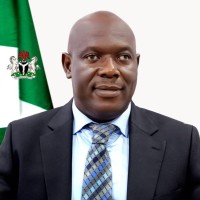
The Hydrocarbon Pollution Remediation Project (HYPREP) has commemorated the 15th anniversary of the release of the United Nations Environment Programme (UNEP) Environmental Assessment Report on Ogoniland, reaffirming its commitment to restoring the environment and improving the livelihoods of affected communities.
In a statement signed by the Project Coordinator, Prof Nenibarini Zabbey, to commemorate the anniversary, HYPREP described the anniversary as a significant milestone in Nigeria’s environmental restoration efforts, noting that the project has made remarkable progress in implementing the recommendations of the landmark UNEP report released on August 4, 2011.
The UNEP report had revealed extensive oil pollution across Ogoniland, severe environmental degradation, and serious public health risks resulting from decades of petroleum operations. It also recommended an initial $1 billion fund to commence the cleanup of the affected communities.
According to HYPREP, the Federal Government formally launched the Ogoni clean-up in 2016, while the Project Coordination Office was established in 2017 to drive the implementation of UNEP’s recommendations.
Zabbey said the current administration has continued to prioritise the project under the Renewed Hope Agenda.
Providing an update on the cleanup, the Project Coordinator disclosed that 30 of the 65 contaminated sites identified by UNEP have been fully remediated, while work is ongoing at several medium- and high-risk locations. It also stated that more than 1.5 million mangrove seedlings have been planted as part of what it described as the world’s largest restoration of oil-degraded mangroves, with over 1,000 hectares of shoreline already rehabilitated.
Zabbey further revealed that 49 Ogoni communities have been connected to potable water schemes through multiple water projects and booster stations aimed at providing safe drinking water across the region.
In the health sector, he said the 100-bed Ogoni Specialist Hospital in Kpite and the 43-bed Cottage Hospital in Buan are nearing completion, adding that several existing health facilities have been upgraded with modern medical equipment, while five ambulances have been donated to improve emergency healthcare services. The Project Coordinator also disclosed that a three-year human health biomonitoring study is being conducted in collaboration with the World Health Organization’s International Agency for Research on Cancer (IARC).
On economic empowerment, Zabbey stated that the Project has created more than 8,000 direct jobs and trained thousands of Ogoni youths and women in various vocational and technical skills, including software development, cybersecurity, aviation, commercial diving, seafaring, mechatronics, and creative arts. The project also reported awarding scholarships to more than 1,000 students, providing grants to small businesses, and supporting persons living with special needs through skills acquisition programmes.
The statement further highlighted ongoing legacy projects, including the Ogoni Power Project and the Centre of Excellence for Environmental Restoration, which it said is about 96 per cent complete. HYPREP also welcomed the recent designation of the Ogoni Wetland as a Ramsar Site of International Importance and pledged to continue promoting biodiversity conservation and sustainable management of the ecosystem.
Marking the anniversary, Zabbey said the progress achieved over the past 15 years demonstrates the collective commitment of government, development partners, stakeholders, and local communities to restoring Ogoniland. He called for renewed collaboration to sustain the cleanup effort, promote environmental sustainability, and support the long-term development of the region. 3
-

 News2 days ago
RSG Targets Nine Million Residents in Mosquito Net Distribution Campaign
-

 Oil & Energy2 days ago
Aiyedatiwa Signs New Electricity Bill
-

 Maritime2 days ago
Marine Minister Commends President Tinubu On NPERA Bill Assent
-

 Oil & Energy2 days ago
NLNG Commissions Research And Innovation Centre In RSU
-

 News2 days ago
KenPoly Holds Eight Convocations, August 29
-

 News2 days ago
RSG Begins Another Phase of Projects Commissioning Today
-

 News2 days ago
RMAFC Completes Revenue Sharing Review, Proposes New Pay
-

 Maritime2 days ago
NAGAFF Petitions IGP Over Alleged Maritime Police Harassment