
Business
Nigeria And Self Sufficiency In Rice Production

In a bid to mitigate the effect
of the ban on rice importation into Nigeria, President Muhammadu Buhari in June this year announced that his administration would make Nigeria self-sufficient in rice production within 18 months.
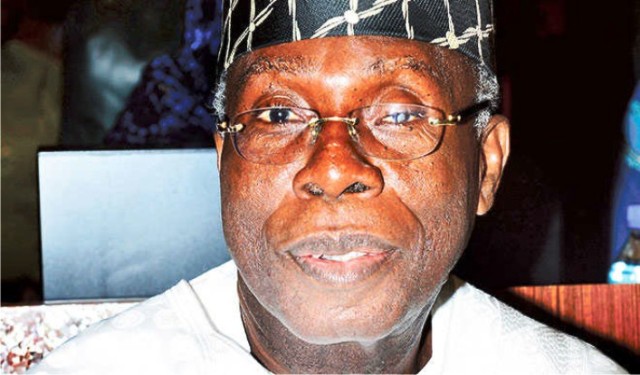
Speaking at the Ramadan breaking of fast with members of the business community, Buhari said 13 states of the federation had been identified for the production of the crop, pointing out that the Minister of Agriculture, Chief Audu Ogbeh, had already been briefed on how best to achieve the target.
He decried the way and manner the nation’s scarce resources were wasted on the importation of food items by the previous regimes, saying that the nation had no option than to concentrate more on agriculture and solid mineral activities.
The Minister of State for Agriculture and Rural Development, Senator Heineken Lokpobiri at a town hall meeting in Yenagoa, capital of Bayelsa State, said the reliance on imported food led to the astronomical rise in price of rice and other commodities, stressing that if Nigerians failed to produce some of the items being imported before December, the price of rice would skyrocket to N40,000 a bag.
According to him, Nigeria spends about $22 billion a year on importation of food, saying that a projection shows that the population of Nigeria would be 450 million by 2050 and wondered what would happen then if the people could not feed themselves now. We do not have enough dollars to fund the import because of low crude oil price and that is why you see the price of rice going up. Prices of rice was between N9,000 to N12,000 some months ago, but it is now about N26,000 and if we don’t start producing by December, it could be N40,000. Rice matures in three months, so this is a wake-up call for Bayelsa people to take the four farms we have serious. The Federal Government has four farms in the state in our records.
There is no rice farm in Rivers State and many other state. They have land to cultivate rice but no support from government. All states in the country should be encouraged to produce rice and give it priority attention. The North- West states such as Kebbi, Jigawa, Kano as well as other states like Lagos, Ebonyi, Anambra have prioritized it.
The Dangote Group of Companies is set to invest over N53 billion in the production of rice and sugar in Nasarawa State, said its President, Alhaji Aliko Dangote. He disclosed this recently in Lafia during an assessment tour of the investment potentials in the state.
Represented by Mr Abdullahi Sule, the company’s group managing director in charge of sugar production, Dangote said the company had set the machinery in motion to invest in Obi, Awe and Doma Local government areas of the state. He stated that the company would establish a rice mill and give agriculture and sugarcane outgrowers about 10,000 hectares and seed cane to enhance production, adding that the company has similar projects in Adamawa and Taraba States which had generated over 25,000 jobs, while expecting some to happen in Nasarawa.
On its part, the Korean International Cooperation Agency (KOICA) last year September completed its rice mill project in Bida and handed over same to the Federal Government. Its country Director, Mr Jung Sang-hoon told The Tide in Abuja that the project was initiated in 2007, but was halted for a while due to technical challenges the company encountered. “The company has several projects; we have rice processing centre in Bida and cassava processing centres in Kogi, Enugu and Ogun States, Sang-hoon said, adding “in case of the rice processing project, the delays came from our side; we were unable to find alternative replacement (contracting companies).
“In 2012, when I came, I made some reports. My new approach at the time was to find collective association of agriculture machinery production companies; they followed my advice and were able to resume. Now the process became very swift and prompt; virtually all the job has been completed.
Olam International, a Singaporean Company in 2012 commenced large-scale cultivation and processing of rice by the last quarter in Nasarawa State, the nation’s major rice growing state. The company announced that it invested $49.2 million in rice farming and milling in the state. Speaking to newsmen, the President of the firm, Mr Jajreev Raina said the investment established a 6,000 hectres of irrigated paddy farms and rice milling projects as the company’s first venture in rice production in the country.
Olam is a leading rice trader globally and has been working with several rice firms across the country but does not own any of them. The project provides 60,000 tones of paddy annually to the processing facility which had then been converted into 36,000 tonnes of milled rice. Industry analysts have descried the project as a big boost for the Federal Government’s drive to raise agricultural production towards food security for the rising population.
The Special Adviser on Media and Publicity to President Buhari, Mr Femi Adesina recently confirmed that the Federal Government had in 2014 signed a one billion dollars Memorandum of Understanding (MoU) for investment in integrated rice project with Dangote Industries Limited. Further to this agreement, Dangote Industries Ltd, this year cultivated over 8,000 hectares in Hadejia, Jigawa State, creating over 10,000 direct and indirect jobs for farmers who are the major beneficiaries of the scheme.
According to Adesina, the Buhari-led administration is also in partnership with the African Development Bank (ADB) and other reputable companies to tap into the vast potential in the private sector. This was aimed at broadening the economic base of the country.
“The gains of the diversification drive, especially in the agriculture sector, he said, are already yielding dividends as shown by the recent statistics in the sector published by the National Bureau of Statastics (NBS)”.
A social media report had accused the Federal Government and Dangote group of a plan to ‘flood’ the market with Genetically Modified rice (GMO). But the Special Adviser on Media and Publicity dismissed the report, describing it as the hand work of unscrupulous individuals who were bent on tarnishing the good image of the government. “It is therefore ridiculous that a government that is wholly devoted to the generation of employment for Nigerians, especially through agriculture will turn around to get involved in an activity that will reverse the gains of the same partnership”.
In a bid to stemming the tide of the effect of pests that attack cereal crops on the fields, especially rice, the federal government in 2014 approved a 50 hours serial spray of high risk areas in Kano State under attack of quelea birds. The aim was to reduce the amount of money spent by farmers employing traditional control methods. Rice farmers had lamented about the challenges the birds had posed to their farm output as a result of the attacks.
Rice is one of the staple foods for Nigerians and its supply and demand trend are imbalance. The production of rice in this country is expected to be more than 100 tonnes following an increase in the demand for the commodity. Rice production can earn Nigerian high foreign exchange if its farmers in the country are supported financially and materially. “Government agricultural loans will enable rice farmers acquire modern farming equipment as well as vast land for their business. The provision of irrigation infrastructure for rice farmers is necessary as rice can be scorched due to the lack of rain which also providing fertilizers at the appropriate time during the farming season”.
In order to make the ban on rice importation realistic, a Port Harcourt-based large-scale rice dealer, Eugene Aririeri, urged the Federal Government to ensure that local producers of rice are adequately empowered. He advised that for the federal government’s ban on importation of rice to be realistic in 2016, local rice farmers need to be empowered and encouraged, pointing out that the idea of banning the importation of rice is good, but that concrete steps must be taken by the Federal and state governments before the implementation of the ban.
According to him, the local producers of rice should be provided with adequate and highly subsidized agricultural loans, adding that these loans should only be given to genuine farmers while that should not be politicized. “The farmers should also be provided with adequate improved seeds, genuine fertilizers and other related farm imputs”. The rice dealer explained that by statistics, Nigerians consume more than 45 million metric tonnes of rice per annum, while 21 million metric tonnes of the commodity was being imported through back-door yearly, disclosing that Nigeria was the second largest importer of rice in the world in spite of large endowment of arable land suitable for rice production.
He maintained that locally produced rice was more qualitative with more nutritional value than imported rice.
If Nigeria is really committed to an ambitious programme for growth, to consolidate and increase the present levels of profitability through international expansion, and to further develop its agricultural business activities, there should be medium plan for rice production in the country. Ebonyi State has carved a niche for itself in the area of rice production. Its production has increased in the state and if given encouragement as well as other states, the problem of rice in this country will soon be a thing of the past.
Chief Anthony Ndubuka, a major rice dealer in Umuahia in an interview expressed optimism that the price of rice would soon fall in Nigeria, saying that the grains would become affordable as soon as farmers began to harvest the grains in the next few months. “I am confident that there will be a bumper harvest this year. So, by November, the price of the commodity will definitely come down”, he said, expressing concern that the astronomical price of rice had made it unaffordable in many homes. “Rice is a staple food in many families in Nigeria, it is children’s favourite, but the commodity has become unaffordable because of its astronomical price”.
Ndubuka traced the scarcity of rice to the ban on importation of the grains by the Federal Government, saying that the inability of the local rice producers to fill the gap caused by the ban compounded the situation. According to him, the scarcity posed serious challenges to rice farmers and manufacturers in the country. “Luckily, many farmers have braced the challenges, so there will be plenty of rice this year”, he said.
The Tide reports that the scarcity of foreign rice after the government’s ban led to increased demand for local substitutes. The rice dealer, Ndubuka, said although eh ban on importation of rice was expected to boost local production, government should have taken measures to bridge the gap. He added that it was still smuggled into the country in spite the ban, to evade arrest. Urging the Federal Government to give incentives to rice farmers, he said that would boost output and quality of the grains and make them affordable.
In Umuahia, a bag of local rice now sells for between N18,500 and N20,000 as against previous price of N5,000 and N6,000. The imported substitutes cost between N23,000 and N25,000 as against the previous N8,000 and N10,000 per bag.
Shedie Okpara


Business
IPMAN Raises Concern Over Delay In Chinese Refinery Deal …Predicts Lower Fuel Prices Through Competition

-
Rivers2 days ago
Rivers Police Uncovers Firearm Concealed In Loaf Of Bread
-

 Niger Delta1 day ago
Pro-Chancellor Hands Over Okey Onuchuku Peace, Conflict Institute Building
-

 News1 day ago
Fubara Reaffirms Commitment To Blue Economy, Private Sector Growth …Calls For Protection Of Marine Resources
-
Sports2 days ago
Six Nigerians To Play For NBA Teams
-
Business2 days ago
Gas Economy: Decade of Gas, Pi-CNG/ EV Deepen Media Engagement
-
 Business1 day ago
IPMAN Raises Concern Over Delay In Chinese Refinery Deal …Predicts Lower Fuel Prices Through Competition
-
Business2 days ago
Navy Nabs 13 Black Sand Miners In Bayelsa –Impound Two Boats
-

 Politics2 days ago
Senate Defends Passage Of State Police Bill