
Nation
THE STATES

Adamawa
From January 2016 to date, the Adamawa State Govern
ment has generated over N7 million revenue from the sale of timber, Permanent Secretary, Mr Barnabas Pata, Ministry of Environment, has said.
“In 2015, government discovered underground dealing and unlawful activity by the association of timber dealers, Adamawa branch.
“We invited and held meeting with the members and categorically informed them of the importance of registration and government supervision.
“I am therefore happy to inform you that, as a result of the meeting, the ministry generated over N7 million between January and today, ” Pata told newsmen in Yola recently.
Bauchi
Governor Mohammed Abubakar of Bauchi State said
that previous administrations in the country were responsible for the poor state of local government councils.
Abubakar made the assertion in Bauchi while having an interactive session with the 20 council chairmen in the state.
He said that past administrations in the country had reduced activities at the local governments to nothing.
“Workers only visit the councils at the end of each month to collect salaries and allowances,’’ he said.
Abubakar said local governments, if effectively utilised, would wipe out poverty and create wealth.
He said that the country needed radical measures that would proffer sustainable solutions to the myriads of problems and scarce resources facing the country.
Borno
Alhaji Abubakar Deribe, Caretaker Committee Chairman,
Jere Local Government Area, Borno State said the council had sunk 42 boreholes with hand pumps in the area.
In addition, he said that the council constructed 20 earth dams to support the boreholes in providing water to people in the area.
Deribe told newsmen in Maiduguri that the projects were undertaken to address the problems of potable water supply in the 12 wards under his council.
He said that the projects were also conceived to minimise the heavy dependence on diesel and petrol-powered boreholes and save cost.
“Water supply has been a major problem in Jere for quite some time; so, to address the problem, we decided to do the hand pumps which are cheaper and easier to maintain”.
Ekiti
An Ado-Ekiti Customary Court has dissolved a four-
year-old marriage between Yetunde Kayode and her husband, Temitope over lack of care.
The President of the Court, Mr Joseph Ogunsemi, who dissolved the union said he observed that it had broken down irretrievably.
Ogunsemi awarded the custody of the five month old baby of the union to the mother, Yetunde, saying that Temitope would be responsible for the child’s education at all levels.
He held that Temitope should pay N5, 000 as monthly feeding allowance for the child. Ogunsemi granted the respondent access to see his child whenever he wanted to.
Earlier, Yetunde, a resident of Abekoko, Falegan area of Ado-Ekiti, told the court that when she got pregnant and told her husband he gave her money to abort the child.
She said she refused to abort the pregnancy because she had once aborted a pregnancy for him, saying she was not ready to die.
FCT
Alhaji Isiwele Shehu, President of the Road Transport
Employers Association of Nigeria (RTEAN), has called on state governments to allow local government in the country to enjoy autonomy.
Shehu made the call in an interview with newsmen in Abuja recently.
He said that said autonomy for the councils was one of the recommendations of the 2014 National Conference, which should not be ignored.
Kogi
The Kogi State Pastor of the Living Faith Church, Lokoja,
Pastor David Popoola, has urged the people of Kogi to be united irrespective of their ethnic diversities and political differences.
Popoola spoke to newsmen in Lokoja on the sidelines of the 25th anniversary celebration of the creation of the state.
He said that, though, tongue and tribe might differ, people should learn to live together in peace and harmony, and as brothers and sisters.
“We should celebrate and promote those things that unite us and do away with things that separate and divide us as a state and a nation.
“The Lord will help our leaders at all levels and give them divine wisdom to know and do what it takes to move this state to greater heights.
Kwara
The Muslim Media Watch Group of Nigeria, a Non-Gov
ernmental Organisation (NGO), has called for industrialisation of Kwara State in order to boost the state’s economy.
The call is contained in a statement issued in Abuja by the group’s National Coordinator, Alhaji Abdullahi Ibrahim.
“We appeal for industrialisation of Ilorin to boost its economic power and commercial activities. The state government should create the enabling environment for this economic boost to come to reality,’’ the statement said.
The group congratulated the Emir of Ilorin, Alhaji Ibrahim Gambari, on his 21st coronation anniversary.
“We call on the people of Ilorin Emirate to support the Emir by moving closer to him, and admonish him on the importation of some cultural behaviour.
Lagos
Governor Akinwinmi Ambode of Lagos State has or
dered the contractor handling the Berger area expansion project to deliver the project by December, 2016 or face sanction.
Ambode, in a statement by his Chief Press Secretary, Mr Habib Aruna, gave the ultimatum while on inspection visit to some ongoing projects in the state, recently.
According to the statement, the governor ordered the contractors to work day and night, saying that the directive became imperative in view of the strategic importance of the axis as major gateway to the state.
It said that Ambode ordered the construction of iron barricades under the newly-completed pedestrian bridge to compel usage, save lives and facilitate free flow of traffic.
The statement also said that Ambode inspected the newly-completed lay-by at Car Wash Bus Stop in Oworonsoki and 1.65 kilometre road from Olopomeji in Oworonsoki to Ifako.
It added that Commissioner for Works and Infrastructure, Mr Ganiyu Johnson, said the projects, upon completion, would not only give Berger even a befitting look, but would permanently remove gridlock associated with the area.
Nasarawa
Head of Nupe community in Nasarawa State, Chief Baba
Bello, has called for truce between the state government and Nigeria Labour Congress (NLC) in the interest of the state.
He said that both parties should bury the hatchet and urged leadership of the workers to end the two-month old strike in the state.
Bello, who is Sarki Nupe of Nasarawa State, made the call while addressing newsmen in Lafia.
According to him, the strike which has lasted for two months now has brought untold hardship to the people of the state and also brought setback to the economic fortunes of the state.
Plateau
The management of Jos University Teaching Hospital
(JUTH), Plateau State, said that it had resolved the feud with its striking workers months after it started.
It said this was after a joint meeting facilitated by the Federal Ministry of Health .
Its Chief Medical Director (CMD), Prof Edmund Banwat, said in Jos that the meeting, brokered by the former Governor of Plateau, Senator Joshua Dariye, provided the platform where all the parties ventilated their positions on the lingering dispute.
Our correspondent reports that all had not been well between the workers and the JUTH management since March which had resulted into intermittent strikes and street protests among others.
Sokoto
The National Hajj Commission (NAHCON), Sokoto
Zone, has transported 8,500 pilgrims to Saudi Arabia for the 2016 Hajj in 17 flights.
Alhaji Abubakar Kaoje, the zonal coordinator of the commission, told newsmen in Sokoto that the pilgrims were from Sokoto and Zamfara States.
He said that the pilgrims were transported by Max Airline from the Sultan Abubakar International Airport, Sokoto.
According to him, 4,500 of them were from Sokoto and were transported through nine flights.
Taraba
Senior Special Assistant to Taraba State governor on
Media and Publicity Mr Sylvanus Giwa, says the digitisation of the state’s broadcasting station would be completed before June, 2017.
Giwa gave the assurance in an interview with newsmen in Jalingo saying that, the move was to beat the 2017 deadline for switch-over from analogue to digital broadcasting.
He said that the state government signed the contract for the full digitization of the station with Pinnacle Communication Limited in December, 2015 to ensure that the deadline was met.



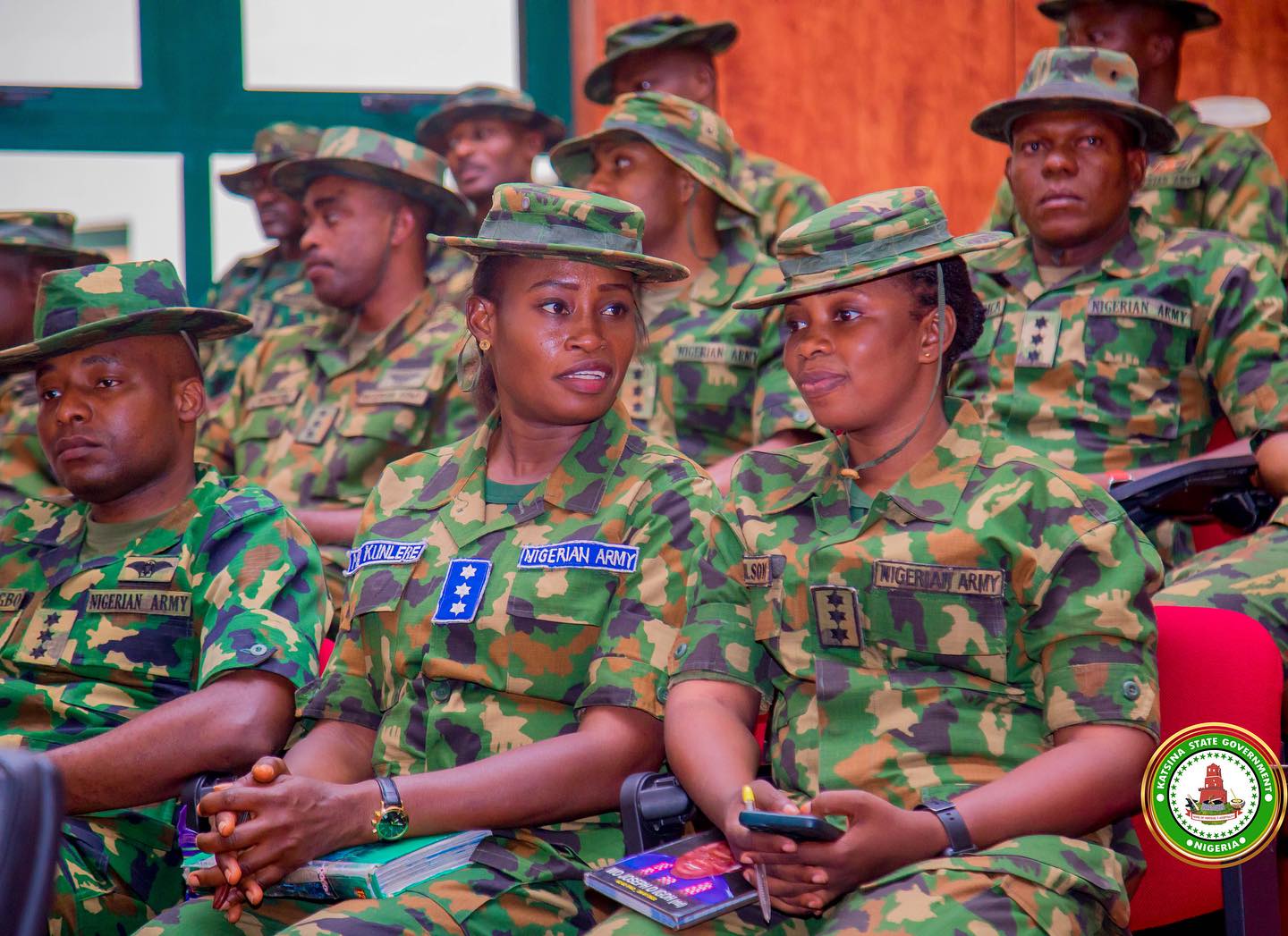
The Nigerian Army has passed out 384 female soldiers of the 90 Regular Recruit Intake (90 RRI) following the successful completion of Exercise SHINING STAR 2026 in Giri, Abuja.
In a post shared on the Nigerian Army’s X handle, yesterday, the Assistant Director, Army Public Relations, Nigerian Army Women Command, Giri, Abuja, Major Nsima Essien, said the passing-out ceremony was held on Wednesday, 28 October 2026, at the Nigerian Army School of Public Relations and Information (NASPRI), Giri, with the Chief of Army Staff (COAS), Lieutenant General W. Shaibu, represented by Major General Umar Gital Yusuf, as the Guest of Honour.
In his address, the Army Chief commended the female personnel for their dedication, resilience, discipline and commitment throughout the training exercise.
He described the successful completion of the exercise as an important milestone in their military careers and reaffirmed the Nigerian Army’s commitment to developing a professional, disciplined and combat-ready force.
He urged the newly trained soldiers to uphold the values of teamwork, courage, loyalty and professionalism, while applying the knowledge and skills acquired during the exercise to their military duties.
Shaibu emphasised the importance of continuous training, physical fitness and operational preparedness in addressing contemporary security challenges before declaring the exercise closed.
Earlier, the Acting Commander of the Nigerian Army Women Command (NAWC), Colonel S. M. Ahmed, welcomed the special guest and other dignitaries to the ceremony.
Ahmed highlighted the significance of Exercise SHINING STAR 2026 in enhancing the physical fitness, military competence, discipline and operational readiness of the female personnel.
He also acknowledged the contributions of the authorities, instructors and other personnel whose efforts ensured the successful conduct of the exercise.
Highlights of the ceremony included obstacle-crossing demonstrations and weapons-handling exercises, during which the female soldiers demonstrated their ability to strip and assemble AK-47 rifles while blindfolded.
The demonstrations showcased the personnel’s physical endurance, confidence, weapons-handling skills and proficiency in basic military tasks.
“A total of 384 female personnel of the 90 RRI participated in the exercise, alongside 14 male personnel from the Headquarters, Directorate of Army Physical Training (HQ DAPT), and 70 male personnel from the 167 Special Forces Battalion, “ Ahmed said.
The ceremony attracted senior military officers from various units and formations, representatives of paramilitary agencies and other invited guests.
Eight male and female personnel who distinguished themselves during the exercise received awards presented by the Acting Commander of NAWC.
The event also featured a vote of thanks delivered by one of the beneficiaries, the presentation of souvenirs and a group photograph to commemorate the successful completion of the exercise.
The exercise forms part of the Nigerian Army’s efforts to strengthen personnel development, improve military competence and enhance operational readiness in response to the country’s evolving security challenges.
As the world marked the 2026 International Day of the Girl Child on Sunday, October 11, 2026, a non-governmental organisation, Stand Up for Women Society (SWS) has intensified its campaign against child marriage, urging schoolgirls to prioritise education, protect their rights and develop skills for a better future.
The organisation joined the global observance of the day under the theme, “International Day of the Girl Child: End Child Marriage and Invest in Girls’ Rights,” with a sensitisation programme at Government Girls Secondary School, Oromenike, D-Line, Port Harcourt, Rivers State.
Led by its Vice Chairperson, Daba Benebo, the group engaged the students in discussions on the dangers of early marriage, teenage pregnancy, sexual abuse and other challenges that threaten the education, safety and development of the girl child.
Speaking during the programme, Benebo urged the students to reject early marriage and remain focused on their studies, stressing that education would empower them to make informed decisions about their lives and future.
She cautioned the girls against allowing anyone to deprive them of their right to education and dignity, advising them to report cases of harassment, abuse and other violations of their rights to the appropriate authorities.
Benebo assured the students that SWS remained available to support them whenever they encountered violations of their rights.
She also encouraged them to maintain discipline and responsible conduct while avoiding behaviours that could expose them to negative influences and jeopardise their future.
Beyond formal education, the SWS vice chairperson urged the students to acquire vocational skills that could provide additional opportunities for economic independence and help them navigate future challenges.
The sensitisation programme, enlivened by singing, dancing and to share their views and experiences on issues affecting the girl child interactive sessions, provided an opportunity for the students to share their views and experiences on issues affecting the girl child.
One of the major issues raised during the discussion was the appropriate age for marriage. While some participants maintained that 18 years was the constitutionally approved age, the discussion highlighted the need to consider not only age but also the maturity, preparedness and responsibilities associated with marriage.
The speaker stressed that marriage required adequate mental and emotional preparation, as well as the capacity to shoulder its responsibilities.
She therefore advised the students to concentrate on acquiring a sound education before considering marriage, noting that education would equip them with the knowledge and skills needed to make responsible decisions and manage family life.
The issue of teenage pregnancy also featured prominently during the question-and-answer session.
In addressing the subject, the speaker explained that pregnancy could occur even at the age of 12, using the example to underscore the vulnerability of young girls to the consequences of early sexual activity.
She advised the students to avoid sexual intercourse and prioritise their education, personal safety and future aspirations.
The discussion also examined the difficulties some girls encounter when living with hostile spouses, relatives or guardians.
Benebo encouraged the students to cultivate patience, humility and diligence, noting that these qualities could help them navigate difficult situations and build a brighter future.
However, she warned that patience and humility should never be interpreted as an obligation to endure violence, abuse or degrading treatment.
She urged girls experiencing hostile or abusive living conditions to seek help from their parents, trusted adults or appropriate support services rather than remain in environments that could expose them to physical or emotional trauma.
“When such happens, please return to your parents and engage in petty trade or learn a skill to support your education rather than stay in a hostile environment,” Benebo stressed.
The programme also underscored the importance of protecting girls from early marriage and other harmful practices that can disrupt their education, compromise their well-being and limit their opportunities in life.
It also reinforced the need for families, schools, communities and relevant organisations to work together to ensure that girls have access to education, vocational training, protection and the support they need to realise their potential.
For SWS, the message was clear: empowering the girl child begins with protecting her rights, investing in her education and equipping her with the confidence and skills to make informed choices about her future.
Stories by Kevin Nengia
The Egberipapa Foundation has unveiled a mass transit scheme aimed at easing transportation difficulties and improving connectivity among communities in the three Kalabari local government areas of Asari-Toru, Degema and Akuku-Toru in Rivers State.
The initiative, established by former Caretaker Committee Chairman of Akuku-Toru Local Government Council, High Chief Sobomabo Jackrich, popularly known as Egberipapa, is designed to make transportation more accessible and affordable for residents across the Kalabari area.
The scheme was launched on Monday, October 12, 2026, and is expected to address longstanding transportation challenges confronting residents, particularly those in riverine and hard-to-reach communities.
Communities expected to benefit from the initiative include Krakrama, Minama, Angulama, Sangama, Omekwe-Tariama and Omekwe-Ama.
The project is expected to ease movement within and beyond the Central Group area, while providing residents with a more convenient means of transportation for their daily activities.
For decades, transportation difficulties have posed significant challenges to several Kalabari communities, making movement between settlements both cumbersome and expensive. These challenges have also affected commercial activities, social interactions and access to essential services.
The introduction of the mass transit scheme is therefore expected to provide relief to residents, strengthen inter-community connections and stimulate economic activities across the benefiting communities.
Beyond improving mobility, the initiative could contribute to community development by facilitating the movement of people and goods, supporting local businesses and enhancing social and economic interactions within the Kalabari area.
As the scheme gets underway, attention will be focused on its implementation, accessibility and sustainability, as well as its capacity to deliver lasting transportation benefits to the target communities.
The initiative represents a potentially significant step towards addressing transportation challenges and promoting grassroots development across the Kalabari Kingdom.
-

 Politics3 days ago
LG CITY BOY COORDINATOR HAILS WIKE’S SUPPORT FOR ONYESOH, TINUBU
-
Politics3 days ago
DIRI INAUGURATES APC CAMPAIGN COUNCIL, SETS MILLION VOTES TARGET FOR TINUBU
-

 Politics3 days ago
NDC Candidate Urges Oborevwori To Probe Asaba Political Violence
-

 News3 days ago
Army Recovers X Account After Hack Attempt
-
 Business3 days ago
Nigeria Loses N17tr Yearly To Abandoned Projects
-
Politics3 days ago
2027: Oborevwori Tasks Media On Fair, Accurate Reporting
-
Politics3 days ago
2027: AKPABIO ENVISAGES TINUBU’S VICTORY IN SOUTH SOUTH REGION
-
Politics3 days ago
Asaba Political Violence: Police Confirm One Dead, Delta Govt Urges Probe