
Business
Business Booms In Eagle Island Over New Road ….Plot Of Land Now Costs N10m

The Eagle Island Road
which was commissioned about a year ago by the Rivers State Governor, Chief Nyesom Wike has pushed the cost of land in the area from N1.5 million to over N10 million per plot.
A former CDC Chairman, Eagle Island community, Mr Charles Wakama Ogbobo, who disclosed this in an interview with The Tide in Port Harcourt, said the road project has opened up more businesses, resulting in a serious boom on land and estate business.
He said: “About ten years ago, a plot of land was sold N180,000 and four years ago it was sold between N1.5 million to N2 million, but today, it goes for between N10 million to N15 million and you beg for it.”
He said the people of the Island would ever remain grateful to the state Governor for the socio-economic turnaround which is being experienced in the area as a result of the commissioned road.
Ogbogbo said the road has attracted so much business interest such that the demand for land in the area is so high and many important persons in the Port Harcourt City now wish to have a space in the area.
Noting that before the road was constructed, many people living in the area had serious security challenges because crime wave was high and it was difficult for security personnel to access the area.
As a result of the poor situation of the area then, he said, those who had land there were not interested in developing the area and batchers were found everywhere as many land owners were giving out their land at the cheapest possible rate.
The former CDC boss, said in the next ten to fifteen years, the island has what it takes to turn to the Victorial Island or Ikoyi status in Lagos State.
“If more land is reclaimed and the Ministry of Urban Development maintains its serious effort in the area, the area will be pursuing V.I or Ikoyi in the next ten years,” he said.
He stressed the need for both land and marine police and also the presence of other security outfits for adequate protection of the area so that more and more important persons will be attracted to live in the Island.
Chris Oluoh



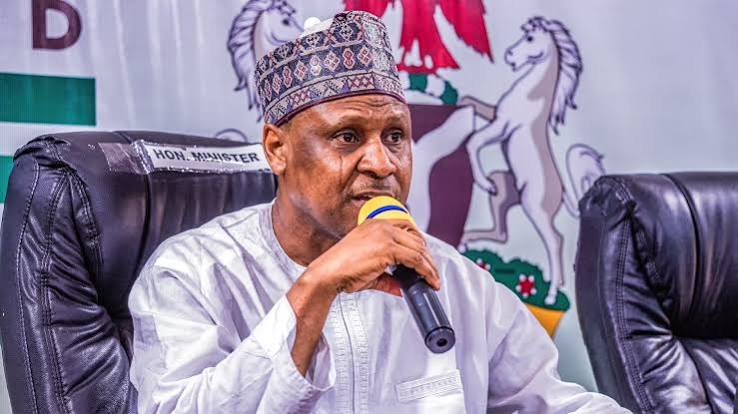
The Minister of State for Industry, Trade and Investment, John Enoh said this at the 8th annual induction and conference of the Chartered Institute of Project Managers of Nigeria (CIPMN).
He explained that abandoned projects continue to lock up public funds that could have been used for infrastructure development, industrial growth, job creation and essential social services.
Represented by the ministry’s Permanent Secretary, Chris Osa Isokpunwu, he said the impact goes beyond financial losses, as incomplete projects affect communities and limit access to important public services
He cited examples of that remain unopened, schools that cannot accommodate students, roads that fail to connect communities and electricity projects that have not delivered their intended benefits.
The Registrar-General and Chief Executive Officer of CIPMN, Henry Ifeanyi Mbadiwe, also identified poor project management as a major challenge affecting development in Nigeria.
He revealed that the institute had developed a project management curriculum for Nigerian universities, which has received approval from the National Universities Commission (NUC). The programme is expected to enable universities to offer project management as a bachelor’s degree.
Mbadiwe further referenced findings by the Presidential Projects Assessment Committee, which identified 11,886 ongoing federal capital projects in 2011, with an estimated financial commitment of ?7.78 trillion.
He noted that inadequate planning, supervision, accountability and implementation were among the factors contributing to the abandonment of projects across the country.
The minister called for stronger project management structures across ministries, departments and agencies to improve planning, monitoring and evaluation.
He added that the Federal Ministry of Industry, Trade and Investment had introduced a 90-day implementation reporting cycle to strengthen transparency and monitor the progress of government programmes.

Ikenga said the company remained committed to Nigeria’s power sector and would continue investing in its operations despite the challenging business environment.
He spoke in Lagos at the third edition of the Shell Power Conference, themed “Powering Nigeria’s Progress: Turning Ambition and Action into Sustainable Impact”.
The Transcorp Power chief said the company would sustain electricity generation, invest in its facilities and deliver value to shareholders.
“Transcorp Power is a long-term player, not a short-term player. This year has been challenging, but what is important is getting power to schools, hospitals and businesses to power progress,” he said.
Ikenga said the company’s focus on operational efficiency and investment had strengthened its contribution to Nigeria’s electricity supply.
He disclosed that since acquiring the Ughelli Power Plant in Delta State in 2013, Transcorp Power had quadrupled its available generation capacity.
He also said the company became the first privatised power generation firm to receive a post-privatisation discharge certificate after fulfilling all its privatisation obligations.
The company’s unaudited results for the nine months ended September 30, 2026, showed a profit before tax of N83.1 billion, while its profit-before-tax margin rose to 31.2 per cent from 29.6 per cent recorded in the corresponding period of 2025.
Its total assets rose to 11.7 per cent amounting to N629.5 billion, while shareholders’ funds grew 8.9 per cent to N199.8 billion. Cash and cash equivalents also rose to N10.3 billion, supported by improved collections.
On the company’s contribution to grid stability, Ikenga said Transcorp Power’s black-start capability enabled it to restart operations without relying on electricity from the national grid.
He explained that the capability allowed the company to support power restoration following grid disturbances, helping to restore electricity supply to homes, businesses and industries.
Ikenga noted that Nigeria had an installed electricity generation capacity of about 13,000 megawatts, with an estimated potential of 50 gigawatts, adding that realising the potential would require effective coordination across the entire value chain.
“Everything in the value chain has to work,” he said.
He called for stronger collaboration among federal and state governments, regulators and private-sector operators, alongside increased private investment, to build a sustainable electricity market.
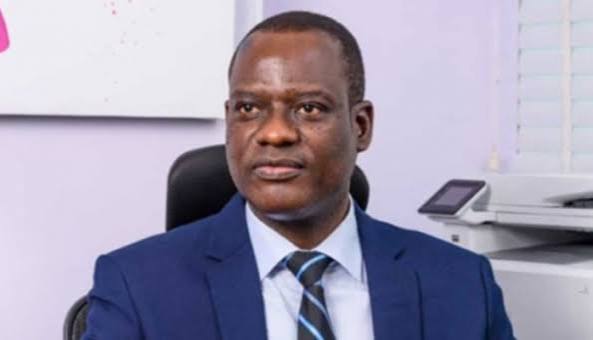
This was contained in a statement issued on Thursday by his Senior Special Assistant on Communications and Press Secretary, Maryann Duke.
The statement said Oyedele pointed to “improved digital systems, including electronic invoicing, as a key driver behind a record of N33tn in government revenue collected between January and October 2026.”
The minister said the performance demonstrated the potential of technology to improve revenue administration, strengthen compliance and increase efficiency across government institutions.
Speaking on the theme, ‘Digital Sovereignty and Ethics: Guarding the Economy for the Next Generation,’ Oyedele warned that Nigeria risked losing substantial economic opportunities if it continued to depend heavily on foreign digital infrastructure.
Citing Nigerian Communications Commission figures, he disclosed that the country recorded more than 157 million active internet subscriptions as of May 2026.
He explained that these connections generated significant volumes of information through financial transactions, healthcare, education and taxation.
However, citing estimates from the Nigeria Data Protection Commission, Oyedele said as much as 90 per cent of the country’s data was hosted abroad.
According to him, the situation has implications for foreign exchange expenditure, employment opportunities, technological skills and Nigeria’s control over information generated by its citizens.
He compared the country’s reliance on foreign digital infrastructure with its historical dependence on imported refined petroleum products, warning against a situation where Nigerian data would be processed abroad and the resulting services sold back to domestic users.
The minister consequently advocated greater investment in local data infrastructure, technical expertise, cybersecurity and predictable regulations to enable Nigerian businesses to capture more value from the digital economy.
He clarified that digital sovereignty should not translate into technological isolation but should strengthen Nigeria’s capacity to participate competitively in international markets.
Addressing graduating students, Oyedele urged young Nigerians to become developers of technological solutions rather than remain primarily consumers of products created elsewhere.
He identified artificial intelligence as both a disruptive force and an opportunity for innovation, advising graduates to acquire relevant digital skills alongside critical thinking, creativity, sound judgement and integrity.
The minister also cautioned against irresponsible online behaviour, explaining that digital footprints increasingly influence employment prospects, commercial relationships and professional credibility.
Oyedele outlined five priorities for graduates, including continuous learning, value creation, integrity, responsible digital citizenship and active participation in national development.
“Your degree is evidence of what you have learned. Your competence will demonstrate what you can do. Your character will reveal who you truly are,” he told the graduating students.
-
 Politics1 day ago
LG CITY BOY COORDINATOR HAILS WIKE’S SUPPORT FOR ONYESOH, TINUBU
-
Politics1 day ago
DIRI INAUGURATES APC CAMPAIGN COUNCIL, SETS MILLION VOTES TARGET FOR TINUBU
-

 Politics1 day ago
NDC Candidate Urges Oborevwori To Probe Asaba Political Violence
-
Rivers4 days ago
NUJ Set To Attend UNIPORT’s 217th Inaugural Lecture
-

 News2 days ago
Army Recovers X Account After Hack Attempt
-

 News4 days ago
NJC Suspends Three Judges, Sanctions Eight Others
-
Politics4 days ago
Atiku Kicks-Off 2027 Campaign, Promises To Tackle Nigeria’s Challenges
-

 Featured4 days ago
APC Presidential Campaign Storms PH, ‘Morrow