
Nation
THE STATES

Adamawa
Farmers in Adamawa State have urged government and
military authorities in the state to lift the total ban on the use of motor-cycle across the state.
Our correspondent reports that military authorities placed a ban on the use of motorcycles in the state two years ago due to security reasons.
A cross section of farmers, who spoke with our correspondent in Yola on Tuesday, said that there had been tremendous improvement in security situation in the state.
They said that the ban should be lifted to enable farmers in the rural areas who depended heavily on motor-cycles for farming to get some relief.
The farmers said that the ban on motor-cycles had seriously affected farming activities in the state and that something needed to be done by relevant authorities to end their suffering.
Abuja
The Inspector-General of Police, Mr Solomon Arase, has
directed Assistant-Inspectors General of Police and the Commissioners of Police in the South-South and South-East zones to disarm members of the Independent People of Biafra (IPOB) operating with firearms immediately.
Arase gave the directive in a statement issued by an acting Commissioner of Police, Olabisi Kolawole,who is the Force Public Relations Officer in Abuja.
The statement indicated that the directive followed the manifestation of the disposition of the armed IPOB activists to undertake premeditated attacks
on police officers engaged in operations aimed at restoring public order in the states.
Kolawole quoted the inspector-general as saying “the targeted attacks on police personnel showed that the activists have crossed the threshold in their misguided attempt to test the common will of the nation.”
Jigawa
Miyetti Allah Cattle Breeders Association of Nigeria
(MACBAN), has urged nomads to desist from grazing their livestock at night in order to avoid farm land encroachment as farmers begin planting.
The MACBAN’s Secretary in the state, Alhaji Adamu Birniwa, gave the advice in an interview with newsmen in Dutse.
Birniwa said that the warning has become necessary in view of the current security challenges facing the country.
The scribe also urged parents to desist from sending their under-aged children out to graze at night.
Kaduna
UNICEF said it would support states in the north to develop
plan against flood and other disasters in the country.
The UNICEF Chief of field office, Kaduna, Mr Utpal Moitra, disclosed this at a workshop on Emergency Preparedness Response Training and Flood Preparedness in Kaduna.
He said the workshop, which is an annual event, was designed to help focal persons from the north to prepare plans against disasters for their respective states.
“Whenever there is a disaster, there must be an immediate action to remedy it.
“Our Preparedness plan is to provide relief. The Fund was able to support SEMA and other agencies. So, emergency is everybody’s business.”
Katsina
The Federal Government has earmarked about N600 million
in 2016 budget to boost water supply and irrigation farming at Zobe Dam in Katsina State.
Kurfi, a member of the House of Representatives from Dutsin-ma/Kurfi Federal Consistency, stated this during an interview with newsmen to mark the All Progressives Congress (APC) one year in office in Katsina.
Kurfi said contract for the supply of water from the Zobe Dam to communities of Dutsin – ma and Kurfi would soon be awarded.
The lawmaker said about N300 million out of the amount had been set aside for irrigation at the dam to boost food production.
Kurfi said that the dam would be used for irrigation farming to generate income for unemployed youths from his constituency.
Lagos
The Lagos State Commissioner for Works and
Infrastructure, Mr Ganiyu Johnson, said the government would soon start rehabilitation of the damaged pedestrian bridge at Fadeyi Bus Stop on Ikorodu Road.
Our correspondent recalls that the state government had, in November 2015, shut the steel bridge in the area due to public outcry over its dilapidated state.
Mini-gates were thereafter used to block the entry and exit points of the foot bridge to prevent its use.
Johnson said that the state government planned to rehabilitate the bridge alongside the ongoing construction of four new ones.
Nasarawa
Vice Chancellor of Nasarawa State University, Prof.
Mohammed Akaro-Mainoma, said that the institution had lost over N627 million to the ongoing strike by its lecturers.
Our correspondent reports that the local branch of Academic Staff Union of Universities (ASUU) has been on strike since March 7, over unpaid allowances, promotion, tax deductions and funding.
The vice chancellor told newsmen in Keffi that the strike had seriously affected financial and academic activities of the institution.
Akaro-Mainoma, however, said that the state government had released money to the institution to pay the striking lecturers.
Niger
The Niger Basin Authority has pledged to implement an
operational plan that would preserve the region and enable it meet its full potentials.
This was the thrust of the presentation by the Executive Secretary of the authority, Mrs Toupta Boguena, at the ongoing extraordinary session of the Council of Ministers in Abuja recently.
She listed drought and population increase, as part of the causes of depletion in the river basin, saying efforts are on to preserve the region to enable it meet its full potential.
According to her, the authority is implementing an Operational Plan from the just concluded 11th Summit of the Heads of States and Governments with active participation of the nine member countries.
Ogun
A former President of the Association of National
Accountants of Nigeria (ANAN), Dr Samuel Nzekwe, has advised the Federal Government to formulate policies that would reduce inflation and boost the economy.
Nzekwe gave the advice in an interview with newsmen in Ota, Ogun, recently.
He said that the Federal Government needed to make policies that would lead to the growth of the economy.
Nzekwe said there were still some areas of the economy that the Federal Government needed to re-double its efforts in order to achieve meaningful result.
He also said Nigerians were waiting for the dividends of democracy through the provision of job opportunities and infrastructural development.
Ondo
Civil servants in Ondo State are to begin an indefinite
strike action this week to protest non payment of over five months salary.
The strike notice is contained in a communiqué issued in Akure by the state Chairmen and Secretaries of the Nigeria Labour Congress (NLC), Joint Negotiating Council (JNC) and Trade Union Congress (TUC).
It said that the decision followed an emergency meeting of the labour unions which reviewed the failure of the state government to pay the workers since January 2016.
“It has become unbearable that workers have not received salaries for the past five months at a stretch.
“That non-payment of salaries to workers have affected the wellbeing of workers/pensioners economically, socially, psychologically and health wise.
“That workers of Ondo State can no longer bear this situation, in view of the untold hardship suffered by these workers,” it added.
Oyo
Wife of the Vice-Chancellor, University of Ibadan, Dr
Eyiwumi Olayinka, has inaugurated an agriculture project titled, ‘Ag Impact’ to create jobs for women and youths.
Olayinka, who is also the President, University of Ibadan Women’s Society, made this known in an interview with newsmen in Ibadan.
She said the project’s vision was to eradicate poverty by empowering women and youths through sustainable agricultural projects.
Olayinka emphasised that women would be introduced to simple cutting edge technologies by working with experts with relevant skills nationally and internationally.
“We hope to explore value addition chain by keying into best practices that have been proven to have the capacity to eradicate crop glut in the production and processing of agricultural crops”.
Plateau
Vice Chancellor, University of Witwatersrand, South Africa,
Prof. Adam Habib, has advised African Governments to properly fund universities to boost their quality and ensure competitiveness.
Habib gave the advice in a key note address at the Annual Conference of Association of Vice-Chancellors of Nigerian Universities (AVCNU), which took place at the University of Jos.
“For the African continent to fully develop, its education sector must first develop.
“We cannot be economically free if we cannot produce our knowledge and tailor it towards our goals.
“To produce our knowledge, government must properly fund universities or make legislation for organisations or individual to pay for university education,” he said.
He described education as the precursor for development, stressing that no meaningful growth could be attained without adequate attention to the sector.



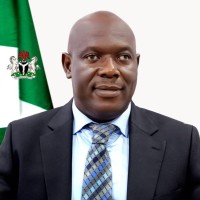
The Hydrocarbon Pollution Remediation Project (HYPREP) has commemorated the 15th anniversary of the release of the United Nations Environment Programme (UNEP) Environmental Assessment Report on Ogoniland, reaffirming its commitment to restoring the environment and improving the livelihoods of affected communities.
In a statement signed by the Project Coordinator, Prof Nenibarini Zabbey, to commemorate the anniversary, HYPREP described the anniversary as a significant milestone in Nigeria’s environmental restoration efforts, noting that the project has made remarkable progress in implementing the recommendations of the landmark UNEP report released on August 4, 2011.
The UNEP report had revealed extensive oil pollution across Ogoniland, severe environmental degradation, and serious public health risks resulting from decades of petroleum operations. It also recommended an initial $1 billion fund to commence the cleanup of the affected communities.
According to HYPREP, the Federal Government formally launched the Ogoni clean-up in 2016, while the Project Coordination Office was established in 2017 to drive the implementation of UNEP’s recommendations.
Zabbey said the current administration has continued to prioritise the project under the Renewed Hope Agenda.
Providing an update on the cleanup, the Project Coordinator disclosed that 30 of the 65 contaminated sites identified by UNEP have been fully remediated, while work is ongoing at several medium- and high-risk locations. It also stated that more than 1.5 million mangrove seedlings have been planted as part of what it described as the world’s largest restoration of oil-degraded mangroves, with over 1,000 hectares of shoreline already rehabilitated.
Zabbey further revealed that 49 Ogoni communities have been connected to potable water schemes through multiple water projects and booster stations aimed at providing safe drinking water across the region.
In the health sector, he said the 100-bed Ogoni Specialist Hospital in Kpite and the 43-bed Cottage Hospital in Buan are nearing completion, adding that several existing health facilities have been upgraded with modern medical equipment, while five ambulances have been donated to improve emergency healthcare services. The Project Coordinator also disclosed that a three-year human health biomonitoring study is being conducted in collaboration with the World Health Organization’s International Agency for Research on Cancer (IARC).
On economic empowerment, Zabbey stated that the Project has created more than 8,000 direct jobs and trained thousands of Ogoni youths and women in various vocational and technical skills, including software development, cybersecurity, aviation, commercial diving, seafaring, mechatronics, and creative arts. The project also reported awarding scholarships to more than 1,000 students, providing grants to small businesses, and supporting persons living with special needs through skills acquisition programmes.
The statement further highlighted ongoing legacy projects, including the Ogoni Power Project and the Centre of Excellence for Environmental Restoration, which it said is about 96 per cent complete. HYPREP also welcomed the recent designation of the Ogoni Wetland as a Ramsar Site of International Importance and pledged to continue promoting biodiversity conservation and sustainable management of the ecosystem.
Marking the anniversary, Zabbey said the progress achieved over the past 15 years demonstrates the collective commitment of government, development partners, stakeholders, and local communities to restoring Ogoniland. He called for renewed collaboration to sustain the cleanup effort, promote environmental sustainability, and support the long-term development of the region. 3
-

 News2 days ago
RSG Targets Nine Million Residents in Mosquito Net Distribution Campaign
-

 Oil & Energy2 days ago
Aiyedatiwa Signs New Electricity Bill
-

 Oil & Energy2 days ago
NLNG Commissions Research And Innovation Centre In RSU
-

 Maritime2 days ago
Marine Minister Commends President Tinubu On NPERA Bill Assent
-

 News2 days ago
KenPoly Holds Eight Convocations, August 29
-

 News2 days ago
RSG Begins Another Phase of Projects Commissioning Today
-

 News2 days ago
RMAFC Completes Revenue Sharing Review, Proposes New Pay
-

 Maritime2 days ago
NAGAFF Petitions IGP Over Alleged Maritime Police Harassment