
Niger Delta
Super Highway Project: CRSG Refutes 10km Acquisition Claims

The Cross River State
Government has dispelled speculations surrounding the 10km delineation on both sides of the proposed Superhighway.
It said it was not out to acquire the land from communities as being speculated, but for administrative purpose and development control.
Commissioner for Lands and Urban Development, Elder John Inyang, disclosed this while responding to issues raised by stakeholders at the panel review meeting on the EIA of the 260km Calabar-Ikom-Katsina-Ala Superhighway project, held at Channel View Hotel, Calabar, recently.
“We are not acquiring 10kms to either side of the proposed superhighway. The purpose is not also aimed at sending the settlers out of their settlement; rather it is for administrative purpose and development control.”
Inyang explained that government could not afford to pay compensations accruing from the rumoured 10kms space, hence the need to shun unconstructive criticism if the state must be rapidly transformed.
In her speech, the Commissioner for Information, Mrs. Rosemary Archibong, said the proposed Superhighway would boost the internally generated revenue of the state, create alternative route as well as complement the deep seaport as an evacuation corridor.
Earlier, Minister for Environment, Hajia Amina Muhammed, while suing for balance between development and conservation said, “the proposed superhighway represents the hemoglobin that carries blood to the body as it will not only give lives to all sectors of the economy, but will increase the socioeconomic welfare of the people while ensuring environmental sustainability.”
Represented by a Director in the ministry, Mr. John Alonge, the minister stated that, “in promoting environmental acceptability through the EIA, this panel from diverse specialisation has been selected and mandated to evaluate the reports and comments received from stakeholders and advised the ministry appropriately.”
She pointed out that the task of dealing with environmental issues and economic development was not that of government alone, but required the participation of all, especially the host communities where the project would be sited in order to create better standard of living for the citizenry.
Panel Chairman, Prof. Abubakar Sambo, assured that his team would adhere strictly to the terms of reference adding, “the exercise will be open and transparent so that at the end of the day, our position will be seen as being conducted in a democratic manner.”
Friday Nwagbara, Calabar


Niger Delta
Onuchuku Urges More Funding For Vocational, Technical Education …Calls For Collective Responsibility Among Stakeholders

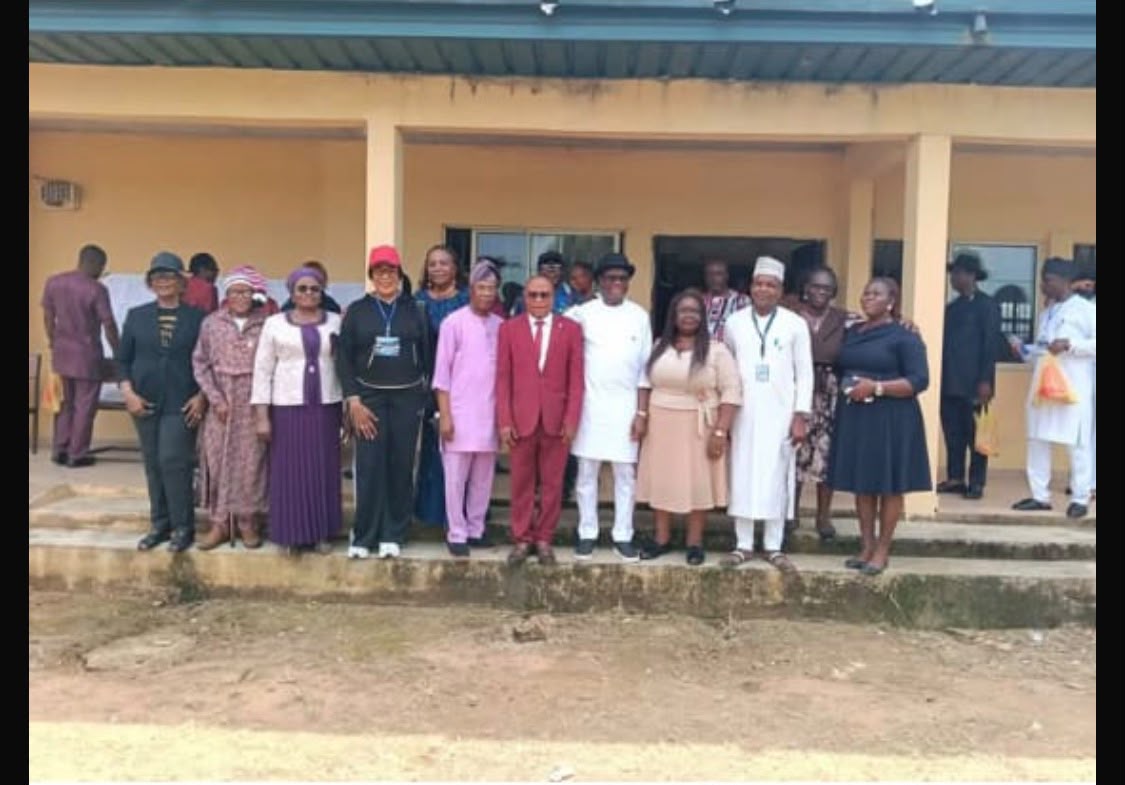
The Acting Vice Chancellor of Ignatius Ajuru University of Education, Prof Okechuku Onuchuku, has urged States and Local Governments to provide an enabling policy to adequately fund vocational and technical education.
He also called on educational institutions to maintain high academic and professional standards, while industries should contribute skills development.
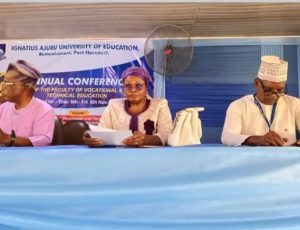
Onuchuku, who stated this last Thursday at the 10th Annual Conference of the Faculty of Vocational and Technical Education, IAUE, also called for collective responsibility among stakeholders.
The Acting VC, who was represented by the Dean of Vocational and Technical Education, Ndele Campus of the university, Prof. Isaac Ogundu, called for collective responsibility among key stakeholders in the industry. Expatiating on the call by the Acting VC in his presentation, Prof. Ogundu identified quality human resources and necessary opportunities for developing their productive capacities as factors that would determine a better future for Nigeria.
He said to attain quality assurance in programmes offered by tertiary institutions, the phenomenon need to be viewed as a strategic investment in human capital and national development.
Making reference to the theme of the conference, “Quality Assurance in Vocational and Technical Education: A Foundation for Sustainable Workforce in Nigeria”, Ogundu, who is the Dean, Faculty of Vocational and Technical Education, IAUE, said to attain quality assurance, there has to be collective commitment of all stakeholders.
He said: “building a sustainable workforce is a collective responsibility that requires the commitment of government, educational institutions, employers, professional bodies, teachers, students, and other wider society.
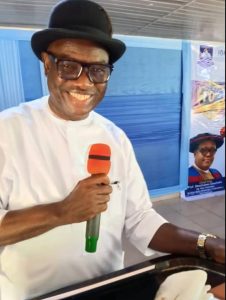
“Government must provide an enabling policy environment and adequate funding for vocational and technical education. Educational institutions must maintain high academic and professional standards. Industry must contribute to skills development and provide opportunities for practical workplace learning. “Teachers and instructors must demonstrate professional competence and commitment to continuous improvement. Students must take responsibility for their learning and embrace discipline, creativity, amd lifelong learning.”
He explained that quality assurance has become “an indispensable component of contemporary education” that provides the framework through which educational institutions establish standards.
According to him, the 10th edition of he conference “is particularly remarkable because it provides an opportunity to reflect on our achievements, assess the challenges confronting Vocational and technical education in Nigeria, and propose practical strategies for improving the quality, relevance, amd effectiveness of skills development.

“It also demonstrates the faculty’s determination to sustain a tradition of intellectual engagement that connects educational research with the practical needs of society, industry, and national development.”
Presenting the Lead Paper, Prof. Hilary Wordu of the Faculty of Education, Rivers State University, said Nigeria’s future will be determined more by what Nigerian do ith the knowledge they have.
“The future of Nigeria’s workforce will not be determined simply by how many people and do with what they have learned.”receive education, but increasingly by the quality of what they are able to know, understand, create and do with what they have learned.”
Sogbeba Dokubo
The Niger Delta Development Commission (NDDC) has dismissed reports on social media that a bridge project under construction in Otuogori community, Ogbia Local Government Area of Bayelsa State, had collapsed
The Commission said an incident occurred at the construction site of the 600-metre Otuogori-Otuegwe Bridge, but insisted that the bridge itself had not been constructed and therefore could not have collapsed.
Addressing journalists during an inspection of the project, the NDDC Director, Bayelsa State Office, Engr. Godknows Alamieyeseigha, described the reports as misleading.
“We don’t have a bridge yet because we are still at the stage of crossing the beams. So, no bridge has collapsed.
“However, there was an incident at the construction site, and we are assessing the circumstances surrounding what happened”, he said.
Alamieyeseigha dismissed suggestions that the incident resulted from structural failure, describing it as an accident during construction.
He expressed confidence that the construction company would address issues identified during the assessment and complete the project.
He also said no bridge had collapsed in Bayelsa State or any of the nine Niger Delta states.
The NDDC Director said the Commission’s current board and management, led by Chairman Chiedu Ebie, and Managing Director, Dr. Samuel Ogbuku, had prioritised quality assurance in project execution.
He added that NDDC engineers and independent consultants regularly inspected project sites across the region to ensure compliance with approved engineering designs and standards.
Also speaking, the Managing Director of the construction firm, Mr. Christian Emiezor, assured that the Otuogori-Otuegwe Bridge was being executed in line with high construction standards.
He explained that the project was still at the preparatory stage, with work focused on positioning the beams before the construction of the main bridge structure.
According to him, the incident occurred during the launching of the beams, which were being positioned on their bearings.
“We are constructing a 600-metre bridge, but as you can see, we have not constructed a bridge yet. What you are seeing is just preparations for the bridge”, Emiezor said.
He described the incident as a minor accident, explaining that a beam resting on a bearing but not yet secured could slide during the positioning process.
“What was going on was the launching of the beams, and in the process, there was a slight accident. Because the beam was resting on a bearing and had not been secured, it could slide. That was what happened”, he said.
Emiezor added that safety measures at the site prevented casualties. “The good thing is that, with the safety measures put in place, no life was lost”, he said.
Enoch Epelle
The second edition of the Niger Delta Blue Economy Investment Summit is expected to attract more than $600 million in investment capital into Nigeria’s blue economy sector.
The three-day summit, scheduled for March 18 to 20, 2027, will be held at Movela Hotels, Warri, Delta State.
Co-convener of the summit, Dr. Uche Igwe, disclosed in an interview with journalists, saying the annual event would bring together key decision-makers and operators to transform the Niger Delta’s blue economy potential into viable investment opportunities.
He said participants would be drawn from the government, the organised private sector, academia, civil society, traditional institutions and community groups across the Niger Delta and beyond.
Igwe said the maiden edition, held in February 2026, had recorded progress through partnerships and the identification of feasible projects requiring funding and further development.
“Since our maiden edition last February, a lot has been achieved. We now have partners who understand our region and who have identified several feasible projects.
“It is now time to go to the next level of ensuring that such projects are made bankable and the necessary funds required are mobilised to ensure that projects leave the drawing board and hit the ground running”, he said.
He commended the Delta State Government led by the State Governor, Sheriff Oborevwori, for providing what he described as an enabling environment for investment in the sector.
According to him, the second summit will focus on developing investment pipelines and exploring innovative financing mechanisms, including blue bonds, to attract capital into the sector.
“With the feedback we have got so far, more than $600 million of investment capital will enter the blue economy sector through our modest efforts”, Igwe added.
Also speaking, Senior Consultant at Gadfly Consulting Limited, Mr. Philemon Oghenedoro Adjekuko, called for stronger collaboration among relevant government agencies and private sector operators to support Nigeria’s ambition of building a $1 trillion economy by 2030.
He said the blue economy could contribute significantly to the country’s economic expansion if stakeholders moved beyond discussions to coordinate action and investment.
Adjekuko, who said he had spent the past three months engaging stakeholders as part of a study on blue finance, expressed optimism about the sector’s capacity to drive economic diversification and strengthen the non-oil economy.
“As someone who has been speaking to stakeholders in the last three months conducting a study ” he said.
Enoch Epelle
-
News2 days ago
RSG Reaffirms Commitment To STEM Education, Technological Advancement
-
Business2 days ago
‘NUJ, NPA’s Partnership Would Boost Port Producrivity, Economic Growth’
-
 News2 days ago
IGP Warns Police Officers Against Partisanship …Directs Regular Engagement With Journalists
-
Business2 days ago
Fire Threat Interrupts Asaba Air Peace Flight
-
 News2 days ago
Customs To Deploy AI, Scanners Against Snuggling
-
Business2 days ago
Fish Production Deficit, A Major Investment Opportunity – Minister
-
Business2 days ago
NCDMB, NLNG Unveil $9m For Professorial Endowment Research Chairs In Six Varsities
-

 Politics2 days ago
2027: INEC Begins Deployment Of Non-Sensitive Materials