
Nation
THE STATES

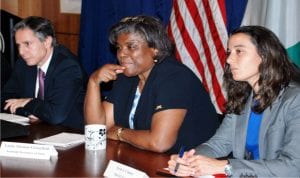
L-R: United States Deputy Secretary of State, Antony Blinken, US Assistant Secretary of State, Linda Thomas-Greenfield and Special Assistant to the Deputy Secretary, Erin Clancy, during the Media Round-Table on the 2nd Regional Security Summit in Abuja on Friday.
Benue
Governor Samuel Ortom of Benue State has ordered the
management of Benue State University to stop the implementation of the new conditional charges introduced for students of the university.Ortom made the information known in Makurdi in an interview with newsmen.
He said the decision to order the stoppage of the conditional charges had become imperative following complaints by students and parents.Our correspondent reports that the new school administration under the leadership of Prof. Msugh Kembe, had introduced different charges across faculties, ranging from 45,000 to N55,000 per student.
The conditional charges included development levy, accreditation, utility, practical, consumables and certificate.
Bauchi
Bauchi State Police Command said it had arrested four
suspects for being in possession of stolen treated mosquitoes nets.
The Spokesman for the command, DSP Haruna Mohammed, made this known in a statement in Bauchi.
Mohammed named one Alhaji Modu, 32, of Lawan Bukar Ward and Ibrahim Ali, 30, of Shehuri North, all in Maiduguri town in Borno State as principal suspects arrested.
He said the suspects were arrested by a combined detachment of men from Bauchi State Police command and Military men from the 33 Artillery Brigade, Bauchi.
Mohammed said that the suspects were arrested along Azare to Kano road in Bauchi State with 42 bags of treated mosquito nets donated by the United States Agency for International Development.
Ekiti
A 38-year-old hunter, Emmanuel Lamidi, has been re
manded in Prison Custody by an Ado-Ekiti Magistrates’ Court for allegedly shooting his friend in the farm.
The Magistrate, Mrs Doyin Akosile ordered that the accused be remanded in custody pending Director of Public Prosecution’s (DPP) legal advice. She adjourned the case till June 16, for further hearing. The Prosecutor, Sgt. Ikebuilo Monica, had told the court that the accused committed the offence at about 23:00 hours on May 8, at Awelewa farm, Ilawe-Ekiti. She alleged that the accused, on the said day, time and place, unlawfully killed his friend, Benjamin Patrick by shooting him with a dane gun on the chest when they went hunting together. According to her, the offence contravened Section 325 of the Criminal Code, Cap C 16, Laws of Ekiti State, 2012.
FCT
Two applicants, Ikechukwu Emeoka, 30 and Enejo James,
20, have appeared in a Kado Grade 1 Area Court for allegedly mobbing a Divisional Police Officer (DPO), Emeoka, and James, pleaded not guilty to a four-count charge of belonging to gang of thieves, resisting arrest, obstruction of police officer on duty, assault and causing grievous hurt.
The Prosecutor, Florence Avihioboh, said the defendants were caught during a police raid at criminal hideout in Berger, Wuse Zone 6 by a team of detectives lead by the Utako DPO on May 7.
Kwara
An agriculturalist, Mr Ogirinye Innocent, has called for
increase in the volume of inter trade relationship among African countries to boost development and unlock the continent’s agricultural potential.
Innocent made the call during a workshop on agricultural entrepreneurship organised by the Association of Deans of Agriculture in Nigerian Universities, (ADAN) in Omu-Aran, Kwara. Our correspondent reports that the workshop was in conjunction with the College of Agricultural Sciences, Landmark University, Omu-Aran. He spoke on the topic: Agro-Preneurship: A Veritable Tool for Food Security and Economic Prosperity. Innocent, who is also the Coordinator of Youth Initiative for Sustainable Agriculture (YISA), an NGO, said that increased trade relationship would avail farmers improved access to global market advantages.
Nasarawa
Governor Tanko Al-Makura of Nasarawa State says he
will pursue a rapid rural and urban development pact for the people of the state with dynamism.
Al-Makura said this when he inspected the ongoing construction of Akwanga-Angwan-Zaria bridge in Akwanga local government area of the state.
“I will fulfill my covenant with the people of the state by embarking on projects that will be of benefit to the people in both rural and urban communities,” the governor said.
He promised that his administration would embark on provision of massive infrastructure to both rural and urban communities in the state.
Niger
The Vice Chancellor, Federal University of Technology
(FUT), Prof Musbau Akanji, Minna said the institution would establish solar energy to tackle inadequate power supply within the university community. Akanji stated this in Minna at a news conference where he outlined his achievements since assumption of office in December 2012. “As a university of technology we have problem of power supply.
“As I am speaking with you now, we pay average of N9 million monthly as electricity bill to Abuja Electricity Distribution Company (AEDC). “We purchase diesel of N16 million every month to get electricity for average of 12 hours,’’ he said. Akanji pointed out that universities all over the world must have power supply for 24 hours to be able to make progress.
Ondo
The Department of Petroleum Resources( DPR) in Ondo
State, is to sanction any filling station found diverting and hoarding petrol in the state.
The DPR Operations Controller in Ondo State, Mr Adewale Oseni, stated this while speaking with newsmen in Akure.
Oseni said that DPR had put machinery in place to ensure that any product coming to the state was not diverted or hoarded by retail outlets.
He decried the high level of diversion and hoarding of petroleum products by some retail outlets in the state, saying this had caused untold hardship on residents.
Ogun
Two men, Ayomide Amoo, 45, and Promise Isiramel, 23,
have appeared before an Ota Magistrates’ Court in Ogun State charged with smoking weed suspected to be Indian hemp. The accused, whose addresses were not provided, are facing charges bordering on causing the breach of peace.
The Prosecutor, Sgt. Chudu Gbesi, told the court that the accused committed the offences on April 16 and April 18 at about 10.30 a.m. at Olurin Street around Power Line, Iyana-Iyesi, Ota.
Gbesi said that the accused conducted themselves in a manner likely to cause the breach of peace by smoking weeds suspected to be India hemp in public.
Plateau
The Plateau State Government said it generated
N2.06 billion as revenue in the first quarter of the year.
The Acting Chairman, Plateau State Internal Revenue Service (PSIRS), Mr Dashe Arlat, disclosed this in an interview with newsmen in Jos.
Arlat described the revenue collected within the period as “very encouraging’’ compared with the N1.84 billion realised in the corresponding period in 2015.
“From the amount so far realised this first quarter of the year, it is glaring that we have improved with our revenue generation having surpassed that of last year with N219, 506, 232.
Sokoto
The traditional leader of Igbo community in Sokoto
state, Eze Ozo Nweke, has advocated cross-cultural marriages among members of the NYSC in the country.
Nweke spoke on Tuesday at the NYSC permanent orientation camp, Wamakko, headquarters of Wamakko local government area in Sokoto State.
,Nweke spoke during the cultural fiesta and a skills acquisition exhibition by the 1,604 corps members deployed to the state, currently undergoing a three-week orientation.
According to the monarch, more of such marriages should be encouraged among the corps members nationwide.
“Such marriages also boost peace, unity and sustainable cohesion of Nigeria,” he added.
Taraba
Wife of Taraba State Governor, Mrs Anna Ishaku,
has launched a free medical treatment in Jalingo tagged: “Medical Rescue Outreach” which targets at least 80,000 patients across the state.
Ishaku said that her “Hope Afresh Foundation” was targeting 5000 people across each of the 16 local government areas of the state.
She explained that she was motivated by persistent calls to her office for assistance in settling medical bills.
Mrs Ishaku urged the state Commissioner for Health, Dr Innocent Vakkai, to look into the high bills charged by hospitals in the state to enable the less privileged people to access medical treatment.



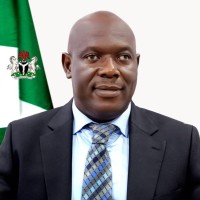
The Hydrocarbon Pollution Remediation Project (HYPREP) has commemorated the 15th anniversary of the release of the United Nations Environment Programme (UNEP) Environmental Assessment Report on Ogoniland, reaffirming its commitment to restoring the environment and improving the livelihoods of affected communities.
In a statement signed by the Project Coordinator, Prof Nenibarini Zabbey, to commemorate the anniversary, HYPREP described the anniversary as a significant milestone in Nigeria’s environmental restoration efforts, noting that the project has made remarkable progress in implementing the recommendations of the landmark UNEP report released on August 4, 2011.
The UNEP report had revealed extensive oil pollution across Ogoniland, severe environmental degradation, and serious public health risks resulting from decades of petroleum operations. It also recommended an initial $1 billion fund to commence the cleanup of the affected communities.
According to HYPREP, the Federal Government formally launched the Ogoni clean-up in 2016, while the Project Coordination Office was established in 2017 to drive the implementation of UNEP’s recommendations.
Zabbey said the current administration has continued to prioritise the project under the Renewed Hope Agenda.
Providing an update on the cleanup, the Project Coordinator disclosed that 30 of the 65 contaminated sites identified by UNEP have been fully remediated, while work is ongoing at several medium- and high-risk locations. It also stated that more than 1.5 million mangrove seedlings have been planted as part of what it described as the world’s largest restoration of oil-degraded mangroves, with over 1,000 hectares of shoreline already rehabilitated.
Zabbey further revealed that 49 Ogoni communities have been connected to potable water schemes through multiple water projects and booster stations aimed at providing safe drinking water across the region.
In the health sector, he said the 100-bed Ogoni Specialist Hospital in Kpite and the 43-bed Cottage Hospital in Buan are nearing completion, adding that several existing health facilities have been upgraded with modern medical equipment, while five ambulances have been donated to improve emergency healthcare services. The Project Coordinator also disclosed that a three-year human health biomonitoring study is being conducted in collaboration with the World Health Organization’s International Agency for Research on Cancer (IARC).
On economic empowerment, Zabbey stated that the Project has created more than 8,000 direct jobs and trained thousands of Ogoni youths and women in various vocational and technical skills, including software development, cybersecurity, aviation, commercial diving, seafaring, mechatronics, and creative arts. The project also reported awarding scholarships to more than 1,000 students, providing grants to small businesses, and supporting persons living with special needs through skills acquisition programmes.
The statement further highlighted ongoing legacy projects, including the Ogoni Power Project and the Centre of Excellence for Environmental Restoration, which it said is about 96 per cent complete. HYPREP also welcomed the recent designation of the Ogoni Wetland as a Ramsar Site of International Importance and pledged to continue promoting biodiversity conservation and sustainable management of the ecosystem.
Marking the anniversary, Zabbey said the progress achieved over the past 15 years demonstrates the collective commitment of government, development partners, stakeholders, and local communities to restoring Ogoniland. He called for renewed collaboration to sustain the cleanup effort, promote environmental sustainability, and support the long-term development of the region. 3
-

 News2 days ago
RSG Targets Nine Million Residents in Mosquito Net Distribution Campaign
-

 Oil & Energy2 days ago
Aiyedatiwa Signs New Electricity Bill
-

 Maritime2 days ago
Marine Minister Commends President Tinubu On NPERA Bill Assent
-

 Oil & Energy2 days ago
NLNG Commissions Research And Innovation Centre In RSU
-

 News2 days ago
KenPoly Holds Eight Convocations, August 29
-

 News2 days ago
RSG Begins Another Phase of Projects Commissioning Today
-

 News2 days ago
RMAFC Completes Revenue Sharing Review, Proposes New Pay
-

 Maritime2 days ago
NAGAFF Petitions IGP Over Alleged Maritime Police Harassment