
Editorial
Democracy: Role Of Civil Society Groups

On September 15, Nigeria joined the rest of the world to mark the International Day of Democracy. The day, like others before it was set aside by the United Nations to promote and advance the cause of democracy everywhere in the world.
Worthy of note is the theme of this year’s International Day of Democracy, “Space For Civil Society.” It is a reminder to governments across the world that stable and successful democracies must of necessity draw from the activities of vibrant civil society groups, whose work with government must promote accountability.
Succinctly put by the UN Secretary-General, Ban Ki-Moon, civil society is the oxygen of democracy. It acts as catalyst for social progress and economic growth and helps represent the diverse interests of the population, most especially, its most vulnerable groups.
In Nigeria, the history of democratic rule will be incomplete without reference to the struggle and critical roles played by the civil society groups in enthroning and nurturing democratic ideals.
The Tide commends the civil society groups for the roles they played in strengthening the Electoral Law, as well as actualising the Freedom of Information (FOI) Law in Nigeria. We also note their passion for the sanctity of human lives as seen in the “Bring Back Our Girls,” campaign.
While we commend civil society organisations for their effort at deepening democracy in Nigeria, we cannot fail to note with, great concern, that the space for civil society groups is gradually shrinking. It is becoming too obvious that some civil society organisations and activists cannot operate effectively due to poor funding or government’s interference or both.
It is in view of this that The Tide calls on the Federal Government to provide the enabling environment for the smooth operation of civil society groups. Government must avoid actions capable of inhibiting the activities of these groups if the people must draw the benefits of democracy.
As the most preferred system of government all over the world, democracy requires certain essential ingredients to survive. These include freedom of speech, association and information, respect for law and human rights, provision of basic social amenities and free, fair and credible elections. All these can be achieved when there is vibrant, credible and non-partisan civil society activities.
But we observe that in recent times some civil society groups have lost focus, credibility and relevance due to their involvement in partisan politics. This has diminished their neutrality and dependability in many quarters.
More worrisome is the tendency of some civil society organisations to advance the interest of their foreign sponsors at the detriment of Nigeria’s national interest. This is unpatriotic and unacceptable. Some have also allowed themselves to do dirty jobs for governments.
We expect that as the world prepares to implement a new development agenda agreed to by the world’s governments recently, the Federal Government and the civil society groups will need to key into the agenda by working together to strengthen democratic governance in Nigeria.



The House of Representatives’ decision to concur with the Senate bill seeking to establish a Federal Medical Centre in Bonny Local Government Area of Rivers State deserves a warm welcome. Titled, “The Federal Medical Centre, Bonny, Rivers State and for Related Matters (SB 659)”, the bill has cleared an important legislative hurdle. In a country where good news from the National Assembly is rarer than it ought to be, this is a development worth celebrating.
Sponsored by Senator Ipalibo Harry Banigo, who represents Rivers West Senatorial District, the bill seeks to amend the relevant provisions of the Federal Medical Centres Act to provide a legal framework for the new institution. It is a modest piece of legislation with potentially far-reaching consequences. A hospital that exists only in politicians’ minds cannot treat a single patient; one backed by law can begin to take shape.
It must be stated, however, that the House’s concurrence is not the end of the matter. The bill must still pass through the remaining legislative and constitutional processes, including presentation to the President for assent, before becoming law. Nigerians have seen too many promising bills die quietly on the Executive’s desk or languish in procedural limbo. Vigilance must, therefore, continue until the President signs it into law.
The case for the FMC is compelling. Bonny is an island community, and its geography makes access to healthcare particularly challenging. Many patients requiring emergency or specialist attention must travel outside the area for treatment. Such journeys cost money and, in emergencies, can cost lives. A tertiary healthcare facility on the island would bring specialist care closer to those who need it and reduce delays that often turn treatable conditions into tragedies.
The benefits would extend beyond patient care. A federal medical centre would ease the pressure on existing hospitals in Rivers State, many of which are overstretched by the demands of a growing population. It would also reduce waiting times and ease the financial burden on families who spend heavily on transport and accommodation, while losing income, to seek treatment far from home.
There is also the question of training. A federal medical centre is not merely a place where the sick are treated; it is also where doctors, nurses, pharmacists, laboratory scientists and other health professionals are trained and mentored. By providing opportunities for professional development and capacity-building, the institution could help stem the exodus of skilled health workers and strengthen healthcare delivery across Rivers State.
The economic argument is equally compelling. A hospital of this stature would create jobs directly in clinical, administrative and support services, and indirectly through traders, transporters, caterers, landlords and contractors. Its construction would engage local labour and suppliers, while its eventual operation could stimulate small businesses, attract investment in housing and services, and contribute to the development of Bonny and neighbouring communities.
Senator Banigo deserves genuine commendation for this initiative. It is no secret that some federal lawmakers from Rivers State have served out their terms in Abuja and returned home with little or nothing to show for their representation. Constituents are often left with speeches and promises, but no roads, schools or clinics to attest to their representatives’ achievements. By sponsoring a bill capable of leaving a lasting legacy, Senator Banigo has set a standard others would do well to emulate.
Commendation, however, must be matched by cooperation. We urge all federal lawmakers from Rivers State and across the Niger Delta to support the bill wholeheartedly. The region has borne the environmental and social costs of oil and gas production for decades, yet its healthcare needs remain acute. Party and personal differences should matter little when the health of the people is at stake. This is not Senator Banigo’s project alone; it is a regional asset in the making.
The lawmakers’ responsibility must also extend beyond securing the bill’s passage. Enacting a law is one thing; providing the necessary funding is another. Nigeria is littered with abandoned and unfinished federal projects, established on paper but starved of funding. The region’s representatives must ensure that the centre receives adequate budgetary allocations, its construction is monitored, and it is properly equipped and staffed rather than left as an empty shell.
The proposed facility comes at a time when access to affordable and specialised healthcare remains a major concern for communities across the country. Bonny’s centre could become a model of purposeful legislative representation. The President should assent to the bill without delay, while Niger Delta lawmakers must sustain their commitment until the first patient is admitted. When that day comes, Bonny will have a much-needed hospital, and Rivers State will have proof that legislative representation can leave a lasting and worthwhile legacy.
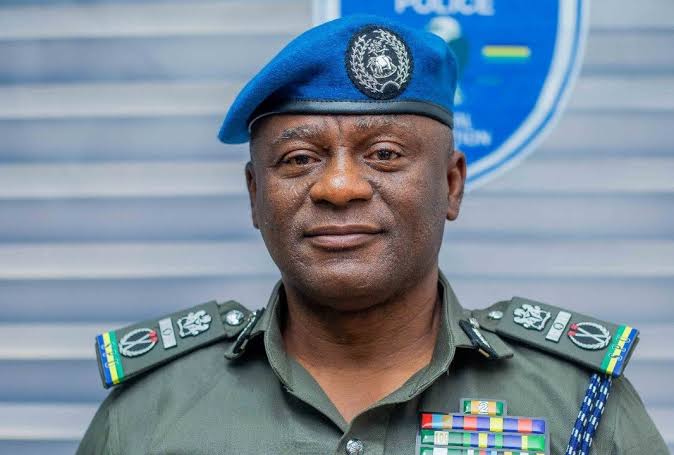
As Nigeria moves toward the 2027 general elections and campaign activities intensify, violence against opposition politicians has become an issue that can no longer be overlooked. What should be a season of competing ideas is increasingly turning into a test of intimidation, and early signs suggest that those challenging the ruling establishment are the primary targets.
It was, therefore, welcome news when the Inspector-General of Police, Olatunji Disu, warned politicians, political thugs and others against destroying, defacing or removing campaign posters, banners and billboards. In a statement issued in Abuja by the Force Public Relations Officer, CSP Ani Iniedu, the police condemned such acts as political intolerance, directed Commissioners of Police in all 36 States and the Federal Capital Territory to take preventive measures, and warned that sponsors would also face prosecution. The police rightly described such vandalism as a criminal act that undermines parties’ and candidates’ freedom to canvass for votes.
But billboards are replaceable; human lives are not. While applauding the IGP’s stance, we urge him to extend the same stern warning and enforcement zeal to thugs who assault opposition members during campaigns. A police force that punishes the tearing of a poster but ignores the breaking of a skull will have its priorities questioned. Allowing such attacks to continue could erode the foundations of our democracy.
Consider the African Democratic Congress (ADC) presidential campaign flag-off in Sokoto State on November 4, 2026. The party alleged that the State Government denied it access to public facilities, sealed its campaign venue and pressured hotels to reject its delegates, forcing it to hold the rally at its secretariat. The Sokoto authorities, however, denied instructing hotels to turn guests away. More seriously, two suspected ADC supporters were reportedly shot along the Sokoto–Wurno Road while travelling to the venue, allegedly by operatives of the Sokoto State Community Guards.
Whatever the truth of these competing accounts, a shooting demands more than press statements. It requires a transparent, independent investigation and prosecution where warranted. Sokoto was not an isolated incident. The following day in Birnin Kebbi, the ADC presidential campaign convoy was reportedly attacked by armed gangs. Amnesty International said vehicles were vandalised, people assaulted with cutlasses and roads blocked, while the party’s Kebbi governorship candidate, Abubakar Malami, alleged that media equipment was destroyed and tear gas deployed. His convoy had suffered a similar attack in the city in September 2025.
The Nigeria Democratic Congress (NDC) has suffered similar attacks. On November 4, hoodlums stoned the motorcade of its presidential candidate, Peter Obi, and running mate, Rabiu Musa Kwankwaso, at Watt Market roundabout in Calabar, Cross River State. Police reported arresting a 27-year-old suspect, Victor Edet, although it remains unclear whether he has been arraigned. The State Government has denied suggestions that ruling-party supporters were responsible. Worse, in Asaba, Delta State, one person was killed and five injured when suspected thugs attacked an NDC rally. A death at a political rally is no longer a warning; it is a damning indictment of the prevailing political climate.
Even critics of the establishment who are not frontrunners have not been spared. Omoyele Sowore, presidential candidate of the African Action Congress (AAC), was attacked by suspected thugs at a restaurant in Ado-Ekiti on October 30. He alleged that the assailants were linked to the Ekiti State Government House and that the Department of State Services leaked his location. Both the State Government and the security service denied involvement, while the police reported a minor injury and a discreet investigation. These conflicting accounts make an independent, publicly reported inquiry indispensable.
What deepens the concern is the Federal Government’s apparent silence. We are unaware of any specific, forceful condemnation of these assaults, even as All Progressives Congress (APC) rallies appear to proceed nationwide without incident. Such silence can easily be misconstrued as complicity, regardless of intent.
According to the Centre for Democracy and Development, 109 election-related deaths were recorded in the build-up to the 2023 polls. The Kimpact Development Initiative separately documented 238 incidents and 24 deaths during the general elections. Beyond Nigeria, Kenya’s 2007–08 post-election violence claimed more than 1,000 lives, according to the Waki Commission. Ghana, by contrast, enacted the Vigilantism and Related Offences Act in 2019 to curb party vigilante groups, a model worth studying.
The remedies are neither exotic nor expensive. The IGP should extend his directive to cover assaults on individuals and disruptions of rallies, while establishing a dedicated investigative unit to probe the Sokoto shooting and the attacks in Kebbi, Calabar, Asaba and Ado-Ekiti. It should publish the status of each case within a fixed period. Suspects must be prosecuted and their sponsors, regardless of party or position, brought to justice. State-backed security outfits, including the Community Guards, should be audited and barred from partisan duties.
The Federal Government must speak and act unequivocally. President Tinubu should specifically condemn attacks on opposition candidates and direct all security agencies to guarantee equal protection for every party. Governors must ensure equal access to public facilities for registered parties. The Independent National Electoral Commission (INEC), which has warned of fines and imprisonment under the Electoral Act 2026 for inflammatory campaign conduct, should enforce the Code of Conduct for Political Parties. Working with the Inter-Agency Consultative Committee on Election Security, it should publish a joint security plan covering campaigns, polling, and collation. Parties must discipline their supporters, courts expedite electoral-violence trials, and civil society and the media maintain a public record of incidents and their outcomes.
The credibility of the 2027 elections is at stake. An election is credible only when every contender can campaign, travel, assemble and speak freely, without fear. Without a free opposition, there can be no meaningful democracy. Nigeria is not a one-party State, and law enforcement agencies must demonstrate their neutrality through action, not communiqués. The campaign atmosphere is too tense to be left to chance. Billboards deserve protection, certainly, but citizens deserve it far more.

-
Business3 days ago
BSG Partiner American Coy To Invest $100m In Gas Processing
-

 Oil & Energy3 days ago
FG To Double Oil, Gas Reserves, Moves To Intensified fresh Exploration
-
Business3 days ago
Seme Customs Intercepts Live Pacific Ridley Sea Turtle
-
Sports3 days ago
Fernandes Turns Down Man Utd Offer
-
Business3 days ago
159m small businesses registered on database in three years – SMEDAN boss
-
Sports3 days ago
Rivers To Host National Table Tennis Championship
-
Maritime3 days ago
Nimasa,China MSA Sign Bilateral Maritime Agreement
-

 Sports3 days ago
Kenyans Win PH International Marathon, Cart Home $10,000