
Business
Passengers Decry State Of Bonny Jetty In PH

It is no longer news that
Bonny waterfront jetty in Port Harcourt has been in a very deplorable condition for some years now.
And the truth is that passengers, mostly workers and traders, could no longer hide their feelings as they called on the government to come to their aid.
They said their entry point into the speed boats which used to have a Jetty had since collapsed and the area is now a death trap and a source of great concern to the entire people of Grand Bonny Kingdom and other riverine communities within the area.
A petty trader from Bonny, Mr Alali Don Pedro who barred her feeling to our correspondent at the Jetty yesterday said it is a pity that the people of Bonny Kingdom have been neglected by governments as they failed to provide a Jetty for the sea travelling public.
Mr Don Pedro was of the view that as tax paying and law abiding citizens, they deserved a better Jetty in Port Harcourt from the Rivers State Government, but they are subjected to situations that caused injury as passengers fell and sustain serious injury especially when the tide is low.
“I am appealing to the government to please come to our aid as we are also part and parcel of the state, she lamented.
Another passenger who said he is a regular traveler to Bonny , Lawrence Soprieye Hart, also lamented that Bonny is being neglected and an eyesore that there is no portable jetty for the people of Bonny to use while travelling by boat to the ancient city from Port Harcourt.
“It is no longer a story as it is unbelievable that every blessed day, well dressed citizens of Bonny, fall, stain and injure themselves due to the deplorable condition of the Jetty, and it is a pitty that the Transport commissioner in the state, Hon George Tolofari, is from Bonny and made promises that are yet to be fulfilled”, he hinted.
Hart, reiterated that the major means to travelling to Bonny from Port Harcourt is an eyesore to the common people as prominent persons used government and NLNG Jetties in Port Harcourt adding that the speed boat unions are trying to ensure safety and comfort of their passengers single handedly, and appealed for prompt attention.
In his comment, the Safety Master of Bonny Waterfront of Maritime Workers Union of Nigeria (MWUN), Port Harcourt District, Comrade Kingsley Donatus said the dilapidated Jetty was donated by TSKJ, a company in Bonny in 2002, and it had now collapsed thereby making things difficult for sea route travellers to Bonny. Donatus consoled himself that one of the govenorship aspirants in the state had promised to make the Jetty project a priority but that the union had bought some sand to cement the Jetty to enable passengers board speed boats without much stress.
Collins Barasimeye



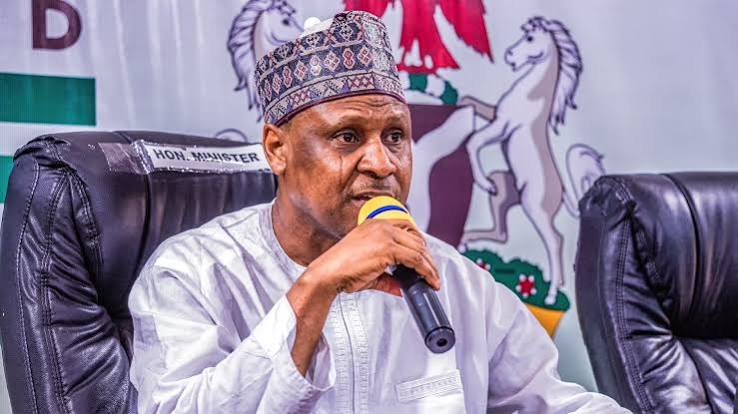
The Minister of State for Industry, Trade and Investment, John Enoh said this at the 8th annual induction and conference of the Chartered Institute of Project Managers of Nigeria (CIPMN).
He explained that abandoned projects continue to lock up public funds that could have been used for infrastructure development, industrial growth, job creation and essential social services.
Represented by the ministry’s Permanent Secretary, Chris Osa Isokpunwu, he said the impact goes beyond financial losses, as incomplete projects affect communities and limit access to important public services
He cited examples of that remain unopened, schools that cannot accommodate students, roads that fail to connect communities and electricity projects that have not delivered their intended benefits.
The Registrar-General and Chief Executive Officer of CIPMN, Henry Ifeanyi Mbadiwe, also identified poor project management as a major challenge affecting development in Nigeria.
He revealed that the institute had developed a project management curriculum for Nigerian universities, which has received approval from the National Universities Commission (NUC). The programme is expected to enable universities to offer project management as a bachelor’s degree.
Mbadiwe further referenced findings by the Presidential Projects Assessment Committee, which identified 11,886 ongoing federal capital projects in 2011, with an estimated financial commitment of ?7.78 trillion.
He noted that inadequate planning, supervision, accountability and implementation were among the factors contributing to the abandonment of projects across the country.
The minister called for stronger project management structures across ministries, departments and agencies to improve planning, monitoring and evaluation.
He added that the Federal Ministry of Industry, Trade and Investment had introduced a 90-day implementation reporting cycle to strengthen transparency and monitor the progress of government programmes.

Ikenga said the company remained committed to Nigeria’s power sector and would continue investing in its operations despite the challenging business environment.
He spoke in Lagos at the third edition of the Shell Power Conference, themed “Powering Nigeria’s Progress: Turning Ambition and Action into Sustainable Impact”.
The Transcorp Power chief said the company would sustain electricity generation, invest in its facilities and deliver value to shareholders.
“Transcorp Power is a long-term player, not a short-term player. This year has been challenging, but what is important is getting power to schools, hospitals and businesses to power progress,” he said.
Ikenga said the company’s focus on operational efficiency and investment had strengthened its contribution to Nigeria’s electricity supply.
He disclosed that since acquiring the Ughelli Power Plant in Delta State in 2013, Transcorp Power had quadrupled its available generation capacity.
He also said the company became the first privatised power generation firm to receive a post-privatisation discharge certificate after fulfilling all its privatisation obligations.
The company’s unaudited results for the nine months ended September 30, 2026, showed a profit before tax of N83.1 billion, while its profit-before-tax margin rose to 31.2 per cent from 29.6 per cent recorded in the corresponding period of 2025.
Its total assets rose to 11.7 per cent amounting to N629.5 billion, while shareholders’ funds grew 8.9 per cent to N199.8 billion. Cash and cash equivalents also rose to N10.3 billion, supported by improved collections.
On the company’s contribution to grid stability, Ikenga said Transcorp Power’s black-start capability enabled it to restart operations without relying on electricity from the national grid.
He explained that the capability allowed the company to support power restoration following grid disturbances, helping to restore electricity supply to homes, businesses and industries.
Ikenga noted that Nigeria had an installed electricity generation capacity of about 13,000 megawatts, with an estimated potential of 50 gigawatts, adding that realising the potential would require effective coordination across the entire value chain.
“Everything in the value chain has to work,” he said.
He called for stronger collaboration among federal and state governments, regulators and private-sector operators, alongside increased private investment, to build a sustainable electricity market.
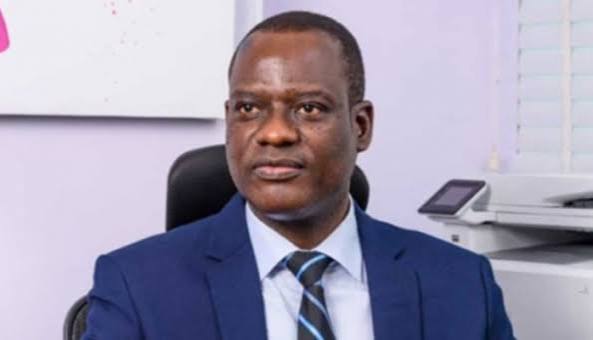
This was contained in a statement issued on Thursday by his Senior Special Assistant on Communications and Press Secretary, Maryann Duke.
The statement said Oyedele pointed to “improved digital systems, including electronic invoicing, as a key driver behind a record of N33tn in government revenue collected between January and October 2026.”
The minister said the performance demonstrated the potential of technology to improve revenue administration, strengthen compliance and increase efficiency across government institutions.
Speaking on the theme, ‘Digital Sovereignty and Ethics: Guarding the Economy for the Next Generation,’ Oyedele warned that Nigeria risked losing substantial economic opportunities if it continued to depend heavily on foreign digital infrastructure.
Citing Nigerian Communications Commission figures, he disclosed that the country recorded more than 157 million active internet subscriptions as of May 2026.
He explained that these connections generated significant volumes of information through financial transactions, healthcare, education and taxation.
However, citing estimates from the Nigeria Data Protection Commission, Oyedele said as much as 90 per cent of the country’s data was hosted abroad.
According to him, the situation has implications for foreign exchange expenditure, employment opportunities, technological skills and Nigeria’s control over information generated by its citizens.
He compared the country’s reliance on foreign digital infrastructure with its historical dependence on imported refined petroleum products, warning against a situation where Nigerian data would be processed abroad and the resulting services sold back to domestic users.
The minister consequently advocated greater investment in local data infrastructure, technical expertise, cybersecurity and predictable regulations to enable Nigerian businesses to capture more value from the digital economy.
He clarified that digital sovereignty should not translate into technological isolation but should strengthen Nigeria’s capacity to participate competitively in international markets.
Addressing graduating students, Oyedele urged young Nigerians to become developers of technological solutions rather than remain primarily consumers of products created elsewhere.
He identified artificial intelligence as both a disruptive force and an opportunity for innovation, advising graduates to acquire relevant digital skills alongside critical thinking, creativity, sound judgement and integrity.
The minister also cautioned against irresponsible online behaviour, explaining that digital footprints increasingly influence employment prospects, commercial relationships and professional credibility.
Oyedele outlined five priorities for graduates, including continuous learning, value creation, integrity, responsible digital citizenship and active participation in national development.
“Your degree is evidence of what you have learned. Your competence will demonstrate what you can do. Your character will reveal who you truly are,” he told the graduating students.
-
 Politics4 days ago
LG CITY BOY COORDINATOR HAILS WIKE’S SUPPORT FOR ONYESOH, TINUBU
-
Politics4 days ago
DIRI INAUGURATES APC CAMPAIGN COUNCIL, SETS MILLION VOTES TARGET FOR TINUBU
-

 Politics4 days ago
NDC Candidate Urges Oborevwori To Probe Asaba Political Violence
-

 News4 days ago
Army Recovers X Account After Hack Attempt
-
 Business4 days ago
Nigeria Loses N17tr Yearly To Abandoned Projects
-
Politics4 days ago
2027: Oborevwori Tasks Media On Fair, Accurate Reporting
-
Politics4 days ago
2027: AKPABIO ENVISAGES TINUBU’S VICTORY IN SOUTH SOUTH REGION
-
Politics4 days ago
Asaba Political Violence: Police Confirm One Dead, Delta Govt Urges Probe