Connect with us

Oil & Energy

Oil Community Demands Pipeline Surveillance Contract

Published

on

The people of Ilaje-
Yoruba oil producing communities of Ondo State have appealed to the Federal Government to consider them in the award of the Ondo State Coastline axis of the contract.
The Ilaje Emancipation and Development Assembly, in a statement signed by its President, Prince Jeffrey Ogunfeyimi and Secretary, Omoba Ezekiel Oyetakin laid claim to the ownership of the longest coastline in Nigeria and Africa with its oil exploration and exploitation dating back to 1958.
Noting that about 1,892, 174,000 barrels of oil have been lifted from Ilaje land by oil companies in the area, the statement said that no other tribe inhabits the coast of Ondo State apart from the people of Ilaje of Yoruba extraction in the west.
“Therefore, a denial of the good people of Ilaje in the award of the coastal Pipelines Surveillance contract shall be deemed an injustice to the entire people of Yoruba land”, the statement stated.
It explained that it is the oil production in Ilaje land and not the presence of the Ijaws, as it is often misconstruced, is the sole reason why Ondo State is categorized as one of the nine oil producing states in Nigeria.
According to the statement, inspite of the 18 local government areas in Ondo State, it is Ilaje, is the only oil producing Local Government that is most improverished due to oil degradation and environmental pollution.
The assembly regretted that as a result of the situation, houses along the coastline have been washed away, leaving the improverished people with erection of temporary abode along the coast.
“The combined effect of these have caused destruction of aquatic habitat, damage to the eco system and ill-health among our people”, the statement said, adding that cases of high blood pressure, heart attack and stroke remain common sickness in the land.
The group further noted that “there are lots of agitations and pressure on government by our Ijaw neighbours in Ondo State to gluttonously obtain the pipeline security surveillance contract passing through our coastline to the environmental and financial detriment of the people of Ilaje”.
It said Ilaje people would not allow a situation where a non-indigenous person or group would be given the contract, and pointed out that nothing threatens the security of the pipelines and the general peace of the region than denial of the right of the people and their due opportunity.


Chris Oluoh
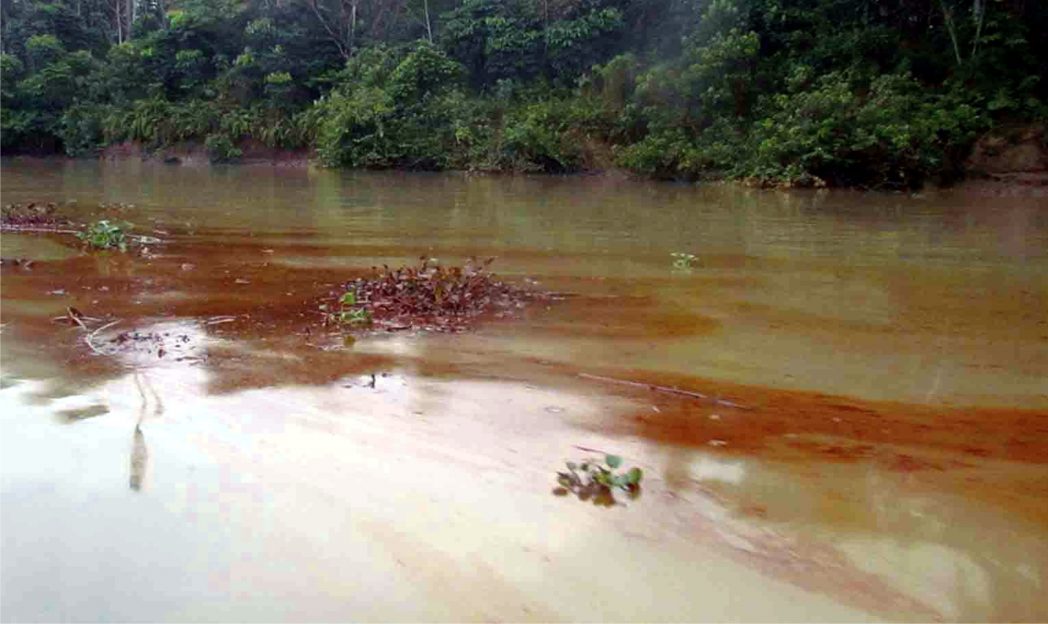
Crude deposits afloat Ogboinbiri River in Southern Ijaw Lga of Bayelsa State due to leaks in the area last Wednesday.


Crude deposits afloat Ogboinbiri River in Southern Ijaw Lga of Bayelsa State due to leaks in the area last Wednesday.

Continue Reading

Oil & Energy

Can Cheap Batteries Deliver COP31’s 35% Electrification Goal?

Published

on

Electrification will be the major focus of the COP31 United Nations climate conference, to hold in Antalya, Türkiye, from today, November 9 to 20, 2026. The host country will invite the attending nations to sign onto a voluntary pledge to reach 35 percent electrification on a global level by 2035. J
ust a year ago, this target may have seemed overly ambitious, but now, experts say that a number of factors, including volatile oil and gas markets stemming from the war in Iran, paired with enormous advances in clean energy technologies, have put that goal within “striking distance.”
The months-long closure of the Strait of Hormuz has catalyzed the clean energy transition and the rate of electrification around the world. Before the United States and Israel began their military offensive in Iran back in February of this year, one fifth of the world’s oil and gas trade flowed through the Strait of Hormuz. Its abrupt closure therefore sent global oil and gas markets into turmoil and sent energy-importing countries around the world scrambling for alternatives, especially ones that they could produce and control on their home soil. And, just like that, renewable energy became the new face of energy security.
“Wind and solar cannot be embargoed, blockaded, or shut off by a foreign power,” David Frykman, General Partner at Stockholm-based venture capital group Norrsken, wrote in an op-ed for Fortune earlier this year. “Every terawatt-hour of domestic renewable generation is a terawatt-hour that no adversary can weaponize.”
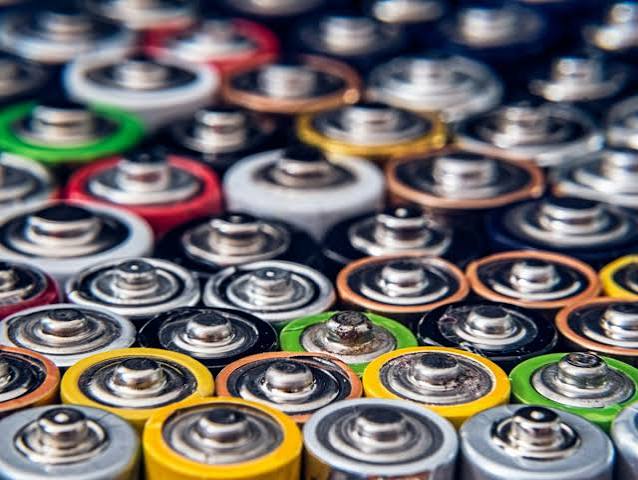
But there is another, quieter force that has made this rapid global pivot toward renewable energies possible – the energy storage boom. Energy storage is critical to ensure grid stability in the face of rapid electrification and the increasing representation of intermittent energy sources like wind and solar power in national energy mixes. Major advances in the sector in recent years have made battery storage more affordable and more scalable than ever before – just in time for the world’s most recent bout of ‘fossilflation.’
“What’s really become a game-changer in the past two years is the rapid deployment of large-scale batteries that can hang onto ever larger amounts of power to be used throughout the day to smooth out demand and avoid overtaxing the grid,” Forbes wrote in a Monday report.
The second quarter of this year saw the United States’ largest-ever energy storage expansion, at 20.2 gigawatt-hours of additional capacity, according to a report by the Solar Energy Industries Association and Benchmark Mineral Intelligence. That puts this year’s total additions at 30.8 GWh – and counting.
“Although President Trump is no fan of renewable energy or batteries, utility-scale energy storage capacity still nearly doubled to 165 GWh from 88 GWh in the first 18 months of his administration,” the Forbes article goes on to detail. “Grid operators, utilities and data center developers are all buying batteries as fast as they can to meet power demand and improve grid reliability. As a result, battery energy storage systems supplied more electricity to the grid in the year’s first eight months than in all of 2025.”
Ironically, despite his best efforts, Donald Trump is overseeing one of the United States’ most significant clean energy booms in the nation’s history as solar and wind have simply become too cheap to fail. And the United States is not alone. Buoyed by a flood of cheap solar panels and battery storage systems coming out of China, even the world’s poorest countries are experiencing clean energy revolutions.
“Some countries are pulling off stunningly fast energy transitions, adding solar so rapidly, it’s become a major source of electricity over the course of years — not decades,” reports CNN.
Pakistan has become the surprise poster child of this trend as residents install rooftop solar and batteries faster than any other market on Earth, as these systems provide electricity more cheaply and reliably than the country’s own beleaguered energy infrastructure. In addition, emerging economies including Brazil, Chile, El Salvador, Morocco, Kenya, and Namibia have all overtaken the United States – the world’s largest economy – in their clean energy transitions.
By Haley Zaremba
Continue Reading

Oil & Energy

MAN, Ministry Tackle High Electricity Costs, Erratic Supply

Published

on

The Manufacturers Association of Nigeria has said it is working with the Federal Ministry of Power to address high electricity tariffs, unreliable grid supply and rising energy costs that are undermining industrial production and competitiveness in the country.
The association said the collaboration would focus on developing sustainable energy solutions for manufacturers, including renewable energy, battery storage, captive power generation and improved electricity distribution.
Speaking during the second edition of the Manufacturers Energy Security and Energy Efficiency Summit in Lagos, the President, MAN, Dr. Ifeanyi Okoye, regretted that high electricity tariffs, unreliable grid supply and heavy dependence on fossil fuels had made industrial production exceptionally difficult.
Okoye said energy expenses consumed nearly half of some factories’ operating budgets, weakening their competitiveness, increasing product prices and threatening jobs.
He said manufacturers had continued to operate their own power infrastructure despite paying for electricity from the national grid.
“When energy expenses claim nearly half of a factory’s operating budget, competitiveness evaporates, retail prices skyrocket, and jobs are placed on the line,” he said.
Okoye said the association was moving beyond advocacy to implement practical solutions through its Industrial Energy Cost Reduction and Energy Support Programme, as key partners in delivering the initiative.
According to him, the programme would promote factory-roof solar installations, battery energy storage systems, captive natural gas generation and smart energy management networks to reduce production costs and protect manufacturers from global fuel price shocks.
He, however, stressed that manufacturers needed affordable, long-term financing to undertake the energy transition.
 “We cannot finance 21st-century industrial transitions with 30-day commercial bank loans at cut-throat interest rates,” Okoye said.
He said the summit would bring financial institutions, climate funds and green investors together to develop long-tenured, low-interest financing instruments, carbon credit opportunities and asset-financing
Also speaking, the Minister of Power, Joseph Tegbe, warned industrial customers against unauthorised electricity connections.
He disclosed that investigations had uncovered about 14 industrial customers along a particular corridor who owed more than N400m in unpaid electricity charges over several years.
Tegbe said such practices deprived the electricity sector of revenue needed to sustain power supply and unfairly burdened consumers who paid their bills.
“Such conduct deprives the sector of revenue that we need to sustain the supply, and unfairly burdens consumers who pay honestly,” Tegbe said.
The minister vowed to recover the outstanding charges and hold those responsible accountable, urging MAN to encourage its members to maintain lawful electricity connections and comply with applicable regulations.
 Tegbe acknowledged that manufacturers continued to struggle with electricity interruptions, poor power quality, vandalism and electricity theft, adding that the government was directing investments towards addressing the underlying problems.
Speaking on behalf of manufacturers, the MAN South-East Chairman, Ada Chukwudozie, said energy had become a question of survival and competitiveness for Nigerian manufacturers.
 She said manufacturers were increasingly financing and managing their own electricity infrastructure while struggling with rising production costs and limited access to capital.
 “We are effectively running a second power system paid for by ourselves, besides the grid we also pay for. And that is why for the Nigerian manufacturer, energy is no longer simply an operational issue. It is a question of survival and competitiveness,” Chukwudozie said.
 She explained that unreliable electricity supply forced manufacturers to make difficult choices between purchasing energy and raw materials, maintaining equipment and paying workers.
The regulator added that manufacturers could strengthen their competitiveness by adopting cleaner energy sources as international markets increasingly imposed environmental and carbon-related requirements on products and supply chains.
Continue Reading

Oil & Energy

Reps Panel Dismisses Petition Against NIPCO gas Licence

Published

on

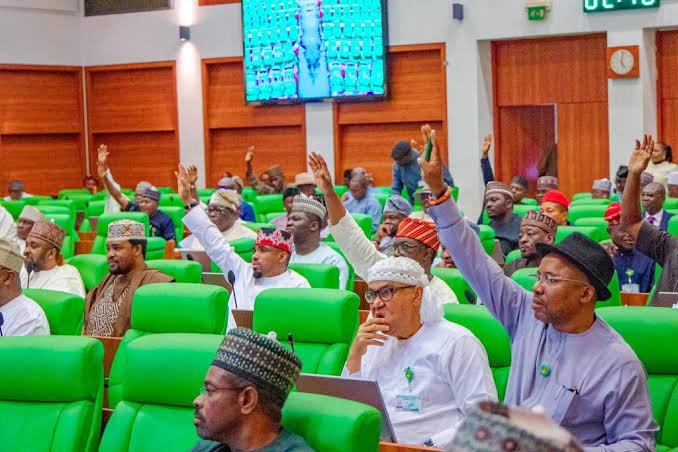
The House of Representatives has dismissed a petition seeking the cancellation of gas distribution licences awarded to NIPCO Plc, ruling that the petitioners failed to provide credible evidence to substantiate their allegations.

The decision followed a review by the House Sub-Committee on the Petition concerning NIPCO Plc, which rejected the complaint filed by the Nigerian Energy Security Watch Group (NESWG) for lacking substance and evidential support.

The petition had called for an investigation into, and the suspension and cancellation of, gas distribution licences issued by the Nigerian Midstream and Downstream Petroleum Regulatory Authority (NMDPRA) to NIPCO for Lagos, Ogun, Oyo and Osun states, as well as the Lagos and Lekki Free Trade Zones.

Announcing the decision last Thursday, the Chairman of the Sub-Committee, Peter Aniekwe, said the petitioners relied on hearsay and failed to establish any wrongdoing in the licensing process.

“At its sitting today, the Sub-Committee resolved not to proceed with the investigation, and the petition is accordingly dismissed,” Aniekwe said.

The committee, which also includes Dahaltu Shehu, was constituted in October to examine the petition. It was granted an additional 14 days on October 26 to conclude its assignment.

Aniekwe said the issuance and regulation of gas distribution licences were statutory responsibilities of the NMDPRA under the Petroleum Industry Act, while stressing that the National Assembly would continue to exercise oversight over the process.

He disclosed that the regulator had committed to completing and rolling out gas distribution licensing in the fourth quarter of 2026, adding that the committee would monitor the implementation.

“Nigerians deserve a gas market that is open, competitive and safe, and investors deserve rules that are clear and stable,” he said.

The lawmaker reaffirmed the House’s commitment to considering petitions from individuals and organisations with genuine concerns about the petroleum sector, saying “each complaint would be assessed on its merits”.

Continue Reading

Trending