
Politics
Feb Polls: To Be Or Not To Be?

The recent call by the
National Security Adviser (NSA), Col. Sambo Dasuki (rtd), for a postponement of the February polls has brought Nigeria to another phase of electioneering. For all the intrigues it has offered so far, one certainty it has proved is the preparedness of key stakeholders, particularly the ruling Peoples’ Democratic Party, PDP, and the main opposition, All Progressives Congress, APC, to ensure free, fair and acceptable 2015 general elections. At least going by what they say they stand for.
To an extent, the modus operandi adopted by all concerned may have ended up opening a can of worms, but all are hell bent on holding their own in their conviction of what the Nigerian populace either desire, or need. In their bid to push forth their stand, some pertinent questions are ostensibly raised. An example is the reason given by Dasuki for postponement of the elections,
Speaking at the London think-tank Chatham House, during a lecture entitled, “Nigeria’s Insecurity: Insurgency, Corruption, Elections and the Management of Multiple Threats”, Dasuki said “INEC had distributed 30 million cards in the past year but had another 30 million to hand out.”
He said INEC had assured him it would achieve this on time for the February elections, but he thought it would make more sense to take more time, as there is a 90-day window during which the election could legally take place.
“It costs you nothing; it’s still within the law”, he said.
While supporting this stand, the highly respected pan-Yoruba socio-political organisation, Afenifere, said, holding credible poll is not feasible considering that majority of voters are yet to collect their Permanent Voter’s Cards (PVCs).
In a communiqué issued after a meeting in Akure, the Ondo State capital, chaired by the leader of the group, Chief Reuben Fasoranti, and read by the Publicity Secretary, Yinka Odumakin, the group emphasized that as far as postponing the election would still meet the May 29 handover date, the sacrifice would be worth the trouble.
“The constitution says election should hold not earlier than 150 days to handover date and not later than 30 days. INEC has chosen February 14. For us, May 29 is sacrosanct; there is no controversy over this.
“Within those days, between February 14 and 30 days to May 29, INEC has a window to make sure that most voters are not disenfranchised. If INEC can give all registered voters their PVCs before February 14, all well and good.
Moreover, they added, the Chairman of the Independent National Electoral Commission (INEC), Prof. Attahiru Jega, has not demonstrated enough determination to conduct free and fair elections.
“The meeting viewed with seriousness the sheer incompetence on the part of INEC. The INEC that wanted to create 30,000 polling units few weeks to the election has yet to distribute almost 30 million voter’s cards. When you look at the table INEC has given, what they tell us is that in each state, this is the PVC received, hiding the total number of registered voters.
“As at today, over 15 million voters out of the ones collected have not received their cards. This is 54 million. There are 14 million voter’s cards that have not arrived in the country. If we put them together, almost half of the total electorate is yet to collect their voter’s cards.
“The assurance by the INEC chairman that he will distribute cards a day to the election is not reassuring. If you have failed to do it before now, what is the assurance that he is going to do it now?
“We want to warn that any election conducted on the basis of disenfranchising almost half of the electorate, the outcome will not be credible or acceptable”, Odumakin said.
One argument that has been put forth against the postponement is that at no point in the history of elections the world over that all registered voters had voted in an election. In the words of the House of Representatives spokesperson, Mr. Zakari Mohammed, “there is nowhere in the world where 100 per cent of registered voters vote in an election”.
Stating the stand of the Lower House, Mohammed said “the call for postponement of the elections is a decoy for third term agenda and as a House of the Nigerian people, we will resist it”. The reason, as he puts it, is that “It will be a breach of the constitution to postpone the polls by whatever guise. This is a ploy and we know where it is coming from.”
Another strong opposition to the postponement came from the 26 registered political parties in the country. They recently met in Abuja with the electoral body and asked INEC not to postpone the elections.
Chairman of the Inter-Party Advisory Council (IPAC), the body of the registered parties, Yunusa Tanko, said all the registered political parties were already on the field canvassing for votes.
Speaking with journalists at the quarterly meeting of INEC with the leadership of the registered political parties ahead of the general elections, Tanko declared that all the political parties were ready and fully prepared for the polls.
He added that a lot of human and material resources had been committed towards having successful elections in the country.
Meanwhile, Tanko noted, INEC, as the electoral umpire, has not said the February 14 and 28 dates for the general elections cannot be met “As we speak, INEC has not come out to tell us that the elections will be shifted; INEC has been carrying the registered political parties along in all the preparations for the February polls.
“Though there may be challenges in the distribution of the PVCs, this is not enough to postpone the elections. To us, it remains agitation and we are not in support of the idea.”
Noting the importance of not disenfranchising qualified voters, he urged INEC to approach the Federal Government for possible declaration of public holidays to enable all eligible voters who are yet to collect their PVCs to do so before the elections.
INEC Chairman, Professor Attahiru Jega, had during the meeting with IPAC, agreed on certain salient points aimed at ensuring free and fair elections. Such points include relocation of some polling units that are located at areas where undue influence could affect voting.
The meeting, Jega said, was an opportunity not only for INEC to brief the political parties but also to listen to their concerns and observations so as to take them into account in the final preparations for the elections.
“I want to also assure you that we are committed to ensuring that the elections will be much better than the elections we conducted in 2011,” he stated.
The crux of agitations for and against the postponement is registered voters taking possession of their PVCs, which is genuine. But the opposition’s stance is based on the timing and who is calling for the postponement. They express the belief that there is more to the call for postponement than meets the eye. Accussing fingers are being pointed at the ruling PDP seeking to maneuver the polls shift to its advantage.
Moreover, the opposition reasoned that such call for postponement should come from the umpire, INEC, not a partisan in the fold of Dasuki. And since INEC had emphasized on the feasibility of the February 14 and 28 dates for the elections, based on which so much has been invested, such postponement, the opposition fear is capable of fueling crisis.
Going by the intrigues, all stakeholders have proven to know their onions in the country’s political arena. The basic concern now is the extent to which these agitations are powered by a genuine concern to build a better and united Nigeria, noting that anything less than that could spell doom for the country.
As the former Governor of Anambra State, Chukwuemeka Ezeife, recently put it, “the outcome of the election would affect the fortunes of the country. Getting the election right would unlock the country’s potentials, while getting it wrong would mean hard times ahead.
“We are at crossroads: we do it right, we’ll get our country perfect, peaceful (and) united. We do it wrong, it may not be the end of Nigeria, (but) difficult times will be ahead”.
From the perspective of the spokesman of Afenifere, Odumakin, one way to get it right is not just to clamour for change, but to do so knowing that the most important change that Nigeria desires this time is one that would restructure governance.
“Most of the issues that are confronting us – insecurity and corruption – have their link with the faulty constitution that we have and to change the constitution is the most important change that we need”, hence “the change that ignores the restructuring of Nigeria is not a change”.
Soibi Max-Alalibo
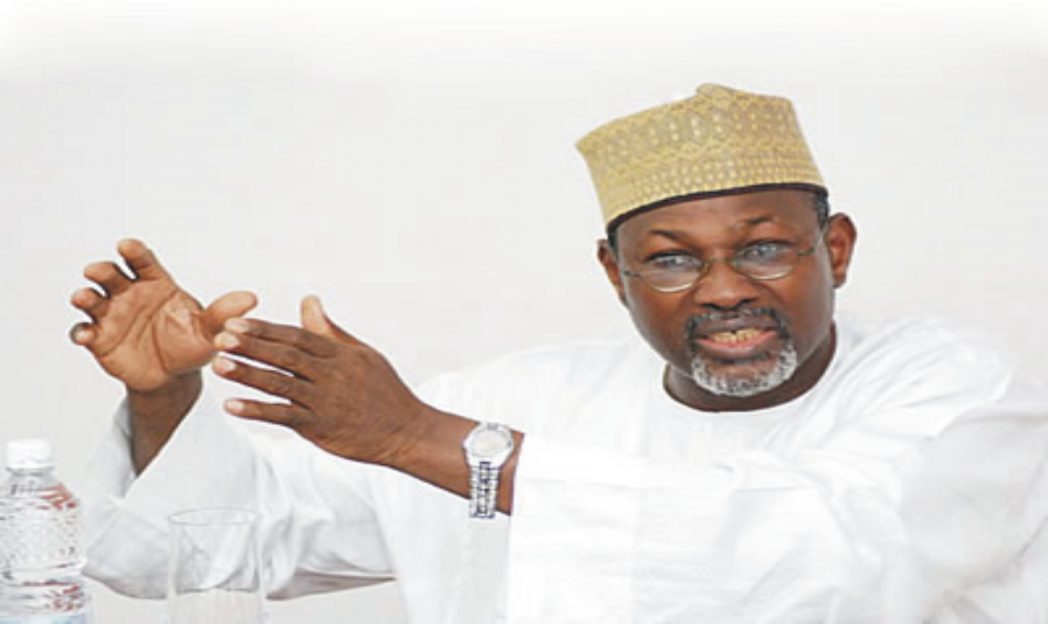
INEC Chairman, Prof Attahiru Jega



The Independent National Electoral Commission (INEC) has extended the deadline for political parties to submit the list of candidates for the 2027 governorship and state Houses of Assembly elections from Saturday, August 8, to Tuesday, August 11, 2026.
The commission announced the extension in a statement issued on Saturday and signed by the National Commissioner and Chairman of its Information and Voter Education Committee, Mohammed Haruna.
According to INEC, the decision followed appeals by political parties for additional time to complete the submission process through the dedicated online portal.
“The submission window, which according to the revised Timetable and Schedule of Activities for the General Election was originally scheduled to close on Saturday, 8th August, 2026, has been extended to Tuesday, 11th August, 2026,” the commission said.
In a a related development, INEC announced the suspension of PVC collection in Osun State ahead of the August 15 governorship election.
The commission said voters who applied for replacement of lost, damaged or defaced Permanent Voter Cards would have until midnight on Sunday, August 9, to print downloadable copies of their cards.
The electoral body explained that the deadline was necessary to enable it compile data on downloaded PVCs and produce final statistics on the total number of cards collected ahead of the election.
INEC said PVC collection in Osun commenced at the Registration Area level from July 22 to 28, 2026, but was extended to July 31 following complaints about large crowds and difficulties experienced by voters at collection centres.
The exercise subsequently moved to the local government level and ran from August 1 to 7.
The commission also disclosed that replacement downloadable PVCs had been made available to voters in Odo-Otin and Ife Central Local Government Areas following the theft of cards during attacks on the two collection centres.
It stressed that the stolen cards could not be used to vote.
INEC reassured Osun residents of its preparedness for the August 15 governorship election.
“The commission reiterates that the stolen cards cannot be used to vote.
“INEC reassures the people of Osun State of its readiness to conduct a free, fair, credible and inclusive governorship election on 15th August, 2026,” the statement said.
The commission said the deadline, initially set for Saturday, 8 August, has been extended to Tuesday, 11 August 2026, following appeals from political parties for more time.
INEC also announced that the window for voters who applied to replace lost, damaged or defaced PVCs to download their replacement cards will close at midnight on Sunday, 9 August.
The move is to enable the commission compile final PVC collection figures ahead of the 15 August Osun governorship election.
INEC said replacement downloadable PVCs have also been provided to affected voters in Odo-Otin and Ife Central Local Government Areas after hoodlums carted away cards from two collection centres, stressing that the stolen cards cannot be used to vote.
The commission reaffirmed its readiness to conduct a free, fair, credible and inclusive election in Osun State.
Gov. Kefas made the remarks over the weekend at the Federal Medical Centre (FMC), Jalingo, during the flag-off of the second phase of the Renewed Hope Medical Outreach in Taraba State, organised as part of activities marking Prof. Yilwatda’s 58th birthday.
The governor commended Prof. Yilwatda for choosing to mark his birthday by providing medical care to people in need.
“What Professor Nentawe did is a powerful demonstration of what leadership should be,” Gov. Kefas said.
He assured that his administration would continue to support initiatives that complement government efforts to improve healthcare delivery and the wellbeing of residents.
Speaking at the event, Prof. Yilwatda called on Nigerian leaders to embrace the culture of giving and use their positions to touch the lives of the less privileged.
He said his decision to celebrate his 58th birthday in Taraba State was deliberate and informed by the needs of underserved communities, particularly people who face difficulties accessing healthcare because of distance and financial constraints.
According to him, the intervention followed a needs assessment and was extended across the three senatorial districts of the state.
He said the exercise commenced on August 3 at Takum General Hospital and covered the Federal University Teaching Hospital, Wukari; First Referral Hospital, Sunkani, Ardo-Kola Local Government Area; General Hospital, Bali; General Hospital, Gembu; and FMC Jalingo.
Prof. Yilwatda said the intervention provided medical services to thousands of beneficiaries, including people who required surgical procedures.
He said sustainable national development could only be achieved when strong institutions placed Nigerians at the centre of development.
“Leadership is about service,” he said, urging political and public leaders to make giving back to society an important part of their responsibilities.
He reaffirmed his commitment to serving Nigeria and its people, saying his personal vision was to make every day of his life useful to humanity.
“Every day that I live, the vision is: let it be useful to humanity,” he said.
The Taraba State Commissioner for Health, Dr. Bordiya Buma, commended the initiative, saying it was consistent with the Renewed Hope agenda and efforts to strengthen healthcare delivery in the state.
Dr Buma said the second phase followed the successful completion of the first phase, which was conducted simultaneously in six local government areas, with two LGAs selected from each of the three senatorial districts.
According to him, more than 10,000 patients were attended to during the first phase, including people with medical and surgical conditions.
He disclosed that 327 general surgeries, 71 eye surgeries and 575 dental procedures were carried out during the exercise.
The commissioner expressed appreciation to President Bola Tinubu for the Renewed Hope Medical Outreach and thanked Prof. Yilwatda for supporting the initiative and choosing Taraba State as a beneficiary.
The Minister of Health and Social Welfare, Prof. Muhammad Ali Pate, also commended Prof. Yilwatda for choosing Taraba State to mark his 58th birthday through a medical outreach.
Prof. Pate said making healthcare the centrepiece of the birthday celebration was significant because health affects everyone.
-

 News2 days ago
RSG Targets Nine Million Residents in Mosquito Net Distribution Campaign
-

 Oil & Energy2 days ago
Aiyedatiwa Signs New Electricity Bill
-

 Maritime2 days ago
Marine Minister Commends President Tinubu On NPERA Bill Assent
-

 Oil & Energy2 days ago
NLNG Commissions Research And Innovation Centre In RSU
-

 News2 days ago
KenPoly Holds Eight Convocations, August 29
-

 News2 days ago
RMAFC Completes Revenue Sharing Review, Proposes New Pay
-

 News2 days ago
RSG Begins Another Phase of Projects Commissioning Today
-

 Maritime2 days ago
NAGAFF Petitions IGP Over Alleged Maritime Police Harassment