
Business
MFBs Want FG To Formulate Textile Industry Dev Policy

The National Association of Microfinance Banks (NAMB) urged the Federal government to formulate a policy that would enhance the development and sustained growth of the nation’s textile industry.
The NAMB President, Mr Valentine Whensu, told newsmen in Lagos yesterday that such a policy would curb large scale textile dumping and smuggling in Nigeria.
He said that the increasing activities of textile smugglers were scaring numerous investors and mortgaging national effort toward expanding employment opportunities.
The NAMB boss also urged the Federal Government to overhaul the extant policies that would reinvigorate the efforts of microfinance banks in poverty alleviation nationwide.
“Although the sub-sector has received N100 billion from the Bank of Industry (BoI) through the Growth Enhancement Support (GES) scheme on cotton, textile and garments funds, those who took the loans got their fingers burnt.
“It was discovered, shortly after accessing the loan that over 80 per cent of the market has been taken over by cheap imports from Asian countries,” Whensu said.
According to him, the influx of foreign textiles into the country made locally produced textiles less competitive, as they are often costlier than the imported or smuggled ones.
He also said the current problem in the nation’s textile industry was that other companies yet to access the loan chose to avoid it.
“Most of them became afraid that they may not be able to repay the loan considering the prevailing unfriendly operating environment particularly with regards to lack of infrastructure.
“The country could boast of about 175 textile factories in the 1980s, but the number shrank to 124 in 1994 and 70 in 2002, following the lifting of the ban on the importation of foreign fabrics in 1997.
“I urge the government to formulate and embark on protectionist policies, who knows, it could be a major solution to benchmark of crude oil threats we are facing,” he said.
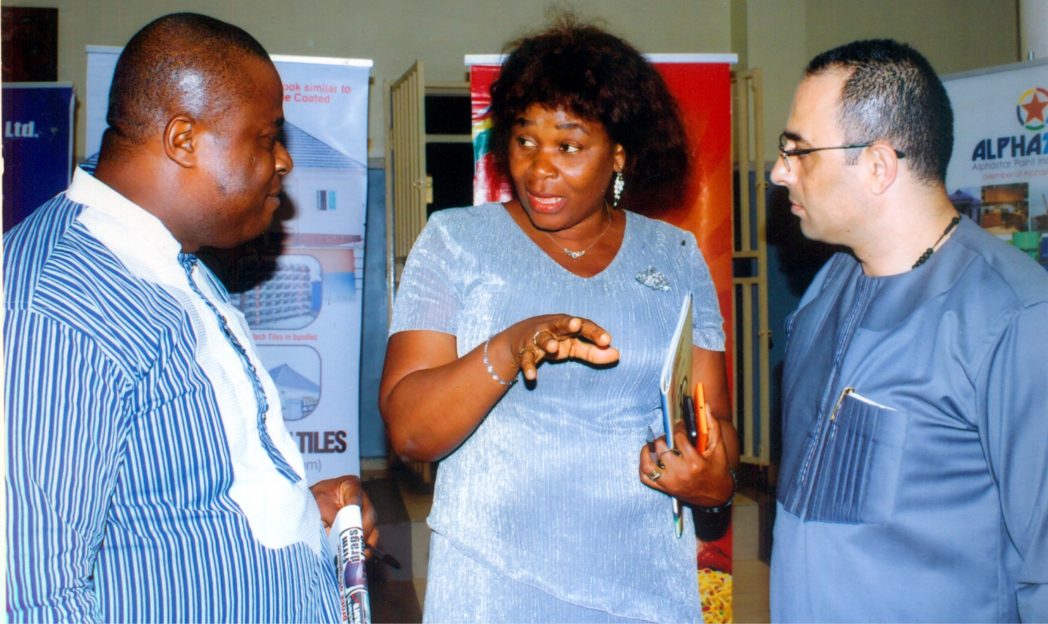
Representative of Rivers State Governor and Permanent Secretary, Rivers State Ministry of Commerce and Industry, Ms Kadilo Brown, with Treasurer of MAN, Chief Nabil Sale (right) and Engr Jubril Balogun, during the AGM of MAN in Port Harcourt, recently. Photo: Egberi A. Sampson.



Business
Jonathan, Diri, Others Laud Firm’s Milestone in Bayelsa …Says Project Will Drive Industrialisation, Create Jobs



-

 News3 days ago
RSG Targets Nine Million Residents in Mosquito Net Distribution Campaign
-

 Oil & Energy3 days ago
Aiyedatiwa Signs New Electricity Bill
-

 Oil & Energy3 days ago
NLNG Commissions Research And Innovation Centre In RSU
-

 Maritime3 days ago
Marine Minister Commends President Tinubu On NPERA Bill Assent
-

 News3 days ago
KenPoly Holds Eight Convocations, August 29
-

 News3 days ago
RSG Begins Another Phase of Projects Commissioning Today
-

 News3 days ago
RMAFC Completes Revenue Sharing Review, Proposes New Pay
-

 Maritime3 days ago
NAGAFF Petitions IGP Over Alleged Maritime Police Harassment