
Oil & Energy
‘RSG Completes 15 Dual Carriage Roads’

The Rivers State Govern
ment says it has completed 15 out of the 24 dual carriage roads while a total of 25 bridges have been completed out of the 37 it embarked upon since the inception of the present administration.
This was contained in the November – December 2014 edition of the Rivers State Civil Service Publication titled “The Rivers Bureaucrat” on Roads, Bridges led by the permanent secretary, Paulinus Nwankwoala and made available to The Tide correspondent in Port Harcourt, recently.
The publication also stated that out of the five flyovers that the government embarked on since its inception, three had been completed while two are on-going.
It also indicated that the government had completed 112 other roads out of the 232 roads it projected as well as completed the two inter change roads it embarked upon within the period under review.
According to the publication, some landmark achievements of the present administration include, the dualisation of the formerly congested and narrow roads such as Rumuokwuta- Choba-East-West Road, the 9.80km Amadi-Slaughter-Woji-Elelenwo-East West Road, Ada George Phase 1, which spans between Mile 3, Diobu and NTA Road, and Airport Road, Omagwa, with a length of 18.60km.
Others are Rumuola-Rumokwuta Road of 2km, Old Aba Road which starts from First Bank,Rumuomasi to Rumuigbo of 7.4km, the 3.2km Slaughter –Oginigba-Rumuobiakani Road, and the 6km Abuloma-Woji-Akpajo Road, which also has bridges and a mini inter change at Abuloma-Woji axis and a toll gate at Abuloma end.
The bulletin also has it that the dualised roads were Elekahia-Rumuomasi Road of 3.62km, the Azikiwe Road UTC Junction – Lagos Bus Stop, the 3.1km Ikwerre Road Education Bus-Stop to Agip flyover, the Ken Saro-Wiwa Stadium Road on which flood control works were done, the Worlu Street, Olu Obasanjo road, Chief G.U. Ake (Eliozu) Road and the 19km reconstruction and modernization of D/Line roads.
It stated that the government also embarked on some rural roads which include, Isiokpo-Ubima –Omerelu Road in Ikwerre Local Government Area, the 2.75km Kabangha –Lueke Road in Khana LGA, the Okrika ring road with three bridges, the Unity Road: Ogoni-Andoni-Opobo Road of 43Km with ten bridges, the 13.8km Okehi II – Ndashi Road in Etche LGA and the Okehi-Ihie-Apani-Omerelu Road in Etche and Ikwerre LGAs of 42.8km.
Others are the 21.6km Omotor Agba Ndele Road in Emohua, the ongoing Trans-Kalabari Highway and bridges of 7.3km as well as the 12.45km Omoku internal roads in Ogba/Egbema /Ndoni Local Government Area.
It gave kudos to the Ministry of Works and the Commissioner, Hon Victor Giadom, for achieving its target as promised by the present administration.
Collins Barasimeye



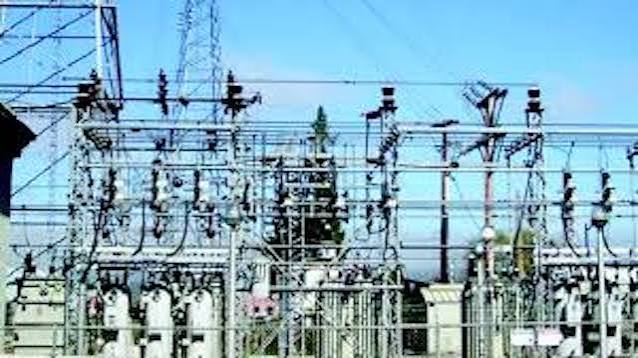
Utilities built a total of over 21,000 km of new transmission lines last year, the International Renewable Energy Agency reported this week at COP31, citing data from a group called the Utilities for Net Zero Alliance. This is 50% more than the new transmission lines installed during the previous year, IRENA noted in its report.
“Power grids will make or break not only the energy transition but also the world’s ambition to raise global electrification to 35% by 2035, as championed by the Turkish COP31 Presidency,” said the director-general of IRENA, Francesco La Camera. “IRENA’s analysis shows that global grid investment must more than double, reaching a cumulative USD 10 trillion by 2035,” he added, noting that ambition would not be enough and that “We must move from targets to implementation, from individual projects to system-wide transformation, and from commitments to delivery at scale.”
Transmission line capacity has become one of the biggest obstacles in the path of the energy transition. Due to their weather-dependent, variable output nature, wind and solar installations generate electricity intermittently. Because the best locations for such installations are often far from electricity demand centers, having to waste output in times of low demand is a frequent occurrence with both. Called curtailment, wind and solar electricity waste increases costs for the alternative energy sources.
The solution, net-zero proponents such as the International Energy Agency believe, is to expand the grid by building new transmission lines connecting wind and solar installations with demand centers. Back in 2023, the IEA said utilities needed to add or replace some 50 million km of transmission lines by 2040 if Paris Agreement signatories were to meet their commitments.
Forecasting how many millions of kilometers of cable need to be built or replaced, however, is one thing, while paying for it is quite another. Last year, the European Commission estimated that the European Union alone needs to cough up between $2 trillion and $2.3 trillion on grid upgrades by 2050 to achieve the Commission’s climate goals. For context, EU investment in the grid in 2024 stood at $90.5 billion. This would need to rise to over $100 billion annually, according to energy think tank Bruegel.
$100 billion in grid buildout investment is no small potatoes, yet some believe this investment would be inevitable as energy security takes priority over climate change concerns. Wood Mackenzie said this week that countries that prioritize energy security over emission-reduction plans could achieve lower emissions through faster electrification, replacing hydrocarbon import dependence.
“The energy transition has arrived at a genuine crossroads,” Prakash Sharma, Wood Mackenzie’s head of scenarios and technologies, said. “The world is no longer moving in one direction. Nations are making fundamentally different choices about how to power their economies, and those choices are producing outcomes that confound conventional wisdom.”
Energy security has indeed come to the fore since February, with emission reduction taking the back seat as governments struggle to keep energy relatively affordable without emptying state coffers and slipping into a recession. This has proven hard for many that depend on imports of oil and gas, with the effects of this dependence especially obvious in most of Asia and the European Union.
Reducing this dependence on imports has become an obvious path for many of these governments, as much as it is possible. And the most obvious way of reducing this dependence has been electrification, wherever possible. According to Wood Mackenzie, the impact of the war in Iran on energy prices would drive a shift to electrification, a wind and solar buildout, and nuclear generation expansion to produce more energy locally. This, in turn, would inevitably lead to lower emissions, even though, ironically, these lower emissions are not the priority.
COP31 host Turkey has proposed that participants commit to electrification, aiming for electricity to account for 35% of final energy. That would be up from some 20% today, with most of the world’s final energy still coming from hydrocarbons despite the net-zero rush from the last ten years. What is interesting, however, is that the proposal does not include a stipulation for reducing the use of hydrocarbons. Based on Wood Mackenzie’s scenario for inadvertent emission reduction, the lower use of hydrocarbons would happen organically rather than by means of government regulation enforcement.
Such developments would be an interesting departure from what has become the standard modus operandi of pro-transition governments: regulation, emission-cutting mandates, and penalties for using hydrocarbons, such as credit offsets. Instead, the energy ramifications of geopolitical events could lead to what one could describe as an organic shift away from imported hydrocarbons, while countries with their own mineral resources exploit those more fully. Whether such an organic shift would indeed reduce the consumption of oil, gas, and coal, however, remains to be seen.
By: Irina Slav
-
Business4 days ago
BSG Partiner American Coy To Invest $100m In Gas Processing
-

 Oil & Energy4 days ago
FG To Double Oil, Gas Reserves, Moves To Intensified fresh Exploration
-
Business4 days ago
Seme Customs Intercepts Live Pacific Ridley Sea Turtle
-
Sports4 days ago
Fernandes Turns Down Man Utd Offer
-
Business4 days ago
159m small businesses registered on database in three years – SMEDAN boss
-
Sports4 days ago
Rivers To Host National Table Tennis Championship
-
Maritime4 days ago
Nimasa,China MSA Sign Bilateral Maritime Agreement
-

 Sports4 days ago
Kenyans Win PH International Marathon, Cart Home $10,000