
Politics
Contradictions Of Nation’s Democratic Experience

One of the fallouts of Ekiti
and Osun gubernatorial elections was the issue of the militarisation of the polls by the federal government that earned it knocks for alleged intimidation of the voters with heavy security and military presence before and during the polling days. The main opposition party, the All Progressives Congress (APC) argued that the militarization of polls created voters’ apathy and a threat to the nation’s democratic process.
Government’s response to the accusation of using high security and military presence to intimidate and disfranchise many voters at polling days was not without a valued point. According to it, “it is better to have a militarized polls where votes would count and the peace of the people is guaranteed in the electoral process than bloody and violent elections.” In the governorship poll of Ekiti, power changed hands from the APC-led government to the Peoples Democratic Party (PDP), while PDP failed to unseat the APC government in Osun State.
Both Ekiti and Osun elections represented litmus test for the Independent National Electoral Commission as the commission prepares for the 2015 general polls. Nigerian’s democratic experience has witnessed many events that tended to question her march to democratic growth. The recent commotion at the National Assembly where the police reportedly tear-gased members of the House of Representatives, no doubt, represents contradiction to democratic experience and learning.
Sad as the action of the police was, members of the lower chamber had reconvened from its break to address a matter of urgent national concern bordering on the extension of the state of emergency in North East states of Adamawa, Borno and Yobe as requested by President Jonathan in his letter to National Assembly. But the action of the police, however, not only prevented the lawmakers from gaining access to the premises of the National Assembly, but also placed them “under siege”.
Police action and what it intended to achieve eventually became a tissue of concern to the All Progressives Congress (APC), the Nigeria Bar Association (NBA) and some civil society groups. While the APC, NBA and the civil society group saw the invasion of the National Assembly by the police as a “threat to democracy,” leadership of the Nigerian police, defended the police action, claiming that the police acted based on the alleged “security reports.”
The NBA, for instance, said “the selective manner in which some persons were allowed into the National Assembly Complex, while others were shut out, raises doubt in respect of the authenticity of the alleged “security reports.” The NBA also condemned in strong terms the acts of members of the National Assembly, who in a manner unexpected of honourable members scaled the gates leading to the assembly complex to gain access to the complex. The Senate leader, Victor Ndoma-Egba argues that the precincts of every parliament of the world are supposed to be sacred, yet, he said that there is no law that prevents one from scaling the fence to enter ones place. In the absence of law, where is the place of morality in the affairs of men?
The reaction of Governor Chibuike Rotimi Amaechi of Rivers State, however, added another twist to the scenario when he said “we don’t have democracy in Nigeria yet. What we have is diarchy.
… Diarchy is dictatorship”.
Apart from accusing the federal government of appropriating the police as its personal property, Amaechi was also vocal that his party (APC) would not go to court if the PDP decides to rig the 2015 presidential election, but instead would form a parallel government.
In his words, “if you rig us out, we would rig ourselves in. Which means if you think you can rig us out in 2015, we will form our own government. We have met on that and we have agreed on that. We will install our own government and there would be two governments. The only way to avoid a parallel government is to have a free and fair election.”
Amaechi’s presentation can be examined under two areas namely: the issue of no democracy yet in Nigeria and secondly, that APC will form a parallel government if PDP rigs the 2015 presidential election. From several perspectives, the two issues raised by Governor Amaechi represent some of the contradictions of the nation’s democratic experience.
Records show that Amaechi was in the Rivers State House of Assembly as member and speaker for eight years and from the Assembly platform, Amaechi gained entrance into Brick House as governor. Even Amaechi’s ride to Rivers Brick House was truncated by human error, it took another human rationality through court process to correct the error. Today, the governor is at the eve of his eight-year tenure. Yet Amaechi believes there is no democracy in Nigeria.
Point two. While it is a fact that freedom of expression is an attribute of democracy, that expression must find its whole within the ambits of the law of the land. The call for “parallel government, if PDP rigs the 2015 presidential election” by Amaechi and his party, many argue, “is a sad commentary by politicians who will like to collapse a system because such system was not favourable to their line of aspiration.” If some politicians appeared to be losing faith in democratic principles and strengths, is the judiciary not alive in raising hope in a workable system of which some politicians have benefited from?
Another contradiction in democratic growth is the state of the legislature in some states. While in Edo and Rivers States, it is on records that governments have shifted the sitting of Assembly members to Government Houses following crises that rocked both Assemblies, seven PDP lawmakers in Ekiti State, in a twist to the unfolding events in the state had reportedly removed Ekiti speaker, deputy and also approved commissioner nominees sent in by Governor, Ayodele Fayose.
Recently, Governor Adams Oshiomhole of Edo State and his Ekiti counterpart, Fayose had exchanged hot words over the state of the legislature in their respective states. Oshiomhole had told Fayose, in a statement by his chief press secretary, Peter Okhiria, that there was no crisis in Edo Assembly and that Fayose should not drag his name (Oshiomhole) into the “political gansterism that has become peculiar with the Ekiti State government”.
But Fayose fired back, saying Oshiomhole lacked the moral right to question developments in Ekiti when he had not managed well the crisis in his state legislature. No matter how hard Oshiomhole and his aides may try to convince the public that all is well with the state assembly, political observers believe that both Oshiomhole and his aides are economical with the truth.
Is it proper for a state House Assembly to sit in the Government House where the governor, his wife and children reside? What legislation will emanate from a legislature that is sitting exclusively at the comfort zone of the governor at Government House? There are fundamental questions that are begging for answers.
Those who may argue that there is no illegality for lawmakers to hold sessions inside Government Houses may be right, but they should also be reminded that it may not be laughable afferall if President Jonathan moves the sittings of the National Assembly to Aso Rock.
Fayose’s media spokesman, Lere Olayinka, while arguing that the lawmakers cannot sit anywhere else apart from the state House of Assembly, also raised concern whether actions taken at the sitting of a House of Assembly held inside Edo Government House can be said to have “stamp of legality.
Threat to democracy should not only been seen in crude method, siege to legislative assembly or disobedience to rule of law, but also in shifting the goalpost of legislative houses and democratic principles for selfish interests of those calling the shots.
There is also democratic sacrilege when the executive arm of government pockets another arms, the legislature for instance. What signals are Nigerians sending to the world about the health status of Nigerian democracy when judges and judicial officers are beaten and desecrated at the court chambers by men suspected to be party thugs.
However, the All Progressives Congress recently asked the Federal High Court, Abuja to declare the seats of Ekiti six lawmakers vacant, for defecting to the Peoples Democratic Party. APC also prayed the court to order a bye-election to fill their seats in accordance with the 1999 constitution. The affected Ekiti assembly members are Dele Olugbemi (the factional speaker); Alex Ade Ojo; Israel Olowo, Adeyinka Adeloye and Ayoka Fatumbi and the lawmakers are joined with the PDP and the Independent National Electoral Commission as defendants in the action.
The plaintiff (APC), in originating sermons had asked the court to determine “where upon proper construction of the provisions of Section 109(1)(g) of the constitution of the Federal Republic of Nigeria, 1999 as amended, defendants being persons whose elections to the House of Assembly was sponsored by the ACN, now the APC, can continue to retain their seats in the said house having become members of another political party, the Peoples Democratic Party since October 16, 2014 before the expiration of the period for which the House was elected.”
Outside the realm of making comment on the issue before the court, one sticking concern is that while APC is not losing sleep to protect its house members from being poached by the PDP, the same APC is committed in poaching the territory of the former, and would stop at nothing in defending the actions of defectors to its fold. The case of the speaker, House of Representatives, Aminu Tambuwal, who dumped the PDP for the APC and since fighting a political battle to retain its status at the house at the hands of the PDP-led federal government, is a typical example of the irony of the nation’s democratic experience.
The political reality is that when it suits or favours one party, it glorifies that “our God is good” but cry to high heavens about impunity and lawlessness on the part of opponent when it is disfavoured in the political chess game.
The recent protests on the streets of Port Harcourt by Ogoni youths over the adoption of Dakuku Peterside, member, House of Representatives as the APC consensus aspirant for the Rivers governorship election over and above their son, Senator Magnus Abe, further suggests that more than ever before, there are hazards arising from the nation’s developing democracy. Democracy itself entails participation in the affairs of men and where participation is shut out, it can rock the boat.
That the nation has practiced 15 years of unbroken democracy is not in doubt.
But how has the democracy impacted on the lives of the people? True, the nation has not had the best of its times in democracy, but that is not to write off the nation’s democracy. The bedrock for development and modernizing change is to strengthen democratic institutions that will enforce standard and quality in growth.
Unfortunately, some persons lower standard to suit their landing and such practice spell trouble for the system to work well. Every attempt at putting a shine on the nation’s democracy should not be left for politicians alone. Even more important is that prevailing contradictions in democratic growth should not deter the people to work for democracy to blossom in the land. Afterall, the gains of democracy is not accidential.
Samuel Eleonu
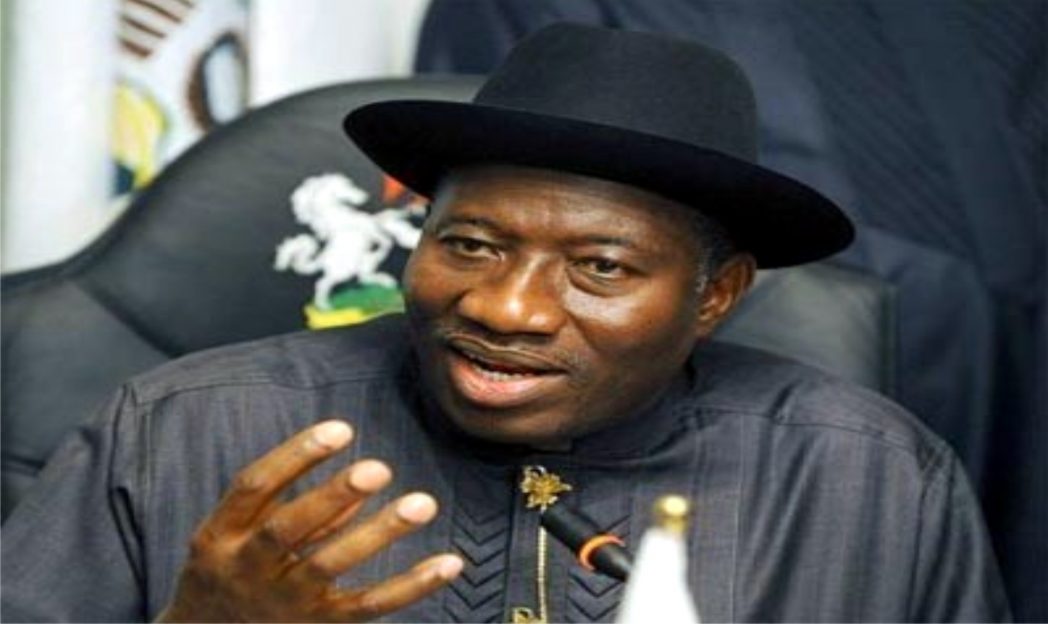
President Jonathan




The Independent National Electoral Commission (INEC) has begun deploying non-sensitive materials to the zones as it prepares for the 2027 general election.
Acting Chairman of the commission, Prof. Rhoda Gumus, disclosed this in Abuja, yesterday at a bench-marking meeting with a delegation of Kenya’s Independent Electoral and Boundaries Commission (IEBC).
“Right now, all non-sensitive materials are almost ready. In fact, today as we speak here, the non-sensitive materials have been lifted to some zones now,” Gumus said.
She said the commission had completed nine of its scheduled activities and was preparing for the next phase.
“We are preparing for the election next year and we have activities lined up. So far, we have been able to complete nine activities and we are still preparing for the next level of activities,” she said.
Gumus said the commission’s leadership had just concluded a tour of the country’s six zones to assess their level of preparedness.
“The purpose was to go round the zones to see how prepared we are, assess what the zones have put in place, their challenges and what to do. We concluded last week and we can see from our tour that we are really going towards the election proper,” she said.
On Permanent Voter Cards (PVCs), the acting chairman said production had been completed and distribution to the states was well advanced.
“As of today, we can say that PVCs have been produced and the first, second batches, most of the states have received them. Their PVC collection is ongoing. All those who are supposed to be the voters are supposed to receive their PVCs, and if they don’t have them, it is also another challenge,” Gumus said.
She added that capacity building was under way for staff at the headquarters and in the states, and that the procurement and deployment of the Bimodal Voter Accreditation System BVAS devices were also ongoing.
On diaspora voting, Gumus said the commission could not proceed for now because the law did not provide for it.
“Here, because we go by the law, in our electoral law, it is not included there, so we cannot go on for the diaspora voting for now until we amend the electoral law,” she said.
The acting chairman said the commission had arranged for its directors to hold an interactive session with the Kenyan team and present papers on the work of their departments.
Leading the delegation, the Kenyan High Commissioner to Nigeria, Isaac Parashina, said the IEBC team was in Nigeria to benchmark ahead of Kenya’s general election in August 2027.
He said the team was studying how Nigeria handled its diaspora population and special voting groups, as Kenya sought to widen voting rights for citizens living abroad.
“Currently we have about 12 of them who voted in the last general election, but there is intention to expand to around, I think, 26,” Parashina said, referring to the countries where Kenyans abroad vote.
He said the expansion was a constitutional requirement backed by Kenyan court rulings, and would be enforced progressively.
Parashina said Nigeria’s election, which he noted would come in two rounds, would be closely watched across Africa.
“Everyone is looking at what Nigeria will do because it is the biggest democracy in Africa. The success of Nigeria remains a great success to Kenya and indeed to the continent,” he added.
The High Commissioner thanked INEC for receiving the team despite a tight schedule and wished the commission success.
Governor Douye Diri has set a target of at least one million votes for President Bola Tinubu in Bayelsa State in the 2027 presidential election, while charging the newly inaugurated All Progressives Congress (APC) State Campaign Council to prioritise reconciliation, party unity and collective electoral mobilisation.
Governor Diri gave the charge at the inauguration of the 20-member campaign council at the APC secretariat in Yenagoa, where he warned that internal divisions could undermine the party’s efforts to secure victory for President Tinubu and other candidates at the federal and state levels.
Governor Diri urged party members who were not appointed to the council to support its activities by taking the APC’s message to communities, wards and polling units across the state.
He specifically charged the campaign team to mobilise at least one million votes for President Tinubu, arguing that Bayelsa’s voting strength had increased and should be reflected in the 2027 election results.
“I give you a target that in Bayelsa, we must not bring less than one million votes for Mr President. You are going to campaign, and you have a lot to talk about the President. He has done so much for our people,” the governor said.
He listed the Lagos-Calabar Coastal Highway, the second phase of the Nembe-Brass Road, interventions in the power sector, federal appointments for Bayelsa indigenes and the establishment of the Ministry of Marine and Blue Economy among the achievements the campaign should present to voters.
The governor particularly praised President Tinubu for the coastal highway project, arguing that it reflected federal attention to the development needs of coastal communities.
“No president, alive or dead, has remembered the coastal people and coastal states to say let us do this signature project from Lagos to Calabar. The first president to think about it is Bola Tinubu, and those were the demands of the Ijaw people,” he said.
Governor Diri also expressed hope that a second term for President Tinubu would provide an opportunity to advance demands for fiscal federalism, greater resource control and state policing, which he described as longstanding aspirations of the Niger Delta.
He said the President had shown indications of addressing some of the demands of younger Nigerians and argued that re-election would allow the administration to consolidate its reforms.
The governor further cautioned campaigners against personal attacks and abusive exchanges with political opponents, insisting that the APC should focus its campaign on issues, policies and achievements.
The governor’s mobilisation directive comes amid criticism from the opposition Peoples Democratic Party (PDP), which has questioned his commitment to President Tinubu’s re-election campaign, alleging that APC campaign billboards erected across Yenagoa promote other party candidates without featuring the President.
The PDP, through its Publicity Secretary, Mr Ikaebimo Mark, said the billboards showed Governor Diri urging voters to support APC candidates for the National Assembly and State House of Assembly elections without identifying President Tinubu as the party’s presidential candidate.
Mr Mark described the omission as an indication that the governor was not fully aligned with the APC’s national leadership.
“When we said that the governor, Senator Douye Diri, is not supporting President Bola Ahmed Tinubu, we knew exactly what we were saying. Now Governor Douye Diri has erected APC campaign billboards across Bayelsa State without Tinubu’s picture. He is even afraid to associate himself with the photograph of the presidential candidate of his own party. How can this governor claim to be supporting President Tinubu?” he said.
The PDP, however, maintained that the governor’s public campaign posture raised questions about his commitment to the President’s re-election bid. Its allegation over the billboards now places the issue of the relationship between the state APC leadership and the party’s national campaign among the political questions likely to feature in Bayelsa’s preparations for 2027.
The PDP’s allegation has introduced a fresh political dimension to the APC’s preparations in Bayelsa, even as Governor Diri publicly called on party leaders and members to close ranks and mobilise support for all its candidates.
“Every person picked as a member of this campaign council was carefully scrutinised. I want to tell you that our campaign team is loaded. We parade the best candidates among all the parties in Bayelsa State, and there is no doubt about that,” he said.
He urged members to remain focused and united, warning that political opponents could exploit any divisions within the party.
“Our unity is very important because they would want to feast on our disunity. We will not give them that opportunity. Please, as you carry out this assignment, do not take your eyes off the target,” Hon. Ogoriba said.
SP Edafe explained that during the meeting, the organisers were briefed on the identified security threats and advised against embarking on an open-road procession.
Instead, the police reportedly recommended that the political activities be conducted at a designated venue where adequate security arrangements could be provided.
However, the Command alleged that the organisers disregarded the security advice and proceeded with the road procession.
Meanwhile, the Delta State Government has condemned the political violence that erupted in Asaba, the state capital, on Saturday, confirming that one person was killed while four others sustained serious injuries.
The government described the incident as unfortunate and unacceptable, warning political parties and their supporters against actions capable of threatening public peace, security and democratic participation in the state.
In a statement issued by the Commissioner for Works (Rural Roads) and Public Information, Mr Charles Aniagwu, the government reiterated its zero tolerance for political violence, intimidation and other forms of political misconduct.
Mr Aniagwu said the government had repeatedly cautioned political parties against engaging in activities capable of disrupting the peace, insisting that the incident could have been avoided if the organisers had followed security advice.
According to him, the police had advised the organisers to cancel the proposed street march and instead conduct their political campaign at a designated venue where adequate security arrangements could be provided.
He expressed concern that the advice was allegedly disregarded, resulting in a confrontation that claimed one life and left four other people seriously injured.
The government subsequently called on the police to conduct a thorough investigation into the circumstances surrounding the violence and ensure that anyone found culpable is brought to justice.
Mr Aniagwu further warned that the state government would not tolerate politically motivated attacks against any individual, regardless of political affiliation.
He maintained that Delta State remained safe for residents and visitors, stressing that the government would not allow the actions of individuals or groups to undermine the prevailing peace and security in the state.
The government also urged political parties, their leaders and supporters to conduct their political activities within the confines of the law and demonstrate respect for human life, public order and the rights of other citizens.
The latest development follows an attack on supporters of the Nigeria Democratic Congress (NDC) during a political procession in Asaba, which reportedly left several participants injured and campaign vehicles vandalised.
The government’s condemnation comes amid growing concerns over political violence and the safety of opposition supporters as political activities intensify ahead of the 2027 general elections.
-
 Politics4 days ago
LG CITY BOY COORDINATOR HAILS WIKE’S SUPPORT FOR ONYESOH, TINUBU
-
Politics4 days ago
DIRI INAUGURATES APC CAMPAIGN COUNCIL, SETS MILLION VOTES TARGET FOR TINUBU
-
 Politics4 days ago
NDC Candidate Urges Oborevwori To Probe Asaba Political Violence
-

 News5 days ago
Army Recovers X Account After Hack Attempt
-
Business12 hours ago
‘NUJ, NPA’s Partnership Would Boost Port Producrivity, Economic Growth’
-
News10 hours ago
RSG Reaffirms Commitment To STEM Education, Technological Advancement
-
 News9 hours ago
IGP Warns Police Officers Against Partisanship …Directs Regular Engagement With Journalists
-
Politics4 days ago
2027: Oborevwori Tasks Media On Fair, Accurate Reporting