
Politics
2015: Jonathan And The Dangling Carrot

It is a general knowledge
that the Boko Haram insurgency predates the administration of President Goodluck Ebele Jonathan. Many people believe that the terror group was a remnant (break-away) of the deadly Maitatsine group of the 1980s. The Maitatsine revolt resulted from various efforts by the Northern extremists to radicalise various segments of Northern Nigeria.
Originally, the group operated under the name Shabaab, the Muslim Youth Organisation in 1995 under the leadership of Lawan Abubakar, who reportedly left for the University of Medina, Saudi Arabia for further studies.
Mohammed Yusuf took over the leadership of the group at the exit of Lawan. Apart from opening the group to political influence and popularity, Yusuf also reportedly established many schools where many poor percentage across Nigeria and neighbouring countries of Chad and Niger had access to education.
The move provided the platform for the recruitment of unemployed youths to fight the state. The ulterior political motive of Yusuf took a centre stage when he embarked on intensive mobilization of followership. The almajiri system in the North allegedly made the mobilization easier. Before long, the activities of the group became violent and forcing the administration of Late President Umaru Musa Yar’Adua to order the military to contain the group which his government descried as ‘dissidents.’ In the process, Yusuf and his alleged sponsor, Alhaji Buji Foi, who was the Commissioner for Religious Affairs during the first tenure of former Governor Ali Modu Sheriff of Borno State were arrested by the military and handed over to the police. The two suspects died in controversial circumstances in 2009 while in the custody of the police.
Abubakar Shekau who assumed the leadership of Boko Haram after the death of Yusuf, reformed that sect with deadly motive and made it a political tool in the hands of viable politicians in the North. Shekau also strengthened the sect with its international connections with Al-Quaida.
Unfortunately, Boko Haram that started as a child’s play is today a harvest of death in Nigeria, unleashing mayhem through senseless killings, bomb blasts, rape and abductions, leaving hundreds dead and properties worth billions of naira destroyed.
Packaged under the guise of religion, Boko Haram has now assumed a political muscle which the government and the opposition freely use to edge each other out ahead the 2015 general eelctions. Recently, the Northern Elders Forum (NEF) is now using the Boko Haram issue as a carrot on Jonathan as the race for 2015 elections begins. NEF, in a statement signed by Mr Solomon Dalung and Dr Hakeem Baba-Ahmed, gave ultimatum to President Jonathan to bring back the abducted Chibok girls and stop Boko Haram insurgency by October unfailingly or forget about contesting in 2015.
In the words of Northern Elders Forum. “In the light of our conviction that the insurgency and related security challenges pose threat to the 2015 elections and the survival of our nation, we strongly advise President Goodluck Ebele Jonathan to bring an end to the insurgency in all its manifestations and produce the Chibok girls before the end of October, 2014 … If President Jonathan fails to end the insurgency, Nigerians will be left with the only conclusion that he has forfeited his rights to ask for their mandate beyond 2015.”
It is also the thinking of the Northern elders that the military can defeat Boko Haram terrorists if the government wants to subdue the sect. Even more cardinal in their conviction is that most of these conflicts are being engineered to weaken the North politically and economically.
The Northern elders further accused the presidency of lacking the strong will to fight the insurgency especially in the face of what they called “deep-seated corruption and incompetence in government in the management of security challenges” resulting in the terrorists taking advantages to perpetrate evil in the land, while the citizens live in fear of being the next victim.
The Northern elders’ ultimatum to Jonathan came on the heels of the accusation by the National leader of All Progressives Congress (APC), Senator Ahmed Bola Tinubu that President Jonathan was behind the abduction of over 200 Chibok secondary school girls in Borno State on April 14, 2014.
At the final mega rally for Governor Rauf Aregbesola of Osun State in Osogbo, Tinubu had told the crowd that since Jonathan had told the world that he knew where the girls were kept, the President should tell the world why his governmnent was yet to rescue the female students despite the huge support he had gotten from international communities.
Both Tinubu and the Northern elders shared the same opinion that “Jonathan was incompetent to rule Nigeria.” A step further, NEF is worried that “the state of security and economic challenges of the North are deteriorating, in spite of its wealth of leaders and elders who should use their God-given privileges, power and influence to effect a reversal of these dangerous trends.”
The postulations of the Northern elders, however, have since attracted wide-spread condemnation and reactions. The Presidency tongue-lashed the elders for asking Jonathan to forget about contesting in 2015 if by October, he fails to produce the Chibok students kidnapped by Boko Haram sect in April, this year. Senior Special Assistant to the President on Public Affairs, Dr Doyin Okupe said, “we wish to state categorically that President Jonathan does not require any threat or ultimatum from the North or group of persons to be alive to his responsibilities to the Nigerian people”.
Okupe, in a statement, said the argument of the Northern elders that the “government is carrying out any scheme to annihilate any section of the country for political gains is preposterous, contrary to common sense, divisive and essentially a deliberate attempt to disseminate hate mentality and cause mischief.
According to Okupe, “the issue of insurgency, especially those ideologically-based on Islamic extremism, is a global phenomenon and requires tact, military capability, serious de-radicalisation, techniques and community-based counter-insurgency programmes to ensure success,” adding that in these areas, the federal government is making progress and improving on her operational capabilities and efficiencies by acquiring more advanced weapons and technologies for military and security agencies.
Beyond drafting more military personnel to the region to strengthen the fighting power of the armed forces, Okupe said government was working with neighbouring countries to secure the borders and limit the movement of Boko Haram, sect, as well as deploying more resources to maximize operational efficiency and target the domestic and international funding with a view to stopping the money flows into the coffers of the terrorists.
Despite the misgivings of what government was doing in the fight against terrorism, Okupe said, the President would remain focused and alive to his responsibilities to the people of Nigeria, adding that with the total co-operation of the citizens and stakeholders with the government, the “steps will help fight the threat of Boko Haram and move us closer to bringing the girls back safely.”
The former Minister of Transport, Chief Ebenezer Babatope, in his reaction, did not spare the statement credited to the Northern elders, saying their move will not stand the test of time.
“They are just hallucinating and as Nigerians, we need to understand that the abduction of these girls should not be politicised … Mr President is not a magician to know where the girls are but I believe he is working assiduously to get those girls. But for some Northern leaders to start giving conditions, such will not stand the test of time,” he said.
A member of the Board of Trustees of the Peoples Democratic Party (PDP), Senator Aniete Okon, in his submission, said the statement credited to the Northern leaders has further confirmed their complicity in the Boko Haram insurgency.
He described the NEF’s ultimatum as unreasonable, unpatriotic, divisive and unfortunate, and called on genuine leaders, traditional rulers, political and business leaders as well as patriotic Nigerians to rise up in condemnation of those he called desperate, parasitic politicians who do not mean well for either the North or Nigeria as a whole.
A group, the Northern Alternative Forum (NAF) said the Northern elders got it wrong because Jonathan enjoys about 75% support in the region. The NAF chairman, Alhaji Gidado Ibrahim said contrary to the claim of the elders, Northerners would not vote in 2015 based on sentiments or ethnic considerations, but on the performance of the present administration.
“We are solidly behind the president and our forum has since endorsed him for a second term,” Gidado said.
Even though that the North is crying about marginalisation and poverty in the area, a stalwart of the All Progressive Congress (APC) who would not want his name mentioned for fear of anti-party, said underneath the agitation is the fact that political power now resides in the South and not the North as the Northerners would wish.
While accusing the North of being insincere in the political equation of the country since independence, the unnamed APC stalwart said the North has presided over the affairs of Nigeria more than three quarters in the life of the nation while the South waited patiently to take its turn at the helm of the country’s affairs.
Whether or not the North dangles the carrot before Jonathan for the 2015 elections, the claim that the President is responsible for the woes of the North, the APC chief said, “is an indictment of the gross performance of past leaders form the North to transform the fortunes of the area towards improving the lots of the people.”
He believed that the North is calling the shots in several other sectors while Jonathan holds only the political baton at Aso Rock.
“When the North is in charge of power at the centre, it suits them and the world ‘marginalisation’ is not in their lexicon, but when power shifts from the North they cry to the high heaven about marginalization. Who is fooling who?” he querried.
Samuel Eleonu
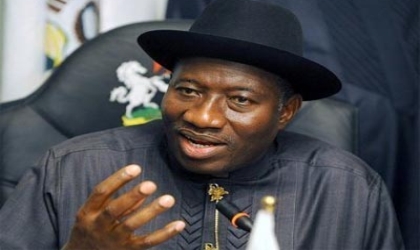
President Goodluck Jonathan



The Independent National Electoral Commission (INEC) has extended the deadline for political parties to submit the list of candidates for the 2027 governorship and state Houses of Assembly elections from Saturday, August 8, to Tuesday, August 11, 2026.
The commission announced the extension in a statement issued on Saturday and signed by the National Commissioner and Chairman of its Information and Voter Education Committee, Mohammed Haruna.
According to INEC, the decision followed appeals by political parties for additional time to complete the submission process through the dedicated online portal.
“The submission window, which according to the revised Timetable and Schedule of Activities for the General Election was originally scheduled to close on Saturday, 8th August, 2026, has been extended to Tuesday, 11th August, 2026,” the commission said.
In a a related development, INEC announced the suspension of PVC collection in Osun State ahead of the August 15 governorship election.
The commission said voters who applied for replacement of lost, damaged or defaced Permanent Voter Cards would have until midnight on Sunday, August 9, to print downloadable copies of their cards.
The electoral body explained that the deadline was necessary to enable it compile data on downloaded PVCs and produce final statistics on the total number of cards collected ahead of the election.
INEC said PVC collection in Osun commenced at the Registration Area level from July 22 to 28, 2026, but was extended to July 31 following complaints about large crowds and difficulties experienced by voters at collection centres.
The exercise subsequently moved to the local government level and ran from August 1 to 7.
The commission also disclosed that replacement downloadable PVCs had been made available to voters in Odo-Otin and Ife Central Local Government Areas following the theft of cards during attacks on the two collection centres.
It stressed that the stolen cards could not be used to vote.
INEC reassured Osun residents of its preparedness for the August 15 governorship election.
“The commission reiterates that the stolen cards cannot be used to vote.
“INEC reassures the people of Osun State of its readiness to conduct a free, fair, credible and inclusive governorship election on 15th August, 2026,” the statement said.
The commission said the deadline, initially set for Saturday, 8 August, has been extended to Tuesday, 11 August 2026, following appeals from political parties for more time.
INEC also announced that the window for voters who applied to replace lost, damaged or defaced PVCs to download their replacement cards will close at midnight on Sunday, 9 August.
The move is to enable the commission compile final PVC collection figures ahead of the 15 August Osun governorship election.
INEC said replacement downloadable PVCs have also been provided to affected voters in Odo-Otin and Ife Central Local Government Areas after hoodlums carted away cards from two collection centres, stressing that the stolen cards cannot be used to vote.
The commission reaffirmed its readiness to conduct a free, fair, credible and inclusive election in Osun State.
Gov. Kefas made the remarks over the weekend at the Federal Medical Centre (FMC), Jalingo, during the flag-off of the second phase of the Renewed Hope Medical Outreach in Taraba State, organised as part of activities marking Prof. Yilwatda’s 58th birthday.
The governor commended Prof. Yilwatda for choosing to mark his birthday by providing medical care to people in need.
“What Professor Nentawe did is a powerful demonstration of what leadership should be,” Gov. Kefas said.
He assured that his administration would continue to support initiatives that complement government efforts to improve healthcare delivery and the wellbeing of residents.
Speaking at the event, Prof. Yilwatda called on Nigerian leaders to embrace the culture of giving and use their positions to touch the lives of the less privileged.
He said his decision to celebrate his 58th birthday in Taraba State was deliberate and informed by the needs of underserved communities, particularly people who face difficulties accessing healthcare because of distance and financial constraints.
According to him, the intervention followed a needs assessment and was extended across the three senatorial districts of the state.
He said the exercise commenced on August 3 at Takum General Hospital and covered the Federal University Teaching Hospital, Wukari; First Referral Hospital, Sunkani, Ardo-Kola Local Government Area; General Hospital, Bali; General Hospital, Gembu; and FMC Jalingo.
Prof. Yilwatda said the intervention provided medical services to thousands of beneficiaries, including people who required surgical procedures.
He said sustainable national development could only be achieved when strong institutions placed Nigerians at the centre of development.
“Leadership is about service,” he said, urging political and public leaders to make giving back to society an important part of their responsibilities.
He reaffirmed his commitment to serving Nigeria and its people, saying his personal vision was to make every day of his life useful to humanity.
“Every day that I live, the vision is: let it be useful to humanity,” he said.
The Taraba State Commissioner for Health, Dr. Bordiya Buma, commended the initiative, saying it was consistent with the Renewed Hope agenda and efforts to strengthen healthcare delivery in the state.
Dr Buma said the second phase followed the successful completion of the first phase, which was conducted simultaneously in six local government areas, with two LGAs selected from each of the three senatorial districts.
According to him, more than 10,000 patients were attended to during the first phase, including people with medical and surgical conditions.
He disclosed that 327 general surgeries, 71 eye surgeries and 575 dental procedures were carried out during the exercise.
The commissioner expressed appreciation to President Bola Tinubu for the Renewed Hope Medical Outreach and thanked Prof. Yilwatda for supporting the initiative and choosing Taraba State as a beneficiary.
The Minister of Health and Social Welfare, Prof. Muhammad Ali Pate, also commended Prof. Yilwatda for choosing Taraba State to mark his 58th birthday through a medical outreach.
Prof. Pate said making healthcare the centrepiece of the birthday celebration was significant because health affects everyone.
-

 News2 days ago
RSG Targets Nine Million Residents in Mosquito Net Distribution Campaign
-

 Oil & Energy2 days ago
Aiyedatiwa Signs New Electricity Bill
-

 Maritime2 days ago
Marine Minister Commends President Tinubu On NPERA Bill Assent
-

 Oil & Energy2 days ago
NLNG Commissions Research And Innovation Centre In RSU
-

 News2 days ago
KenPoly Holds Eight Convocations, August 29
-

 News2 days ago
RSG Begins Another Phase of Projects Commissioning Today
-

 News2 days ago
RMAFC Completes Revenue Sharing Review, Proposes New Pay
-

 Maritime2 days ago
NAGAFF Petitions IGP Over Alleged Maritime Police Harassment