
Features
Nigeria’s Constitution And Press Freedom

Nigerian journalists on
May 3, 2014 joined their counterparts worldwide to celebrate the World Press Freedom Day, a date set aside by the United Nations General Assembly in 1993, to apart from inform the general public on events and issues that affect them but to also let the people know that the media is a significant force in modern-day culture and politics.
It is a day meant to celebrate the fundamental principles of press freedom, evaluate press freedom around the world, defend the media from attacks on their independence and to pay tribute to journalists who lost their lives in the exercise of their profession, among others. Each time the World Press Freedom Day is celebrated, one is forced to pause and ask this question: How freely are journalists who practice in Nigeria and other parts of the world? There are sustained attacks on journalists globally.
It is an undeniable fact that the world today is currently experiencing a turbulent period like never before. In Nigeria, the unfortunate events of Boko Haram terrorism and insecurity around us are enough to cite as examples, as thousands of innocent people including media men who are doing their job, have lost their lives, leaving behind their wives, children, parents and siblings. As this year’s World Press Freedom Day was celebrated, majority or many journalists are currently languishing in different countries innocently, most of them without access to lawyers. They did not commit any offence, other than discharging their duties professionally.
Right now, some Al-Jazeera journalists are being detained by Egyptian authorities. They are Peter Greste, Abdullah Shami, Mohammed Fahmy and Baher Mohammed who have been in detention for about 5 months now, according to Muslim Students Society of Nigeria (MSSN), Lagos State chapter via its monitoring outfit, Media 961. The body’s Director, Abdurrasheed Abubakar said the Al-Jazeera journalists have appeared seven times in court for performing their statutory role, pointing out that journalists are not criminals. “It is the fundamental rights of the people to know, and it is the responsibility of the media to give them the most objective and unbiased information, he stressed and called for the immediate release of the reporters and other journalists who are going through the same treatment in other parts of the world.
In its report, the committee to Protect Journalists recently said over 500 reporters have been in prison worldwide in the last two years while the International Federation of Journalists reported that 105 media workers were killed in 2013.
The group added that while extremist groups in crisis-ridden regions have been behind a good numbers of these injustice meted on journalists, in certain cases, government officials, even the allied forces with the United States of America are culpable. “Back home in Nigeria, we are hitherto ranked among socially responsible media in the world, yet our leadership has failed to address problems bedeviling the media industry, one of which is poor welfare package.
Journalists in Nigeria, according to facts, are among the worst remunerated in the world, most journalists live on the gratifications they receive from people, which is seen as unethical. They are not paid wages by their employers”.
In the area of attacks on Nigerian journalists, we say thanks to God for making democracy to thrive after the many years of military rule in this country. The major problem with the Nigerian journalists is the constitution which failed to provide protection for the press, rather than section 36 which provided for freedom of the individual to receive and impart information without interference, and in a manner that is justifiable in a democratic society. Section 21 of the constitution gave the press, including radio and television and other agencies of the mass media the obligation of upholding “the fundamental objectives” of the constitution and to “uphold the responsibility and accountability of the government to the people”, it gave no special protection for press freedom in upholding the obligations.
In reality, government interference during the Shehu Shagari years was commonplace and several journalists lost their jobs for giving out stories considered unpalatable by the authorities. At the state and federal levels, government media was used to propagate only the views of those in power instead of serving the interests of the public as stipulated by the constitution. Much as the press and other media have a very vital function to perform in our democratic system of government uptill today, and even called the ‘court of public opinion’, there is nothing in our constitution to support the contention that they form the fourth arm of government . The right to freedom of expression under section 36 of the constitution is one which belongs to all who have to hold opinion, receive and impart ideas or disseminate information but stipulates no separate treatment to the press or mass media.
Compared to the military, the civilian government under Shehu Shagari was more subtle in its approach to control the mass media. Indeed, journalists in Nigeria witnessed an unfortunate era during the military reign when late Dele Giwa, Ray Ekpu, Dan Agbese and Yakubu Mohammed founded the Newswatch magazine in 1985 and in that same year, Dele Giwa was killed through a parcel bomb in his residence, and the publication was banned in 1987 for publishing details of the Political Bureau set up to articulate popular opinion on Nigeria’s political future. There had been a long list of media houses arbitrarily closed by the military authorities for publishing stories considered offensive while the arrest of journalists also became overly frequent.
Really, freedom of the press is better protected under a civilian government than a military regime. This is why the Freedom of Information Bill succeeded in becoming a low today. Although the FOI is yet to be fully operational, there is no doubt that Nigerians and journalists are protected under that law. Journalists are weary of the non-entrenchment of a clear protectional clause for the practice of their profession. It is, therefore, important at this moment of constitution review, to call on the National Assembly Committee on the 1999 Constitution Review to ensure that issues affecting the media and practitioners are entrenched in the proposed new constitution to enable them to carry out their statutory obligations of informing, entertaining and educating the people.
It is hoped that a new constitution will be drawn up for the next civilian dispensation which will give the mass media the obligation of upholding the fundamental objectives of the constitution and ensuring that the responsibility and accountability of the government to the people is uphold. The new constitution should guarantee freedom of expression for journalists, it should also give specific protection to the press to equate press freedom with freedom of expression for the individual. The press is equipped to collect, analyse and disseminate information to the public for the good of the general society, and is, therefore, better placed to vindicate the right of the people to know the activities of those in power, interprete and provide information to the public. An institution that is responsible for creating a bridge between the government and the people require certain specific guarantees in the constitution to ensure its effectiveness.
Freedom of the press should be clearly enshrined in the new constitution and this freedom should adequately guarantee to the press the right to receive and disseminate information and protect the source of such information. Any existing law that tends to unduly strangulate the freedom of the press should be reviewed, because the failure of the Nigerian constitution to specifically guarantee press freedom remains a source of anxiety for most journalists as they want the law that will abridge the freedom of speech or of the press. There is also need to give legal protection to journalists to guarantee the confidentiality of their sources in aid of freedom of information.
No matter the circumstances, journalists should be able to say no to the government and politicians when they go wrong, whatever the medium. As journalists, we should not at all times try to identify the interests of our owners and protect them through what we publish. Several factors inhibit press freedom and the free flow of information and some of these factors are induced by the legal framework under which the press operates and government’s extra-legal and arbitrary control of the press. The right of the press to seek, obtain and publish news and information without constraint should be specifically entrenched in the Nigerian Constitution.
All restrictive laws on the press should be expunged from the statute book while the freedom to information should be fully guaranteed. The National Assembly Committee on Constitution Review must ensure that all clauses restricting the free and independent practice of journalism are not included in the new constitution.
The press, whether privately or government-owned should be made free from political manipulations to permit independent and unhindered operation. Harassments, arrests and detention of journalists, including the arbitrary closure of media houses have had a very negative effect on press freedom in Nigeria, and has seriously affected the quality of the Nigerian press, especially in the nature of information provided to the public. There is the need for legal restraint on the government and security agencies to prevent their arbitrary interference, harassment and closure of media houses.
There should be specific constitutional provision forbidding the closure of media houses, while journalists accused of violating any criminal law should be treated in accordance with the due process of law this means prompt and fair trial before competent courts. There is no doubt that a system of information management that gives journalists access to official information will ultimately promote responsible journalism and put paid to rumour mongering and publication of unconfirmed or unsubstantiated reports. As Nigeria seeks to restructure and achieve a new constitution for its people, there is the need to promote openness and condemn secrecy in the conduct of all forms of official business.
The current state of press freedom in Nigeria falls very short of the standards set by the international bill of rights and the African Charter on Human and Peoples’ Rights. So, the time to redress this shortcoming for the government and people is now.
In view of these, the Nigeria Union of Journalists (NUJ), the Nigerian Press Council (NPC), Nigeria Guild of Editors (NGE) and the Broadcasting Association of Nigeria (BON) should see the welfare of journalists, dead or alive, as a priority and work with both government and media owners on how to effect a standard wage for the practitioners of journalism to live happy and good life, to put an end to all forms of unethical practices among members and ensure that a clear and absolute press freedom is entrenched in the new constitution and also enforced to the letter.
Shedie Okpara
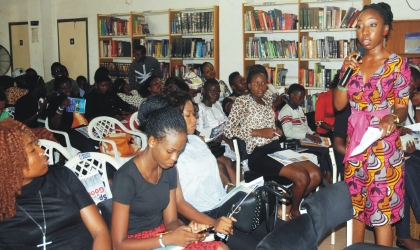
Guest speaker, Edem Andah (right), speaking during a lecture on the importance of Freedom of Information Bill vis-a-vis Press Freedom for the Development of Democracy in Nigeria to mark World Press Freedom Day at the American Corner, Ibadan, recently..




It has been 25 years of impactful development of the Niger Delta region, facilitated by theNiger Delta Development Commission. NDDC. Without doubt, it has been a remarkable journey, marked by significant milestones and daunting challenges.
For the past week, the NDDC has been celebrating its achievements, beginning with a thanksgiving service in Akure, Ondo State, on July 6, drawing stakeholders and Niger Deltans to express gratitude to God for the Commission’s journey so far.
Taking off on the wings of the Oil Minerals Development Commission, OMPADEC, in 2000, the NDDC has grown into a symbol of federal presence in the oil-rich Niger Delta region.
The celebration moved from spiritual reflection and thanksgiving to strategic communication, with a World Press Conference held in Asaba, Delta State, on Monday, the 7th of July. There, members of the Fourth Estate across all media gathered in what was perhaps the most extensive media engagement of its kind. The NDDC Managing Director and Chief Executive Officer, Dr. Samuel Ogbuku, reaffirmed the Commission’s commitment to its motto of “making a difference.”
Dr. Ogbuku stated, “The President gave us a matching order during our inauguration to positively turn things around in the Niger Delta region.” That presidential directive, he noted, continues to guide the Board and Management as they pursue legacy projects across the region.
From electricity restoration in Ondo to road linkages in Bayelsa and Akwa Ibom, the NDDC’s impact was showcased in clear, tangible terms. “We commissioned the 45-km double-circuit 33KV feeder line from Omotosho Power Station to Okitipupa in Ondo State,” Dr. Ogbuku recalled, “bringing electricity back to 25 local governments after 15 years in darkness.” This was just one of several landmark interventions highlighted during the press briefing, underscoring the Commission’s renewed vigour under the current leadership.
The Managing Director spoke candidly about the setbacks caused by years of instability in leadership. “Frequent changes in management and boards have slowed our progress,” he admitted. “But today, we are targeting legacy projects. Our mandate is to complete those critical projects.” He emphasised that the Commission had transitioned from a transactional mindset to one of transformation, including the digitisation of procurement processes to ensure transparency and accountability.
Other top executives echoed similar sentiments. The Chairman of the Governing Board, Mr. Chiedu Ebie, stressed the importance of collaboration, particularly with the media, whom he described as “critical stakeholders” in advancing development. Alabo Boma Iyaye, the Executive Director of Finance and Administration, noted that the celebrations would run until Saturday, July 12, culminating in a gala night and plenary session in Port Harcourt.
Perhaps, the most significant message from the silver jubilee celebration is the renewed hope that the Niger Delta can finally experience holistic and sustainable development.
According to Ogbuku, “Through the initiative of the Board and Management, we have restructured the administrative architecture of the Commission to its 13 statutory Directorates, introduced robust Corporate Governance protocols… This formalised a value- driven institutional culture anchored on ethics and performance.”
As the weeklong celebrations continue across different states in the region, the NDDC appears determined not just to celebrate its past but to chart a bold course for the future.
The people of the Niger Delta are watching, hopeful that the next 25 years will be defined not by promises, but by lasting progress that transforms lives and communities, truly making a difference.
The celebration also featured a movie premiere titled “Making a Difference”, which traced the Commission’s journey and told stories of transformation in communities once plagued by underdevelopment. For many observers, the film served as both an emotional tribute and a powerful reminder of the NDDC’s role in shaping the destiny of the region.
The Governing Board and management of the NDDC have again proven to Nigerians, particularly the people of the oil-bearing Niger Delta region, that history does matter. They have also shown clearly that extraordinary personalities can upturn calculations and permutations. The above assertion was evidenced by the torrents of praises, accolades, and commendations poured on the Commission and its management and board by critical stakeholders during its week-long 25th anniversary celebration.
Beginning with Ondo State, one of the NDDC mandate states, Ondo Governor, Lucky Aiyedatiwa, hailed the management of the NDDC for the peace and development currently prevailing in the Niger Delta region. He said the Commission, under the current management and board, has succeeded in bridging developmental gaps in the region, noting that NDDC’s emphasis on partnerships and collaboration aimed at driving sustainable development across the Niger Delta has ushered in unprecedented progress.
Aiyedatiwa, who spoke at the Thanksgiving Service of the NDDC held at St Thomas’s Anglican Church, Akure, the Ondo State capital, stressed that the commission has undoubtedly lived up to its established mandate, commending the Board and Management for their exemplary leadership and commitment.
The Governor hailed the commission’s commitment and dedication to project conception, implementation, and completion, noting that the NDDC has established a culture of delivery and the region would no longer witness abandonment of projects as was the case in the past.
He said, “As we celebrate the Silver Jubilee of the NDDC, we must acknowledge the progress we have made and also recognise that there is still much work to be done as the Niger Delta region continues to face significant development challenges and we must work together to address these issues. “I urge the NDDC to continue to improve on its activities, ensuring that projects are tailored to the needs of the communities we serve. Let us work together to unlock the potential of our region, promote economic growth and enhance the lives of our people. We are partners in progress, unity and development.”
From Ondo State to Asaba, the Delta State capital, it was the same rain of praises. The Asaba monarch, the Asagba of Asaba, Obi Epiphany Azinge, on his part, was full of praises for the NDDC for its achievements in the past 25 years.
Obi Azinge spoke when Ebie led a delegation of the Commission’s Board and Management to pay a courtesy visit to him in his palace in Asaba, the Delta State capital. The Royal Father commended the NDDC for its intervention in several sectors across the Niger Delta region.
He expressed delight with the foreign postgraduate scholarship programme, which had helped many youths from the Niger Delta upgrade their knowledge.
He also acknowledged the contributions of the NDDC Chairman, whom he said had served the Delta State Government in different capacities. He noted that Ebie served meritoriously as Delta State Commissioner for Basic and Secondary Education and later, Secretary to the State Government. The monarch thanked the NDDC for selecting Asaba as the venue for some of the activities marking its 25th anniversary, such as a press conference and the movie premiere.
Earlier, the NDDC Board Chairman congratulated Asagba on his ascension to the throne of his forefathers, saying he was eminently qualified for the position. Ebie expressed optimism that the Asagba’s reign would bring good tidings to Asaba, which serves as both a Kingdom and the capital of Delta State.
He stated that the NDDC had come of age and was now a big brother to the new development agencies in Nigeria’s geo-political zones. Ebie disclosed that as part of the silver jubilee celebration, the Commission was going around the nine States of the Niger Delta.
The NDDC Chief Executive Officer pledged that the NDDC’s commitment to adhering strictly to the President’s directive to the Commission to complete all ongoing projects in the region, including roads, bridges, schools, and healthcare facilities. He disclosed that the Commission was engaging all stakeholders to ensure harmony and cooperation in the task of developing the hitherto neglected Niger Delta region.
He noted that, ”It is not only by our efforts; it is the collaborative efforts from all the stakeholders who believe the time has come when there should be stability in the NDDC and that stability is a challenge to us to ensure that we deliver development to the people of the Niger Delta region.”
Ifeatu Agbu
Agbu wrote in from Port Harcourt.
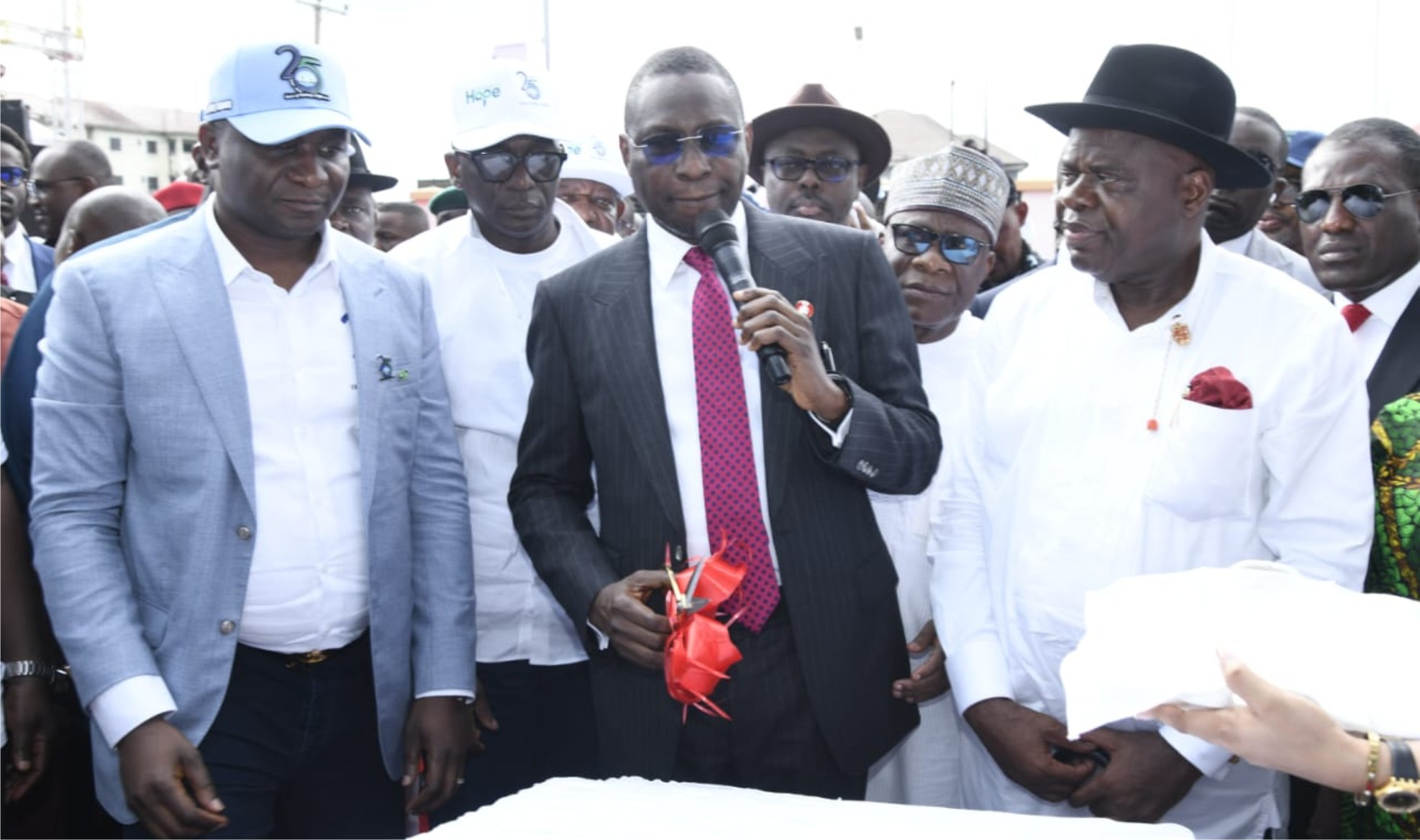
The mandate of the Niger Delta Development Commission, NDDC, is to facilitate the rapid and sustainable development of the Niger Delta region, while that of the Economic and Financial Crimes Commission, EFCC, is to investigates financial crimes and put corrupt practices in check.
Given their different roles, the idea of an alliance between the two organisations may seem far-fetched. However, with the NDDC Managing Director, Dr Samuel Ogbuku, and the EFCC Executive Chairman, Mr. Olanikpekun Olukoyede, it is not just an idea; it is a reality.
The unique collaboration between the NDDC and the EFCC has given rise to the Renewed Hope Multi-Purpose Training Centre, unveiled on Tuesday at Otuokpoti Community in Ogbia Local Government Area, Bayelsa State.
According to the NDDC Managing Director, the vast training complex was executed with funds recovered on behalf of the Commission by the EFCC.
Ogbuku explained that the Bayelsa training centre was funded through the money recovered by the EFCC and executed under a signed performance bond, ensuring transparency and impact. He noted that the facility represented one of several such centres being constructed in Delta and Rivers States. He said: “We have similar facilities currently under construction in Odi, Bayelsa State, while the ones in Delta State are being built in Patani and Ozorro and another two in Rivers State.”
He observed that the Multi-Purpose Training Centre, which was completed in record time, was a partnership between the EFCC and the NDDC, as the anti-crime agency had recovered the funds that facilitated the project’s execution.
Ogbuku observed that the facility, which could accommodate 1,000 persons, represented a significant step toward empowering local communities through skills development and inclusive growth.
The training centre’s components, which include a school, hospital, cafeteria, police post, and recreational centre, are all designed to support training, healthcare, and emergency accommodation within a single integrated complex.
Speaking at the inauguration ceremony, the EFCC Chairman assured the NDDC of the release of more recovered funds in the coming weeks.
Olukoyede described the NDDC as a “renewed and transformed government agency.” He assured that the EFCC would do everything to recover all outstanding statutory contributions due to the NDDC from oil companies.
He noted: “We have made several recoveries on behalf of the NDDC, and we will not relent in this direction. We are encouraged by the fact that the NDDC is making the Renewed Hope Agenda of the Federal Government a reality in the Niger Delta region.”
Olukoyede commended the NDDC for its institutional and policy reforms, declaring that the people of the Niger Delta will have every reason to celebrate the current leadership of the Commission. He described the NDDC as a beacon of good governance under President Bola Ahmed Tinubu.
He noted: “The Niger Delta is the goose that lays the golden egg and should not be denied the benefits of that golden egg. On our part at the EFCC, we must do everything within our power to ensure that the three per cent statutory contribution due to the NDDC is recovered and handed over to the Commission. We are going to continue supporting you.”
He said further: “Under this President, NDDC is working; good governance is being delivered. It is my delight to be part of this transformational agenda. The Renewed Hope Agenda is no longer a slogan—it is a reality. For the first time, people are identifying with what NDDC is doing.”
Olukoyede commended the NDDC, saying the Commission has refined its processes to uphold the principles of probity. This aligns with the agency’s head’s emphasis on upholding transparency and accountability in the country’s affairs.
The Chairman of the anti-crime agency confessed that his perspective on the NDDC was turned around in 2024, when the NDDC management, led by Ogbuku, paid him a courtesy visit at the EFCC’s headquarters in Abuja.
Olukoyede stated that he was impressed by the Commission’s “Rewind to Rebirth” initiative.
He declared: “The five minutes of interaction with the MD left me with a different perception of NDDC. Maybe, we will begin to see an NDDC that is a symbol of pride, accountability, transparency and able to deliver on its mandate.
“From his presentation, you can see that he is ready to bring a change, and that is the exact thing that we stand for in EFCC.”
Assuring that the EFCC would continue to assist the NDDC to achieve its mandate, he said: “We have been working with you to make recoveries; we will continue to do more.
“The collaboration is something we need to take to the next level, and with what you have put on the table I think we are ready to work with you to strengthen your systems and processes and to take the NDDC to the next level.”
In his remarks, the Minister of Niger Delta Development, Engr. Abubakar Momoh, praised the NDDC Board and Management for their unity of purpose and commitment to service delivery, stating that the level of harmony and stability within the Commission is unprecedented.
He declared: “What we are witnessing here today has never happened in the history of the NDDC. Since I assumed office as Minister, I have not been called upon to settle any crisis within the Commission. This is a testament to the teamwork between the Board and Management.”
Also speaking, the Chairman of the NDDC Governing Board, Mr. Chiedu Ebie, emphasised the human capital development focus of the two projects commissioned, noting that reforming the NDDC is an ongoing but rewarding process.
He stated: “We are moving from transaction to transformation. We are doing our best to improve not just the reputation of the NDDC, but everything that concerns the Commission. Today is about promoting and celebrating human capacity.”
Without a doubt, the Niger Delta region is confronted with ecological and environmental challenges that should, perforce, attract significant funds from the Federal Government and the oil companies operating in the region.
Sadly, this has not been so, thus limiting the capacity of the NDDC to fulfill its mandate of driving the development process and transforming the Niger Delta region into one that is “economically prosperous, socially stable, ecologically regenerative and politically peaceful.”
It is rather unfortunate that, despite the spirited efforts by successive boards and managements of the NDDC to meet the expectations of the people, their efforts have not been matched with commensurate funding.
The issue of inadequate funding is resurfacing again. Indeed, it is an inconvenient truth that will remain on the front burner until it is fully addressed.
That explains why the NDDC Managing Director highlighted the issue during interactive sessions that the Commission’s Board and Management held with the relevant Committees of the National Assembly in Abuja last year.
Ogbuku told the House of Representatives Committee on NDDC, chaired by Hon. Ibori-Suenu Erhiatake, that the Commission is owed over N2 trillion, arising from withheld funds and underpayments by both the government and the oil companies. He blamed this on non-compliance with the Act establishing the Commission.
Given the enormous impact of their activities on the environment, the oil companies are expected to be at the forefront in the critical task of urgently developing the oil basin that has suffered so much neglect in the past. It is, in fact, in their interest to develop the communities where they operate to guarantee peace, which is very necessary for them to continue with their work.
Thankfully, both the Senate and the House of Representatives promised to assist the NDDC in recovering its outstanding funds. In their various interactions with the NDDC leadership, the lawmakers expressed concern about the disregard for existing laws governing the Commission’s funding.
The Chairman of the Senate Committee on NDDC, Senator Asuquo Ekpenyong, expressed displeasure over the disregard for the law by the International Oil Companies (IOCs) and promised to call them to order.
The Senate Committee Chairman stated that proper funding would help NDDC to adequately address the sustainable development of the Niger Delta region, noting that the challenge of developing the region was enormous and that all relevant contributors to the NDDC must play their roles diligently.
Senator Ekpenyong said that in discharging its oversight functions, his committee will ensure that every contributor to NDDC pays what they owe the Commission, “because we cannot afford to toy with the development of that very important region. We owe it to the country to make sure that we improve the living conditions of the people of the region.”
It is reassuring to note that both chambers of the National Assembly are concerned about the pressing funding challenges facing the NDDC and are taking steps to address the situation.
The lawmakers understand that we have a responsibility to adequately fuel the vehicle chosen to drive the development process in the Niger Delta region.
In 2023, the House of Representatives unveiled plans to investigate the activities of International Oil Companies (IOCs) operating in the Niger Delta region, as well as the recovery of over $4 billion allegedly owed to the NDDC.
The resolution was passed sequel to the adoption of a motion sponsored by Hon. Donald Kimikanboh Ojogo, who frowned at the flagrant breach of the NDDC Act, 2000, which was established in response to heightened agitations and violent yearnings for special intervention in the oil-producing states.
He said: “The House is aware that the indebtedness of the IOCs to the NDDC had culminated in the drive by the Economic and Financial Crimes Commission (EFCC) to commence the debt recovery process.
By Ifeatu Agbu
-

 News2 days ago
RSG Targets Nine Million Residents in Mosquito Net Distribution Campaign
-

 Oil & Energy2 days ago
Aiyedatiwa Signs New Electricity Bill
-

 Maritime2 days ago
Marine Minister Commends President Tinubu On NPERA Bill Assent
-

 Oil & Energy2 days ago
NLNG Commissions Research And Innovation Centre In RSU
-

 News2 days ago
KenPoly Holds Eight Convocations, August 29
-

 News2 days ago
RSG Begins Another Phase of Projects Commissioning Today
-

 News2 days ago
RMAFC Completes Revenue Sharing Review, Proposes New Pay
-

 Maritime2 days ago
NAGAFF Petitions IGP Over Alleged Maritime Police Harassment