
Oil & Energy
National Confab Goes Tough On Gas Flaring

The National Conference
concluded its consideration of the report of the Committee on Energy with a resolution by the conference that the powers of the minister to grant exemption to gas flaring should be abolished under Nigerian laws.
It was also resolved that all new non-associated gas produced in Nigeria be reserved for the domestic market until such a time that domestic quota is satisfied; and that a pricing regime for gas should be developed to make this possible.
Conference adopted the recommendation of a total ban on the flaring of associated gas and that any oil field that does not have infrastructure to capture associated gas should be shut down by the end of 2014.
Delegates agreed that communities in the Niger Delta region be paid adequate compensation for gas flaring that has affected their lives and environment.
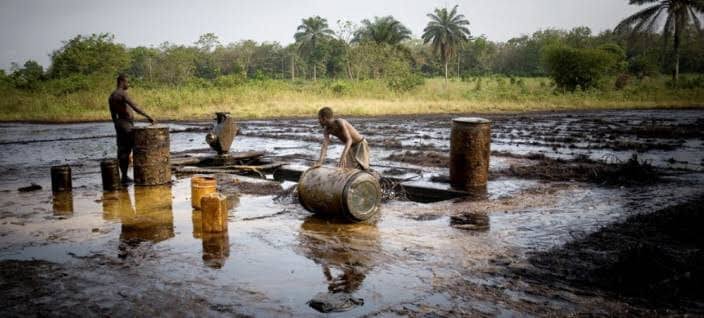
It was equally resolved that proceeds from pollution tax to be collected from oil companies be used to clean up communities that are impacted by oil spill.
Conference demanded immediate initiation of efforts to clean-up oil spill and restore degraded environments in the Niger Delta in line with the recommendations of the United National Environment Programme.
In order to make fuel supply available to people in the riverine areas, Conference resolved that government should investigate why the floating petrol stations built in the past have not worked, and take steps to resuscitate them.
It was also resolved that government finds immediate means of improving gas supply and transmission to ramp up power delivery to the system as a solution to current cash shortfall in the sector.
In addition, Conference said government should implement the National Gas Plan which main objective is to transmit gas to all the states of the federation for industrial and domestic use and to the Independent Power Projects.
Delegates however voted against a declaration of a state of emergency in the power sector in line with the promise made in 2008 by the late President Umaru Yar’Adua during a visit to France.
It was however resolved that government should release take-off grant to the Hydro Electric Power Area Development Commission so that communities in river banks would have access to power.
Adequate representation of Nigerian engineers in the planning and implementation of all aspects of the power sector reform programme was also recommended by the Conference.
Delegates also asked government to ensure level playing ground for the independent power producers and other genuine investors in the power business.
As a matter of urgency, Conference said government must set up a committee to review the current National Electric Power Policy to make it suitable to provide a quantum leap required to propel Nigeria into the top 20 economies of the world; and that the Electric Power Sector Reform Act be aligned with the new policy.
It was observed that this might involve revisiting the contract entered into with the new private owners with a view to charting a way forward that would ensure increased, improved quality and sustainable electrical power supplies to Nigerians.
Conference agreed that the new private power companies be given two years to stabilize and provide efficient electricity supply to every Nigerian.
To realise the vision of providing electric power supply at affordable cost, Conference resolved that a deliberate policy be put in place to encourage local production of spare parts and all electrical equipment needed by the electricity supply industry.
Politicians, especially elected public officials, and aspiring politicians had a demand placed on them; that of making availability and usage of liquefied petroleum gas part of their constituency project undertaking.
Justus Awaji, Abuja



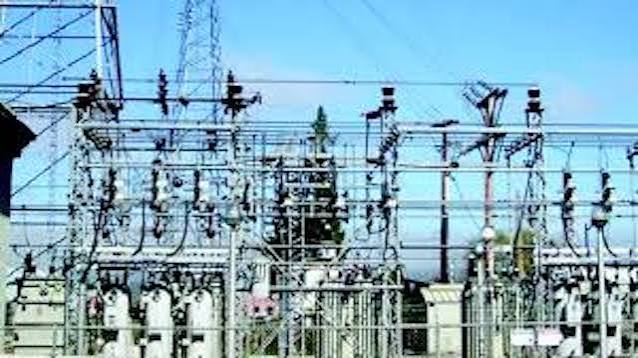
Utilities built a total of over 21,000 km of new transmission lines last year, the International Renewable Energy Agency reported this week at COP31, citing data from a group called the Utilities for Net Zero Alliance. This is 50% more than the new transmission lines installed during the previous year, IRENA noted in its report.
“Power grids will make or break not only the energy transition but also the world’s ambition to raise global electrification to 35% by 2035, as championed by the Turkish COP31 Presidency,” said the director-general of IRENA, Francesco La Camera. “IRENA’s analysis shows that global grid investment must more than double, reaching a cumulative USD 10 trillion by 2035,” he added, noting that ambition would not be enough and that “We must move from targets to implementation, from individual projects to system-wide transformation, and from commitments to delivery at scale.”
Transmission line capacity has become one of the biggest obstacles in the path of the energy transition. Due to their weather-dependent, variable output nature, wind and solar installations generate electricity intermittently. Because the best locations for such installations are often far from electricity demand centers, having to waste output in times of low demand is a frequent occurrence with both. Called curtailment, wind and solar electricity waste increases costs for the alternative energy sources.
The solution, net-zero proponents such as the International Energy Agency believe, is to expand the grid by building new transmission lines connecting wind and solar installations with demand centers. Back in 2023, the IEA said utilities needed to add or replace some 50 million km of transmission lines by 2040 if Paris Agreement signatories were to meet their commitments.
Forecasting how many millions of kilometers of cable need to be built or replaced, however, is one thing, while paying for it is quite another. Last year, the European Commission estimated that the European Union alone needs to cough up between $2 trillion and $2.3 trillion on grid upgrades by 2050 to achieve the Commission’s climate goals. For context, EU investment in the grid in 2024 stood at $90.5 billion. This would need to rise to over $100 billion annually, according to energy think tank Bruegel.
$100 billion in grid buildout investment is no small potatoes, yet some believe this investment would be inevitable as energy security takes priority over climate change concerns. Wood Mackenzie said this week that countries that prioritize energy security over emission-reduction plans could achieve lower emissions through faster electrification, replacing hydrocarbon import dependence.
“The energy transition has arrived at a genuine crossroads,” Prakash Sharma, Wood Mackenzie’s head of scenarios and technologies, said. “The world is no longer moving in one direction. Nations are making fundamentally different choices about how to power their economies, and those choices are producing outcomes that confound conventional wisdom.”
Energy security has indeed come to the fore since February, with emission reduction taking the back seat as governments struggle to keep energy relatively affordable without emptying state coffers and slipping into a recession. This has proven hard for many that depend on imports of oil and gas, with the effects of this dependence especially obvious in most of Asia and the European Union.
Reducing this dependence on imports has become an obvious path for many of these governments, as much as it is possible. And the most obvious way of reducing this dependence has been electrification, wherever possible. According to Wood Mackenzie, the impact of the war in Iran on energy prices would drive a shift to electrification, a wind and solar buildout, and nuclear generation expansion to produce more energy locally. This, in turn, would inevitably lead to lower emissions, even though, ironically, these lower emissions are not the priority.
COP31 host Turkey has proposed that participants commit to electrification, aiming for electricity to account for 35% of final energy. That would be up from some 20% today, with most of the world’s final energy still coming from hydrocarbons despite the net-zero rush from the last ten years. What is interesting, however, is that the proposal does not include a stipulation for reducing the use of hydrocarbons. Based on Wood Mackenzie’s scenario for inadvertent emission reduction, the lower use of hydrocarbons would happen organically rather than by means of government regulation enforcement.
Such developments would be an interesting departure from what has become the standard modus operandi of pro-transition governments: regulation, emission-cutting mandates, and penalties for using hydrocarbons, such as credit offsets. Instead, the energy ramifications of geopolitical events could lead to what one could describe as an organic shift away from imported hydrocarbons, while countries with their own mineral resources exploit those more fully. Whether such an organic shift would indeed reduce the consumption of oil, gas, and coal, however, remains to be seen.
By: Irina Slav
-
Business5 days ago
BSG Partiner American Coy To Invest $100m In Gas Processing
-

 Oil & Energy5 days ago
FG To Double Oil, Gas Reserves, Moves To Intensified fresh Exploration
-
Business5 days ago
Seme Customs Intercepts Live Pacific Ridley Sea Turtle
-
News14 hours ago
Parents Protest Scholarship Scheme Suspension At PAMO Varsity
-
 News12 hours ago
US Hails Nigerian Military For Rescuing 125 Kidnap Victims
-
Sports4 days ago
Fernandes Turns Down Man Utd Offer
-
Business5 days ago
159m small businesses registered on database in three years – SMEDAN boss
-
Sports4 days ago
Rivers To Host National Table Tennis Championship