Connect with us

Oil & Energy

FG Woos FDLs With Oil, Gas Summit

Published

on

The Federal Government
has inaugurated the organising committee for the 2014 Nigeria Oil and Gas Trade and Investment Forum.
The inter-ministerial committee was inaugurated last Wednesday in Abuja by Minister of State for Industry, Trade and Investment Mr Samuel Ortom,
Ortom reiterated that the Federal Government would continue to promote the Onne Oil and Gas Free Zone Authority in Rivers  State as the gateway for the oil and gas industry in Africa.
He said that the present administration was committed to consolidating the successes achieved in the past two editions of the forum to further strengthen the economy.
The minister said the 2013 Oil and Gas Trade and Investment Forum recorded over 2,500 participants, 100 exhibitors and over 500 investment enquiries.
“I am particularly happy that last year’s edition of the forum was a huge success.
“I am proud of the achievement of the ministry’s organising committee and our partner, Orlean Investment West Africa Limited,” Ortom said.
He said that the Onne Oil and Gas Free Zone Authority was structured and designed to address specific needs and requirements of the corporate bodies in the industry.
“Onne Oil and Gas Free Zone was established as a tax-free centre for processing of goods that encourage acquisition of skills, job creation and transfer of technology.
“It also encourages local content participation, enhances foreign exchange earnings and backward integration in the country,” he stated.
Ortom urged the organising committee to work hard to ensure that this year’s forum recorded better success in terms of attracting more domestic and foreign investment into the sector.
The committee’s terms of reference include organising a two-day trade and investment forum on oil and gas from Oct. 30 and to showcase the Onne Oil and Gas Free Trade Zone as a successful free trade zone in Nigeria.
Others are to mobilise relevant stakeholders, public and private sector investors (local and foreign) for the forum as well as monitoring and following up on the outcomes of the forum.
Members of the committee are drawn from the federal ministries of Industry, Trade and Investment; Petroleum, Transport and Niger Delta Affairs as well as Orleans Invest West Africa.
Other members are the Nigerian National Petroleum Corporation, Nigerian Ports Authority, Oil and Gas Free Zone Authority, Nigeria Export Processing Zone Authority, Nigeria Investment Promotion Commission, Nigeria Customs Service and Nigeria Immigration Service.


Continue Reading

Oil & Energy

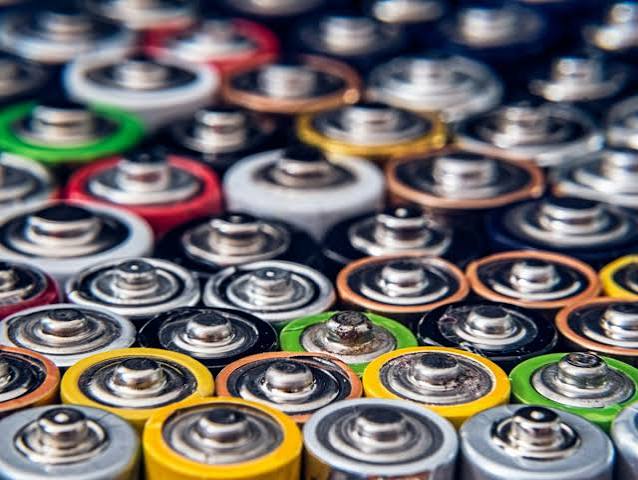
Can Cheap Batteries Deliver COP31’s 35% Electrification Goal?

Published

on

Electrification will be the major focus of the COP31 United Nations climate conference, to hold in Antalya, Türkiye, from today, November 9 to 20, 2026. The host country will invite the attending nations to sign onto a voluntary pledge to reach 35 percent electrification on a global level by 2035. J
ust a year ago, this target may have seemed overly ambitious, but now, experts say that a number of factors, including volatile oil and gas markets stemming from the war in Iran, paired with enormous advances in clean energy technologies, have put that goal within “striking distance.”
The months-long closure of the Strait of Hormuz has catalyzed the clean energy transition and the rate of electrification around the world. Before the United States and Israel began their military offensive in Iran back in February of this year, one fifth of the world’s oil and gas trade flowed through the Strait of Hormuz. Its abrupt closure therefore sent global oil and gas markets into turmoil and sent energy-importing countries around the world scrambling for alternatives, especially ones that they could produce and control on their home soil. And, just like that, renewable energy became the new face of energy security.
“Wind and solar cannot be embargoed, blockaded, or shut off by a foreign power,” David Frykman, General Partner at Stockholm-based venture capital group Norrsken, wrote in an op-ed for Fortune earlier this year. “Every terawatt-hour of domestic renewable generation is a terawatt-hour that no adversary can weaponize.”
But there is another, quieter force that has made this rapid global pivot toward renewable energies possible – the energy storage boom. Energy storage is critical to ensure grid stability in the face of rapid electrification and the increasing representation of intermittent energy sources like wind and solar power in national energy mixes. Major advances in the sector in recent years have made battery storage more affordable and more scalable than ever before – just in time for the world’s most recent bout of ‘fossilflation.’
“What’s really become a game-changer in the past two years is the rapid deployment of large-scale batteries that can hang onto ever larger amounts of power to be used throughout the day to smooth out demand and avoid overtaxing the grid,” Forbes wrote in a Monday report.
The second quarter of this year saw the United States’ largest-ever energy storage expansion, at 20.2 gigawatt-hours of additional capacity, according to a report by the Solar Energy Industries Association and Benchmark Mineral Intelligence. That puts this year’s total additions at 30.8 GWh – and counting.
“Although President Trump is no fan of renewable energy or batteries, utility-scale energy storage capacity still nearly doubled to 165 GWh from 88 GWh in the first 18 months of his administration,” the Forbes article goes on to detail. “Grid operators, utilities and data center developers are all buying batteries as fast as they can to meet power demand and improve grid reliability. As a result, battery energy storage systems supplied more electricity to the grid in the year’s first eight months than in all of 2025.”
Ironically, despite his best efforts, Donald Trump is overseeing one of the United States’ most significant clean energy booms in the nation’s history as solar and wind have simply become too cheap to fail. And the United States is not alone. Buoyed by a flood of cheap solar panels and battery storage systems coming out of China, even the world’s poorest countries are experiencing clean energy revolutions.
“Some countries are pulling off stunningly fast energy transitions, adding solar so rapidly, it’s become a major source of electricity over the course of years — not decades,” reports CNN.
Pakistan has become the surprise poster child of this trend as residents install rooftop solar and batteries faster than any other market on Earth, as these systems provide electricity more cheaply and reliably than the country’s own beleaguered energy infrastructure. In addition, emerging economies including Brazil, Chile, El Salvador, Morocco, Kenya, and Namibia have all overtaken the United States – the world’s largest economy – in their clean energy transitions.
By Haley Zaremba
Continue Reading

Oil & Energy

MAN, Ministry Tackle High Electricity Costs, Erratic Supply

Published

on

The Manufacturers Association of Nigeria has said it is working with the Federal Ministry of Power to address high electricity tariffs, unreliable grid supply and rising energy costs that are undermining industrial production and competitiveness in the country.
The association said the collaboration would focus on developing sustainable energy solutions for manufacturers, including renewable energy, battery storage, captive power generation and improved electricity distribution.
Speaking during the second edition of the Manufacturers Energy Security and Energy Efficiency Summit in Lagos, the President, MAN, Dr. Ifeanyi Okoye, regretted that high electricity tariffs, unreliable grid supply and heavy dependence on fossil fuels had made industrial production exceptionally difficult.
Okoye said energy expenses consumed nearly half of some factories’ operating budgets, weakening their competitiveness, increasing product prices and threatening jobs.
He said manufacturers had continued to operate their own power infrastructure despite paying for electricity from the national grid.
“When energy expenses claim nearly half of a factory’s operating budget, competitiveness evaporates, retail prices skyrocket, and jobs are placed on the line,” he said.
Okoye said the association was moving beyond advocacy to implement practical solutions through its Industrial Energy Cost Reduction and Energy Support Programme, as key partners in delivering the initiative.
According to him, the programme would promote factory-roof solar installations, battery energy storage systems, captive natural gas generation and smart energy management networks to reduce production costs and protect manufacturers from global fuel price shocks.
He, however, stressed that manufacturers needed affordable, long-term financing to undertake the energy transition.
 “We cannot finance 21st-century industrial transitions with 30-day commercial bank loans at cut-throat interest rates,” Okoye said.
He said the summit would bring financial institutions, climate funds and green investors together to develop long-tenured, low-interest financing instruments, carbon credit opportunities and asset-financing
Also speaking, the Minister of Power, Joseph Tegbe, warned industrial customers against unauthorised electricity connections.
He disclosed that investigations had uncovered about 14 industrial customers along a particular corridor who owed more than N400m in unpaid electricity charges over several years.
Tegbe said such practices deprived the electricity sector of revenue needed to sustain power supply and unfairly burdened consumers who paid their bills.
“Such conduct deprives the sector of revenue that we need to sustain the supply, and unfairly burdens consumers who pay honestly,” Tegbe said.
The minister vowed to recover the outstanding charges and hold those responsible accountable, urging MAN to encourage its members to maintain lawful electricity connections and comply with applicable regulations.
 Tegbe acknowledged that manufacturers continued to struggle with electricity interruptions, poor power quality, vandalism and electricity theft, adding that the government was directing investments towards addressing the underlying problems.
Speaking on behalf of manufacturers, the MAN South-East Chairman, Ada Chukwudozie, said energy had become a question of survival and competitiveness for Nigerian manufacturers.
 She said manufacturers were increasingly financing and managing their own electricity infrastructure while struggling with rising production costs and limited access to capital.
 “We are effectively running a second power system paid for by ourselves, besides the grid we also pay for. And that is why for the Nigerian manufacturer, energy is no longer simply an operational issue. It is a question of survival and competitiveness,” Chukwudozie said.
 She explained that unreliable electricity supply forced manufacturers to make difficult choices between purchasing energy and raw materials, maintaining equipment and paying workers.
The regulator added that manufacturers could strengthen their competitiveness by adopting cleaner energy sources as international markets increasingly imposed environmental and carbon-related requirements on products and supply chains.
Continue Reading

Oil & Energy

Reps Panel Dismisses Petition Against NIPCO gas Licence

Published

on

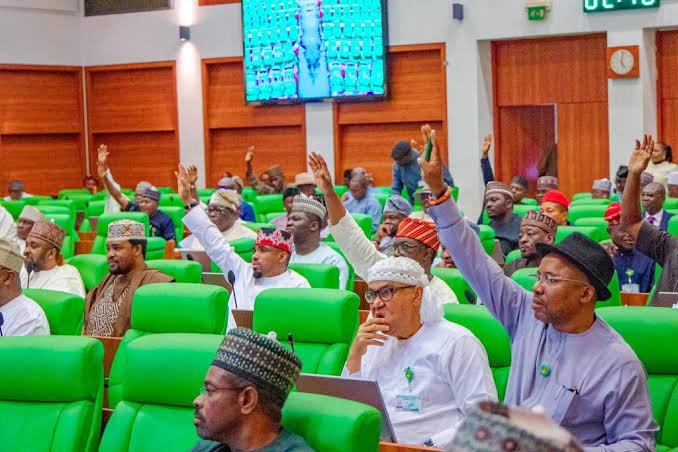
The House of Representatives has dismissed a petition seeking the cancellation of gas distribution licences awarded to NIPCO Plc, ruling that the petitioners failed to provide credible evidence to substantiate their allegations.

The decision followed a review by the House Sub-Committee on the Petition concerning NIPCO Plc, which rejected the complaint filed by the Nigerian Energy Security Watch Group (NESWG) for lacking substance and evidential support.

The petition had called for an investigation into, and the suspension and cancellation of, gas distribution licences issued by the Nigerian Midstream and Downstream Petroleum Regulatory Authority (NMDPRA) to NIPCO for Lagos, Ogun, Oyo and Osun states, as well as the Lagos and Lekki Free Trade Zones.

Announcing the decision last Thursday, the Chairman of the Sub-Committee, Peter Aniekwe, said the petitioners relied on hearsay and failed to establish any wrongdoing in the licensing process.

“At its sitting today, the Sub-Committee resolved not to proceed with the investigation, and the petition is accordingly dismissed,” Aniekwe said.

The committee, which also includes Dahaltu Shehu, was constituted in October to examine the petition. It was granted an additional 14 days on October 26 to conclude its assignment.

Aniekwe said the issuance and regulation of gas distribution licences were statutory responsibilities of the NMDPRA under the Petroleum Industry Act, while stressing that the National Assembly would continue to exercise oversight over the process.

He disclosed that the regulator had committed to completing and rolling out gas distribution licensing in the fourth quarter of 2026, adding that the committee would monitor the implementation.

“Nigerians deserve a gas market that is open, competitive and safe, and investors deserve rules that are clear and stable,” he said.

The lawmaker reaffirmed the House’s commitment to considering petitions from individuals and organisations with genuine concerns about the petroleum sector, saying “each complaint would be assessed on its merits”.

Continue Reading

Trending