
Nation
THE STATES

Bauchi
Former Chief Security Officer to the late Head of State, Gen. Sani Abacha, Major Hamza Al-Mustapha, last Friday offered to partner with the Bauchi State Government to boost youth development.
Al- Mustapha , who is the President, Unity and Development Initiative (APUDI), an NGO, made the plea when he led members of the management team of the organisation on a courtesy call to the Bauchi State Governor, Malam Isa Yuguda ,in Bauchi.
He said that the organisation was creating new opportunities that would promote the well being of the younger ones.
Yuguda, who was represented by his Chief of Staff, Alhaji Musa Gumli , appealed to Al-Mustapha to take all that had happened to him as an act of God and forgive all those that erred.
Benue
The Executive Director, Environment and Climate Change Amelioration Initiative, an NGO, Mrs Victoria Esa, last Tuesday warned against bush burning and indiscriminate felling of trees.
Esa who gave the advice in an interview in Makurdi said bush burning and indiscriminate felling of trees were contributing to deforestation, erosion and global warming.
She urged the forestry departments at the state and federal levels to intensify efforts at reducing the massive felling of trees across the country.
Esa enjoined Nigerians to plant trees and flowers and nurture them to maturity in order to mitigate the effect of deforestation and its attendant consequences on the socioeconomic lives of the people.
FCT
The Chairman of Bwari Area Council in the FCT, Mr Peter Yohanna, has called on politicians, especially those in leadership position, to make judicious use of resources at their disposal, to promote grassroots development.
Yohanna who gave the advice on Monday in his address at the conferment of the award of “Friendliest Chairman” on him by the Bwari chapter of the Motorcycle and Tricycle Operators Association of Nigeria urged political office holders to be more prudent in the use of resources to ensure even spread of social amenities in the country.
Yohanna said that eradicating poverty was not only through hard work, but also by making use of available resources judiciously to solve problems affecting the people and advised the political class to always seek divine intervention in the face of leadership challenges, in order to be able to find solutions to the problems of the country.
Kano
Kano State Government has ordered polio workers to conduct house-to-house immunisation in the 44 local government areas of the state.
The Commissioner for Health, Dr Abubakar Labaran, who gave the directive on Monday while monitoring the exercise in Garun Malam, Bebeji and Madobi local government areas said the workers should not wait for parents to bring their children to them for immunisation but to ensure that they entered the houses and immunise each of the targeted children.
He, however, commended parents for bringing their children below five years for immunisation centres and also commended traditional and religious leaders as well as voluntary organisations for working to ensure the success of the immunisation.
Katsina
The Katsina State House of Assembly last Tuesday passed the 2014 appropriation bill of N113.3 billion.
The passage followed the report on the budget presented by the Chairman, House Committee on Appropriation, Alhaji Abdu Danshehu.
The state government, had in December 2013, presented the budget of N113.6 billion with a surplus of N609 million before the House.
The House, however, made some minor adjustments by reducing the budget to N113.3 billion with a surplus of N259 million.
Danshehu commended the various ministries and parastatals agencies for the way and manner they defended their budgets before the committee.
Kebbi
The Emir of Argungu, Alhaji Sama’ila Mera, last Tuesday called on Kebbi State Government to enter into partnership with the Republic of Rwanda to develop the tourism potentials in the state.
Mera, made the call in Argungu when he received the Rwandan High Commissioner to Nigeria, Mr Joseph Habineza, during a courtesy visit to his palace.
He said the partnership would favour the state, “considering the fast rate of recovery of Rwanda after its internal crisis”.
The emir noted that Rwanda had taken measures that have enhanced the country’s tourism, turning it into a major source of revenue.
Kogi
More than 10,000 unemployed graduates have applied to fill 60 vacancies at the Kogi State Internal Revenue Service.
A competent source in the service said in Lokoja on Tuesday that the service had advertised for applications from suitably qualified candidates to be engaged as Revenue Trainee Officers noting that about 900 of the applicants had First Class and Second Class Upper Division degrees as well as Distinction and Upper Credit at HND level.
It was gathered that government embarked on the recruitment drive to harness fresh brains following its resolve to reposition the service for operational efficiency in conformity with international best practises in tax administration.
Kwara
Governor AbdulFatah Ahmed of Kwara State on Tuesday presented a list of 16 nominees to the state House of Assembly for confirmation as commissioners in the state executive council.
The governor’s request contained in a message read by the Speaker of the House, Mr Rasaw Atunwa, during plenary was in consonance with Section 192, Sub-section 125 of the 1999 Constitution as amended.
The nominees are Mr Amos Aboyeji from Oyun Local Government Area; Alhaji Issa Kayode, Moro; Alhaji Aliu Mohammed, Asa; Alhaji Shaaba Umar, Edu; and Alhaji Abubakar Mora, Kaima.
Ondo
The Nigeria Union of Journalists (NUJ), Zone B, has advocated better wage for all media practitioners across the country.
A statement by the zonal Vice President, Mr Dele Atunbi on Monday in Akure described the monthly take home of media practitioners as a “slave wage’’.
According to the union, the disparity in the take home of media practitioners and other civil servants is economic dehumanisation, deprivation and marginalisation.
It pointed out that the media in collaboration with other well-meaning Nigerians fought for the independence of the country.
Osun
A peace advocate, Mr Ajibola Owolabi, has described the directive by the All Progressive Congress (APC) to its National Assembly members to block all executive bills as “counterproductive’’.
Owolabi, the Executive Director of Advocacy for Advancement of Peace and Harmony in Africa Initiative (ADAPHAI), an NGO, said in Osogbo on Monday that the essence of formation of political associations was to mobilise the people and make them conscious of the ideal of good governance.
According to him, party politics should not be personalised at the detriment of the people if the political party really exists for the wellbeing of the people adding that blocking a budget would portray a political party as anti-people.
Oyo
Acting Vice-Chancellor, Ladoke Akintola, University of Technology (LAUTECH), Ogbomoso, Prof. Adeniyi Gbadegesin, and two others have won the 2013 African Growth and Development Policy Modelling (AGRODEP) innovative grant.
According to a statement from the Vice-Chancellor’s office and made available to newsmen last Monday in Ogbomoso. Gbadegesin, Prof. Joshua Ajetumobi of LAUTECH’s Agricultural Economics and Extension Department and Prof. Olusanya Ajakaiye of the African Centre for Shared Development and Capacity Building, Ibadan won the grant.
Plateau
The Public Complaints Commission in Plateau State resolved 301 cases and recovered N82 million for complainants in Plateau last year, the commission said in a statement in Jos on Tuesday.
Its Director of Investigation, Mrs H.H. Isandu, said it received a total of 598 complaints in the year with 297 cases still pending.
Of the monies recovered, the statement said that some were unpaid salaries while others were terminal benefits and recoveries from breaches of trust.
Sokoto
The Sokoto State Government last Friday in Sokoto conducted a mass wedding for 125 couples.
The wedding prayer (Fatiha) conducted at the Government House, Sokoto was presided over by Gov. Aliyu Wamakko and the Sultan of Sokoto, Alhaji Sa’ad Abubakar III, who was represented by Alhaji Rilwanu Bello, the Magajin Rafin Sokoto.
Wamakko said that the gesture was aimed at further reducing the problems associated with the high number of unmarried youths and urged the new couples to uphold the trust reposed in them by the state government.
Taraba
The Acting Governor of Taraba, Alhaji Garba Umar, on Monday in Jalingo signed the 2014 Appropriation Bill of N83.33 billion into law.
The budget figure was reviewed by the House of Assembly from N79.66 billion to N83.33 billion.
Umar said that N41.70 billion of the budget was for recurrent expenditure, while N41.63 billion was earmarked for capital expenditure.



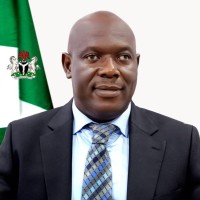
The Hydrocarbon Pollution Remediation Project (HYPREP) has commemorated the 15th anniversary of the release of the United Nations Environment Programme (UNEP) Environmental Assessment Report on Ogoniland, reaffirming its commitment to restoring the environment and improving the livelihoods of affected communities.
In a statement signed by the Project Coordinator, Prof Nenibarini Zabbey, to commemorate the anniversary, HYPREP described the anniversary as a significant milestone in Nigeria’s environmental restoration efforts, noting that the project has made remarkable progress in implementing the recommendations of the landmark UNEP report released on August 4, 2011.
The UNEP report had revealed extensive oil pollution across Ogoniland, severe environmental degradation, and serious public health risks resulting from decades of petroleum operations. It also recommended an initial $1 billion fund to commence the cleanup of the affected communities.
According to HYPREP, the Federal Government formally launched the Ogoni clean-up in 2016, while the Project Coordination Office was established in 2017 to drive the implementation of UNEP’s recommendations.
Zabbey said the current administration has continued to prioritise the project under the Renewed Hope Agenda.
Providing an update on the cleanup, the Project Coordinator disclosed that 30 of the 65 contaminated sites identified by UNEP have been fully remediated, while work is ongoing at several medium- and high-risk locations. It also stated that more than 1.5 million mangrove seedlings have been planted as part of what it described as the world’s largest restoration of oil-degraded mangroves, with over 1,000 hectares of shoreline already rehabilitated.
Zabbey further revealed that 49 Ogoni communities have been connected to potable water schemes through multiple water projects and booster stations aimed at providing safe drinking water across the region.
In the health sector, he said the 100-bed Ogoni Specialist Hospital in Kpite and the 43-bed Cottage Hospital in Buan are nearing completion, adding that several existing health facilities have been upgraded with modern medical equipment, while five ambulances have been donated to improve emergency healthcare services. The Project Coordinator also disclosed that a three-year human health biomonitoring study is being conducted in collaboration with the World Health Organization’s International Agency for Research on Cancer (IARC).
On economic empowerment, Zabbey stated that the Project has created more than 8,000 direct jobs and trained thousands of Ogoni youths and women in various vocational and technical skills, including software development, cybersecurity, aviation, commercial diving, seafaring, mechatronics, and creative arts. The project also reported awarding scholarships to more than 1,000 students, providing grants to small businesses, and supporting persons living with special needs through skills acquisition programmes.
The statement further highlighted ongoing legacy projects, including the Ogoni Power Project and the Centre of Excellence for Environmental Restoration, which it said is about 96 per cent complete. HYPREP also welcomed the recent designation of the Ogoni Wetland as a Ramsar Site of International Importance and pledged to continue promoting biodiversity conservation and sustainable management of the ecosystem.
Marking the anniversary, Zabbey said the progress achieved over the past 15 years demonstrates the collective commitment of government, development partners, stakeholders, and local communities to restoring Ogoniland. He called for renewed collaboration to sustain the cleanup effort, promote environmental sustainability, and support the long-term development of the region. 3
-

 News2 days ago
RSG Targets Nine Million Residents in Mosquito Net Distribution Campaign
-

 Oil & Energy2 days ago
Aiyedatiwa Signs New Electricity Bill
-

 Oil & Energy2 days ago
NLNG Commissions Research And Innovation Centre In RSU
-

 Maritime2 days ago
Marine Minister Commends President Tinubu On NPERA Bill Assent
-

 News2 days ago
KenPoly Holds Eight Convocations, August 29
-

 News2 days ago
RSG Begins Another Phase of Projects Commissioning Today
-

 News2 days ago
RMAFC Completes Revenue Sharing Review, Proposes New Pay
-

 Maritime2 days ago
NAGAFF Petitions IGP Over Alleged Maritime Police Harassment