
Editorial
Nigeria At 100: Congrats, But…

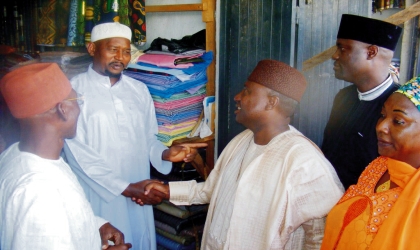
Senator representing Adamawa North Senatorial District of Adamawa State, Senator Bindow Jibrilla (3rd-right), with some traders, during his visit to Mubi Central Market to console the traders over recent robbery attack tn the market last Thursday. Photo: NAN
The country with the highest number of black
people, Nigeria is 100 years old this month.
It is believed that one out of every four black persons across the globe is a Nigerian. This was made possible by the amalgamation of the Northern and Southern Protectorates of Nigeria by Lord Fredrick Luggard in 1914.
While the debate over the propriety of the amalgamation may not end too soon, some things have become facts that no one can change. It is a fact that Nigeria is about 54 years old as an independent nation and 100 years as an administrative entity. It is also a fact that Nigeria has survived as a country all these years.
In spite of all the odds, past and present, we feel gratified that Nigeria is able to make it to the legendary age of 100. We are also pleased to join millions and millions of well-meaning persons across the globe to congratulate Nigeria and Nigerians on the feat and to point them to a greater future. To say the least, Nigeria has come too far to break up.
The Tide is surprised that in a country where people celebrate birthdays every year, in some cases, at such great cost, some Nigerians have allowed themselves to argue over the need to celebrate or mark this wonderful epoch in the history of the country and its people.
Knowing the importance of the date and the things the country have gone through, it is only natural that every Nigerian in the land of the living would give thanks to God and pray for a better future. The only progress, we dare say, is for the country to remain united, peaceful and God-fearing.
The other alternative is to break-up into tiny inconsequential countries that cannot influence anything. Such countries will suffer weak currencies, weak defense and even weaker economies. They will become more fragmented along ethnic lines and become the laughing stock of the civilised world. This is what only the devil would wish for Nigeria.
Those who preferred to look at the prediction of a possible disintegration of Nigeria in a positive light have come to the conclusion that the prediction was not done in bad faith, but to warn Nigeria of a possible danger. Without a doubt, given the population and quality of the average Nigerian, a better half of Africa will be in trouble if Nigeria boils.
Those who beat the drums of disunity fail to look at the bigger picture. The people of the country have been so delicately and intricately connected in marriage, business and religion in ways that would make any division merely artificial and of no value. New maps can be drawn, but the people cannot be forced apart.
No one can deny the fact that in the past 100 years all have not been well for Nigeria. There have been coups and counter coups; there have been civil wars and reign of corruption; there have been religious extremities and economic failures; there have been military misadventures and political suicides, but the country has stood strong.
Through the period, the country recorded some changes. Owing to the judgment over the Bakassi Peninsular, Nigeria lost some land areas at the Cross-River State area to the Camerouns and gained some communities in the northern part of the country. The country also moved from being three regions to 36 states and the Federal Capital Territory.
Within the period, the dominant qualities of the Nigerian were discovered. In addition to being mostly patriotic, the Nigerian is greatly resilient, resourceful but painfully gullible. The ordinary people from the ethnic and religious divides get along well, but their politicians constantly engage in imaginary wars.
Some of the conflicts have been caused by the deliberate disregard for the founding dreams. Nigeria is supposed to be a federation that is being run as a unitary system. The concentration of power and wealth at the centre attracted the ants, the vultures and the hyenas.
Thankfully, the nation has decided to have a national dialogue for the constituent ethnic groups. If all the dialogue would achieve is the recognition of each other’s interest, the implementation of true federalism and the enthronement of the rule of law, Nigeria will make a quantum leap towards her destiny. Indeed, the number of states must drop as they were created to draw from the national treasury and not to add.
So far, the reservations over fiscal federalism, state police, autonomy of the constituent units among others have not helped any group. Although Nigeria sees a ready example to follow in the United States of America, a selfless approach would have raised our own brand of democracy that would make the US envious.
It is not an accident that Nigeria is talking about a national dialogue at a time the country is 100. It is not an accident that a person from the minority south would be President at the time. It is no accident that the unity of the country would be under pressure at the time. It only requires that Nigeria takes advantage of this time to plot the path to a glorious future for the country.



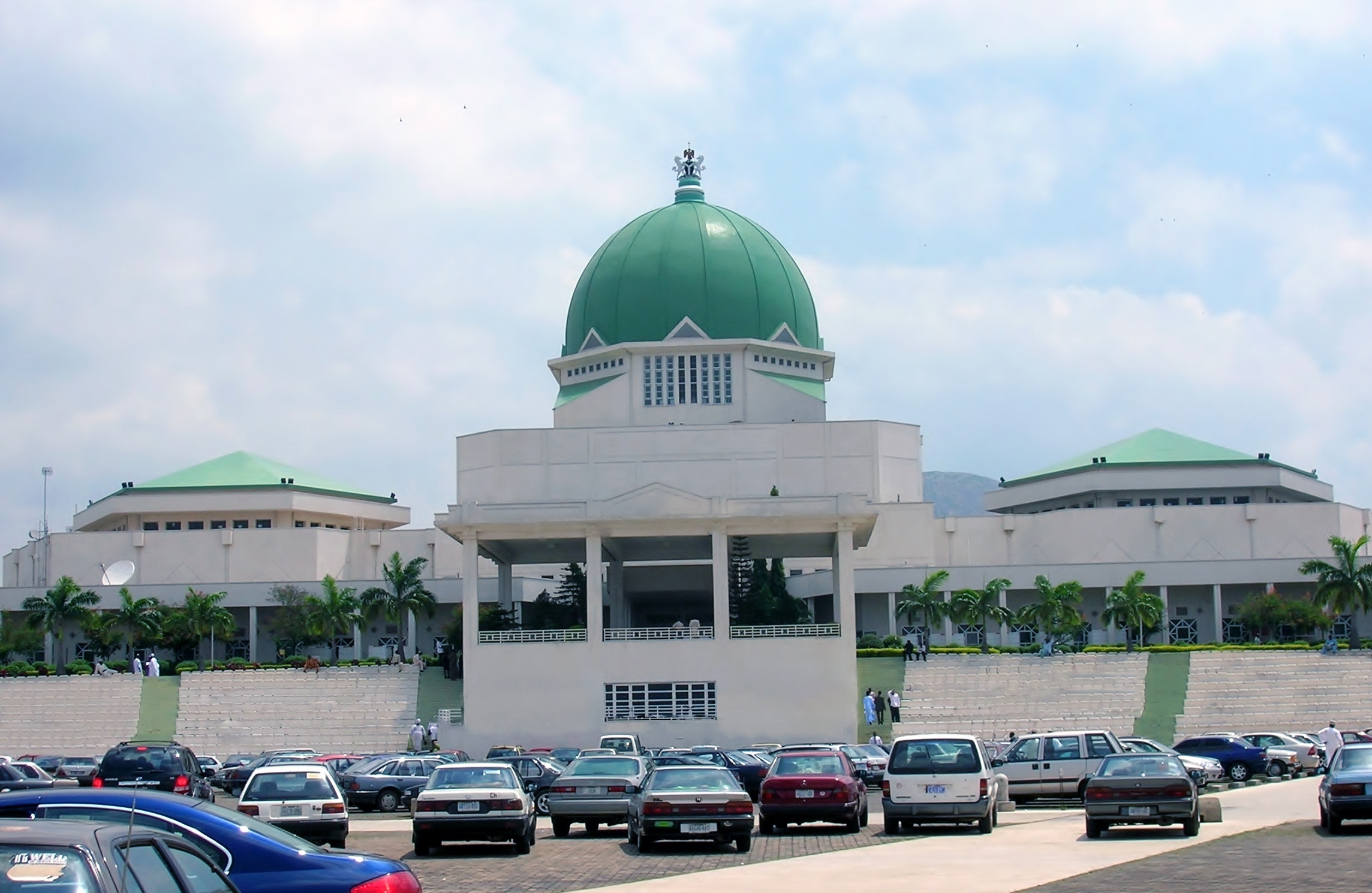
The proposal before the National Assembly to create 74 additional seats for women in the Senate and House of Representatives, with three more reserved in each State House of Assembly, deserves a welcome, albeit a cautious one. Women make up roughly half of Nigeria’s population, yet remain scandalously marginal in its legislative chambers, so, any serious attempt to correct the imbalance cannot be dismissed out of hand. It is an admission, at last, that the present system is not merely slow to reform but structurally hostile to women’s emergence. If the amendment succeeds, it will at least guarantee presence where persuasion and patience have failed.
But support must not blind us to the central question: what exactly does this proposal intend to cure? Numerical under representation and the conditions that produce it are not the same thing. Adding seats without dismantling the barriers that keep women out of politics treats the symptom while leaving the disease to fester. If the aim is merely to improve Nigeria’s standing in global gender rankings, the proposal may succeed. If it is to deepen democratic inclusion, numbers alone will not suffice.
The barriers are well known and brutally persistent. Party primaries are expensive, violent, and controlled by male-dominated structures that reward loyalty over competence. Nomination forms cost fortunes, and campaigns demand resources that most women, systematically excluded from economic power, do not possess. Add the cultural policing of ambition and the weaponisation of marital status, religion, and “respectability” against female aspirants. A reserved seat does nothing, by itself, to lower the price of a form, tame thuggery at a primary, or persuade a party chairman that a woman can win a governorship.
That is why Nigerians are entitled to ask the most practical question of all: how will the women for these special seats emerge? Will they be elected directly in specially created constituencies? Will they be chosen from party lists, and if so, who composes those lists? Or will they be nominated by governors, party leaders, and other power brokers who have long treated women’s wings as decorative appendages? The method of emergence will determine whether this reform empowers women or merely creates a new patronage pipeline for the wives, daughters, and loyalists of powerful men.
The danger of tokenism is real and must be confronted honestly. Nigeria has seen too many “women leaders” whose authority derived not from a mandate but from proximity to power. If these 74 seats become consolation prizes handed out by the same gatekeepers who shut the main door, they will produce legislators who owe allegiance to their benefactors rather than to the women they purport to represent. A reserved seat filled by selection rather than election would be democratic in form but feudal in substance.
A second, equally, troubling question is whether special seats mean women will no longer contest regular ones. Senator Opeyemi Bamidele, who presented the proposal, insists that existing representatives will not be displaced. That assurance is welcome, but it does not answer the deeper fear. Will parties quietly steer ambitious women towards the “women’s seats” and reserve the “real” seats for men? Will a woman who dares to contest a senatorial district election be told she is greedy, that she already has her quota? A reform meant to widen the path could, if carelessly designed, narrow it.
Other countries offer both encouragement and warning. Rwanda’s constitutional quota transformed its parliament and, in time, normalised women’s leadership. Yet, that success rested on direct election and a broader commitment to women’s participation at every level. Elsewhere, reserved seats have become ceilings rather than floors, marking women as a special category rather than full political equals. Nigeria must decide which path it wishes to follow.
For the proposal to be credible, it must therefore carry clear safeguards. The seats must be filled through competitive election, not appointment. The electoral mechanism must be transparent and subject to the same scrutiny as any other. Term limits or rotation provisions must prevent the seats from becoming personal fiefdoms. Crucially, the law must state explicitly that nothing in the amendment bars a woman from contesting any seat, regular or reserved.
Beyond the mechanics, the National Assembly must address the wider ecosystem. What of campaign finance reform? What of stronger penalties for violence against female candidates? What of internal party democracy that would let a woman without a godfather win a primary on merit? A constitutional amendment that creates seats while leaving party structures untouched is like building an annex onto a house with a cracked foundation. It may look impressive, but it will not hold.
Accountability is equally important. To whom will these women legislators answer? If they represent no defined constituency, and are elected on a statewide or zonal basis without clear ties to communities, they risk becoming legislators without a base and voices without voters. Representation without rootedness is a weak form of power. The design must give these women constituents to serve, promises to keep, and voters who can punish failure.
None of this is an argument for abandoning the proposal. On the contrary, it is an argument for taking it seriously enough to get it right. Nigeria cannot afford another well-intentioned reform that collapses under the weight of its own ambiguities. The under representation of women is a democratic failure, and democratic failures demand structural remedies. Reserved seats, properly designed, can be one.
The National Assembly should proceed, but with open eyes and honest debate. Let the public see the full text of the amendment. Let women’s groups, civil society, and constitutional lawyers interrogate the mechanism of emergence. Let the sponsors say plainly whether a woman in a reserved seat is equal in status, tenure, and power to her colleague in a regular seat. Only when those questions are answered can Nigerians embrace this proposal as a long-overdue correction to the nation itself.
The House of Representatives’ decision to concur with the Senate bill seeking to establish a Federal Medical Centre in Bonny Local Government Area of Rivers State deserves a warm welcome. Titled, “The Federal Medical Centre, Bonny, Rivers State and for Related Matters (SB 659)”, the bill has cleared an important legislative hurdle. In a country where good news from the National Assembly is rarer than it ought to be, this is a development worth celebrating.
Sponsored by Senator Ipalibo Harry Banigo, who represents Rivers West Senatorial District, the bill seeks to amend the relevant provisions of the Federal Medical Centres Act to provide a legal framework for the new institution. It is a modest piece of legislation with potentially far-reaching consequences. A hospital that exists only in politicians’ minds cannot treat a single patient; one backed by law can begin to take shape.
It must be stated, however, that the House’s concurrence is not the end of the matter. The bill must still pass through the remaining legislative and constitutional processes, including presentation to the President for assent, before becoming law. Nigerians have seen too many promising bills die quietly on the Executive’s desk or languish in procedural limbo. Vigilance must, therefore, continue until the President signs it into law.
The case for the FMC is compelling. Bonny is an island community, and its geography makes access to healthcare particularly challenging. Many patients requiring emergency or specialist attention must travel outside the area for treatment. Such journeys cost money and, in emergencies, can cost lives. A tertiary healthcare facility on the island would bring specialist care closer to those who need it and reduce delays that often turn treatable conditions into tragedies.
The benefits would extend beyond patient care. A federal medical centre would ease the pressure on existing hospitals in Rivers State, many of which are overstretched by the demands of a growing population. It would also reduce waiting times and ease the financial burden on families who spend heavily on transport and accommodation, while losing income, to seek treatment far from home.
There is also the question of training. A federal medical centre is not merely a place where the sick are treated; it is also where doctors, nurses, pharmacists, laboratory scientists and other health professionals are trained and mentored. By providing opportunities for professional development and capacity-building, the institution could help stem the exodus of skilled health workers and strengthen healthcare delivery across Rivers State.
The economic argument is equally compelling. A hospital of this stature would create jobs directly in clinical, administrative and support services, and indirectly through traders, transporters, caterers, landlords and contractors. Its construction would engage local labour and suppliers, while its eventual operation could stimulate small businesses, attract investment in housing and services, and contribute to the development of Bonny and neighbouring communities.
Senator Banigo deserves genuine commendation for this initiative. It is no secret that some federal lawmakers from Rivers State have served out their terms in Abuja and returned home with little or nothing to show for their representation. Constituents are often left with speeches and promises, but no roads, schools or clinics to attest to their representatives’ achievements. By sponsoring a bill capable of leaving a lasting legacy, Senator Banigo has set a standard others would do well to emulate.
Commendation, however, must be matched by cooperation. We urge all federal lawmakers from Rivers State and across the Niger Delta to support the bill wholeheartedly. The region has borne the environmental and social costs of oil and gas production for decades, yet its healthcare needs remain acute. Party and personal differences should matter little when the health of the people is at stake. This is not Senator Banigo’s project alone; it is a regional asset in the making.
The lawmakers’ responsibility must also extend beyond securing the bill’s passage. Enacting a law is one thing; providing the necessary funding is another. Nigeria is littered with abandoned and unfinished federal projects, established on paper but starved of funding. The region’s representatives must ensure that the centre receives adequate budgetary allocations, its construction is monitored, and it is properly equipped and staffed rather than left as an empty shell.
The proposed facility comes at a time when access to affordable and specialised healthcare remains a major concern for communities across the country. Bonny’s centre could become a model of purposeful legislative representation. The President should assent to the bill without delay, while Niger Delta lawmakers must sustain their commitment until the first patient is admitted. When that day comes, Bonny will have a much-needed hospital, and Rivers State will have proof that legislative representation can leave a lasting and worthwhile legacy.
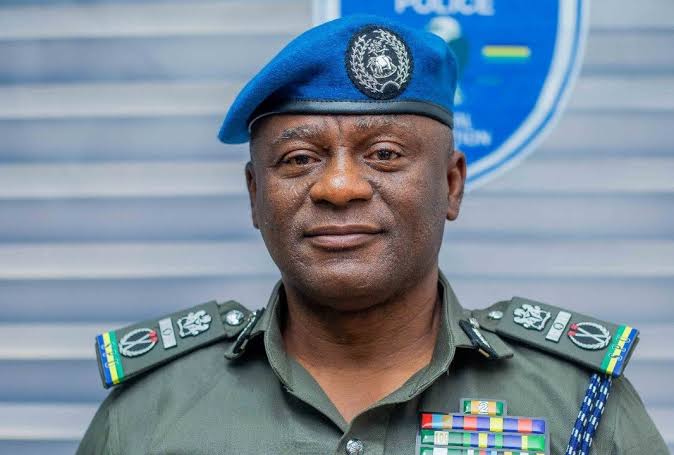
As Nigeria moves toward the 2027 general elections and campaign activities intensify, violence against opposition politicians has become an issue that can no longer be overlooked. What should be a season of competing ideas is increasingly turning into a test of intimidation, and early signs suggest that those challenging the ruling establishment are the primary targets.
It was, therefore, welcome news when the Inspector-General of Police, Olatunji Disu, warned politicians, political thugs and others against destroying, defacing or removing campaign posters, banners and billboards. In a statement issued in Abuja by the Force Public Relations Officer, CSP Ani Iniedu, the police condemned such acts as political intolerance, directed Commissioners of Police in all 36 States and the Federal Capital Territory to take preventive measures, and warned that sponsors would also face prosecution. The police rightly described such vandalism as a criminal act that undermines parties’ and candidates’ freedom to canvass for votes.
But billboards are replaceable; human lives are not. While applauding the IGP’s stance, we urge him to extend the same stern warning and enforcement zeal to thugs who assault opposition members during campaigns. A police force that punishes the tearing of a poster but ignores the breaking of a skull will have its priorities questioned. Allowing such attacks to continue could erode the foundations of our democracy.
Consider the African Democratic Congress (ADC) presidential campaign flag-off in Sokoto State on November 4, 2026. The party alleged that the State Government denied it access to public facilities, sealed its campaign venue and pressured hotels to reject its delegates, forcing it to hold the rally at its secretariat. The Sokoto authorities, however, denied instructing hotels to turn guests away. More seriously, two suspected ADC supporters were reportedly shot along the Sokoto–Wurno Road while travelling to the venue, allegedly by operatives of the Sokoto State Community Guards.
Whatever the truth of these competing accounts, a shooting demands more than press statements. It requires a transparent, independent investigation and prosecution where warranted. Sokoto was not an isolated incident. The following day in Birnin Kebbi, the ADC presidential campaign convoy was reportedly attacked by armed gangs. Amnesty International said vehicles were vandalised, people assaulted with cutlasses and roads blocked, while the party’s Kebbi governorship candidate, Abubakar Malami, alleged that media equipment was destroyed and tear gas deployed. His convoy had suffered a similar attack in the city in September 2025.
The Nigeria Democratic Congress (NDC) has suffered similar attacks. On November 4, hoodlums stoned the motorcade of its presidential candidate, Peter Obi, and running mate, Rabiu Musa Kwankwaso, at Watt Market roundabout in Calabar, Cross River State. Police reported arresting a 27-year-old suspect, Victor Edet, although it remains unclear whether he has been arraigned. The State Government has denied suggestions that ruling-party supporters were responsible. Worse, in Asaba, Delta State, one person was killed and five injured when suspected thugs attacked an NDC rally. A death at a political rally is no longer a warning; it is a damning indictment of the prevailing political climate.
Even critics of the establishment who are not frontrunners have not been spared. Omoyele Sowore, presidential candidate of the African Action Congress (AAC), was attacked by suspected thugs at a restaurant in Ado-Ekiti on October 30. He alleged that the assailants were linked to the Ekiti State Government House and that the Department of State Services leaked his location. Both the State Government and the security service denied involvement, while the police reported a minor injury and a discreet investigation. These conflicting accounts make an independent, publicly reported inquiry indispensable.
What deepens the concern is the Federal Government’s apparent silence. We are unaware of any specific, forceful condemnation of these assaults, even as All Progressives Congress (APC) rallies appear to proceed nationwide without incident. Such silence can easily be misconstrued as complicity, regardless of intent.
According to the Centre for Democracy and Development, 109 election-related deaths were recorded in the build-up to the 2023 polls. The Kimpact Development Initiative separately documented 238 incidents and 24 deaths during the general elections. Beyond Nigeria, Kenya’s 2007–08 post-election violence claimed more than 1,000 lives, according to the Waki Commission. Ghana, by contrast, enacted the Vigilantism and Related Offences Act in 2019 to curb party vigilante groups, a model worth studying.
The remedies are neither exotic nor expensive. The IGP should extend his directive to cover assaults on individuals and disruptions of rallies, while establishing a dedicated investigative unit to probe the Sokoto shooting and the attacks in Kebbi, Calabar, Asaba and Ado-Ekiti. It should publish the status of each case within a fixed period. Suspects must be prosecuted and their sponsors, regardless of party or position, brought to justice. State-backed security outfits, including the Community Guards, should be audited and barred from partisan duties.
The Federal Government must speak and act unequivocally. President Tinubu should specifically condemn attacks on opposition candidates and direct all security agencies to guarantee equal protection for every party. Governors must ensure equal access to public facilities for registered parties. The Independent National Electoral Commission (INEC), which has warned of fines and imprisonment under the Electoral Act 2026 for inflammatory campaign conduct, should enforce the Code of Conduct for Political Parties. Working with the Inter-Agency Consultative Committee on Election Security, it should publish a joint security plan covering campaigns, polling, and collation. Parties must discipline their supporters, courts expedite electoral-violence trials, and civil society and the media maintain a public record of incidents and their outcomes.
The credibility of the 2027 elections is at stake. An election is credible only when every contender can campaign, travel, assemble and speak freely, without fear. Without a free opposition, there can be no meaningful democracy. Nigeria is not a one-party State, and law enforcement agencies must demonstrate their neutrality through action, not communiqués. The campaign atmosphere is too tense to be left to chance. Billboards deserve protection, certainly, but citizens deserve it far more.
-
News3 days ago
Bayelsa Boat Mishap: Tinubu Donates N250m As Death Toll Hits 29
-
News3 days ago
Odu Pays Tribute To Late Chinwah, Describes Him As Courageous, Selfless Academic
-
 Maritime3 days ago
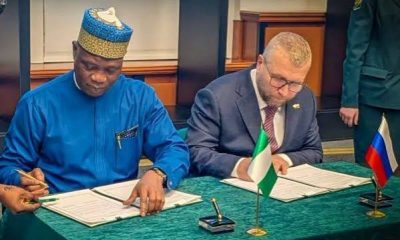
Nigeria, Russia Customs Sign MOU To Trade Facilitations
-

 Sports3 days ago
World marathon champion gets three-year doping ban
-
 Maritime3 days ago
South-South Governors Urges To Shake Off Collective Lethargic To Embrace Blue Economy
-
 Maritime3 days ago
Oyetola Woos Investors With Nigeria’s Seabed Resources, Marine Biotechnology
-

 Business3 days ago
Moniepoint MfB transaction volume hits 1trn daily — CEO
-

 Oil & Energy3 days ago
Global Oil Market May Witness Supply Surplus Before The End Of 2026 …… Report