
Women
Reflections On Widowhood In Nigeria

They are one of the most vulnerable in the society, they are exposed to indiscriminate abuses in all aspects of their lives, and they bear the scars of their stigmatisation in a society whose sensibility has been lost to a jaded conscience.” Such anonymous oddity captures the plight of widowhood in Nigeria. Nigerian widows like other widows across the world, belong to the downtrodden class, whose voices are mostly represented by Non-Governmental Organisations, civil society and human rights groups, who raise concern over the sordid conditions to which widows are subjected.
Nigerian widows recently joined their counterparts the world over to celebrate the 2013 edition of the International Widows Day.
In Rivers Sate, a cross section of widows in the state gathered at the Ministry of Women Affairs to celebrate their international day of recognition at the instance of the ministry.
The widows filed up in their numbers bearing the brunts and telltale signs of their individual experiences, and typifying the classification of those confined to a perpetual injunction of poverty and deprivations.
Addressing the highly emotional section of participants at the event, the Rivers State Commissioner for Women Affairs, Joeba West, raised concern over the plight of widowhood. The commissioner who was represented by the Permanent Secretary of the ministry, Mr. Belema Mangibo, said “there were an estimated 24.5 million widows in the world, out of which 115 million live in poverty and suffer social stigmatisation.”
She pointed out that “81 million of widows have also been subjected to physical abuses. The commissioner said the theme of the 2013 edition of the event, “zero tolerance, women and men unite to end cultural discrimination against widows” was apt, and urged the widows to be steadfast and strive to know their rights; especially in terms of inheritance of the husband’s property.
The commissioner also called for concerted effort in raising concern for the betterment of widows and save them from cultural and institutional stigmatisation. The commissioner emphasised the need for legislative expediency in the country to protect the interest of widows.
In her keynote address Barr. Florence Amiesimaka, noted that widows in Nigeria have suffered grave indignity through unconscionable cultural practices and other social inbalances and restructions that debases their sense of existence. She decried the traumatic experiences which widows go through in their daily lives, which are mostly recounted during counselling as a legal practitioner. She lamented that “most widows live in hellish conditions due to lack of access to the legal interventions,” and advocated for policies that would place widows on a social obligation by the society. The legal practitioner called on the widows, to always fight for their right by accessing the interventionist offer of concerned bodies like, the International Federation of Women Lawyers (FIDA) among other NGOs who has passion for their welfare. Mrs. Amiesimaka also urged the widows to be discreet in their economic live, by “investing wisely to cater for the interest of the family.”
Also speaking at the event the chairman of the occasion, Patricia Wali, encourage the widows not to lose hope in live, but always life a cautious live that will protest them. From unpleasant situations. Musing over the plight of widows, the founder of Rose of Sharon Foundation, Folorunsho Alakija, during the launching of her book recently, was reported to have said that; “African widows were among one of the most humiliated peasantries in the world.”
Alakija said; the book “The cry of widows and orphans” chronicles the plight of widows and suggest policies that would help to promote the course of widows. The author was reported to have said during the book launch at the Institute of International Affairs in Lagos, that ‘widowhood which is created by natural occurrence of death, need deserving attention “and if those left behind are not catered for, it comes back to the society. She said, Nigerian widows represented the social inequality in the society and advocated for policies that would promote the course of widowhood. Beyond the advocacy for gender equality, the author said “There was need for special intervention through sustainable policies for widows in terms of rights and other issues that would enhance their physical well-being. In comparative terms, there are the obvious certainties that the growing number of widows in the society, are created by the monster of insecurity which leads to the depletion of male population. In the Niger Delta for instance, reports shows that most male population lost their lives at the peak of the militancy resulting in the expanse of filial fold of widowhood. There are indications that more widows will be created from the murderous campaign ravaging the northern part of the country through the blood tasty reign of the Boko Haram sect. Commenting on the plight of widows, the President of the Niger Coalition Against Violence, (NDCAV), Comrade Lekia Christian said the plight of widows in Nigeria should be given legislative consideration to give them a sense of belonging and raise their derogating sense of existence.”
Comrade Christian also advocated for zero tolerance to violence “to save our male population from depletion and reduce the potentiality of widowhood.” He said the (NDCAV) was committed to raising the awareness against violence in the society. Also commenting on the plight of widowhood, the chairperson of the Port Harcourt City Council, Nwonwereoma Akarolo, charged politicians to channel their resources toward the elevation of the living standards of widows and other less -privilege in the society.
The chairperson who spoke with The Tide while presenting some items to the Port Harcourt children home and the compassion centre, said; “politicians rather than waste their resources on needless political bickering and flaunting of excessive wealth should contribute to charity, and impact on the lives of widows, orphans and the physically challenged.”
The years ahead would decide whether the Nigerian society would yield to the clarionc all of passion and institutional concern towards alleviating the scourge of widowhood.


As Nigeria’s political arena thickens ahead of the January / February 2027 elections , the women folk stand on their resolve to remain a force to reckon with .
Not just in mobilisation as before but right there on the ballot papers . Rivers women this time , more than ever are determined to shake the space .
Through the creeks of Opobo, the bustling markets of Mile One in Port Harcourt, and the political wards stretching from Ogoni to Ahoada, Rivers women sought flags for political posts across the parties.
The story is that for the forthcoming January and February 2027 general elections, the women are undeniable the engine room of political mobilisation across the Treasure Base of the Nation.
Filling every campaign arena coordinating ward-to-ward voter drives, and sustaining the grassroots coalitions that determine who occupies Government House and the legislative chambers but their numerical strength still couldn’t translate to equivalent number of tickets granted them .The Final list of the Independent National Electoral Commission (INEC) unveiled , a familiar paradox. While women constitute the backbone of Rivers State’s electorate and party structures, their names on the actual ballot paper remain hard-won exceptions rather than the rule.
Against the backdrop of complex political realignments—most notably the reconciliatory Rainbow Coalition uniting allies of Governor Siminalayi Fubara and Federal Capital Territory Minister Nyesom Wike behind President Bola Tinubu’s re-election bid, a select group of determined women has stepped forward to claim space on the 2027 ballots.
In the female squad; the faces defining women’s quest for power in Rivers State in 2027 parades a lone female governorship contender challenging 18 men to seasoned labour leaders, lawyers, and grassroots strategists vying for legislative seats, The lone woman in the Brick House Race, to succeed Governor Siminalayi Fubarra among 19 governorship hopefuls, is West Ivy standard-bearer of the African Action Congress (AAC).
At 47, West Ivy is no stranger to the rough-and-tumble of Rivers politics. A lawyer holding multiple academic and legal credentials (including an LL.B, BL, and LL.M), she previously ran as the AAC’s deputy governorship candidate during the 2023 general elections.
West Ivy has anchored her 2027 campaign on ideological consistency and independence from political godfathers.
“I did not switch parties or sides. I kept faith with you, and I am back to lead,” she declared on the campaign trail, framing her candidacy around peace, job creation, and human dignity. Crucially, she has placed gender inclusion at the heart of her governance blueprint, pledging to reserve at least 35 percent of executive cabinet positions for women alongside signing a 13-point Citizens’ Charter. Running alongside her as deputy is Eletuo Ezekiel Ijendu, At the Deputy Governorship corridor, six women appear on the ballot as deputy governorship candidates across diverse party platforms:
Davies Joy Jebba Ikubogh ; and Running mate to Chibuzor Israel Rain on the Accord (A) ticket.
John-Woke Geraldine ; Running mate to Idoniboye-Obu Omangima of the All Progressives Grand Alliance (APGA).
Badom Zaavalo ; Running mate to Whyte Churchill Dagogo of the Allied Peoples Movement (APM).
Jumbo Jessica Robert ; Running mate to Labour Party (LP) candidate Boms Chima Ernest.
Ehuwa Pirinye Kabaka an accountant paired with Peoples Democratic Party (PDP) flag bearer Samuel Soni Ejekwu.
Membere Ibigbeye Deborah ; Running mate to Peoples Redemption Party (PRP) candidate Kieghe Nature Dumale.
The presence of women on the deputy tickets of legacy parties like the PDP and major opposition platforms like the Labour Party reflects an enduring tradition in Rivers politics following in the footsteps of amiable Dr. Ipalibo Harry Banigo, who broke the glass ceiling in 2015 as the state’s first female deputy governor.
Then the Law makers Zone ; battles for the Red Chamber: Women in the Senate Races: . In Rivers State, seven women are contesting across the three senatorial districts, bringing varied backgrounds in labour activism, law, business, and community organising to the January 16 National Assembly polls: Rivers East Senatorial District:Two women are vying to represent the state’s most populous senatorial zone. Leading the charge is Beatrice Itubo. of the Labour Party (LP). A veteran trade unionist and former chairperson of the Rivers State chapter of the Nigeria Labour Congress (NLC), Itubo was the Labour Party’s governorship candidate in 2023.
She is joined on the Rivers East ballot by Wokekoro Beauty Dike Chinonso of the Action Peoples Party (APP).
Rivers South-East Senatorial District: Lessi Naasi Susan flies the flag for the Social Democratic Party (SDP), carrying the banner for female representation in the Ogoni and Opobo/Nkoro axis.
Rivers West Senatorial District This riverine and upland district features the highest concentration of female senatorial contenders in the state, with four women on the ballot: *Ololube Charity Chizhim of the Action Alliance (AA), Abusi Tammy C. of the Action Democratic Party (ADP), Opoli Aneni Inyamoyio* of the Democratic Leadership Alliance (DLA), and *Sokari George Georgina* of the New Nigeria Peoples Party (NNPP).
Yet, the Rivers West race is also defined by the loud absence of Incumbent Senator *Distinguished Senator Ipalibo Harry Banigo, the former deputy governor who won the seat in 2023, and currently Chairs the Health Committee of the Senate . She couldn’t scale through at the primaries of the All Progressives Congress (APC) .
Her exit from the major-party ticket speaks loud of the vulnerablity of even high-ranking, experienced female politicians even with their huge grassroots popularity.
The House of Representatives and State Assembly Contests
In the lower chamber of the National Assembly and the Rivers State House of Assembly INEC’s final list( for the House of Representatives,) has women such as *Victor Igeh Happiness* (contesting the Abua-Odual/Ahoada East Federal Constituency on the Action Alliance platform), alongside candidates under the ADC, NDC, SDP, ZLP, and APM banners, are pushing to break male dominance in federal constituencies.
At the state legislative level —scheduled for February 6, 2027—women across local government areas from Tai to Abua/Odual women had many battles and are still battling internal party intrigues and post-primary litigation. It’s common seeing some female aspirants who clinched party tickets loose their victories immediately in court contests with male contenders Behind the faces on the Ballot are Mobilisers shaping the outcome. Let’s talk about them !
In Rivers State, electoral outcomes are frequently decided by powerful women-led mobilisation networks operating inside the major coalitions.
As the Rivers Rainbow Coalition bridging the political structures of Governor Fubara and Minister Wike under the APC and PDP umbrellas— women leaders have been central to translating high-level political truces into ward-level votes:
Hon. Tonye Briggs-Oniyide, a former two-term Commissioner for Culture and Tourism and Rivers State Coordinator of the Renewed Hope Initiative, has played a pivotal role in linking federal women-empowerment interventions with grassroots political mobilisation.
Barr. Onyii Ile; State Coordinator of the Simplified Grassroots Ladies (SGL), commands one of the most visible female political networks in the state, rallying women across the 23 local government areas behind Governor Fubara’s political alignments.
Prof. Adaeze Chidinma Oreh former Commissioner for Health, continues to bridge public health advocacy and community engagement, resonating strongly with female voters and professional networks.
Amb. Dr. Ruth Davies Ibiamu; Chairperson of the Rivers State chapter of the Nigeria League of Women Voters (NILOWV), leads non-partisan civic education, pushing for peaceful polls and encouraging women to vote beyond material inducements.
Rivers Women in Politics still have lots of hurdles to pull off.
Rivers state with all her dynamic, politically astute women still see men occupy over 90 percent of the top slots on the 2027 ballot.
Women folk; Rivers Women there’s every need to discuss the following barriers : The Patronage and Godfather System,, Prohibitive Campaign High Costs ,Political Volatility and Intimidation: Looking Ahead to January and February 2027 ballots our Women flag bearers have a dual burden. They are competing to win seats in a fiercely contested political environment, while simultaneously keeping the door open for the next generation of female leaders.
I believe through West Ivy’s bold solo run for Government House, Beatrice Itubo’s labour-backed push for the Senate, and the six women standing a heartbeat away from the governorship as running mates, Rivers women are fast going beyond mobilisation figures, aso – ebi wearers or mere spectators in Politics .True democratic representation in Rivers State will remain incomplete until the women who deliver the votes are equally entrusted with the power to govern.
Nneka Amaechi-Nnadi
Women
Hearty Cheers To Nigeria’s Flamingos …Kudos To All Nigerian Women Who Chose To Excel In Male Turfs

For ages, football and soccer pitch in Nigeria were literally identified as areas specifically meant for the menfolk, in line with the societal expectation that physical dominance belongs exclusively to men. Our pitches and the likes were formerly mapped out as men’s domain!
As years rolled by, a new generation of daughters arose. The barriers were broken. Our women and girls graced the pitches and took solid grounds. Not, just to watch and not just to participate, but to conquer.
Nigeria’s female national football teams have consistently flown the country’s flag high, serving as absolute power houses on the African continent and earning immense global respect.
The year 2026 will forever be etched in gold. In Nigeria, and African football history as the year Nigeria’s U-17 women’s national team, the Flamingos took over the male turf, rewrote the global script at the FIFA U-17 Women’s World Cup in Morocco, emerging the first African female Team to conquer the World and bring home the World Cup.
The journey through the seven matches were clearly tough and rough but the Nigerian teenage Queens defied all odds , faced the global big hooves , beat them in their games and made Africa; Nigeria proud . They broke all barriers and won their six matches. They conquered football behemoths like Brazil in the semi-finals with a stellar 3-1 victory, and stood face-to-face with multi-time global champions, Japan in the grand finale in Rabat. When the final whistle blew, sealing a tense 2-1 victory over Japan, the Flamingos achieved the unthinkable: they became the first African nation in history (male or female) to lift the FIFA U-17 World Cup trophy. .
I hail the Midfielder, Oluebube Umejiaku , who ignited the pitch and tamed the world former bests, clinching the prestigious ” FIFA Golden Ball as “ “Player of the Tournament.” Under the tactical brilliance of Head Coach Akeem Busari, the young Nigerian girls stood firm and displayed “what they got”
They did not just win; they dismantled barriers. After an initial setback, they surged forward with six consecutive victories.
As the African Queens landed home amidst thunderous ovations, the Presidency and the Senate took turns to celebrate the Young World Conquerors. Tuesday, the Senate, following the prayers of a Motion on the Flamingos glorious outing sponsored by Distinguished Senator Abdul Ningi applauded the U-17 World best. The World record attained by the players gave room for off politics deliberations in the Red Chamber as all Senators united in commendations over this national feat. The lawmakers took turns to eulogise the female players and splashed the team with cash sum of one hundred million naira.
Senate President Godwill Akpabio, speaking on behalf of his colleagues said, “I want to commend the Flamingos, the U-17 youth team of Nigeria, for defeating major countries such as Brazil and Japan to win the Under-17 World Cup for Africa for the first time and for Nigeria.”
He also appealed to the Federal Government and corporate Nigeria to adequately reward the players and invest in the foundational development of women’s sports. The lawmakers also commended the National Sports Commission (NSC) under Mallam Shehu Dikko for his good work which yielded the world trophy to Nigeria.
Wednesday, the Senate, President and his colleagues continued the shower of praises as they hosted the Flamingos in the National Assembly.
Same day, the team was hosted at the Presidential Villa by the First Lady, Senator Oluremi Tinubu. The players at the Villa received gifts of One hundred million Naira each from President Bola Ahmed Tinubu .
From the women’s world, the victory of the Flamingos speaks volumes. It is women breaking boundaries, venturing into male – dominated terrains not just to be seen but to excel not minding systemic hurdles.
Looking back, it is already established that soccer, the field of men had expanded. No longer a male preserve but a shared terrain where Nigeria’s female teams shake the world.
Before now, the Super Falcons (Senior Women’s National Team; undisputed Queens of Africa, dominated the Women’s Africa Cup of Nations (WAFCON) with multiple continental titles and historic triumphs. They qualified for every single edition of the FIFA Women’s World Cup since its inception in 1991. The Super Falcons maintained Continental Dominance and Rankings.
The Falconets, Nigeria’s U-20 Women’s National Team in turn carved their names in gold over the years as they consistently terrified traditional superpowers at the FIFA U-20 Women’s World Cup. They have a history of reaching deep into the tournament, famously securing runners-up position (Silver medals) at the FIFA U-20 Women’s World Cup on multiple occasions, fiercely challenging powerhouses like Germany and the USA. Maintaining African Supremacy, they routinely swept the African qualifiers, proving to be the ultimate conveyor belt of talent feeding straight into the senior Super Falcons squad.
Cheers to all Nigerian Women! Our Teams are the best!
Nneka Amaechi-Nnadi
-
News2 days ago
Parents Protest Scholarship Scheme Suspension At PAMO Varsity
-
 News2 days ago
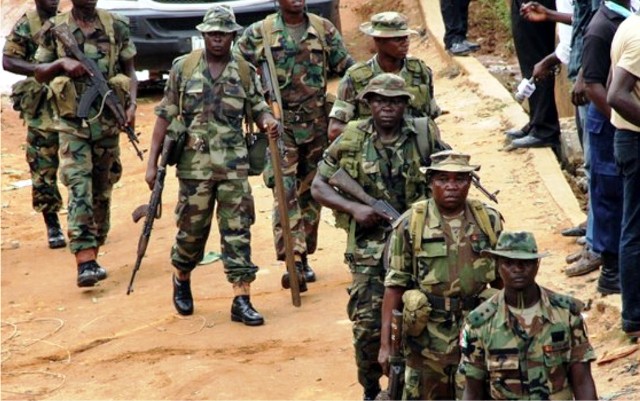
US Hails Nigerian Military For Rescuing 125 Kidnap Victims
-
Business3 days ago
Reps Raise Alarm Over N2trn Agricultural Loan Diversion
-

 Featured2 days ago
Presidents Xi, Trump, Putin Commit To Global Stability, Denuclearisation
-
Politics3 days ago
ADC Faults INEC’s Alleged Limited Capacity To Upload Election Result On IREV
-
Politics3 days ago
Tinubu Expands 2027 Campaign Tour To 19 States
-
Politics3 days ago
Rivers INEC Set To Begin PVCs Distribution Amidst Residents’ Complaints
-
Business3 days ago
Ibom Airlines Hits 52 Percent Of N147.03billion Financial Year, -FAAN