Editorial
Avoiding The 2012 Flood Experience

The Nigerian Meteorological Agency (NIMET) and a renowned geoscientist, Professor Dagogo Fubara of the Rivers State University of Science and Technology, on two separate occasions, last week, alerted the nation on the need to take proactive measures to avert a repetition of the 2012 flood experience. Each of these two alerts predicted disastrous consequences should the governments fail to take urgent steps to check flood. NIMET had estimated rainfall of between 1500 to 300mm for this year as against 800 to 900mm of rainfall in 2012.
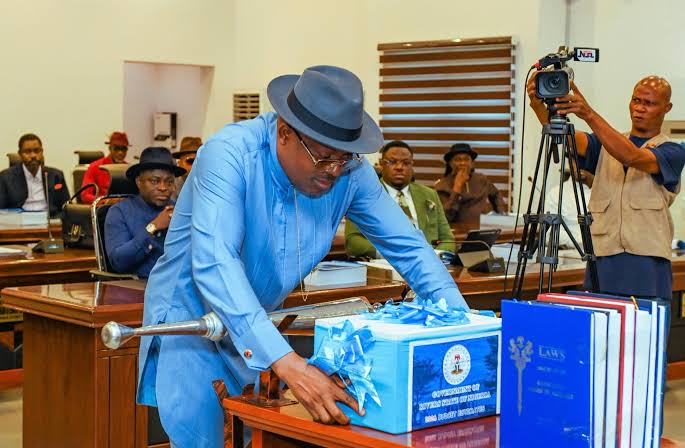
Without further prompting, the Rivers State House of Assembly has summoned three key Commissioners from the State Executive Council namely; the Hon. Commissioner for Environment and Special Duties as well as the Hon Commissioner of Information and Communications, to interface with the lawmakers on plans to checkmate the impending flood.
The invitation followed a resolution passed by the House as part of its oversight functions to find out from the commissioners the steps taken so far to check and possibly mitigate the effect of flooding when it occurs. The Assembly also urged the Ministry of Health to begin plans for necessary medical activities in the vulnerable areas to help prevent diseases that are consistent with flooding by embarking on immunisation, vaccination, distribution of mosquito nets, among others.
The Tide is happy over the timely invitation and commends the House for the prompt response. The action is not only a demonstration of foresight and responsibility but also sensitivity to the concerns of the citizenry.
The 2012 flood took the nation by storm and caused immeasurable damage not only to private and public property and infrastructure but also to the entire ecosystem.
The rainy season of that year was worse than earlier years, and heavy rains at the end of August and the beginning of September led to serious floods in most parts of the country.
Though the Nigerian authorities eventually contained the initial excess run-off through contingency measures, it must be said that during the last week of September, water reservoirs over flew and forced authorities to open dams needed to release pressure in both Nigeria and neigbouring Cameroon and Niger. These led to massive flood that destroyed river banks and infrastructure, loss of property and livestock as well as flash floods in many areas.
According to the International Federation of Red Cross and Red Crescent (IFRC) and the Disaster Relief Emergency Fund (DREF), by September 29, the floods had affected 134,371 people, displaced 64,473, injured 202 and killed 148. However, by the end of October, more than 7.7 million people had been affected by the floods, and more than 2.1m had registered as Internally Displaced Persons (IDPs). Another 363 people were reported dead while almost 600,000 houses were reportedly damaged or destroyed.
The water flooded the Lokoja-Abuja road, divided the country into two parts and made it impossible for travelers to move from the southern part to the northern part of the country. Many travelers were shocked when on getting to Lokoja, they discovered that they could only get to the other side by canoe.
Out of Nigeria’s 36 states, 32 were affected by the floods. Needless to say that most of the state governments were overwhelmed.
We think the ministries should begin early to sensitise the populace on the need to avoid activities that could block waterways such as erection of structures and dumping of refuse. Equally important is the need for the government to construct canals and embankments where necessary. The experiences of other countries such as Singapore in shore and coastline protection can be of benefit. Indeed, we think it is high time an environment summit was convoked, especially in the Niger Delta area for the purpose of finding a lasting solution.
The Ministry of Niger Delta Affairs and the Niger Delta Development Commission (NDDC) in cooperation with the states of the Niger Delta can take the lead in convoking such a summit in order to also fine-tune strategies aimed at containing the threat of flood in this part of the country. Such summit can be replicated in other zones of the country in order to form the necessary synergy.
Judging from the 2012 experience, the threat of flood is real and all hands including those of the private sector must be on deck in the search for a lasting solution.
Rather than do nothing and turn round to blame disaster management agencies when the worst happens, the lawmakers have taken the bold initiative that needs to be pursued to a logical conclusion.



There are moments in the life of a legislature when plain speaking becomes a public service. Senator Adams Oshiomhole provided such a moment on the floor of the Senate when he accused the Minister of Works, Senator David Umahi, of manifestly neglecting critical federal arteries in Edo and Delta States, and implored his colleagues to prevail on the Minister to adopt a more equitable and genuinely national approach to road infrastructure delivery. It was blunt, it was uncomfortable, and it was necessary.
The specifics of his complaint deserve restating. Drawing attention to the recent approval of some 20 new road projects despite the parlous state of existing ones, the former Edo State governor lamented that Nigerians cannot travel from Benin to Warri, Benin to Asaba, Benin to Auchi, or Auchi to Okene without encountering severe distress. He alleged a deliberate omission of these corridors from the national budget in the last three years, save for palliative interventions directed by President Bola Tinubu through tax credit arrangements. His question — “What have we done wrong?” — resonates far beyond the chambers of the National Assembly.
We lend our full and unequivocal support to that call. The Auchi-Benin Road, for instance, has been in a deplorable and near-impassable condition for several years, turning what should be a two-hour journey into an all-day ordeal of broken axles, extortionate fares, and despondent commuters. The media have, on multiple occasions, chronicled the suffering of motorists, traders, and students who ply that route. To describe it as a federal road today is to stretch the meaning of the term beyond recognition.
This pattern of sidelining is not confined to Edo or Delta. Even here in Rivers State, the disposition of the Federal Ministry of Works has left much to be desired, particularly along the Eleme axis of the East-West Road. That road, which ought to be a flagship of federal presence in the Niger Delta, has remained in a wretched state for long. Those who use it daily — workers at the Eleme Petrochemical Complex, the two refineries, Onne Port, and the countless ancillary industries — can attest to its deterioration. Work has proceeded in fits and starts without the sustained urgency such a strategic road demands.
The Eleme stretch is not a mere intra-state byway. It is the gateway to the nation’s economic jugular. According to the Federal Ministry of Works and Housing’s 2023 Highway Condition Survey, only about 35 per cent of the country’s 36,000 kilometres of federal roads are rated as being in good or fair condition, with the remainder classified as poor or very poor. The East-West Road, conceived in the 1970s to bind the entire Niger Delta, remains unfinished in critical sections more than four decades after. If it had been treated as a priority, the perennial gridlock, carnage, and economic loss on the Eleme-Refinery junction would have long been consigned to history.
The irony is as painful as it is glaring. The Niger Delta remains the goose that lays the golden eggs. Data from the Nigeria Extractive Industries Transparency Initiative [NEITI 2023 Oil and Gas Audit] show that the region still accounts for over 78 per cent of Nigeria’s federally collected export earnings and about 65 per cent of total government revenue. The National Bureau of Statistics [NBS Foreign Trade Report Q4 2024] similarly confirms that crude oil continues to dominate export receipts. By every metric of equity and economic logic, a region that sustains the national purse deserves first-rate consideration in the allocation of infrastructure, not afterthoughts and tokenism.
Road infrastructure is not largesse to be dispensed by favour; it is the skeleton upon which commerce, cohesion, and citizenship hang. When contracts are concentrated in one geopolitical zone while other zones are left to contend with craters, it erodes trust in the federation itself. The World Bank’s Nigeria Development Update [June 2023] estimated that poor transport connectivity inflates the cost of moving goods by up to 40 per cent and costs the Nigerian economy an estimated $1.5 billion annually in lost man-hours and vehicle maintenance. If we profess to be one country, then equity must be the compass that guides key institutions before any project is executed. Development must spread round, not pool in one place as though other regions do not matter.
There is also a grave security dimension that can no longer be ignored. The deplorable condition of federal roads has become a veritable enabler of criminality. The NBS Crime Experience and Security Perception Survey reported over 2.5 million incidents of kidnapping-related occurrences nationally, with transport workers identifying bad road spots as prime ambush points. When vehicles are forced to crawl at 10 kilometres per hour through failed sections at Auchi, Sapele Road, or Eleme, they become sitting ducks for armed gangs. Fixing bad roads, therefore, is not merely about convenience; it is about safeguarding lives.
By his intervention, Senator Oshiomhole has hit the nail on the head and reminded Minister Umahi of a fundamental constitutional truth: public office is held in trust. The Ministry of Works is not a personal estate where contracts are awarded according to whim or political convenience. It is a national institution funded by the collective resources of Nigerians, including the oil and gas rents from the very communities whose roads are now neglected. The Minister must demonstrate balance, transparency, and a pan-Nigerian outlook in the distribution of projects that impact the daily existence of citizens. Selective neglect breeds suspicion, and suspicion is corrosive at a time when the nation is preaching unity, oneness, equity, and justice.
Consequently, the National Assembly must go beyond rhetoric and assert its oversight powers with vigour. Sections 88 and 89 of the 1999 Constitution [as amended] empower the legislature to investigate and expose any maladministration in the execution of federal projects. If an office holder is not acting rightly, it is the duty of the Senate and the House of Representatives to call him to order. Oversight must not be reduced to budget approval ceremonies; it must translate to field verification, public hearings, and insistence that the Federal Character principle, as enshrined in Section 14(3) of the Constitution, reflects in road awards.
Let the Auchi-Okene, Benin-Warri, Benin-Asaba, and Eleme East-West gangways be restored to motorable dignity. Let priority be given to completing existing, economically vital roads before embarking on new ones. If those who, through their resources, sustain the federation are sidelined in the distribution of tangible dividends, it tells poorly of our nationhood. Bad roads must be fixed, and they must be fixed now, with fairness as the guiding standard.