
Nation
THE STATES

FCT
The Guild of Medical Directors (GMD) has restated its commitment to collaborate with government to build world class hospitals in Nigeria to reduce foreign medical trips by Nigerians.
The GMD is a body of medical doctors who own and run private hospitals and clinics in Nigeria.
The new President of the guild, Dr Tony Phillips, made the pledge in Abuja while briefing newsmen on the activities of the body.
Phillips recalled that at the guild’s last general conference held in November, 2012, it stated that 60 per cent of healthcare delivery in Africa was provided by the private sector.
Jigawa
The new president of Royal Equestrian Club of Nigeria, Alhaji Ahmed Mohammed-Sani, has mandated the club to encourage the game of horse racing in the northern part of the country.
Mohammed-Sani, who is also the Emir of Gumel, Jigawa, gave the charge while inaugurating the horse racing club last Sunday in Gumel.
He said that with the mandate, the club would promote horse racing in the area.
the president explained that a similar club was formed in the past with the same goal to develop the game of horse racing.
Kano
The Legal Aid Council, Kano State Office, and Northern Nigeria Flour Mills have sponsored skills training for 27 inmates of Kano Prison preparatory to their release.
The Kano State Coordinator of the council, Alhaji Abubakar Umar, said in Kano that the inmates were trained in baking and textile technology, known as tie and dye.
“We are trying to make sure that inmates are trained in various trades to enable them be self-reliant after reuniting with their families.
“The council is also making effort to see that the state government gives the trainees capital to start their own businesses when they return home,’’ Umar told newsmen.
Kebbi
The Kebbi State government said that it had concluded plans for the payment of N18,000 minimum wage to workers.
The State Head of Service, Alhaji Buhari Jega, said this after a meeting with officials of the Nigeria Labour Congress in Birnin Kebbi.
He called on the labour leaders and stakeholders to present a workable payment timetable for implementation.
Jega, commended the state NLC and entire workforce for their patience and understanding over the implementation of a uniform minimum wage.
Kogi
Nineteen awaiting trial inmates remanded in the six Federal Prison formations in Kogi State have regained their freedom folllowing the intervention of the state Chief Judge, Justice Nasir Ajanah.
Ajanah, who spoke in Idah at the end of his two-week prison decongestion tour, also granted conditional bail to 12 inmates.
The chief judge told newsmen that the unconditional release of the inmates was not a grant of amnesty or pardon.
He said that some of the inmates were unjustly and unconstitutionally incarcerated for allegedly belonging to faceless gangs of thieves without concrete charges.
Kwara
The Kwara State Government has approved the establishment of Public-Private-Partnership Office (PPP) to encourage investors and promote job creation.
The Commissioner for Finance and the Senior Special Assistant to the Governor on Media and Communications, Dr Muideen Akorede, said this in Ilorin at a post-executive council news briefing.
Akorede explained that the framework of the office of the PPP was the engagement of the private sector investors in key sectors of the state’s economy.
He mentioned human capital development, economic development and infrastructure as key areas of interest to the government.
Lagos
Former President Olusegun Obasanjo has said that the Nigeria Police the judiciary and prisons should be reformed to reflect modern standards obtainable in developed countries.
Obasanjo was quoted as saying this at his investiture as the Life Grand Patron of the Prison Rehabilitation Mission International (PREMI) by its Chairman, Oba Adedapo Tejuosho, the Osile Oke Ona in Abeokuta.
The former president further said that the ill-treatment of citizens of any country could best be known through visitations to their prison yards.
‘’If reformation must to be achieved in Nigerian prisons, these three public sectors namely the police, the judiciary, and the prison must be seriously reformed.
Nasarawa
The Nigeria Security and Civil Defence Corps (NSCDC), Nasarawa Command, said last Sunday that it had arrested two men for stealing 43 iron doors and four windows at the Karu International Market, Karu.
The state Commandant, Mr Andekin Amos-Musa, who disclosed this to newsmen in Lafia, said that the arrest was made possible by officers of the Karu Division, following a tip-off by a good Samaritan.
Amos-Musa said that the suspects were arrested while trying to sell the stolen items to a trader at the scraps market, Mararaba.
The commandant said that the complainant, who is also a contractor in the market, had earlier reported the incident at the Karu Divisional Office of NSCDC before the arrest was made.
Ogun
The wife of the Ogun State governor, Mrs Funsho Amosun, has called on women in the state to support moves to end violence against the female gender.
Amosun made the call in Abeokuta during the 2013 International Women’s Day celebration, with the theme: “Time For Action To End Violence Against Women’’.
The wife of the Ogun governor expressed regrets about violence against women and described it as a major challenge confronting womanhood.
Millions of women and girls suffer from violence both in times of peace and war.
Oyo
A Federal High Court in Ibadan last Friday sentenced a 20-year-old tailor turned drug trafficker, Fatai Adetoro, to seven months imprisonment for being in possession of 800g of cannabis.
Justice Abimbola Obaseki-Adejumo found Adetoro guilty of the crime and sentenced him to imprisonment at the Oyo prison without an option of fine.
The judge said that her decision followed the evidence before her and the guilty plea of the convict and ordered that the sentence was to commence from the day he was arrested.
“I have, however, considered that the convict is a first time offender and that he had undergone counselling from the NDLEA,’’ she said.
Sokoto
The Minister of Health, Prof. Onyebuchi Chukwu, has said that the maternal mortality rate in Nigeria dropped from 704 per 100,000 live births in 1990 to 487 per 100,000 live births in 2011.
The minister spoke in Sokoto recently during the inauguration of Kwannawa Primary Health Centre (PHC) to symbolise the inauguration of 230 such projects executed by Sokoto State Government.
The minister said there was also a decline in the mortality rate of children aged below five years to 141 per 1000 in 2011.
He said that the progress toward improving maternal and child health in realisation of MDGs 4 and 5 could not be sustained without giving primary healthcare the attention it deserved.
Taraba
Alhaji Ibrahim El-Sudi, representing Gashaka, Kurmi and Sardauna Federal Constituency of Taraba in the House of Representatives, has appealed to aggrieved members of the PDP in the state to unite.
El-Sudi told newsmen in Jalingo on Monday that a divided party could not win election in a competitive political arena.
He wondered why members of the PDP would engage in internal crisis when opposition political parties were forming strong alliance ahead of 2015 general elections.
“Our party is in control in the state but we cannot continue to be strong when divided.



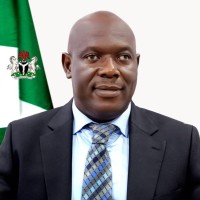
The Hydrocarbon Pollution Remediation Project (HYPREP) has commemorated the 15th anniversary of the release of the United Nations Environment Programme (UNEP) Environmental Assessment Report on Ogoniland, reaffirming its commitment to restoring the environment and improving the livelihoods of affected communities.
In a statement signed by the Project Coordinator, Prof Nenibarini Zabbey, to commemorate the anniversary, HYPREP described the anniversary as a significant milestone in Nigeria’s environmental restoration efforts, noting that the project has made remarkable progress in implementing the recommendations of the landmark UNEP report released on August 4, 2011.
The UNEP report had revealed extensive oil pollution across Ogoniland, severe environmental degradation, and serious public health risks resulting from decades of petroleum operations. It also recommended an initial $1 billion fund to commence the cleanup of the affected communities.
According to HYPREP, the Federal Government formally launched the Ogoni clean-up in 2016, while the Project Coordination Office was established in 2017 to drive the implementation of UNEP’s recommendations.
Zabbey said the current administration has continued to prioritise the project under the Renewed Hope Agenda.
Providing an update on the cleanup, the Project Coordinator disclosed that 30 of the 65 contaminated sites identified by UNEP have been fully remediated, while work is ongoing at several medium- and high-risk locations. It also stated that more than 1.5 million mangrove seedlings have been planted as part of what it described as the world’s largest restoration of oil-degraded mangroves, with over 1,000 hectares of shoreline already rehabilitated.
Zabbey further revealed that 49 Ogoni communities have been connected to potable water schemes through multiple water projects and booster stations aimed at providing safe drinking water across the region.
In the health sector, he said the 100-bed Ogoni Specialist Hospital in Kpite and the 43-bed Cottage Hospital in Buan are nearing completion, adding that several existing health facilities have been upgraded with modern medical equipment, while five ambulances have been donated to improve emergency healthcare services. The Project Coordinator also disclosed that a three-year human health biomonitoring study is being conducted in collaboration with the World Health Organization’s International Agency for Research on Cancer (IARC).
On economic empowerment, Zabbey stated that the Project has created more than 8,000 direct jobs and trained thousands of Ogoni youths and women in various vocational and technical skills, including software development, cybersecurity, aviation, commercial diving, seafaring, mechatronics, and creative arts. The project also reported awarding scholarships to more than 1,000 students, providing grants to small businesses, and supporting persons living with special needs through skills acquisition programmes.
The statement further highlighted ongoing legacy projects, including the Ogoni Power Project and the Centre of Excellence for Environmental Restoration, which it said is about 96 per cent complete. HYPREP also welcomed the recent designation of the Ogoni Wetland as a Ramsar Site of International Importance and pledged to continue promoting biodiversity conservation and sustainable management of the ecosystem.
Marking the anniversary, Zabbey said the progress achieved over the past 15 years demonstrates the collective commitment of government, development partners, stakeholders, and local communities to restoring Ogoniland. He called for renewed collaboration to sustain the cleanup effort, promote environmental sustainability, and support the long-term development of the region. 3
-

 News2 days ago
RSG Targets Nine Million Residents in Mosquito Net Distribution Campaign
-

 Oil & Energy2 days ago
Aiyedatiwa Signs New Electricity Bill
-

 Maritime2 days ago
Marine Minister Commends President Tinubu On NPERA Bill Assent
-

 Oil & Energy2 days ago
NLNG Commissions Research And Innovation Centre In RSU
-

 News2 days ago
KenPoly Holds Eight Convocations, August 29
-

 News2 days ago
RSG Begins Another Phase of Projects Commissioning Today
-

 News2 days ago
RMAFC Completes Revenue Sharing Review, Proposes New Pay
-

 Maritime2 days ago
NAGAFF Petitions IGP Over Alleged Maritime Police Harassment