
Rivers
Commissioner Hails Water Sector Dev Law

The Rivers State Attorney General and Commissioner for Justice, Barrister Wogu Boms, has described as revolutionary and ground breaking the Rivers State Water Sector Development Law.
Barrister Boms who said this during the Rivers State Water Sector Development Conference 2013 in Port Harcourt also said that the effective implementation of the law will ensure sustainable water supply in the State.
Highlighting some aspects of the law, the Attorney General said that the new law has outlaw the activities of night soil men as well as commercialized the production and distribution of water.
He said that, the law also empowers the Port Harcourt water corporation to collect all forms of water rates from consumers.
The commissioner said that the law which establishes the Rivers State Small Town Water Supply and Sanitation Agency also seeks to involve the communities in the protection of water service as well as the formation of Water Consumer Association.
He said that laws also compels owners of boreholes to pay rate to the government as well as renews their licences.
Hon Boms urged for the support of the people to ensure the success of the law, stressing that its effective implementations depend on the support and cooperation of the people.
In her lecture entitles, “Water Cooperation: A Key To Socio-Economic Development, Poverty Eradication, Social Equity and Gender Equality,” Mrs Priscillia Achakpa lauded the State Water Sector Reform, stressing that the reforms will enhance the distribution of water in the State.
Mrs Achakpa who is the National Coordinator Water and Sanitation collaborative Council, said that the reforms also seeks to enhance quality of water distribution in households.



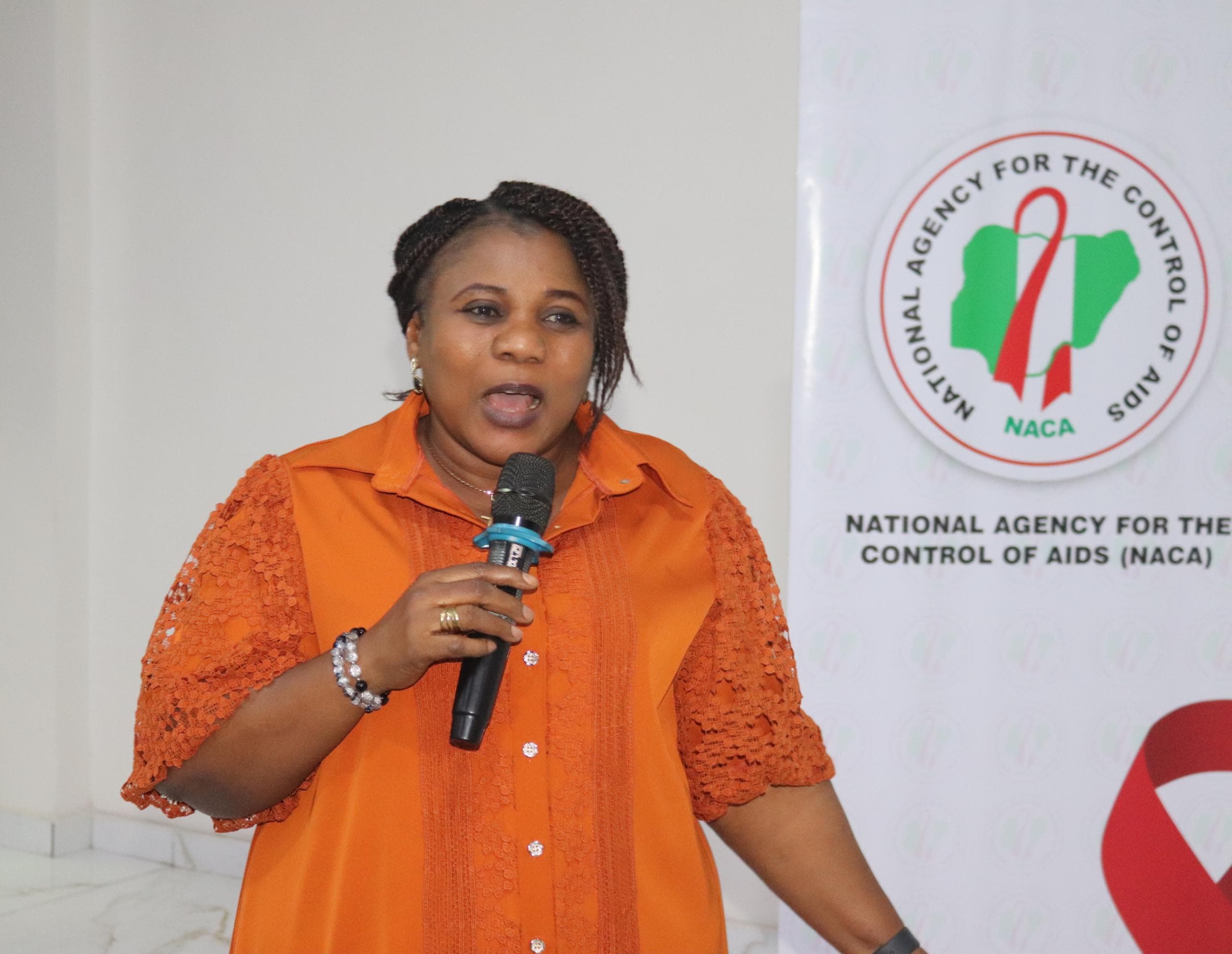
Prevention for HIV has taken yet another more advanced dimension with the introduction of the Lenacapavir (LEN) Pre-Exposure Prophylaxis (PrEP) into the stable of HIV prevention.
This was disclosed to Journalists assembled from across Nigeria in a two-day training programme on Lenacapavir in Lagos State.
In his presentation, the Lead Facilitator, and Principal Partner, Kent Consult Limited, Abuja, Dr. Segun Oyedeji, said unlike the earlier Post-Exposure Prophylaxis (PEP), which is taken to prevent HIV infection after exposure, the Lenacapavir PrEP is taken by non-infected persons.
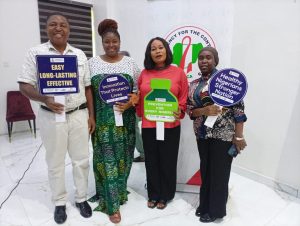
Such targeted persons are usually those exposed to vulnerable behaviours capable of exposing them to HIV infection.
“PrEP is taken before you are exposed to HIV, and comes in three forms: the daily oral PrEP, Truvada pill; the two-months interval injectible, Cabotegravir; and the long-acting bi-annually (six months interval) injectible, Lenacapavir. There’s also the Dapivrine Vaginal Ring, which women wear for one month”, he said.
Dr. Oyedeji explained that PrEP is meant for people who are exposed by their risk profile to HIV infection.
Risk profile, he explained, “is the kind of risk behaviours they exhibit in their lifestyle.”
Such people include people with a partner who has HIV, people who don’t always use condoms, sex workers, etc.

PrEP, according to Dr. Oyedeji, “builds up protection in your body so that if HIV enters your body, the medicine stops it from multiplying.”
Also, within the period the person is taking it, the person must get tested for HIV every three months interval.
So far, among the four options of PrEP, Adedeji, continued, “the Lenacapavir is the game-changer everyone is talking about.”
The reason is that it is a Capsid inhibitor, first of its class, that attacks the protein shell that HIV uses to copy itself, which is different from old drugs, and is just two injections per year, plus small starter tablets at the beginning. Not daily pills.
He, however, noted that before any of the PrEP options can be used, the person has to go through an eligibility test to ascertain which of the options would be suitable for the person, based on the person’s risky behaviour, and that all the person needs to do is to go to any health facility close to them to seek for the service, or the State Agency for the Control of AIDS (SACA) to get the right direction.

On his part, the Senior Prevention Manager, AIDS Healthcare Foundation (AHF), Mr. Adeleye Taofeek, who spoke on condom use as part of preventive measures for both HIV and Sexually Transmitted Infections (STIs), encouraged the use of condoms, especially where abstinence from sex is inevitable.
He said, “We are canvassing that as much as you use PrEP, you can also use condoms to prevent other STIs, beside HIV.
“We want the media to engage in demand creation for use of the various HIV prevention options: whether it is condom, PrEP, or change of behaviour, staying with an uninfected partner, we want the media to support the national response by creating demand for HIV prevention options.”
Earlier in her welcome address to participating Journalists at the two-day training, organised by the NACA and the Institute of Human Virology, Nigeria (IHVN), the Director-General, National Agency for the Control of AIDS (NACA), Dr. Temitope Ilori, emphsised the importance of the media in awareness creation.

She said: “PrEP is an effective HIV prevention for people who are HIV-negative and may be at risk of acquiring HIV. However, the availability of a prevention intervention is only one part of the equation. People must also have access to the right information, understand their prevention options, know where services are available, and feel confident seeking those services. This is where you, our media professionals, become indispensable partners.
“The media has the power to shape public understanding. A well researched story can dispel a misconception, encourage someone to seek a prevention service and potentially change a life. On the contrary, inaccurate or sensational reporting can create fear, reinforce stigma and discourage people from accessing HIV services.
“We, therefore, count on you to report PrEP and HIV prevention accurately, responsibly, and without stigma.”
The NACA D-G, who was represented by the Head, Public Relations and Protocol, NACA, Toyin Aderibigbe, charged the participants at the training, saying, “your reporting should make these issues understandable to ordinary Nigerians.”
Research shows that so far there have been no infections among all the people who have received the LEN PrEP, showing almost 100% protection.
The World Health Organisation (WHO) adopted it in July 2025 as an additional PrEP option.
In Nigeria, NAFDAC approved it in the late 2025 and received regulatory clearance, with the country receiving its first batch of doses in March 2026, and subsequently distributed it to 8 pilot states.
The states are: Akwa Ibom, Anambra, Benue, Cross River, Ebonyi, FCT, Gombe, and Kwara.
Investigation revealed that since May 2026, all the pilot states are accessing the LEN, and the demand is very high, especially among sex workers who want privacy and no daily pills.
In Rivers State, although the Lenacapavir is expected to arrive soon, the daily oral PrEP (Truvada pill), and the two-months interval injectible (Cabotegravir) are available, and the relevant authorities are encouraging people to access the drug.
Sogbeba Dokubo
-
News4 days ago
Parents Protest Scholarship Scheme Suspension At PAMO Varsity
-
 News4 days ago
US Hails Nigerian Military For Rescuing 125 Kidnap Victims
-
News1 day ago
Bayelsa Boat Mishap: Tinubu Donates N250m As Death Toll Hits 29
-
News1 day ago
Odu Pays Tribute To Late Chinwah, Describes Him As Courageous, Selfless Academic
-
Business4 days ago
Reps Raise Alarm Over N2trn Agricultural Loan Diversion
-

 Featured4 days ago
Presidents Xi, Trump, Putin Commit To Global Stability, Denuclearisation
-
Politics4 days ago
ADC Faults INEC’s Alleged Limited Capacity To Upload Election Result On IREV
-
Politics4 days ago
Tinubu Expands 2027 Campaign Tour To 19 States