
Nation
THE STATES

Bauchi
Governor Isa Yuguda of Bauchi State said on Friday that the lack of political will by previous administrations delayed the building of Bauchi International Airport conceived in the 1980s.
Yuguda who made the remark while laying the foundation stone for the International Airport estimated to cost N7.98 billion, recalled that the airports in Abeokuta, Ibadan, Minna, Akure and Warri were conceived at the same time but Bauchi could not build its own airport.
He said that contract for the construction of the airport was awarded to Messrs Triacta Nigeria Limited at the cost of N7.98 billion to be completed in 18 months, adding that the government had paid the contractor 70 per cent of the project cost.
Yuguda said work on the 3.4km long and 1km wide runway had reached advanced stage and promised that Muslim pilgrims would travel from the airport during the year.
A former minister of information, Prof. Dora Akunyili, commended Yuguda’s foresight and described the project as “strategic to the people of Bauchi State.”
Kaduna
The authorities of Ahmadu Bello University (ABU), Zaria, Kaduna State, have advised students of the institution against acts capable of disrupting peace on the campus.
The Vice-Chancellor, Prof. Abdullahi Mustapha, gave the advice at the 2012/2013 matriculation ceremony of 6,000 students of the institution held at the main campus in Samaru, Zaria.
Mustapha, who was represented by the Deputy Vice-Chancellor (Administration), Prof. Na’iya Sada, said the advice became necessary in view of the current security challenges in the country.
He said peace was critical to success and as such the university community required peace to run stable academic calendar.
The vice-chancellor urged the new students to make judicious use of the unique opportunity to learn and become useful to themselves, their families and the society.
Kano
No fewer than 310 offenders appeared before 10 Mobile Courts in Kano on Saturday for non-compliance with the monthly environmental sanitation exercise in Kano State.
In a statement signed by the Public Relations Officer of the Kano State Ministry of Environment, Hajiya Maryam Abdulkadir, in Kano, Abdulkadir said that N680,238 was realised as fine by the 10 Mobile Courts that tried the defaulters.
The state’s Commissioner for Environment, Alhaji Abdullahi Abbas, urged people of the state to give special attention to the monthly environmental exercise as part of their contribution to ensuring cleaner environments.
Kebbi
The Kebbi chapter of Miyyetti Allah Cattle Breeders Association of Nigeria (MACBAN) plans to expand Hotungo Fulani Cultural Festival to involve neighbouring West African countries.
The Chairman of the association, Alhaji Mohammed Dan-Ali, said in Birnin Kebbi on Friday that the festival would be extended to involve cattle breeders from Niger, Chad and Benin Republic.
He said the expansion of the festival to those countries would begin with the next edition, “after clearing security issues among the participating countries,” adding that the festival was an avenue for strengthening social and economic relationships among cattle breeders in West Africa, especially considering the migrant nature of the breeders.
The Secretary of the Elders’ Committee of the association ,Alhaji Nasiru Masama, said as part of efforts to ensure unity and end disputes among members, the district and local government branches of the association had been dissolved.
Kwara
Professor Oluwasegun Adekunle of the Department of Agricultural Extension, Faculty of Agriculture, University of Ilorin, has urged the Federal Government to implement policies on agricultural extension for food sustainability.
Adekunle, who made the call on Saturday while delivering a lecture entitled: “Key to Unlock’’ in Ilorin, said for any government to succeed in the agriculture sector, it must implement good policies on agricultural extension.
He said that the country was involved in too much food importation which was detrimental to the agriculture sector in the country, and made case for agricultural extension as a key to unlock the immense food potential in Nigeria.
According to him, a well focused agricultural transformation programme is usually sustainable, provided it is targeted at the small-scale farmers.
Lagos
A former Director of Central Bank of Nigeria (CBN), Mr Chris Nemedia, has urged the Federal Government to prioritise its development agenda to achieve goals.
Nemedia said in Lagos that it was economically unhealthy for the government to try to achieve many things at once.
He advised the Federal Government to follow elementary economics principles about making opportunity cost choices from a scale of preference of its development agenda.
“And it is a common precept in economics that choice and opportunity cost is made from not more than two or three items. “So, it will not augur well for our economy if the government is not prioritising its development agenda and focusing on attaining some at a time,“ he said.
He added that government at all levels needed to consult widely, especially with experts, on projects that required immediate attention.
Nasarawa
Governor Tanko Al-Makura of Nasarawa State on Sunday announced the establishment of a committee to work for the recovery of over 10,000 cows that got missing during the recent communal crisis in the state..
Al-Makura said that the committee would be saddled with the responsibility of recovering all the missing cows across the state.He assured the leadership of the Fulani group that the committee would handle the assignment efficiently, adding that the necessary logistics would be given to the committee to make its assignment easier.
Al-Makura said that members of the committee included soldiers, policemen, members of the State Security Service (SSS) and the Nigeria Security and Civil Defence Corps (NSCDC), as well as some state government officials.
Besides, Al-Makura announced that 200 of the missing cows, which had been recovered at Kwandare, were currently under the custody of the traditional ruler of that area.
Plateau
There is a mass movement away from Wadata, the boarder village in Wase Local Government of Plateau, which was hit by unknown gunmen on Wednesday, says its Chairman, Mr. Mohammed Zakari.
Zakari told newsmen in Wase on Saturday that natives of Tarok and Fulani, the major ethnic groups inhabiting the area, have fled to other communities “for fear of the unknown”.
“We wonder why people should flee from their abodes because of an unfortunate attack.
“Such mass exodus is not good for us because it sends the wrong signals and also gives us a wrong image,’’ he said.
Zakari said that a committee had been set up to investigate the attack and suggest possible ways to avoid a recurrence.
“The committee has been going round appealing to people not to leave since we have put in place adequate security measures in the area,’’ he said.
Osun
The Osun Government has stocked over 300 poultry farms in 13 months, according to an official.
The Director, Livestock Services in the state Ministry of Agriculture and Food Security, Mr Johnson Ajayi, disclosed this in an in Osogbo on Sunday.
“We have more poultry farms in Osun because the current administration had organised empowerment programmes such as `O’bop, O’bee and O’reap’, among others, for farmers to benefit from the dividends of democracy.”
The director said that the objective of the project was to make the state self-sufficient in food production as well as a net exporter of food in the country.
Ajayi further explained that the poultry farms would add value to local foods and create jobs for youths across the state.
Zamfara
Governor Abdulazeez Yari of Zamfara State said in Dutse on Friday that his government had put necessary measures in place to address insecurity in the state.
Yari made the statement in an interview after he paid a condolence visit to Gov. Sule Lamido over the death of his uncle.
He said the state government was working with the security agencies and other relevant stakeholders to tackle insecurity.
“The only security challenge we have in Zamfara is the farmers’ and pastoralists’ conflict.
“My government has designed several measures to address the problem head on,” he said.
The governor said the problem of insecurity was a global challenge and restated his government’s determination to ensure peace and stability in the state.



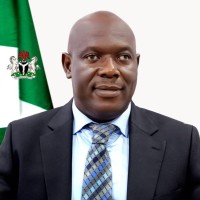
The Hydrocarbon Pollution Remediation Project (HYPREP) has commemorated the 15th anniversary of the release of the United Nations Environment Programme (UNEP) Environmental Assessment Report on Ogoniland, reaffirming its commitment to restoring the environment and improving the livelihoods of affected communities.
In a statement signed by the Project Coordinator, Prof Nenibarini Zabbey, to commemorate the anniversary, HYPREP described the anniversary as a significant milestone in Nigeria’s environmental restoration efforts, noting that the project has made remarkable progress in implementing the recommendations of the landmark UNEP report released on August 4, 2011.
The UNEP report had revealed extensive oil pollution across Ogoniland, severe environmental degradation, and serious public health risks resulting from decades of petroleum operations. It also recommended an initial $1 billion fund to commence the cleanup of the affected communities.
According to HYPREP, the Federal Government formally launched the Ogoni clean-up in 2016, while the Project Coordination Office was established in 2017 to drive the implementation of UNEP’s recommendations.
Zabbey said the current administration has continued to prioritise the project under the Renewed Hope Agenda.
Providing an update on the cleanup, the Project Coordinator disclosed that 30 of the 65 contaminated sites identified by UNEP have been fully remediated, while work is ongoing at several medium- and high-risk locations. It also stated that more than 1.5 million mangrove seedlings have been planted as part of what it described as the world’s largest restoration of oil-degraded mangroves, with over 1,000 hectares of shoreline already rehabilitated.
Zabbey further revealed that 49 Ogoni communities have been connected to potable water schemes through multiple water projects and booster stations aimed at providing safe drinking water across the region.
In the health sector, he said the 100-bed Ogoni Specialist Hospital in Kpite and the 43-bed Cottage Hospital in Buan are nearing completion, adding that several existing health facilities have been upgraded with modern medical equipment, while five ambulances have been donated to improve emergency healthcare services. The Project Coordinator also disclosed that a three-year human health biomonitoring study is being conducted in collaboration with the World Health Organization’s International Agency for Research on Cancer (IARC).
On economic empowerment, Zabbey stated that the Project has created more than 8,000 direct jobs and trained thousands of Ogoni youths and women in various vocational and technical skills, including software development, cybersecurity, aviation, commercial diving, seafaring, mechatronics, and creative arts. The project also reported awarding scholarships to more than 1,000 students, providing grants to small businesses, and supporting persons living with special needs through skills acquisition programmes.
The statement further highlighted ongoing legacy projects, including the Ogoni Power Project and the Centre of Excellence for Environmental Restoration, which it said is about 96 per cent complete. HYPREP also welcomed the recent designation of the Ogoni Wetland as a Ramsar Site of International Importance and pledged to continue promoting biodiversity conservation and sustainable management of the ecosystem.
Marking the anniversary, Zabbey said the progress achieved over the past 15 years demonstrates the collective commitment of government, development partners, stakeholders, and local communities to restoring Ogoniland. He called for renewed collaboration to sustain the cleanup effort, promote environmental sustainability, and support the long-term development of the region. 3
-

 News2 days ago
RSG Targets Nine Million Residents in Mosquito Net Distribution Campaign
-

 Oil & Energy2 days ago
Aiyedatiwa Signs New Electricity Bill
-

 Maritime2 days ago
Marine Minister Commends President Tinubu On NPERA Bill Assent
-

 Oil & Energy2 days ago
NLNG Commissions Research And Innovation Centre In RSU
-

 News2 days ago
KenPoly Holds Eight Convocations, August 29
-

 News2 days ago
RMAFC Completes Revenue Sharing Review, Proposes New Pay
-

 News2 days ago
RSG Begins Another Phase of Projects Commissioning Today
-

 Maritime2 days ago
NAGAFF Petitions IGP Over Alleged Maritime Police Harassment