
Nation
THE STATES

Bauchi
The Bauchi State House of Assembly committee on
budget and appropriation has commended the state government for pudent budget management and spendings in the 2012 fiscal year.
Chairman of the committee, Alhaji Abdulkadir Dewu, made the commendation in an interview with newsmen in Bauchi.
Dewu said that his committee had specifically commended the office of the Secretary to the State Government (SSG) for the way it handled the security situation in the state and the relative peace enjoyed in 2012.
FCT
A Zuba Grade 1 Area Court has sentenced a 19-year-
old man, Salisu Magaji, to six months imprisonment for stealing 11 baskets of onions.
Police prosecutor Momoh Ibrahim told the Court that Magaji of Dankogi, Abuja, stole the onions belonging to one Abdulhamidu Lawal of Fruit Market, Zuba, in the FCT.
He said that only six of the 11 baskets were recovered from the convict, who pleaded guilty to charge and begged the court to temper justice with mercy.
The Presiding officer, Alhassan Kusherki, sentenced Magaji to six months imprisonment and 12 strokes of the cane. Kusherki, however, gave the convict an option to pay N10,000 fine and N7,000 as compensation to the complainant.
He said the sentence was not harsh because the convict, who pleaded guilty to the crime, was a first time offender.
Gombe
Gombe State Government has distributed 900 tonnes
of grains to 6,653 farmers affected by the 2012 flood disaster in the state.
The state Commissioner for Agriculture, Alhaji Dahiru Buba-Biri, disclosed this to newsmen in Gombe on Thursday.
He said the foodstuff, comprising sorghum and millet, were delivered to the state by the Federal Government, to cushion the effects of the flooding on the victims.
“Gombe State received 900 tonnes of sorghum and millet for distribution to victims of the flood disaster. “To ensure that the grains reached the targeted beneficiaries, the ministry created five redemption centres for the 11 local government areas.” Buba-Biri announced plans by the state government to complement the Federal Government’s efforts by providing other relief materials to the victims.
Jigawaa
The Provost of Jigawa College of Education, Gumel,
Dr Dahiru Abdulkadir, said that the school would begin degree programmes in the 2013/2014 academic session.
Abdulkadir disclosed this in Gumel, Jigawa, in an interview with the newsmen.
He said the college had put all necessary facilities in place to start the programme in six courses.
According to him, the courses are Biology, Chemistry, English language, Hausa language, Agricultural Science and Physical Health Education. The provost stated that the courses would be run in conjunction with the Bayero University Kano.
Kaduna
Kaduna State Government has constructed two new
hostel blocks at the National Youths Service Corps (NYSC) orientation camp in Kaduna, to ease accommodation problem.
The State Coordinator, Mrs Victoria Ango disclosed this while speaking with newsmen on Thursday in Kaduna.
She said that with the additional facility, the camp now has the capacity to accommodate 2,800 corps members and 300 camp officials.
On general camp development, the coordinator said it was the collective responsibility of the federal, state and local governments.
“ The responsibility of providing hostel accommodation and office is the responsibility of the state government that is why I have been pushing them’’, she said.
Kano
The Police Command in Kano State on Thursday said
it recovered 1,123 Improvised Explosive Devices (IEDs) between January and December 2012.
This is contained in a statement by the command’s Public Relations Officer, ASP Magaji Majiya, in Kano.
According to the statement, 68 IEDs were successfully defused in different parts of the state by the Anti-Bomb Disposal Unit of the command during the period.
“Even though the early part of the year 2012 was characterised by terrorists attacks, the situation was immediately brought under control through concerted efforts of the police and other security agencies.’’
and the public for their prayers which had “greatly helped the command against evil intention of criminals in the state”. The command also expressed gratitude to all those who assisted the police and other security agencies with timely information that led to successes in its operations.
Lagos
A Federal High Court in Lagos has remanded two busi
nessmen, Prince Emenike and George Egotanwa, at the Ikoyi Prisons over alleged importation of bullet proof jackets and other contraband.
Emenike, 37, and Egotanwa, 33, are facing trial on a two-count charge of unlawful importation and false declaration before Justice Okechukwu Okeke.
Okeke ordered that the men, who did not have legal representation but pleaded not guilty to the charges, be remanded in custody and adjourned the case till Feb. 1.
The judge advised the accused to secure legal representation to defend them before the next adjourned date.
The prosecutor, Mrs Salamatu Yakubu, told the court that the accused, both residents of Ilupeju in Lagos, were arrested by officials of the Nigeria Customs Service on Dec. 27, 2012, on the Lagos-Badagry Expressway.
Nasarawa
Nasarawa state governor Umaru Tanko Al-Makura inaugurated 33-member visitation panels for the four tertiary institutions in the state.
The institutions are Nasarawa State University, Keffi; College of Education (COE), Akwanga; Nasarawa State Polytechnic, Lafia and College of Agriculture, Lafia.
Prof. Festus Ogunlade is the chairman of the nine-member panel for the university and Dr Abdullahi Liman is the chairman of the six-member panel for COE. Dr Silas Gyar, is chairman of the nine-member panel for Nasarawa polytechnic, while Prof. Musa Enna is to serve as the chairman for the nine-member panel for the College of Agriculture. Speaking at the ceremony, Al-Makura said that the gesture was to reposition the state-owned tertiary institutions for better performance.
Osun
An Osogbo Magistrates’ Court last Thursday sen
tenced a 20-year old man, Dada Jimoh, to nine months imprisonment for stealing N500 telephone recharge card and N5,000 cash.
Jimoh, who pleaded guilty to the one- count charge of stealing, was convicted based on evidence presented before the court by the prosecution.
The police prosecutor, Insp. Solomon Oladele, had earlier told the court during a summary trial, that the convict on Jan. 7, at Jaleyemi area, Osogbo, “criminally unlocked a shop and carried out the act“.
According to Oladele, the convict broke into the shop of one Mrs Adetoro Eunice and stole the card and N5,000.
Oyo
A football academy based in Ibadan, New Glory Acad
emy, last Thursday said it would improve on the game’s technical skills to ensure its further development in the country. Babs Oderinde, the proprietor of the academy, newsmen in Ibadan that the academy was also to groom young talents into stardom.
“Whenever I watch some of the matches played in Ibadan, I am not always impressed by the technical approach to the game.
“Due to this, the academy, based at Loyola College, Ibadan, has concluded plans to enhance the technical know-how of the game for improved cohesion, “ he said.
Plateauu
The National Orientation Agency (NOA) in Plateau, says
it has begun a massive sensitisation of students against the menace of examination malpractice. Its Director, Musa Chantu, told newsmen in Jos last Thursday that the programme had begun in secondary schools and would be extended to the polytechnics and universities.
“Examination malpractice is an epidemic that can be more dangerous than the cultist groups existing in most Nigerian schools; that is why we are making a priority to create the needed awareness,’’ he said.
Chantu lamented that most students had abandoned proper reading and hard work which used to be the main path to effective growth and development in any society.
Yobe
Artisans, professionals and traders, who fled Damaturu
last year at the peak of insurgency attacks have returned to the city. Our source said that normal commercial activities in the state capital have returned as the fleeing traders have openned their shops.
In Damaturu, restaurants, furniture makers, masons, building materials and automobile spare part dealers, among others, have returned to base.
Mr Sunday Emmanuel, one of the traders, said: “I returned back to Damaturu following the relative peace recorded in the state capital. “It has not been easy since we left our businesses due to the attacks, but we thank God that everything is coming back to normal” he added.



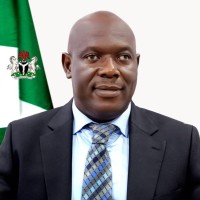
The Hydrocarbon Pollution Remediation Project (HYPREP) has commemorated the 15th anniversary of the release of the United Nations Environment Programme (UNEP) Environmental Assessment Report on Ogoniland, reaffirming its commitment to restoring the environment and improving the livelihoods of affected communities.
In a statement signed by the Project Coordinator, Prof Nenibarini Zabbey, to commemorate the anniversary, HYPREP described the anniversary as a significant milestone in Nigeria’s environmental restoration efforts, noting that the project has made remarkable progress in implementing the recommendations of the landmark UNEP report released on August 4, 2011.
The UNEP report had revealed extensive oil pollution across Ogoniland, severe environmental degradation, and serious public health risks resulting from decades of petroleum operations. It also recommended an initial $1 billion fund to commence the cleanup of the affected communities.
According to HYPREP, the Federal Government formally launched the Ogoni clean-up in 2016, while the Project Coordination Office was established in 2017 to drive the implementation of UNEP’s recommendations.
Zabbey said the current administration has continued to prioritise the project under the Renewed Hope Agenda.
Providing an update on the cleanup, the Project Coordinator disclosed that 30 of the 65 contaminated sites identified by UNEP have been fully remediated, while work is ongoing at several medium- and high-risk locations. It also stated that more than 1.5 million mangrove seedlings have been planted as part of what it described as the world’s largest restoration of oil-degraded mangroves, with over 1,000 hectares of shoreline already rehabilitated.
Zabbey further revealed that 49 Ogoni communities have been connected to potable water schemes through multiple water projects and booster stations aimed at providing safe drinking water across the region.
In the health sector, he said the 100-bed Ogoni Specialist Hospital in Kpite and the 43-bed Cottage Hospital in Buan are nearing completion, adding that several existing health facilities have been upgraded with modern medical equipment, while five ambulances have been donated to improve emergency healthcare services. The Project Coordinator also disclosed that a three-year human health biomonitoring study is being conducted in collaboration with the World Health Organization’s International Agency for Research on Cancer (IARC).
On economic empowerment, Zabbey stated that the Project has created more than 8,000 direct jobs and trained thousands of Ogoni youths and women in various vocational and technical skills, including software development, cybersecurity, aviation, commercial diving, seafaring, mechatronics, and creative arts. The project also reported awarding scholarships to more than 1,000 students, providing grants to small businesses, and supporting persons living with special needs through skills acquisition programmes.
The statement further highlighted ongoing legacy projects, including the Ogoni Power Project and the Centre of Excellence for Environmental Restoration, which it said is about 96 per cent complete. HYPREP also welcomed the recent designation of the Ogoni Wetland as a Ramsar Site of International Importance and pledged to continue promoting biodiversity conservation and sustainable management of the ecosystem.
Marking the anniversary, Zabbey said the progress achieved over the past 15 years demonstrates the collective commitment of government, development partners, stakeholders, and local communities to restoring Ogoniland. He called for renewed collaboration to sustain the cleanup effort, promote environmental sustainability, and support the long-term development of the region. 3
-

 News2 days ago
RSG Targets Nine Million Residents in Mosquito Net Distribution Campaign
-

 Oil & Energy2 days ago
Aiyedatiwa Signs New Electricity Bill
-

 Maritime2 days ago
Marine Minister Commends President Tinubu On NPERA Bill Assent
-

 Oil & Energy2 days ago
NLNG Commissions Research And Innovation Centre In RSU
-

 News2 days ago
KenPoly Holds Eight Convocations, August 29
-

 News2 days ago
RMAFC Completes Revenue Sharing Review, Proposes New Pay
-

 News2 days ago
RSG Begins Another Phase of Projects Commissioning Today
-

 Maritime2 days ago
NAGAFF Petitions IGP Over Alleged Maritime Police Harassment