
Features
Nigeria’s Fiscal Discipline And Economic Growth

Policy analysts claim that one of the factors inhibiting Nigeria’s economic growth over the years is the lack of transparency, accountability and fiscal discipline in the day-to-day governance.
They argue that the country can never attain any meaningful development if drastic measures are not adopted to reposition the national economy through appropriate and translucent accounting standards.
The experts, nonetheless, stress that developing nations are mostly prone to challenges emanating from fiscal indiscipline, as the world gradually recovers from the global financial crunch.
Observers, however, insist that fiscal discipline is very vital to the development of all the countries of the world, stressing the need to evolve schemes aimed at managing the countries’ resources prudently.
At the recent 42nd Annual Accountants Conference, Mr the President of Institute of Chartered Accountants of Nigeria (ICAN), Mr Adedoyin Owolabi, called on government at all levels to address issues relating to the rising cost of governance, which had taken a heavy toll on the economy.
“Nigeria requires strong institutions that will make development and regulatory environment conducive to effective operation of economic development and democratic process that is consistent with good governance.
“The task of building such strong institutions must start today for the benefit of tomorrow.
“We must take those painful but necessary decisions that will lead us to where we desire to be as a nation by the year 2020. As leaders, we need to think outside the box and act strategically,’’ he said.
Owolabi said that Nigeria could still achieve a remarkable infrastructural development with the available resources, if projects were properly evaluated and monitored.
In his speech, President Goodluck Jonathan commended ICAN for its contributions toward efforts to set up the Nigerian Accounting Standards Board (NASB) in 1982.
He said that the Board later metamorphosed to the Financial Reporting Council of Nigeria (FRC) in 2011, in attestation of his administration’s commitment to promoting best practices in financial reporting.
Represented by the Accountant-General of the Federation, Mr Niyi Otunla , the president noted that abandonment of development planning and inadequate performance benchmarks for public officers had posed great challenges to Nigeria’s development.
He, nonetheless, expressed his government’s determination, through pragmatic policies, to tackle these development challenges headlong.
“Our aim is to re-institutionalise development planning, place greater premium on capital allocation in annual budgets and deliberately set performance benchmarks for public officers, so that the citizens, on whose behalf they hold office, can objectively assess their performance,’’ he said.
Jonathan stressed that his administration was creating an enabling environment for the country’s growth through fiscal, monetary and legislative initiatives for private-sector investments in telecommunications, wholesale and retail trade, tourism and entertainment, manufacturing, building and construction.
“I would like to assure you all that financial prudence, discipline, transparency and value for money will continue to guide the implementation of these initiatives
“ We will not sacrifice accountability on the altar of political or economic expediency,’’ he vowed.
Jonathan, nonetheless, urged ICAN members to take up the challenges of fostering Nigeria’s economic transformation and social rebirth with their creative expertise as professionals.
He urged them to strengthen the institute’s public sector department, stressing that his administration was rebuilding enduring institutions around its Public Financial Management Reforms programme.
“Through high fiscal discipline, we have not only brought down the fiscal deficit, we have also enhanced the predictability of public expenditures,’’ he added.
Jonathan said that his government had initiated some measures to promote the country’s financial management system and accountability.
According to him, these include the new Integrated Payroll and Personnel Information System (IPPIS), Government Integrated Financial Management Information System (GIFMIS), improved Cash Management System through Treasury Single Account (TSA) as well as other non-financial reforms.
The president noted that these reforms had created a big challenge for the capacity building of financial experts within and outside the civil service, expressing the hope that ICAN would provide invaluable support for the initiatives.
All the same, economic experts contend that Small and Medium Enterprises (SMEs) are pivotal to the growth and progression of the economy of any country.
In the light the above, the conference’s participants harped on the need to give priority attention to the development of SMEs in Nigeria.
Mr Vernon Soare, the Executive Director of the Institute of Chartered Accountants of England and Wales (ICAEW), urged Nigeria to empower its domestic entrepreneurs, saying that this was one of the factors behind the economic growth of developed countries.
“ It is good for foreigners to invest in a nation but domestic investors should also be encouraged.
“Small-scale enterprises should be made to grow in all spheres of the country’s economy and as for the shareholders, they need to be aware of the ups and downs of the stock exchange market,’’ Soare added.
Sharing similar sentiments, Mr Oscar Onyema, the Chief Executive Officer of the Nigerian Stock Exchange (NSE), expressed the need to empower shareholders and domestic investors to enable them to make appreciable impact in the running of their companies.
He stressed the need for the creation of an avenue that would allow shareholders to have a voice in the companies’ management, adding the shareholders’ views ought to be respected in management issues.
“Shareholders own the company; so they should have the right to be informed on what is going on in the organisation,’’ he added.
Besides, Onyema called on the government to empower domestic investors, especially those who owned small-scale enterprises, to strengthen them for the capital market.
“So much emphasis is being placed on foreign investors but the truth is that ‘charity begins at home’; the Federal Government should work more on empowering home-grown investors,’’ he said.
Onyema underscored the need to strengthen the country’s SMEs to meet international standards, adding that the NSE had already taken the initiative in that regard.
“The NSE has introduced a forum to assist SMEs to adopt the International Financial Reporting Standards method and to get access to legal backing to grow their business,’’ he said.
Mr Sunny Nwosu, the National Coordinator of the Independent Shareholders Association of Nigeria (ISAN), however, bemoaned the lackadaisical attitude of courts when entertaining cases filed against companies.
“Right now, we have several cases in court where we have sued companies but some of the courts are not responding well to the lawsuits.
“There is a policy somersault in this country; this has to be checked, particularly to promote the shareholders’ interests,’’ he said.
In his speech, Governor Ibrahim Dankwambo of Gombe State appealed to ICAN to reposition the accountancy profession for effective service delivery, while ensuring the elimination of corruption in the country.
The governor rejected the notion that accountants largely functioned as instruments of corruption, arguing that the fact that accountants were the custodians of funds did not make them agents of corruption.
He noted that ICAN had resolved to act as a preventive force against corruption, while adding value to governance and humanity.
“We, as the members of the noble profession, are determined to contribute our quota to the development of the economy, while building a virile institution that will sustain the economy.’
“So, we have resolved to readjust and strive to ensure that corruption does not find a place in the economy,’’ he said.
Dankwambo stressed that the ICAN leadership had empowered its president to take disciplinary measures against any member who was found wanting on the issue of corruption.
However, experts believe that the theme of the ICAN conference was apt, particularly now when the federal and state governments were preparing their 2013 budgets.
Mr Bode Augusto, a former Director-General of the Budget Office, called on the government to be more prudent in its management of resources.
In his comments on the Federal Government’s proposed budget for 2013, Augusto urged the government to invest more in capital projects.
“In the past nine years — 2003 to 2012 — a large chunk of the nation’s revenue was used to service the Federal Government’s daily expenditure, while a small fraction was left to fund vital national needs,’’ he said.
Financial analysts, therefore, stress the need for ICAN to play a major role in advising the government on budget implementation processes, noting that poor budget implementation has somewhat led to a decline in citizens’ the quality of life.
They also underscore the need for the government to consult professional accountants on all budgetary and fiscal issues so as to engender the country’s economic growth in a pragmatic way.
Okoronkwo writes for News Agency of Nigeria.
Chijioke Okoronkwo



For generations, Female Genital Mutilation(FGM) has remained one of the most deeply entrenched harmful traditional practices affecting women and girls across many societies.Sustained largely by cultural beliefs, misconceptions and long-standing norms, the practice has continued despite increasing global awareness of its severe health, psychological and human rights consequences.
In Nigeria, however, growing public awareness, stronger legal frameworks and coordinated interventions by government institutions and development partners are gradually changing the narrative.Although significant progress has been recorded, experts insist that achieving the complete eradication of female genital mutilation requires more than legislation. It demands sustained collaboration, continuous public enlightenment, community ownership and the willingness to challenge harmful practices that have endured across generations.
To this end, stakeholders in Rivers State have renewed calls for stronger collaboration, sustained public enlightenment and community ownership in the fight against Female Genital Mutilation (FGM), warning that the harmful practice cannot be completely eradicated through legislation alone.
The call was made during the Third Quarter State Technical Committee Meeting on the Elimination of Female Genital Mutilation in Rivers State, organised by the Rivers State Ministry of Health with support from the United Nations Children’s Fund (UNICEF) and other development partners.
The meeting brought together representatives of the Ministries of Health, Social Welfare and Rehabilitation, Information and Communications, civil society organisations, child protection advocates, development partners and other stakeholders committed to protecting women and girls from harmful traditional practices.
The engagement provided an opportunity for participants to review progress recorded in the state, examine persistent challenges and develop practical strategies for accelerating the elimination of FGM through stronger partnerships, coordinated interventions and evidence-based advocacy.
A major focus of the meeting was the need to broaden public understanding of what constitutes FGM. Participants noted that the practice extends beyond the commonly recognised cutting or removal of parts of the female genitalia and includes other harmful procedures that can cause lasting physical and psychological damage.
Setting the tone for the technical discussions, the Reproductive Health Coordinator, Rivers State Ministry of Health, Dr. Ebere Smith, described FGM as both a reproductive health concern and a social injustice that violates the bodily integrity, dignity and wellbeing of women and girls.
According to her, although FGM has historically been sustained by cultural beliefs and traditions in many communities, medical evidence has established that the practice exposes women and girls to avoidable health complications and psychological trauma.
“It is an injustice to the female anatomy. It is not just a reproductive injustice; it is also a social one. It affects a woman’s emotional well-being, childbirth, marriage and overall quality of life,” Dr. Smith said.
She explained that FGM can involve the use of unsterilised razor blades, knives, scissors and needles, while drawing attention to less recognised practices, including the repeated pressing of a baby girl’s genital area with hot water, which she identified as a form of Type IV FGM.
Dr. Smith noted that survivors could suffer excessive bleeding, infections, chronic pain, complications during childbirth, sexual dysfunction and emotional trauma, among other long-term health consequences.
She therefore stressed the importance of providing families and communities with accurate information to dispel misconceptions that have allowed harmful practices to persist across generations.
“Having the right information at the right time for the right people is essential,” she said, emphasising the roles of healthcare workers, parents, caregivers, traditional institutions, educators, journalists and community leaders in preventing FGM.
Speaking on progress made in Rivers State, the UNICEF Desk Officer in the Rivers State Ministry of Social Welfare and Rehabilitation, Dr. Victor Iseberetonma, expressed optimism over the impact of sustained advocacy and community sensitisation.
He disclosed that sensitisation structures established in about 60 communities were conducting house-to-house campaigns, church outreaches and market engagements aimed at educating residents on the dangers of FGM.
Iseberetonma also noted that an increasing number of traditional rulers and community leaders were demonstrating commitment to ending the practice within their domains.
He described the willingness of some monarchs to formally abolish FGM in their communities as an important milestone, stressing, however, that the ultimate objective remained the complete eradication of the practice across Rivers State.
In his technical presentation, UNICEF Facilitator, Mr. Uchenna Unah, cited findings from the 2024 Nigeria Demographic and Health Survey (NDHS), which showed that the prevalence of FGM among women aged 15–49 had declined from 20 per cent in 2018 to 14 per cent in 2024.
Despite the decline, Unah said FGM remained a significant public health and human rights concern, noting that 85 per cent of girls and women who underwent the practice experienced it before the age of five.
He further highlighted encouraging changes in public attitudes, stating that 71 per cent of women and 74 per cent of men surveyed believed that FGM should not continue, while a similar majority affirmed that no religion requires the practice.
He urged stakeholders to sustain evidence-based advocacy, strengthen community engagement and intensify public enlightenment to ensure that the declining prevalence ultimately translates into the complete elimination of FGM.
Also contributing to the discussions, the State Coordinator of the Child Protection Network (CPN), Rivers State, Inyinyi Irimagha, challenged the continued use of the term “female circumcision”, describing it as medically inaccurate.
She explained that circumcision refers to the removal of the male foreskin and should not be used to describe harmful procedures carried out on the female genitalia.
Irimagha said collaboration between the Rivers State Ministry of Social Welfare and Rehabilitation, Child Protection Network, UNICEF and other partners had strengthened community advocacy through survivor groups, adolescent networks, male champions and traditional rulers.
She also highlighted the need to increase awareness of Type IV FGM, particularly practices that communities may not recognise as forms of genital mutilation.
According to her, the absence of cutting does not mean that such practices are harmless, as damage to delicate tissues and nerves can result in long-term health and reproductive complications.
Beyond the formal presentations, discussions with participants revealed that misconceptions about FGM remain widespread.
Some participants admitted that they had previously associated FGM exclusively with the physical cutting or removal of parts of the female genitalia and were surprised to learn that other harmful practices are also recognised internationally as forms of FGM.
The discussions further highlighted the influence of culture and intergenerational traditions on perceptions of women’s health. Some participants recalled practices that had been passed down for generations without sufficient consideration of their medical implications.
One cultural practice mentioned during the engagement involved placing a snail between the legs of a woman after childbirth based on the belief that its slimy nature could help control bleeding.
Participants agreed that while cultural traditions remain important to communities, practices that pose risks to human health should be subjected to scientific scrutiny and discontinued where necessary.
A resident, Sampson, described the enlightenment as an eye-opener, noting that many people had traditionally believed that applying hot water to a newborn girl’s genital area was simply a routine hygiene practice.
He said greater public awareness was needed to ensure that families did not unknowingly expose their children to harmful practices.
Another participant, DollyPur, stressed the importance of creating safe spaces for community dialogue, saying that people often continue harmful practices because “everyone else” appears to be doing the same thing.
She noted that open discussions involving parents, community leaders and other stakeholders could help communities understand the health consequences of harmful traditional practices and encourage behavioural change.
The stakeholders consequently agreed that the elimination of FGM requires sustained cooperation among government institutions, healthcare professionals, traditional rulers, religious leaders, civil society organisations, development partners, the media and communities.
They emphasised that continuous public enlightenment, accurate health information and community-led interventions remain critical to correcting misconceptions, changing attitudes and protecting the health, dignity and rights of women and girls across Rivers State.
Christian Nelson Davies & Ekemini Victor Sunday
Dr Davies is the Director of Publications, Rivers State Ministry of Information and Communications, and Ekemini, an intern


It has been 25 years of impactful development of the Niger Delta region, facilitated by theNiger Delta Development Commission. NDDC. Without doubt, it has been a remarkable journey, marked by significant milestones and daunting challenges.
For the past week, the NDDC has been celebrating its achievements, beginning with a thanksgiving service in Akure, Ondo State, on July 6, drawing stakeholders and Niger Deltans to express gratitude to God for the Commission’s journey so far.
Taking off on the wings of the Oil Minerals Development Commission, OMPADEC, in 2000, the NDDC has grown into a symbol of federal presence in the oil-rich Niger Delta region.
The celebration moved from spiritual reflection and thanksgiving to strategic communication, with a World Press Conference held in Asaba, Delta State, on Monday, the 7th of July. There, members of the Fourth Estate across all media gathered in what was perhaps the most extensive media engagement of its kind. The NDDC Managing Director and Chief Executive Officer, Dr. Samuel Ogbuku, reaffirmed the Commission’s commitment to its motto of “making a difference.”
Dr. Ogbuku stated, “The President gave us a matching order during our inauguration to positively turn things around in the Niger Delta region.” That presidential directive, he noted, continues to guide the Board and Management as they pursue legacy projects across the region.
From electricity restoration in Ondo to road linkages in Bayelsa and Akwa Ibom, the NDDC’s impact was showcased in clear, tangible terms. “We commissioned the 45-km double-circuit 33KV feeder line from Omotosho Power Station to Okitipupa in Ondo State,” Dr. Ogbuku recalled, “bringing electricity back to 25 local governments after 15 years in darkness.” This was just one of several landmark interventions highlighted during the press briefing, underscoring the Commission’s renewed vigour under the current leadership.
The Managing Director spoke candidly about the setbacks caused by years of instability in leadership. “Frequent changes in management and boards have slowed our progress,” he admitted. “But today, we are targeting legacy projects. Our mandate is to complete those critical projects.” He emphasised that the Commission had transitioned from a transactional mindset to one of transformation, including the digitisation of procurement processes to ensure transparency and accountability.
Other top executives echoed similar sentiments. The Chairman of the Governing Board, Mr. Chiedu Ebie, stressed the importance of collaboration, particularly with the media, whom he described as “critical stakeholders” in advancing development. Alabo Boma Iyaye, the Executive Director of Finance and Administration, noted that the celebrations would run until Saturday, July 12, culminating in a gala night and plenary session in Port Harcourt.
Perhaps, the most significant message from the silver jubilee celebration is the renewed hope that the Niger Delta can finally experience holistic and sustainable development.
According to Ogbuku, “Through the initiative of the Board and Management, we have restructured the administrative architecture of the Commission to its 13 statutory Directorates, introduced robust Corporate Governance protocols… This formalised a value- driven institutional culture anchored on ethics and performance.”
As the weeklong celebrations continue across different states in the region, the NDDC appears determined not just to celebrate its past but to chart a bold course for the future.
The people of the Niger Delta are watching, hopeful that the next 25 years will be defined not by promises, but by lasting progress that transforms lives and communities, truly making a difference.
The celebration also featured a movie premiere titled “Making a Difference”, which traced the Commission’s journey and told stories of transformation in communities once plagued by underdevelopment. For many observers, the film served as both an emotional tribute and a powerful reminder of the NDDC’s role in shaping the destiny of the region.
The Governing Board and management of the NDDC have again proven to Nigerians, particularly the people of the oil-bearing Niger Delta region, that history does matter. They have also shown clearly that extraordinary personalities can upturn calculations and permutations. The above assertion was evidenced by the torrents of praises, accolades, and commendations poured on the Commission and its management and board by critical stakeholders during its week-long 25th anniversary celebration.
Beginning with Ondo State, one of the NDDC mandate states, Ondo Governor, Lucky Aiyedatiwa, hailed the management of the NDDC for the peace and development currently prevailing in the Niger Delta region. He said the Commission, under the current management and board, has succeeded in bridging developmental gaps in the region, noting that NDDC’s emphasis on partnerships and collaboration aimed at driving sustainable development across the Niger Delta has ushered in unprecedented progress.
Aiyedatiwa, who spoke at the Thanksgiving Service of the NDDC held at St Thomas’s Anglican Church, Akure, the Ondo State capital, stressed that the commission has undoubtedly lived up to its established mandate, commending the Board and Management for their exemplary leadership and commitment.
The Governor hailed the commission’s commitment and dedication to project conception, implementation, and completion, noting that the NDDC has established a culture of delivery and the region would no longer witness abandonment of projects as was the case in the past.
He said, “As we celebrate the Silver Jubilee of the NDDC, we must acknowledge the progress we have made and also recognise that there is still much work to be done as the Niger Delta region continues to face significant development challenges and we must work together to address these issues. “I urge the NDDC to continue to improve on its activities, ensuring that projects are tailored to the needs of the communities we serve. Let us work together to unlock the potential of our region, promote economic growth and enhance the lives of our people. We are partners in progress, unity and development.”
From Ondo State to Asaba, the Delta State capital, it was the same rain of praises. The Asaba monarch, the Asagba of Asaba, Obi Epiphany Azinge, on his part, was full of praises for the NDDC for its achievements in the past 25 years.
Obi Azinge spoke when Ebie led a delegation of the Commission’s Board and Management to pay a courtesy visit to him in his palace in Asaba, the Delta State capital. The Royal Father commended the NDDC for its intervention in several sectors across the Niger Delta region.
He expressed delight with the foreign postgraduate scholarship programme, which had helped many youths from the Niger Delta upgrade their knowledge.
He also acknowledged the contributions of the NDDC Chairman, whom he said had served the Delta State Government in different capacities. He noted that Ebie served meritoriously as Delta State Commissioner for Basic and Secondary Education and later, Secretary to the State Government. The monarch thanked the NDDC for selecting Asaba as the venue for some of the activities marking its 25th anniversary, such as a press conference and the movie premiere.
Earlier, the NDDC Board Chairman congratulated Asagba on his ascension to the throne of his forefathers, saying he was eminently qualified for the position. Ebie expressed optimism that the Asagba’s reign would bring good tidings to Asaba, which serves as both a Kingdom and the capital of Delta State.
He stated that the NDDC had come of age and was now a big brother to the new development agencies in Nigeria’s geo-political zones. Ebie disclosed that as part of the silver jubilee celebration, the Commission was going around the nine States of the Niger Delta.
The NDDC Chief Executive Officer pledged that the NDDC’s commitment to adhering strictly to the President’s directive to the Commission to complete all ongoing projects in the region, including roads, bridges, schools, and healthcare facilities. He disclosed that the Commission was engaging all stakeholders to ensure harmony and cooperation in the task of developing the hitherto neglected Niger Delta region.
He noted that, ”It is not only by our efforts; it is the collaborative efforts from all the stakeholders who believe the time has come when there should be stability in the NDDC and that stability is a challenge to us to ensure that we deliver development to the people of the Niger Delta region.”
Ifeatu Agbu
Agbu wrote in from Port Harcourt.
-
Sports2 days ago
D’Tigress suffer defeat in 2026 FIBA World Cup opener
-
Politics2 days ago
2027: Rivers Monarch Urges APC Support Group To Be Cautious, Selfless
-
Niger Delta2 days ago
NDDC Flags Off Reconstruction Work On Benin-Sapelle-East-West Road
-
Niger Delta2 days ago
Dep Gov Tasks Councillors On Service Delivery
-
 Nation2 days ago
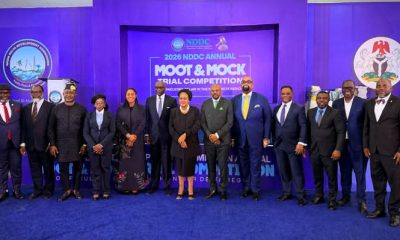
16 Niger Delta Universities Clash in 2026 NDDC Moot Court Competition in Port Harcourt
-
Sports2 days ago
Edo Queens Emerge WAFU B Champions, Qualify For CAF WCL
-
Niger Delta2 days ago
PH Hosts 13th All Nigeria Universities Debate Championship, Today
-
Sports2 days ago
African V’Ball: Amaka Paul Emerges 4th Best Scorer