
Politics
Task Before New RSIEC

Before the 2011 general elections, which was conducted by the Independent National Electoral Commission (INEC) under the leadership of Prof. Attahiru Jega ,many Nigerians had expressed the belief that several factors had constituted hindrances to the country’s development.
One of such important factors for attaining its potential of an egalitarian, rich and prosperous country with a stable polity ,despite its huge endowment in human and material resources has been the nation’s inability over the years to conduct elections which results are widely accepted as representing the people’s wish, save for the 1993 Presidential elections, the results of which were unfortunately annulled.
Since the 1993 Presidential election, which many believed was won by late Alhaji Moshood Abiola, many Nigerians regard other elections in the country as having been marred by partisanship on the part of the electoral body unbridled violence leading to loss of lives and various forms of corrupt practices, including the manipulation of votes through dishonest and deceptive means ,especially by the ruling political class.
It is widely believed that the situation is far worse at the Local Government level, where public opinion holds that state Electoral Commissions, which shoulders the responsibility of conducting elections at that level, simply reflect the wishes of the party of the government in power without recourse to fairness, equity and aspirations of the people.
Indeed, so strongly debated have election issues become in Nigeria, with a huge outcry for electoral reforms ,that they are currently situated on the front burner of national discourse as flawed elections have come to be regarded by many as the very essence of the nation’s backwardness.
This public outcry informed the change by Governor Chibuike Amaechi, when he inaugurated Prof Nimi Briggs on the 27th of November,2007, a month after the supreme court ruled in his favour the governorship of the state, to salvage the electoral process and conduct an election which would be worthy of emulation by other electoral Commissions in the country.
No doubt, the Commission under the leadership of Prof Briggs took its assignment seriously and put in great thought and time. In the end, it achieved some level of success in the 2008 and 2011 Local Government Elections in the state.
Prof Briggs made history not only in Rivers State, but in Nigeria when in 2010, he presented a written report of the 2008 local government council elections in Rivers State. In that election, other political parties won some wards though the ruling peoples Democratic Party (PDP)won the Chairmanship seats in the 23 Local Government Areas.
It is, therefore, expected that the present Chairmanship of Prof Ahiazu whose record had been transparent in his previous major public task as Vice Chancellor of the Rivers State University of Science and Technology (RSUST), Nkpolu, would be discrete to carry out the task of conducting and supervising the next Local Government election in the state.
His appointment and subsequent confirmation by the Rivers State House of Assembly recently, makes Prof. Ahiazu the third Executive Chairman to continue the task of piloting the State Electoral body which was established in 2003.
He succeeds the former Chairman, Prof Nimi Briggs whose tenure expired last April. The former University of Port Harcourt Vice Chancellor, took over from the pioneer Chairman, Senibo Sam Jaja after whose tenure crisis erupted, before the court intervened.
The State legislators confirmed Ahiazu’s appointment with six other commissioners, Dr.Eddy Adiele, Mr Kennedy Saro Pueba, Dr Viviala Fubara, Mrs Ngozi Ayayi, Dr Solomon Nwanchukwu and Mrs Ibiso Dakuru.
The Electoral body was established in the state in accordance with section 197(1) of the 1999 Constitution.
The then Governor of Rivers State, Dr.Peter Odili, established the Commission to conduct and supervise Local Government elections in Rivers State.
From the fore-going the immediate, task before the commission is the Ogba/ Egbema/Ndoni local Government Council election scheduled for January 2013. The board would be expected to conduct an election that would be fair and acceptable to all in the area by all the participating political parties.
The commission as a matter of urgency should. thus commence extensive consultations with stakeholders in that Local Government Area and, all the political parties to ensure an acceptable election in the January 2013 election.
This approach would not only form the basis for careful planning of the forthcoming Ogba/ Egbema/Ndoni Local Government Council election, but would also help the Commission to conduct, supervise and monitor all the primaries of political parties and ensure the safety of electoral materials.
During the presentation of the 2008 Local Government Reports to Governor Chibuike Amaechi, the then Chairman, Prof Nimi Briggs noted that he faced many challenges during and after the election. It is therefore not out of place to expect that the present Commission will face tougher challenges.
Apart from the challenges, the conduct of an acceptable election can only be made possible with cooperation and participation of everyone, and the determination of the electoral body to remain transparent and impartial. This among other factors includes provision of a level playing field for everyone who wish to stand for the election.
Political parties, on their own, must not only apply for internship for the Ogba/Egbema /Ndoni Local Government Council election, but must have well defined and organised structures with sufficient presence that should make them electable.
Political Parties, especially the Peoples’ Democratic Party (PDP), should start by first practicing internal democracy, which should preclude them from thwarting and frustrating the wishes of their party members with often unpleasant consequences.
As for other stakeholders, they must always stand up for their rights at all times and be prepared to take all necessary legal measures that would ensure they are able to cast their votes, and that those votes count in the eventual outcome of the elections.
Lastly, our law courts must realize the powers they are vested with regarding respect for the electoral process, and that these powers should be used to make votes count.
It may also be pertinent to appeal to the Executive Governor, Rt Hon Chibuike Amaechi to continue to keep away from interfering in any way in the electoral process in the forth coming election which will serve as a test for the new RSIEC board.
Meanwhile, the new board of the Rivers State the Commission has promised to use the required process in conducting a free and fair election.
Addressing the press after their first inauguration meeting at the RSIEC headquarters, the Commissioner in charge of media and Public Affairs, Hon. Ibiso Dakoru said the Commission will consult widely with stakeholders in making sure the right things are done in the electoral process.
The Commissioner stated that the new boards have resolved to carry every body along in the scheme of things, adding that the board decided to resume duties immediately in order to acclimatise with both men and materials in the commission.



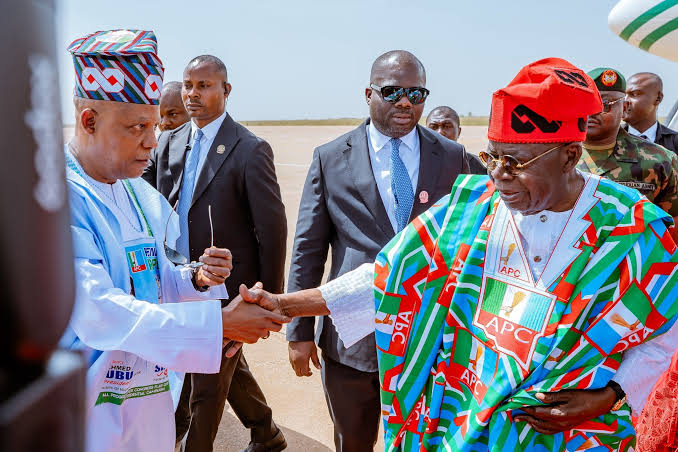
The campaign rally, held at the Kaduna Township Stadium, attracted Vice-President Kashim Shettima, APC governors, party leaders, federal and state lawmakers, political stakeholders and supporters from across the country.
The flag-off marks the beginning of the APC’s drive to secure a second presidential term for President Tinubu, with the party expected to promote its achievements, defend its economic reforms and outline its policy priorities under the proposed Renewed Hope 2.0 agenda.
Kaduna’s selection for the campaign launch underscores the strategic importance of the North-West, a region with a substantial voting population and considerable influence on presidential election outcomes.
The APC faces a significant challenge in Kaduna, where the Peoples Democratic Party’s presidential candidate, Alhaji Atiku Abubakar, defeated President Tinubu in the 2023 election. The rally therefore provides the ruling party an opportunity to strengthen its grassroots structures and regain electoral support in the state.
Addressing supporters, Vice-President Shettima appealed to Northern voters, highlighting President Tinubu’s political relationships with prominent Northern leaders, including Alhaji Abubakar, Mallam Nuhu Ribadu and the late President Muhammadu Buhari.
The Vice-President’s appeal reflects the APC’s determination to consolidate its support in the North as the party intensifies preparations for the presidential contest.
The Renewed Hope 2.0 agenda is expected to feature prominently in the campaign, providing a platform for President Tinubu to explain his administration’s economic policies and outline plans for another term.
However, the President’s record on economic reforms, rising living costs, petrol prices, employment, infrastructure and insecurity is expected to attract considerable scrutiny during the electioneering period.
-

 Niger Delta13 hours ago
Diri Restates Stance On Lagos-Calabar Coastal Highway
-

 Niger Delta13 hours ago
C’River, NUJ Pay Tribute To Late Guardian Editor
-

 News14 hours ago
NDLEA Recovers Tons Of Illicit Drug Consignments In Nine States
-

 Opinion12 hours ago
Checking Voter Apathy In Nigeria’s Electoral Process
-

 Sports10 hours ago
Nigerian Trio Target Titles At PFL Africa Finals
-

 Education10 hours ago
FCE Yola Graduates 3,555 Teachers , Seeks Upgrade to University
-

 Politics10 hours ago
2027: DICKSON’S EX-ALLY VOWS TO WORK AGAINST NDC INTEREST IN BAYELSA
-

 Politics10 hours ago
2027: GROUP PLEDGES 40,000 SUPPORTERS FOR COALITION CANDIDATES IN RIVERS