
Politics
Politics Of Currency Review …Failed Battle of A Central Bank Governor

When Malam Sanusi Lamido Sanusi, the highly intelligent,
educated, fearless and no less patriotic Governor of the Central Bank of
Nigeria (CBN) resolved to introduce “project care”, CBN’s currency
restructuring exercise to Nigerians, the prince of Sokoto caliphate was no
doubt persuaded by love and care for Nigerians and the Nigerian economy.
Unfortunately, barely one month after Sanusi went public
with it, what turned out to be politics of currency restructuring, painted the
project as lacking in care for the citizens and forced the Federal Government
to put the exercise on hold.
The currency restructuring exercise had, like some other
well – intended projects of the president Goodluck Jonathan administration
been, highly politicized in under one month, massing Nigerians in two broad
divides of those in support of the project and those against it, particularly
as it affected the introduction of a single N5,000 note.
It was on August 23, 2012 that the CBN Governor announced
plans to introduce a single N5,000 into circulation and to reduce the existing
N5, N10 and N20 notes to coins by early 2013 in line with statutory
regulations.
Unveiling the plan in Abuja at a news conference, Sanusi had
said that three women: Margret Ekpo, Funmilayo Ransome Kuti and Gambo Sawaba
involved in the independence struggle of Nigeria, had been nominated to be on
the new N5,000 note.
Sanusi said the CBN board had considered and approved the
new currency series on November 28, 2011, adding that the bank also sought and
obtained the approval of President Jonathan on December 19, 2011 as required by
law.
The CBN Governor said under the new structure, the existing
denominations of N50, N200, N500 and N1,000 would be redesigned with added
security features, stressing that when the new structures come on stream in
2013, the Naira currency would comprise of six coins of N1, N2, N5, N10 and N20
and six bank note denominations of N50, N100, N200, N500, N1,000 and N5,000.
Sanusi had also allayed fears that the new N5,000 note might
trigger inflation, heighten corruption and ridicule the cashless policy of the
administration. According to him, there was no correlation between higher
currency denominations and inflation.
The new policy he
said, would, instead, complement its cashless policy and reduce corruption as
the volume of currency in circulation would drop.
The CBN Governor said that the introduction of the new
currency series would be a gradual process as the new bank notes would
circulate simultaneously with the old ones until they were fully withdrawn from
circulation as legal tenders and assured that CBN would ensure that the coins
collection was convenient and the infrastructure readily accessible, just as it
would liaise with all stakeholders to encourage use of coins.
However, the proposition attracted a deafening opposition
from a cross – section of Nigerians, forcing the suspension of the exercise.
Opposition to particularly the introduction of the N5,000 bank note came from
various strata of society including bankers, university lecturers, civil
society groups, labour organizations and political parties including the Action
Congress of Nigeria (ACN), Advanced Congress of Democrats (ACD) and Alliance
for Democracy (AD).
Former Head of Department of Banking and Finance, University
of Port Harcourt, Dr. Prince Nwakanma for instance, believed that the
introduction of the N5,000 bank note would fuel inflation with adverse effect
on the economy. It would also contradict CBN’s cashless policy which, he said
was yet to be enforced by the apex bank. He therefore wondered why the CBN
should introduce the N5,000 bank note when the Naira had lost considerable
value. He insisted instead, that the apex bank should concern itself with
raising the value of the Naira.
For the Ex-president, National Association of Chambers of
Commerce, Industry, Mines and Agriculture (NACCIMA), Dr. Simon Okolo, the
nation’s economy will not fare better with the introduction of N5,000 bank note
since, according to him, it is already affected by high inflation, high
interest rates, infrastructural decay, smuggling and inconsistent policies of
government. He said the organized private sector – the driving force of any
economy had also been adversely affected by high inflation.
According to him, the current low productivity in the
country will not support the proposed currency regime and argued that what
Nigeria needed were policies that would increase her low level production base.
“The apex bank should be seen carrying out its statutory
responsibilities of maintaining price stability in the economy”, Okolo said.
Also criticizing the “Project care” the Association of
Senior Staff of Banks, Insurance and financial Institutions (ASSIBIFI) said the
exercise amounted to policy summersault. Its president, Sunday Salako who
responded to the planned introduction of N5,000
bank notes in a statement, also argued that infrastructure appropriate
for the use of coins in the country was absent, and warned that the
introduction of higher value currency notes in an economy often signifies a
regime of increased and sustained fiscal deficit financing.
ASSIBIFI he said “advocates that national issues of this
magnitude which have serious monetary and fiscal implication on the nation’s
economy should be subjected to public debate for proper input and analysis by
CBN authority”
The Nigeria Labour Congress (NLC) in its robust opposition
to the introduction of the N5,000
currency note on account of various criticisms earlier highlighted, went
further to threaten that it would demand pay rise if the N5,000 was introduced.
On its part, the Nigeria Bar Association threatened to drag the CBN to court
while former President Olusegun Obasenjo, Senate President David Mark and senior
People’s Democratic Party (PDP) members were also opposed to the policy.
However, queuing behind President Jonathan and the CBN in
the now-suspended Project Care were the Federal Government Economic Management
Team (EMT), top flight bank executives, captains of industry, financial experts
and other prominent Nigerians.
The EMT which comprised ministers, top government officials
and members of the organized private sector said it endorsed the policy,
dismissing arguments that it would lead to inflation in the country.
Shamsudeen Usman, Minister of National Planning who spoke on
the issue declared that there were misrepresentations on the introduction of
the N5,000 note.
“There is absolutely no link. I am an economist; I have been
deputy governor, operations of the central bank. During the last review of the
introduction of N1,000 note and the various coins I was deeply involved, it was
my responsibility at the central bank, there is absolutely no link between
inflation and the currency denomination,” he said.
On the issue of coins, Usman said the CBN failed to
communicate what it did properly, adding that the coin will be issued
concurrently with the note until acceptance improved.
Even as movers of the nation’s economy, including Managing
Director, Access Bank, Aigbojie Aig-Imoukhuede, Chairman IBTC, Atedo Peterside
and Chairman, Dangote Group, Aliko Dangote lined behind the proposed currency
restructuring, the opposition forced a listening President Jonathan to suspend
the project.
Announcing the suspension in a statement, CBN’s Director of
Communications Ugochukwu Okoroafor said: “The CBN hereby informs the general
public that the president on Thursday, September 20, 2012 directed that further
action on the approved restructuring exercise be stopped.
“In full compliance with the provisions of the law, the CBN
hereby announces that further action on the said restructuring exercise has
been stopped, until such a time when Mr. President may direct otherwise”.
He stressed that no contract whatsoever, was awarded by the
CBN in connection with the printing and minting of the new currency notes and
coins.
It would be recalled that
former president Olusegun Obasanjo had described the CBN initiative as
one that would stifle production. Like Obasanjo, former military Head of State,
Gen.Yakubu Gowon (Rtd) had also opposed the move by the CBN to introduce the
N5,000 note.
Perhaps, the major undoing of the currency restructuring
exercise was the disinterest of the National Assembly, which appears to be in a
subtle power play with the presidency.
Financial analysts were of the view that the Federal
legislature, which has apparently developed the penchant for flexing muscles
with its executive counterpart, wants to take the credit off the executive, for
the currency restructuring.
Others, particularly the president’s supporters from the
South – South geopolitical zone believe that the “politricking” surrounding the
currency restructuring is part of the grand and sustained design of detractors
to discredit his government.
Eventually, both the senate and the House of Representative
at separate sessions on Tuesday September 18, 2012, after a two-month recess,
passed resolutions calling on the apex bank to halt the move.
Earlier, Senator Bassey Otu, Chairman, Senate Committee on
Banking, Currency, Insurance and other Financial Institutions had at a press
conference in Abuja contended that the currency restructuring exercise required
parliamentary approval because of its numerous fiscal implications on the
economy
Otu said the CBN needed to prove that the policy does not
contradict the cashless policy and that “this is the popular economic way to
go”
Echoing Senator Otu’s position, Senator Enyinna Abaribe,
Chairman Senate Committee on Media and Publicity said the CBN cannot take such
a momentous decision which affects the economy in very fundamental ways without reaching out to the parliament.
“The senate is saying that the major policy change that the
CBN is doing has implications for the country in terms of inflation. Every stakeholder
in the Nigerian government must be carried along. Let us know what you are
doing, why you are doing it, the reason behind that and everything before you
go ahead. This is international best practice”, Abaribe said.
The suspension of the currency restructuring exercise on
September 20, 2012 became the most honourable and patriotic action by the
president in the circumstance, for obvious reasons.
Firstly, going ahead with the policy in the face of intense
and well articulated opposition from the National Assembly would have given a
wrong signal of the executive’s disrespect for the legislature.
Secondly, rumours of unethical and fraudulent considerations
underpinning the exercise and contracts already allegedly awarded in connection
with the printing and minting of the new currency notes and coins would have
assumed lives of their own, had the CBN gone ahead with the exercise.
Thirdly, there were misrepresentations on the introduction
of the N5,000 note which made extensive and considerable interface with
Nigerians by the CBN imperative. This, the apex bank failed to undertake,
leaving many Nigerians ignorant of the policy thrust and incurring virulent
opposition to it. The suspension of the exercise became the most logical thing
to do in order to enable the CBN undertake more enlightenment on it.
Beyond the CBN bashing that trailed the currency
restructuring proposal, some critics went ahead to call for the sacking of
Sanusi. How necessary and realistic were the calls?
Most financial analysts were agreed that such action as
sacking of a Central Bank Governor should be taken very carefully considering
the crucial role of the apex bank in developing the economy of a nation.
Besides, those who spoke to The Tide on the issue described
the current CBN governor, Malam Sanusi Lamido Sanusi as a very competent
financial expert who hitherto, had not disappointed the nation.
They commended his performance in keeping on track the
banking sector reform programme which, they said, had brought sanity into an
industry in which some banks had, prior to the reforms, been conduit pipes for
both local and international money laundering activities.
The analysts also commended Sanusi for CBN’s vigilance which
has occasioned ebb in core banking, which was believed to have been sacrificed
on the altar of round tripping at the foreign exchange market.
Observing that some banks were still involved in some
unwholesome activities by becoming willing instruments in the hands of
fraudsters and some dubious entrepreneurs, the analysts said it was needful for
Sanusi to be allowed to carry through the ongoing banking sector reforms.
It would be recalled that under Sanusi’s watch, some ailing
banks have had their license withdrawn while prominent bank executives involved
in sharp practices that ruined their banks are still giving account of their
actions in various courts of law.
Perhaps, most compelling of the arguments in favour of
retaining Sanusi as governor of the nation’s apex bank is that the power of CBN
to undertake the suspended currency restructuring and the gains therein are yet
to be controverted.
According to one commentator, what undermined the CBN
currency restructuring exercise was that “the apex bank underplayed the
imperative of carrying the people along through enlightenment programmes”.
Under section 19(1) of the Central Bank of Nigeria (CBN) Act
of 2007, “The currency notes and coins issued by the Bank shall be –
a) In such
denomination of the Naira or fractions thereof as shall be approved by the
president on the recommendation of the board and
b) Of such
forms and designs and bear such devices as shall be approved by the
president on the recommendation of the
board”
CBN Director of Communications Okorafor noted in a statement
that in line with the above provisions and for the purposes of more efficient
payments and currency management systems, the CBN proposed and obtained the
approval of the president of the Federal Republic of Nigeria, Goodluck Ebele
Jonathan, to embark on the currency restructuring exercise, codenamed ‘project
CARE’ on December 19, 2011″.
In the light of the foregoing, analysts were agreed that the
1999 constitution of Nigeria had guaranteed the CBN all the powers it required
to operate and that any other call for its autonomy is diversionary.
They contended that there were more urgent issues bordering
on the well being and welfare of the citizenry that required the attention of
government than the autonomy of the CBN.



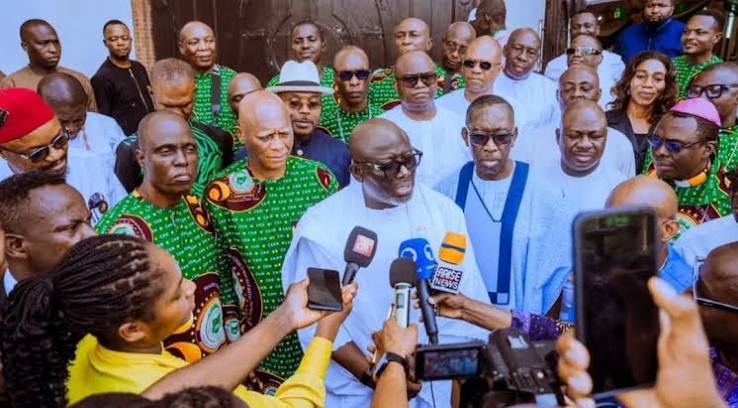
Delta State Governor, Rt. Hon. Sheriff Oborevwori, has urged public office holders to maintain a clear distinction between political responsibilities and service to God, saying the pursuit of political interests should never weaken their commitment to faith and humanity.
Gov. Oborevwori made the call in Abuja, at the weekend, after receiving the Christian Icon Award from the Christian Association of Nigeria (CAN) during the association’s 50th anniversary celebration at the National Christian Centre.
The award was presented by CAN President, Dr Daniel Okoh, in recognition of the governor’s public service, ethical leadership and commitment to Christian values.
Speaking after the presentation, Gov. Oborevwori expressed gratitude to God for the honour, describing it as a reminder of the responsibility to serve humanity with greater dedication.
“We may be involved in politics, but we must be able to distinguish between serving God and playing politics. These are two different responsibilities, and we must never allow politics to undermine our commitment to God,” he said.
The governor explained that his commitment to serving in the church predated his emergence as Speaker of the Delta State House of Assembly. He said he had continued with his ushering duties despite advice at the time that his political position might make the practice inappropriate.
According to him, his conviction that service to God and humanity should remain a sustained responsibility has continued to guide his public life.
Gov. Oborevwori described the recognition by CAN as particularly meaningful because, in his view, the association’s awards reflect not only public service but also character, integrity and the impact of a recipient’s contributions to society.
“When an organisation such as CAN gives you an award, it means a lot because the recognition is based not merely on public service but also on integrity, character and the impact you have made,” he said.
The governor also commended efforts to bring the five blocs within the Christian community together, expressing the belief that greater unity among them would strengthen their contribution to national development.
He said a united Christian community, speaking with one voice on issues of common concern, could contribute to a more cohesive Nigeria.
Gov. Oborevwori added that service to God should be undertaken with sincerity, dedication and a sense of responsibility, rather than for personal gratification or public recognition.
CAN’s 50th anniversary celebration brought together religious leaders, political office holders and other prominent Nigerians to mark the association’s five decades of service.
Those who accompanied the governor included immediate past Delta State Governor, Senator Ifeanyi Okowa; Speaker of the Delta State House of Assembly, Rt. Hon. Emomotimi Guwor; and members of the National Assembly, Hon. Victor Nwokolo, Hon. Nicholas Mutu and Hon. Jonathan Ukodhiko.
Others were the Chief of Staff, Government House, Hon. Johnson Erijo, and the Senior Political Adviser to the Governor, Senator Emmanuel Aguariavwodo, alongside other government functionaries and political leaders.
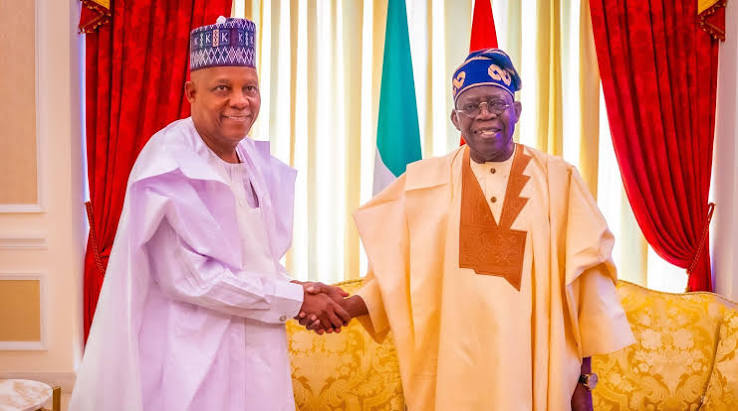
Vice President Kashim Shettima has expressed concern over internal divisions within the ruling All Progressives Congress (APC), warning that disagreements among party members pose a greater threat to its electoral success in 2027 than opposition leaders Atiku Abubakar and Peter Obi.
Vice President Shettima stated this at the weekend, in Abuja, during the unveiling of the campaign headquarters of Arewa for Asiwaju (A4A), a northern political coalition supporting the re-election of President Bola Tinubu.
The Vice President stressed that unity within the APC would be crucial to securing victory in the forthcoming general elections.
Vice President Shettima cautioned party stakeholders against concentrating solely on the presidential election while neglecting governorship and National Assembly contests.
According to him, undermining APC governors or other candidates could weaken the party’s chances of achieving a comprehensive victory.
“There is no point in championing the cause of the presidential election and then undermining the governor in the gubernatorial election. Honestly, it will not go down well with the system,” he warned.
He urged party leaders and supporters to rally behind President Tinubu, APC governors and National Assembly members to strengthen the party ahead of the elections.
Speaking on the political situation in the North, Vice President Shettima declared that the region had already demonstrated its support for President Tinubu’s second-term ambition.
“By now, I believe the North has spoken. We have spoken with a resounding voice and unmistakable conviction. From Adamawa to Zamfara, from Borno to Niger, we have spoken,” he stated.
The Vice President also challenged APC members to confront former Vice President Atiku Abubakar politically but respectfully.
“Go and perform. Go and defeat Baba Atiku. Defeat him respectfully,” he said.
Vice President Shettima maintained that the APC possessed the political structure and grassroots strength required to compete effectively across Nigeria’s polling units.
He disclosed that the party had 361,045 officials across ward and local government structures, compared with the country’s 176,845 polling units.
According to him, the figures demonstrate the party’s organisational capacity to mobilise voters nationwide.
The Vice President further charged political appointees to demonstrate their electoral relevance in their respective wards and local government areas, stressing that political success begins at the grassroots.
“Politics is still local,” he declared.
On the APC’s strength in northern Nigeria, Vice President Shettima claimed that 18 of the region’s 19 states were under the party’s political influence.
He also highlighted defections from the New Nigeria Peoples Party (NNPP) in Kano State as evidence of the APC’s growing political strength.
Addressing Nigeria’s economic challenges, Vice President Shettima acknowledged the hardship facing many households but defended the economic reforms introduced by the Tinubu administration.
According to him, the administration’s reforms have helped stabilise the economy and improve the country’s financial position.
He claimed that Nigeria’s foreign reserves had risen to approximately $58.9 billion, describing the development as evidence of economic recovery.
Vice President Shettima assured northern Nigerians that the region would benefit from President Tinubu’s second term, insisting that the President remained committed to its development.
“For the North, we have absolutely nothing to fear in a Tinubu second term. He has the North at heart,” he said.
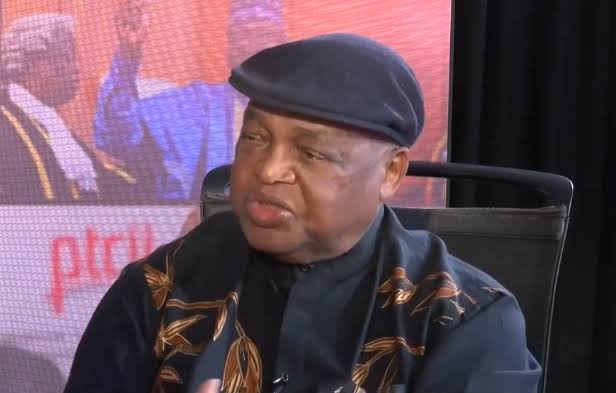
A family source confirmed his death to The Tide source on Saturday, October 17, 2026, disclosing that the former Nigerian ambassador died earlier in the morning following a prolonged period of deteriorating health.
According to the source, Dr Cole had recently been discharged from the intensive care unit (ICU), but his condition continued to worsen.
“He left ICU a few days ago. He had been doing poorly in recent weeks leading to this end,” the source reportedly said.
Born on August 4, 1940, Dr Cole celebrated his 86th birthday in August, barely two months before his death.
He was a prominent figure in Nigeria’s public life, with a distinguished career spanning journalism, diplomacy, public administration and historical scholarship.
Before joining the diplomatic service, Dr Cole established himself in the Nigerian media industry, serving on the editorial board of The Guardian newspaper before becoming Managing Director of Daily Times, one of Nigeria’s most influential media organisations.
His leadership role at Daily Times placed him among the notable figures who shaped the country’s media landscape during a significant period in its development.
Dr Cole subsequently served Nigeria as ambassador to Argentina and Brazil, representing the country in international diplomatic engagements and further broadening his public service experience.
Beyond journalism and diplomacy, he was known for his contributions to discussions on governance, politics and Nigeria’s historical development. His professional engagements reflected a longstanding interest in the country’s political and institutional evolution.
His death marks the end of a career that traversed several important areas of national life, leaving a record of service in journalism, international relations and public affairs.
As of the time of filing this report, the family had yet to announce details of his funeral arrangements.