
Agriculture
Commissioner Procures Fertiliser, Cassava Stems For Farmer

Save for the prompt intervention of the Rivers State Commissioner for Agriculture, Hon. Emmanuel Chindah, a farmer, Mr. Godwin Egba could have risked losing his chance of getting two bags of fertiliser and cassava stems on the occasion of the roll-out of the Growth Enhancement support (GES) scheme for cassava held in Ahoada, headquarter’s Ahoada East Local Government council of the state recently.
Mr. Egba, a native of Ihuaba and a beneficiary of the scheme who was expected to pay the sum of N6,000 instead of N12,000 and get two bags of fertiliser and some Cassava stems said, “I don’t have that amount, I only have N2,000″.
But in a swift reaction, the Hon. Commissioner paid for Mr. Egba who was full of praises for the gesture from the Commissioner and later told newsmen that he was very happy as according to him, he could not explain in words how he came about the items without paying anything.
Said he; “I have not seen the man or known him before and I salute him very well”, adding that he has been a farmer for the past 30 years and promised to use the items judiciously to enhance his output with a promise to encourage other farmers to embrace the scheme.
While addressing the farmers, Hon. Chindah urged them to embrace the programme because government was ready to reverse the trend whereby farmers in the time past put too much effort on the land with very low output.
He said it was not out of place for the farmers to come up with bumper harvest as experienced in places like Taiwan and others explaining that it was for this reason that the government has come up with the provision of improved varieties of Cassava stems and fertiliser to adequately address the issues of low yield experienced by farmers in the state.
He explained that government was aware of the numerous varieties of Cassava in the various communities that go by different names and assured the farmers that the variety which the government was distributing could be described as “Ogbonge” he enthused.
Mr. Chindah explained that the variety was far more better than the previous ones the farmers have been planting over the years without good result.
According to him, the fertilizer application would help ensure that the various nutrients needed for proper growth and yield was enhanced and stressed the need for proper application in order to get the desired result.


The President of the Capital Market Academics of Nigeria, Prof. Uche Uwaleke, has called for urgent agricultural reforms and stronger support for farmers to improve food security in the country.
Uwaleke made the call in an interview with Newsmen Wednesday while reacting to the United Nations projection that millions of Nigerians could face acute hunger in the coming months.
The United Nations Humanitarian Country Team had warned that about 35 million Nigerians could face acute food insecurity between June and August.
According to the organisation, nearly one in seven Nigerians may experience severe food shortages during the 2026 lean season.
Uwaleke said the projection underscored the urgent need for Nigeria to strengthen its food production systems and address factors driving food insecurity.
“The warning should be taken seriously because it reflects the difficult realities many Nigerians are already experiencing, especially vulnerable households.
“A projection of about 35 million people facing acute hunger is disturbing for a country with enormous agricultural potential,” he said.
He attributed worsening food insecurity to inflation, insecurity in farming communities, climate-related challenges, naira depreciation and high transportation costs.
According to him, the combined effects of fuel subsidy removal and declining purchasing power have further reduced access to food for many Nigerians.
Uwaleke said the situation required immediate and coordinated interventions to prevent a deeper humanitarian crisis.
“The lean season is usually difficult, but the scale being projected by the United Nations suggests the need for urgent action from both government and development partners,” he said.
He acknowledged recent government measures aimed at improving food supply, including food imports and tariff reductions on selected commodities such as rice and palm oil.
He, however, said the interventions might not yield the desired results without stronger investments in local agricultural production and improved security for farmers.
“I believe the government has made efforts to address the situation, particularly through policies aimed at boosting food availability.
However, insecurity continues to disrupt farming activities in major food-producing areas, while inflation and weak purchasing power remain major concerns for ordinary Nigerians,” he said.
Uwaleke urged the Federal Government to increase support for farmers through subsidies on fertilisers, improved seedlings and other agricultural inputs ahead of the peak farming season.
He also stressed the need to improve security in farming communities to enable displaced farmers to return safely to their farms.
According to him, targeted food distribution programmes should be expanded to support vulnerable households across the country
Uwaleke further called for long-term investments in irrigation, mechanisation, storage facilities, rural infrastructure and agricultural research to strengthen food security.
He added that food security should be treated as both an economic and national security priority requiring sustained policy implementation and adequate funding.
Agriculture
Livestock Minister Reaffirms Commitment To Integrating Apiculture Development Into NL-GAS

The Minister made this known in a keynote address at the World Bee Day 2026 celebration, held in Abuja, where he emphasised that the livestock value chain can be significantly transformed through targeted investments, innovation, private sector participation, youth empowerment, and inclusive economic growth.
In her remarks, the Permanent Secretary of the Ministry of Livestock Development, Dr. Chinyere Ijeoma Akujobi, said the Ministry remains committed to strengthening interventions aimed at improving the apiculture subsector, promoting sustainable beekeeping practices, enhancing production standards, expanding market access, and protecting pollinator habitats across the country.
The Director of Ruminants and Monogastric, Mr. Victor Egbon, representshe also commended the Youth for Agriculture Initiative (YFAI) for its sustained partnership and commitment to the annual commemoration of World Bee Day.
In a goodwill message, the representative of the Permanent Secretary, Federal Ministry of Industry, Trade and Investment, Dr. Osas Isokponomu, reaffirmed the Ministry’s commitment to supporting policies and programmes that promote value addition, industrialisation, export competitiveness, and market integration within the framework of the African Continental Free Trade Area (AfCFTA).
Earlier in his opening address, the President of the Youth for Apiculture Initiative (YFAI), Mr. Kingsley Nwagwu, called for the establishment of a National Apiculture Policy as a foundation for unlocking Nigeria’s emerging apiculture economy.
Participants at the event were drawn from relevant Ministries, Departments and Agencies, stakeholders, students, academia, research institutions, and development partners.
According to a statement, President of the AFBTE, Chinedum Okereke, gave the warning during the association’s 47th Annual General Meeting held recently in Lagos.
He stated that the food and beverage industry remained a critical pillar of the Nigerian economy because of its significant contributions to employment, public health, and economic growth, adding that government policies should support the sector rather than weaken it.
Okereke noted that many companies in the industry are struggling with rising operational costs and multiple taxes and charges imposed by government agencies without adequate consultation.
“The food and beverage sector remains a major player in the Nigerian economy in terms of its criticality to the financial and physical health of the nation, as well as the well-being of the people. Government support is therefore imperative,” Okereke said.
He added that the relationship between government institutions and businesses should be driven by collaboration, dialogue, and fairness to create a sustainable business environment.
The AFBTE chief also renewed the association’s opposition to the proposed ban on the packaging and sale of alcoholic drinks in sachets and small PET bottles, warning that the policy could worsen unemployment, reduce investment, and shrink government revenue.
“We are in the age of data and analytics Policies that affect businesses and livelihoods should be evidence-based,” Okereke said.
He noted that the industry had repeatedly demanded empirical evidence and statistical data to justify the proposed ban but claimed relevant authorities had yet to provide such information.
The AFBTE president further appealed to the Federal Government to introduce incentives and relief packages for manufacturers battling rising production costs, foreign exchange challenges and infrastructure deficits.
He also advocated the creation of more Free Trade Zones through the upgrade of existing industrial clusters, especially for long-established companies that have contributed significantly to Nigeria’s economic development but now face disadvantages compared to firms operating within free trade zones.
He observed that the absence of dialogue between the government and the private sector often creates avoidable disputes and weakens investor confidence.
Okereke added that the objectives of the Presidential Enabling Business Environment Council should remain a guiding principle for regulators and government agencies in promoting ease of doing business in the country.
Meanwhile, the Treasurer of AFBTE, Osaro Omogiade, disclosed that the association recorded a total income of N165.45m for the 2025 financial year, representing a 10.13 per cent increase from the N150.24m generated in 2024.
He attributed the increase largely to improved returns on investments in the money market through Stanbic IBTC and United Capital.
Omogiade, however, noted that the association’s expenditure rose by 14.22 per cent to N138.25m due to the increasing cost of running its secretariat, leaving a surplus of N27.21m compared to N29.19m recorded in the previous year.
-

 News3 days ago
Family Seeks Police Help As Woman Goes Missing After Fleeing Female Circumcision Threat
-

 News3 days ago
Rivers NUJ Seeks Recruitment Into State Media Houses …Urges Govt To Reposition Public Service
-
 News3 days ago
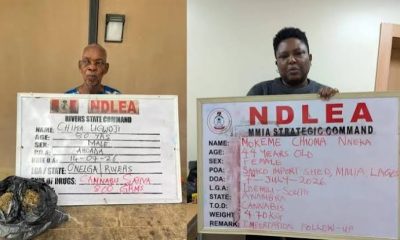
NDLEA Intercepts 1.63m Tramadol Pills, Arrests 80-Year-Old Suspect
-
 Oil & Energy3 days ago
NCDMB Partner Renaissance To Train 300 Youths On oil, gas Skills
-
 News3 days ago
Nigeria Hosts World Public Relations Forum Sept …As Experts Seek Inclusion Of PR In Decision Making
-
 Oil & Energy3 days ago
Abia Secures $145m Investment Commitment To Establish Solar Manufacturing Plant
-

 News3 days ago
Tinubu, Fubara Condole Amaechi Over Mother’s Death
-

 News4 days ago
Spain Are World Champions ….. End Argentina, Messi’s Dreams