
Nation
THE STATES

Bauchi
Governor Isa Yuguda of Bauchi State on Tuesday expressed
sadness over a fresh outbreak of polio virus in the state.
Yuguda, who spoke at the launch of the May 2012 polio
immunisation, said that measures would be put in place to eradicate the disease
in the state.
He said that one
polio case was recently recorded after two years of sustained campaign.
“No single polio case was recorded in the last two or three
years in the state due to government’s commitment and sustained campaign.
“We have the required manpower, equipment and logistics to
eradicate polio and we should not allow diseases which we can control, to
continue killing our children,” Yuguda said.
He attributed the prevalence of the new case to cross-border
migration from neighbouring states
Yuguda urged women to sustain government efforts at
eradicating polio by sensitising their mates and sisters in rural communities
to the importance of immunisation, especially in eradicating polio.
Borno
The Borno Government is to distribute thermo stoves to
residents of the state to reduce dependence on firewood for cooking and
preserve the environment, an official said.
The commissioner for environment, Alhaji Hassan Mustapha
said in Maiduguri on Tuesday that the thermo stoves used ethanol as fuel, which
was environment-friendly.
“The ministry is working on plans to provide thermo stoves
using ethanol as fuel for residents of the state to reduce dependence on
firewood.
“The gesture is aimed at preserving the environment and
prevent desert encroachment,” he said. Mustapha said the ministry was also
raising some tree seedlings for planting to check desert encroachment.
“The ministry is engaged in the raising of over 20 million
assorted tree seedlings, including Acacia, Moringa Oleifera and Jatropha.
“We are also collaborating with some consultants to
establish the Jatropha value chain in the state,” he said.
Mustapha added that the ministry provided employment for
2,000 youths in the forestry sub-sector through various programmes.
Kaduna
The Kaduna State chapter of the Nigeria Union of Teachers
(NUT), on Tuesday said the state government would reinstate the 435 teachers
recently disengaged from service.
The teachers were disengaged for non-participation in the
teachers’ verification exercise carried out by the government and
irregularities in their appointments.
Chairman of the union, Mr. Audu Amba, said in Kaduna that
efforts were on to recall the affected teachers.
He said already the teachers had submitted their complaints
to the state government as directed by the Head of Service.
“The Head of Service has assured the union and the affected
persons that the state government will soon release names of those cleared for
reinstatement.
Kano
The Kano State government has provided N350 million to Rural
Water Supply and Sanitation Agency (RUWASA) to execute water supply and sanitation
projects this year.
Alhaji Garba
Durbunde, the Commissioner for Rural and Community Development, said in Kano on
Monday that the government made provision for the N350 million in its 2012
budget.
“The agency presented a number of work plans to the state
government for approval.’’
According to him, the projects include the construction and
installation of 50 new model windmill water solution schemes.
Others are payment of counterpart funding for the
rehabilitation of hand pump-operated boreholes as well as construction of
numerous hand pump, motorised and solar-powered boreholes in the state.
Kano
Kano State Scholarship Board says it will computerise its
operations for efficient service delivery.
The Executive Secretary of the Board, Alhaji Usman Ririwai,
said in Kano recently that all necessary arrangements had been completed for
the take-off of the exercise.
Ririwai said that the measure was necessary to avoid cases
of lost of documents and misplacement of vital information being experienced in
the board and other organisations.
“The Board intends to establish a central data base and a
research unit to enable us have information on our finger tips at all times,”
he said.
On the non-payment of scholarship allowances to some
students in the state, Ririwai said that the present board had inherited “a
sieable amount of debt of unpaid students’ allowances”.
Katsina
The wife of Katsina State Governor, Hajiya Fatima Shema, has
distributed 68 special-breed goats to 34 women to encourage them in animal
husbandry.
She said, “The
distribution of the goats was aimed at introducing animal husbandry among women
in the state with a view to improving their socio-economic well being.”
Shema, represented by Hajiya Indo Bilya Sanda, who
distributed the goats in Katsina on Tuesday, explained that the goats were
given free of charge to the women selected from the three senatorial districts
of the state.
The programme, she said, was a collaborative effort of her
NGO, Service to Humanity Foundation and the state’s Ministry of Agriculture.
Shema urged the beneficiaries to rear the goats so that they
could multiply rapidly.
Kebbi
The Kebbi Government has said that it will support the Power
Holding Company Nigeria (PHCN) improve power supply for social and economic
activities in the state.
The Kebbi Commissioner for Water Resources and Rural
Development, Alhaji Abdullahi Bunza, made the pledge recently
in Birnin Kebbi during his visit to the Business Department of the
company.
He said that the continued load shedding of electricity in
the state had retarded social and economic activities. According to him,
investors are not keen to invest in the state because of the problem while
costs of social services have gone up due to irregular power supply.
Responding, the PHCN Business Manager, Alhaji Umar Aliyu,
explained that load shedding was sequel to the population increase and
inability of the two available 7.5 MVA transformers to satisfy demands.
He called on the state government to provide an additional
transformer within the metropolis to improve power supply.
Nasaraw
The Nasarawa State Government will start the distribution of
affordable drugs to 18 general hospitals across the state, the Commissioner for
Health, Dr Emmanuel Akabe, has said.
Akabe said in an
interview, Tuesday in Lafia that the drugs would be distributed under the
government’s drug revolving scheme to be inaugurated soon by Gov. Umaru
Almakura.
He said the scheme was aimed at providing quality health
care to the people of the state, adding that the healthcare system needed
urgent intervention.
“The facilities are dilapidated, equipment and manpower are
not there; you can imagine in some of the general hospitals I visited, there
were no doctors. In some cases, you have only two or three nurses; most
hospitals cannot run routine test so you can see the situation we have,’’ he
said.
Akabe explained that the scheme would ensure the
availability of drugs to patients directly from the manufacturers or their
representatives.
Ondo
The Ondo State Commissioner for Agriculture, Mr. Ademola
Olorunfemi, recently said that the
government bought additional 72 tractors in the last three years to boost food
production.
Olorunfemi, who said that the number of tractors in the
state had increased to 129.
He appealed to farmers to avail themselves of the use of the
tractors to enable them embrace mechanised farming to boost food production in
the state.
He said that the provision of additional tractors would
increase the number of Tractor Hiring Units in some parts of the state to give
farmers’ access to the use of the machines
“With this development, every farmer in the state can now
rent the tractors regardless of his location because the units are spread all
over the state,’’ he said.
Ondo
In pursuit of its rural development programme, the Ondo
State Government has embarked on the execution of 345 rural development
projects at a cost of about N3 billion.
The state
Commissioner for Community Development and Co-operatives, Mr Clement Faboyede,
said in Akure on Tuesday that 260 of the projects had been completed and
delivered to the communities.
Faboyede, who said other projects were at various stages of
completion, pointed out that the projects tagged “Quick Win” were executed to
the tastes of the communities.
He said that the government did not just execute them, but
with the consent of each community and what they required after due negotiation
and consultations with the people.
The commissioner said that the ministry had just completed
another round of a need assessment survey for quick win projects in another 40
communities in preparation for award of the contracts.



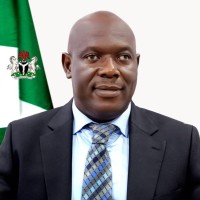
The Hydrocarbon Pollution Remediation Project (HYPREP) has commemorated the 15th anniversary of the release of the United Nations Environment Programme (UNEP) Environmental Assessment Report on Ogoniland, reaffirming its commitment to restoring the environment and improving the livelihoods of affected communities.
In a statement signed by the Project Coordinator, Prof Nenibarini Zabbey, to commemorate the anniversary, HYPREP described the anniversary as a significant milestone in Nigeria’s environmental restoration efforts, noting that the project has made remarkable progress in implementing the recommendations of the landmark UNEP report released on August 4, 2011.
The UNEP report had revealed extensive oil pollution across Ogoniland, severe environmental degradation, and serious public health risks resulting from decades of petroleum operations. It also recommended an initial $1 billion fund to commence the cleanup of the affected communities.
According to HYPREP, the Federal Government formally launched the Ogoni clean-up in 2016, while the Project Coordination Office was established in 2017 to drive the implementation of UNEP’s recommendations.
Zabbey said the current administration has continued to prioritise the project under the Renewed Hope Agenda.
Providing an update on the cleanup, the Project Coordinator disclosed that 30 of the 65 contaminated sites identified by UNEP have been fully remediated, while work is ongoing at several medium- and high-risk locations. It also stated that more than 1.5 million mangrove seedlings have been planted as part of what it described as the world’s largest restoration of oil-degraded mangroves, with over 1,000 hectares of shoreline already rehabilitated.
Zabbey further revealed that 49 Ogoni communities have been connected to potable water schemes through multiple water projects and booster stations aimed at providing safe drinking water across the region.
In the health sector, he said the 100-bed Ogoni Specialist Hospital in Kpite and the 43-bed Cottage Hospital in Buan are nearing completion, adding that several existing health facilities have been upgraded with modern medical equipment, while five ambulances have been donated to improve emergency healthcare services. The Project Coordinator also disclosed that a three-year human health biomonitoring study is being conducted in collaboration with the World Health Organization’s International Agency for Research on Cancer (IARC).
On economic empowerment, Zabbey stated that the Project has created more than 8,000 direct jobs and trained thousands of Ogoni youths and women in various vocational and technical skills, including software development, cybersecurity, aviation, commercial diving, seafaring, mechatronics, and creative arts. The project also reported awarding scholarships to more than 1,000 students, providing grants to small businesses, and supporting persons living with special needs through skills acquisition programmes.
The statement further highlighted ongoing legacy projects, including the Ogoni Power Project and the Centre of Excellence for Environmental Restoration, which it said is about 96 per cent complete. HYPREP also welcomed the recent designation of the Ogoni Wetland as a Ramsar Site of International Importance and pledged to continue promoting biodiversity conservation and sustainable management of the ecosystem.
Marking the anniversary, Zabbey said the progress achieved over the past 15 years demonstrates the collective commitment of government, development partners, stakeholders, and local communities to restoring Ogoniland. He called for renewed collaboration to sustain the cleanup effort, promote environmental sustainability, and support the long-term development of the region. 3
-

 News2 days ago
RSG Targets Nine Million Residents in Mosquito Net Distribution Campaign
-

 Oil & Energy2 days ago
Aiyedatiwa Signs New Electricity Bill
-

 Oil & Energy2 days ago
NLNG Commissions Research And Innovation Centre In RSU
-

 Maritime2 days ago
Marine Minister Commends President Tinubu On NPERA Bill Assent
-

 News2 days ago
KenPoly Holds Eight Convocations, August 29
-

 News2 days ago
RSG Begins Another Phase of Projects Commissioning Today
-

 News2 days ago
RMAFC Completes Revenue Sharing Review, Proposes New Pay
-

 Maritime2 days ago
NAGAFF Petitions IGP Over Alleged Maritime Police Harassment