
Nation
THE STATES

Gombe
The Gombe State Government has approved N900.8 million as compensation to people affected by the expansion of four township roads in the metropolis.
The Deputy Governor, Mr Tha’anda Rubainu, disclosed this while flagging-off the payment of the money to the beneficiaries in Gombe on Sunday.
Rubainu said that the money might not be enough to compensate for the social and psychological sacrifices that would be borne by the affected persons.
He, however, enjoined them to consider it as their personal contribution to the development of the state.
Also speaking, Mr. Shehu Hadi, the state Commissioner for Works and Infrastructure, said that the decision by the government to convert the roads into dual carriageways would decongest traffic within the metropolis.
Kaduna
The Kano State Government said it generated about N1 billion revenue internally in the last 12 months.
Gov. Rabiu Kwankwaso disclosed this, while celebrating “Kano Day” at the ongoing 33rd edition of the Kaduna International Trade Fair, on Saturday in Kaduna.
Kwankwaso, who was represented by Danburam Nuhu, the Commissioner for Commerce, Industry, Cooperatives and Tourism, said the revenue was 100 per cent higher than that of 2010.
Kwankwaso said the state would surpass the present revenue next year.
He said that about N440 million was distributed to women across the 44 local government areas to reduce the rate of poverty among women.
He said that a committee had been set up to ensure that taxes were harmonised to encourage investors in the state.
“Multiple taxation were no doubt discouraging business in Kano, but the government has resolved to introduce what it called shared taxes, where local, state and federal governments will take part of the responsibility,” he said.
Kano
The Kano State Government has procured 1,000 taxi cabs and 500 buses to boost transport services in Kano metropolis.
The state Commissioner for Works, Housing and Transport, Alhaji Abba Yusuf, told said in Kano on Saturday that the gesture was part of the government’s efforts to provide employment in the state.
He said the vehicles which would soon be launched by Gov. Rabi’u Kwankwaso, would alleviate the transportation problem being faced by commuters in the state capital.
“This is part of government’s effort to provide subsidised and cheap public transport services for the public,’’ he said.
According to him, the state government has also provided 15 additional buses to the state transport company, to enhance its operations.
“With government approval, the company has initiated the first passenger Health Insurance Scheme, in partnership with Zuma Health Insurance.
“A passenger will pay only N50 per trip and receive the sum of N190, 000 medical care in the event of an accident and N200, 000 in case of death.”
Katsina
The former NYSC Director General, Brig-Gen. Maharazu Tsiga has said that Nigeria’s Vision 20:2020 could be realised through proper guidance, education and orientation of youths.
Tsiga gave the advice on Saturday in Katsina at the swearing-in ceremony of the executives of National Association of Katsina State Students.
The former NYSC chief spoke on: “The role of Nigerian Students and Youth Development in nation building.
“The symbolic thing about the Vision 20:2020 is that today’s youths are leaders of tomorrow, hence the need to orientate, inform and educate them toward realising the vision.”
“The vision cannot be realised in an environment where the youths are not properly informed, hence the need for concerted efforts to guide the youths in that direction.
“There is the need for special attention to youth development as they are the bedrock upon which the society will move to the next level,” he added.
He charged the youth to always stay focused and to remember that they had a bright future, which could only be achieved through hard work, loyalty and respect for constituted authorities.
Tsiga also advised them not to allow themselves to be used by anybody to perpetrate evil acts.
He commended the Katsina State Government for its free education from primary to secondary levels and for its support to the state’s students in tertiary institutions.
Kogi
Kogi Gov.Idris Wada has said that he constituted two major committees on assumption of office to ensure good governance and meet the yearnings of the people.
Wada stated this in a broadcast in Lokoja on Saturday as part of activities marking his 100 days in office.
He said the government constituted a ‘Think-Tank’ shortly after his inauguration “to ensure
that we institute a well guided, inclusive, sound and cohesive government’’.
The committee, he said, was charged it with the responsibility of outlining strategic development policies and programmes for implementation within four years.
“I also constituted a transition committee to document the state of affairs in the state to provide us with a bearing for smooth implementation of our development programmes,’’ he said, adding that the two committees had since submitted their reports.
“I promised in my inaugural address to run your affairs by subjecting ourselves to the highest ideals of good governance and I did say that hard work, integrity, discipline, transparency and accountability would be our watchword.
“That is exactly what we have pursued with all the vigour and resources at our disposal since the day we assumed office.”
Wada said his assumption of office three months ahead of time prepared him adequately for the task of governing.
Lagos
Acting Director, Lagos State Fire Service, Mr Razak Fadipe, says the service has acquired 30 new fire-fighting vehicles to effectively combat fire outbreaks in the state.
Fadipe said this in Lagos last Friday on the 2012 International Fire-Fighting Day Anniversary.
He expressed the resolve of the service to better its operations, commending the state governor, Mr Babatunde Fashola, for revamping the establishment.
“Gov. Fashola has been very supportive of the Fire Service since he assumed office. As we speak, 30 new fire-fighting vehicles have been purchased to boost our operations.
“The vehicles are still in the U.S, but we are going to take delivery of the first batch before the end of the year.
“They are modern fire-fighting vehicles containing foam, air and water, which would better our rescue operations,’’ Fadipe said.
He said that two additional aerial ladders to combat fire outbreaks in high-rise buildings would accompany the vehicles to Nigeria.
“These aerial ladders are very important in a mega-city like Lagos, where we have many high-rise buildings“, the Fire Service chief said.
The Acting Director said the service had introduced two “three-digit toll-free emergency numbers’’ for members of the public in case of fire outbreaks.
“A resident can just dial 767 or 112 from his or her phone, even without airtime, and his or her message will get to the Command Centre for prompt attention,’’ he said.
Osun
Pupils in Osun would be fed with cocoyam-based nutrition in the state government’s schools feeding programme tagged “O Meal’’, Gov. Rauf Aregbesola has announced.
He made the disclosure in Osogbo on Friday while distributing instructional materials to pupils, saying research had confirmed the nutritional value of cocoyam.
The governor said the cocoyam-based feeding formula would make the pupils strong and sound, as it is rich in minerals and vitamins, and is low in starch.
The Tides Source recalls that the programme was inaugurated on April 30 with the employment of 3,000 women as food vendors.
The governor said findings had revealed that cocoyam remains an indispensable but yet neglected food crop, especially for predominantly malnourished households in the country.
“It is not just to provide the usual meal, meant to fill the bellies of our school children, but the ‘O Meal’ is rich in high protein,” he said.
Aregbesola said that the menu includes a very rich diet in chicken, beef, fish, eggs, and fruits to be served with other regular staple foods.
“Interestingly, and contrary to popular but uninformed belief, we found out through research that cocoyam is one of the most nutritious tubers for human consumption.
“Our policy therefore is based on sound advice by nutritionists that such food enhances the physical growth and mental development of kids in their formative years,” he said.
Aregbesola said the programme has also opened a window of opportunity for economic empowerment as no fewer than 3,000 women have been appointed food vendors.
He said the women had been adequately equipped with modern cooking utensils and provided with two pairs of chef uniforms each to enhance their service delivery.
Plateau
Motorcyclists have continued their operations in Jos and Bukuru metropolis of Plateau in spite of the ban by the State Government on May 4.
The State Government on May 4 banned commercial motorcyclists from operating in Jos and Bukuru.
The Commissioner for Information, Mr Abraham Yiljap, who announced the ban at a news conference, cited the security situation in the state capital as reason for the action.
Yiljap said: “the order is with immediate effect and that means the law enforcement agencies will be expected to comply with this law by checking those who might want to disregard it in any way’’.
He said the government had embarked on the purchase of additional 300 cabs and 500 tricycles for distribution to citizens of the state to ease the transportation problems.
The motorcyclists had appealed to the State Government to rescind its decision in order to save them and some of their passengers, who live in remote areas of the town.



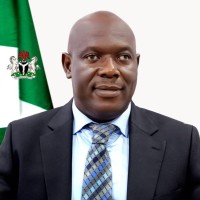
The Hydrocarbon Pollution Remediation Project (HYPREP) has commemorated the 15th anniversary of the release of the United Nations Environment Programme (UNEP) Environmental Assessment Report on Ogoniland, reaffirming its commitment to restoring the environment and improving the livelihoods of affected communities.
In a statement signed by the Project Coordinator, Prof Nenibarini Zabbey, to commemorate the anniversary, HYPREP described the anniversary as a significant milestone in Nigeria’s environmental restoration efforts, noting that the project has made remarkable progress in implementing the recommendations of the landmark UNEP report released on August 4, 2011.
The UNEP report had revealed extensive oil pollution across Ogoniland, severe environmental degradation, and serious public health risks resulting from decades of petroleum operations. It also recommended an initial $1 billion fund to commence the cleanup of the affected communities.
According to HYPREP, the Federal Government formally launched the Ogoni clean-up in 2016, while the Project Coordination Office was established in 2017 to drive the implementation of UNEP’s recommendations.
Zabbey said the current administration has continued to prioritise the project under the Renewed Hope Agenda.
Providing an update on the cleanup, the Project Coordinator disclosed that 30 of the 65 contaminated sites identified by UNEP have been fully remediated, while work is ongoing at several medium- and high-risk locations. It also stated that more than 1.5 million mangrove seedlings have been planted as part of what it described as the world’s largest restoration of oil-degraded mangroves, with over 1,000 hectares of shoreline already rehabilitated.
Zabbey further revealed that 49 Ogoni communities have been connected to potable water schemes through multiple water projects and booster stations aimed at providing safe drinking water across the region.
In the health sector, he said the 100-bed Ogoni Specialist Hospital in Kpite and the 43-bed Cottage Hospital in Buan are nearing completion, adding that several existing health facilities have been upgraded with modern medical equipment, while five ambulances have been donated to improve emergency healthcare services. The Project Coordinator also disclosed that a three-year human health biomonitoring study is being conducted in collaboration with the World Health Organization’s International Agency for Research on Cancer (IARC).
On economic empowerment, Zabbey stated that the Project has created more than 8,000 direct jobs and trained thousands of Ogoni youths and women in various vocational and technical skills, including software development, cybersecurity, aviation, commercial diving, seafaring, mechatronics, and creative arts. The project also reported awarding scholarships to more than 1,000 students, providing grants to small businesses, and supporting persons living with special needs through skills acquisition programmes.
The statement further highlighted ongoing legacy projects, including the Ogoni Power Project and the Centre of Excellence for Environmental Restoration, which it said is about 96 per cent complete. HYPREP also welcomed the recent designation of the Ogoni Wetland as a Ramsar Site of International Importance and pledged to continue promoting biodiversity conservation and sustainable management of the ecosystem.
Marking the anniversary, Zabbey said the progress achieved over the past 15 years demonstrates the collective commitment of government, development partners, stakeholders, and local communities to restoring Ogoniland. He called for renewed collaboration to sustain the cleanup effort, promote environmental sustainability, and support the long-term development of the region. 3
-

 News2 days ago
RSG Targets Nine Million Residents in Mosquito Net Distribution Campaign
-

 Oil & Energy2 days ago
Aiyedatiwa Signs New Electricity Bill
-

 Oil & Energy2 days ago
NLNG Commissions Research And Innovation Centre In RSU
-

 Maritime2 days ago
Marine Minister Commends President Tinubu On NPERA Bill Assent
-

 News2 days ago
KenPoly Holds Eight Convocations, August 29
-

 News2 days ago
RSG Begins Another Phase of Projects Commissioning Today
-

 News2 days ago
RMAFC Completes Revenue Sharing Review, Proposes New Pay
-

 Maritime2 days ago
NAGAFF Petitions IGP Over Alleged Maritime Police Harassment