
News
Fall Of The ‘King Of Kings’

He was one of the world’s most ruthless heads of state. He also was one of the most outlandish. Rarely has the leader of such a small nation played such a large role on the international stage. But Moammar finally lost his invincibility as he fell to the superior fire power of NATO-backed Libyan rebel troops in his homeland, Sirte.
Gadhafi, who had weathered assassination attempts, US air strikes, and years of international sanctions, died today in the desert town of Sirte where he was born, the rebel coalition claimed.
Before there was Osama Bin Laden, there was Moammar Gadhafi. For years he was Public Enemy No. 1 in the US, feared and loathed for bankrolling terrorism and revolution around the globe.
A Newsweek cover story in 1981 branded him “the most dangerous man in the world.” To President Ronald Reagan, he was “the mad dog of the Middle East.”
And that was before his regime’s most dastardly deed of all: the 1988 bombing of Pan Am Flight 103 over Lockerbie, Scotland, by Libyan agents who planted explosives in a suitcase. The crash killed 270 people, most of them Americans.
And then, Gadhafi undertook an astonishing reversal. He was one of the first Arab leaders to denounce the September 11 terrorist attacks. Two years later, Libya abandoned its weapons of mass destruction programs, assumed responsibility for the Pan Am bombing and agreed to pay $2.7 billion in restitution to the families of Lockerbie victims.
The US reciprocated, resuming diplomatic relations with Tripoli and lifting economic sanctions. But while Gadhafi’s political conduct changed, his eccentric behavior did not. Across his four decades in power, he flouted all the rules for how a head of state should act.
He surrounded himself with gun-toting female bodyguards, and for years he traveled with a voluptuous Ukrainian nurse. He brought along a Bedouin tent to sleep in when he traveled abroad, and once attended a summit in Belgrade with six camels and two horses in tow. Gadhafi wore flowing robes, favored oversized sunglasses and received Botox injections.
“Can I ask you something very directly, which may seem rude?” ABC News’ Barbara Walters asked Gadhafi in a 1989 interview in Tripoli. “In our country, we read that you are unstable, we read that you are mad. Why do you think this is? … Does it make you angry?”
“Of course it irritates me,” Gadhafi replied. “Nevertheless, I do believe that a majority of the people in the four corners of the globe do love me.”
Libya was one of the world’s poorest nations when Gadhafi was born in a Bedouin tent in 1942 to illiterate parents. Young Moammar showed promise, and so he became the first member of his family to attend secondary school.
He harbored outsized ambitions even as a teenager. Enamored of Gen. Gamal Abdel Nasser’s rise to power in neighboring Egypt, Gadhafi began conspiring with high school classmates to stage a similar revolution in Libya.
In September 1969, Gadhafi lead a small band of junior military officers in a bloodless coup, toppling Libya’s pro-Western ruler, King Idris. It was an audacious move since Gadhafi was a mere army lieutenant, just 27 years old.
Initially, Gadhafi enjoyed broad support. He took no formal title, calling himself the Supreme Guide or Brotherly Leader. He created a system of government called the “Jamahiriya,” or state of the masses, which called for Libya to be governed by local councils. But there would be no collective rule.
Moammar Gadhafi’s Flamboyant Dictatorship Is Over
He transformed Libya into a dictatorship, criminalizing dissent, creating a network of informers and executing opponents. He sent hit squads to hunt down dissidents “stray dogs,” he called them — who fled to Europe and the US.
Most significantly, Gadhafi squeezed foreign oil companies to give his regime nearly 80 percent of the revenue from Libya’s vast oil fields, a model that would be duplicated by other oil-producing states. It provided Gadhafi with the resources to cause havoc around the world. Harboring a deep resentment of the West, Gadhafi financed revolutionary movements in Africa, Asia and Europe — from the I.R.A. in Northern Ireland to Islamic radicals in the Philippines. He supported Palestinian terrorism, including the Black September movement blamed in the killing of Israeli athletes at the 1972 Munich Olympics.
Gadhafi’s conduct put him on a collision course with the United States. Soon after taking office, President Reagan severed diplomatic relations with Libya and slapped an embargo on its oil. Gadhafi upped the ante when Libyan agents orchestrated the bombing of a West Berlin disco in 1986, killing two U.S. servicemen. American warplanes bombed Gadhafi’s compound in retaliation, nearly killing the dictator.
The bombing of Pan Am Flight 103 cemented Libya’s standing as a rogue state. The ensuing sanctions against him were so severe, Barbara Walters needed the State Department’s permission to visit Libya to interview Gadhafi.
Asked in that interview about Washington’s demand that he needed to “renounce international terrorism,” Gadhafi laughed. “This could be the response when someone is sponsoring terrorism, but when our official position is that we are against terrorism, such demand would be meaningless,” he said.
Gadhafi scoffed when Walters brandished a report accusing him of using surrogates to commit terrorism around the world. “What is the practical evidence, the concrete evidence?” he said. “These are all lies … only ink and paper.”
All of which made Gadhafi’s about-face after 9/11, his rejection of terrorism, even more striking. Reportedly, he shared his intelligence files on al Qaeda with the CIA., and allowed the US to use a Libyan site for the harsh interrogation of a terror suspect.
With the lifting of sanctions, US and international companies rushed into Libya to do business. World leaders like Italy’s Silvio Berlusconi paid visits.
Gadhafi and his country were pariahs no more.
Now rehabilitated, Gadhafi cast himself as a statesman, and in early 2009, he was elected to lead the African Union, a confederation of 53 nations.
But the makeover unraveled in August 2009 after Scotland freed the only person convicted in the Lockerbie bombing, a former Libyan agent named Abdel Basset Ali al-Megrahi. Although the release was described as a humanitarian gesture — Megrahi suffered from prostate cancer it triggered outrage in the U.S. and Britain. The outcry mushroomed when Megrahi returned to a hero’s welcome in Tripoli orchestrated by Gadhafi’s regime. Once again, Gadhafi appeared to be up to his old tricks.
Gadhafi’s ability to outrage was on full display during a subsequent visit to the United Nations General Assembly in New York.
Gadhafi ‘King of Kings’ No More
Introduced as “leader of the revolution, the president of the African Union, the king of kings of Africa,” Gadhafi railed and raged for 90 minutes, instead of the allotted 15. He ripped up a copy of the U.N. charter, demanded investigations into the assassinations of President John F. Kennedy and Martin Luther King Jr., and compared the U.N. Security Council to al Qaeda.
But it was the Arab Spring that led to be Gadhafi’s downfall. In February 2011, the anti-government protests roiling the Arab world spread to Libya with a Day of Rage challenging his rule. More than 40 years of anger and resentment exploded in demonstrations across the country.
When the protests morphed into an uprising, Gadhafi responded with extreme force. As Gadhafi’s forces closed in on the rebel stronghold of Benghazi, the UN Security Council authorized the use of force to protect civilians. And on March 19, US and European forces intervened, launching missiles and dropping bombs to assist the rebels.
The tide turned. In August, Gadhafi fled Tripoli as rebel forces closed in. After 42 years, his reign was over. But the wily leader’s whereabouts remained a mystery for months as the remnants of his security forces fought off rebels closing in on his strongholds.
At the time of his death, Gadhafi, his son Seif al-Islam and his chief of intelligence were wanted by the International Criminal Court in The Hague on charges of crimes against humanity for the killing, wounding and imprisonment of civilians during the early stages of Libya’s uprising.


News
Rivers DPOs Receive Awards For Outstanding Performance In Crime Prevention …As Students, Media Group Honour CSP Worgu, CSP Yusuf

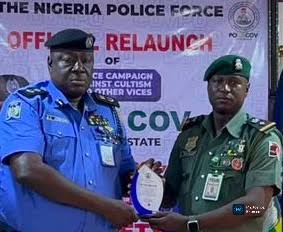
Two Divisional Police Officers (DPOs) in Rivers State have been honoured by separate groups for their contributions to security, crime prevention and improved community-police relations in their respective areas of responsibility.
The beneficiaries are the DPO of Afam Police Division, CSP Endurance Worgu and his counterpart at Oyigbo Police Division, CSP Bello Yusuf.
CSP Worgu was honoured by a group of students under the aegis of Rivers State Graduate Students Associations for what they described as his commitment and outstanding performance in the discharge of his duties.
The students, led by Chidi John Enyie, Esq. said CSP Worgu was selected based on his track record and status as one of the longest-serving young DPOs of Rivers State origin.
According to the group, CSP Worgu has made significant contributions to the protection of lives and property in the area since assuming office following the #EndSARS period.
The students said they were particularly impressed by the improvement in community-police relations under his leadership, noting that professionalism had remained a key feature of his service.
Enyie represented by Comrade Briggs Soku, said the students community was pleased to identify with a Rivers indigene who had distinguished himself in the police force.
He said the students considered it necessary to encourage and celebrate CSP Worgu because of his achievements as a young Rivers man excelling in a profession that many people from the state were often reluctant to join.
Receiving the award at his office in Afam, CSP Worgu expressed gratitude to God and the students for finding him worthy of the honour.
The DPO said the recognition had boosted his morale and encouraged him to sustain his efforts towards maintaining peace and security in the area.
He said he least expected the honour, particularly because it came from the students, adding that the recognition would further motivate him to serve the people better.
CSP Worgu assured residents of Afam that the police would sustain the existing peace in the area.
He appealed to members of the public to support the police by providing credible and timely information, stressing that useful information from residents would make the job of security personnel easier.
Meanwhile, the Ikwerre/Etche Media Association has also honoured the DPO of Oyigbo Police Division, CSP Bello Yusuf, for his efforts in tackling criminal activities in the area.
The media group presented the award following the swift tracking and arrest of five suspected kidnappers who had allegedly terrorised residents of the Kom-Kom axis and other parts of Oyigbo.
The group commended CSP Bello for what it described as his determined efforts to restore confidence and security in the affected communities, particularly Kom-Kom and Obeama.
According to the group, the arrest of the suspects demonstrated the DPO’s commitment to tackling criminality and safeguarding residents.
The media association said residents had received the development with relief, noting that the police action had sent a strong message to criminal elements operating in the area.
Responding, CSP Yusuf appreciated the group for the recognition and reaffirmed that there would be no room for criminality in Oyigbo.
He also commended the media for its role in disseminating credible information to the public, saying the media had remained supportive of the police in the fight against crime.
CSP Yusuf warned criminal elements operating in Oyigbo to leave the area or be prepared to face the full weight of the law.
He assured residents that the police would continue to pursue criminals and work to dismantle their hideouts, regardless of where they might be operating.
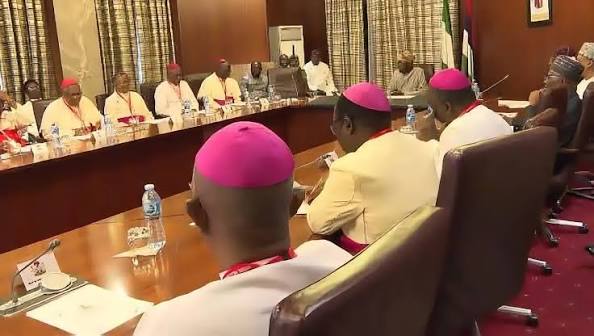
The 5000 Achievers Christian Forum and Colleges of Bishops, Archbishops and Apostles, a Christian interdenominational organisation, has endorsed President Bola Ahmed Tinubu and all candidates of the All Progressives Congress (APC) in Rivers State for the 2027 general elections.
International President of the forum, Archbishop Lucky Aroh, disclosed this during the ordination and consecration of three new Bishops, as well as an award ceremony held in Port Harcourt.
Aroh said the performance of the APC-led Federal Government had endeared the party to the organisation, prompting the forum to declare its support for President Tinubu and other APC candidates in Rivers State.
He said the forum would support all APC candidates in the state during the 2027 elections and urged Nigerians to vote for the party.
Aroh, who is also the General Overseer of Caring Peoples Church, Port Harcourt, charged the newly consecrated Bishops to see their new positions as a great responsibility and dedicate themselves to the advancement of the kingdom of God.
He cautioned them against conduct capable of bringing their offices into disrepute, stressing that their activities would be closely watched by members of the public.
“As Bishops, the eyes of the public are on your activities. You must therefore conduct yourselves in a manner worthy of your calling,” he said.
Also speaking, the International Coordinator of the forum, Bishop Saint Robinson, urged the newly consecrated Bishops to work diligently towards winning souls for the kingdom of God.
Robinson, who was the guest speaker at the event, stressed that the activities of Bishops must at all times be guided by godly principles.
He also called on members of the church to support and cooperate with the newly consecrated Bishops in the discharge of their responsibilities.
The Secretary of the College, Apostle Elizabeth Ayadi Abaye, said the organisation was established to advance the kingdom of God and promote spiritual development.
According to her, the forum has organised several crusades, conferences, prayer meetings, ordinations, consecrations, enthronements, empowerment programmes and other spiritual development activities across the country as part of efforts to win souls for Christ.
Abaye said the organisation has members across the world and disclosed that more programmes had been scheduled to promote the spiritual development and wellbeing of humanity.
The three Bishops consecrated at the ceremony were Prince Alban Chike, Testimony Omenihu Shedrach and Prince Ifemena.
Among those honoured at the event were the Chairman of the Community Development Committee (CDC), Abali Community, Port Harcourt City Local Government Area, Manuchimso Prince Lemmy Wopara, and Clifford Oko Jaja, Coordinator of the 5,000 House-to-House for President Tinubu.
By: John Bibor
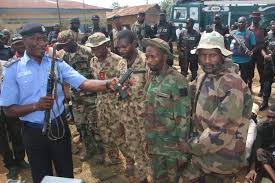
The Rivers State Police Command has arrested a 49-year-old suspected fake soldier, Andrew Atausi, and several other suspects in connection with various criminal activities, including kidnapping, armed robbery, cultism, one-chance robbery and the alleged murder of police officers.
The State Commissioner of Police, CP Olugbenga Adepoju, disclosed this in Port Harcourt, recently during a press briefing at the Command Headquarters, where he said the arrests formed part of the operational achievements recorded by the Command between June and August 2026.
Adepoju said Atausi was arrested on August 10 by police operatives along Ada George, Port Harcourt, while dressed in military uniform and driving a Toyota Hilux painted in Army colours.
The Commissioner said investigation revealed that Atausi was not a member of the Armed Forces, adding that he was suspected to be a serial car snatcher, with three suspected stolen vehicles recovered from him.
He said the recovered vehicles included three Toyota Hilux vehicles without registration numbers and a Toyota Corona Premio with registration number BNY 380 ES, noting that the chassis and engine numbers of the vehicles had allegedly been tampered with.
Adepoju added that an axe and military accoutrements were also recovered from Atausi, as investigation continued into the circumstances surrounding the vehicles and other items recovered from him.
On the June 29 attack on police officers at Aluu Division, the Commissioner said three members of the gang allegedly responsible for the incident had been arrested by operatives of the Violent Crime Response Unit, VCRU-AKU.
The suspects, identified as Maduabuchi Emeka, 34, alleged gang leader; Doctor Chinedu Owhor, 42, and Kamachi Joe, 28, alleged armourer, reportedly led operatives to their hideout at Omagwa where two AK-47 rifles stolen during the attack were recovered.
Adepoju recalled that two police officers were killed during the Aluu attack, while others were wounded and one officer had his leg amputated, stressing that efforts were ongoing to apprehend the fourth suspect.
On kidnapping, the Commissioner said five members of a suspected kidnapping syndicate were arrested in Oyigbo Local Government Area, adding that they allegedly confessed to operations in Kom-Kom, Railway, Obeama and Afam communities.
He said two other suspects from the same network, Anele Ogbogu, 35, alleged to be the gang’s armourer, and Kenneth Eke, 38, were arrested on July 27, with one AK-47 rifle and one SMG rifle recovered.
The Commissioner further disclosed the arrest of suspects in connection with alleged firearm offences, armed robbery, cultism and one-chance robbery, with firearms, ammunition and other exhibits recovered during the operations.
Adepoju assured residents that the Command would sustain intelligence-led, proactive and community-oriented policing in collaboration with other security agencies, while urging members of the public to continue providing credible information that would assist the police in combating crime across Rivers State.
By; King Onunwor
-

 News2 days ago
RSG Targets Nine Million Residents in Mosquito Net Distribution Campaign
-

 Oil & Energy2 days ago
Aiyedatiwa Signs New Electricity Bill
-

 Maritime2 days ago
Marine Minister Commends President Tinubu On NPERA Bill Assent
-

 Oil & Energy2 days ago
NLNG Commissions Research And Innovation Centre In RSU
-

 News2 days ago
KenPoly Holds Eight Convocations, August 29
-

 News2 days ago
RMAFC Completes Revenue Sharing Review, Proposes New Pay
-

 News2 days ago
RSG Begins Another Phase of Projects Commissioning Today
-

 Maritime2 days ago
NAGAFF Petitions IGP Over Alleged Maritime Police Harassment