
Business
Reactions Trail Planned Removal Of Fuel Subsidy

The plan by the Federal Government to remove fuel subsidy sparked off reactions in Port Harcourt city and its environs over the weekend as majority of people interviewed condemned the step, describing it as one that would upset the current stability in fuel supply and impact negatively on other sectors of the national economy.
One of the respondents, the Managing Director of NEDAL oil Ltd, Prince Emmanuel Ogba said he was surprised that the current administration led by President Goodluck Jonathan which is lauded for checking fuel crises in the country could be thinking of removing fuel subsidy now.
“I think that the step is wrongly timed because government should allow the ongoing reform in the petroleum sub sector to get to an advanced stage such that when subsidy is eventually removed, it would not have abrupt and far-reaching negative effects that would eventually affect other sectors of the nation’s economy”, he said.
The managing director who ackowledged that Nigerians could not run away from removal of fuel subsidy in the future, stressed that the idea of removing fuel subsidy should not even be imagined now.
According to Prince Ogba, “the whole idea of removal of subsidy is about increase in pump price and whence such step is taken at this stage of reform in the oil sector, it affects almost every other calculations in the nation’s economy”.
But to Mrs. Ijeoma Nwankwoala, the idea of removal of fuel subsidy would cause people to create “artificial scarcity because, in the short run, there could be hoarding by marketers who may have feelings of uncertainty over the acceptability of the step”.
In the long run, she continued, “Immediately the increase in pump price tries to stabilise, Nigerians would think of short cut. By that, I mean, black market may present itself as another competitor to organised market”.
Mrs. Nwankwoala, a secondary school teacher also expressed the view that when black market begins to thrive as a negative effect of the increase in the pump price, illegal bunkering and vandalism of pipelines by economic saboteur could become the order of the day.
Some drivers in the metropolis also condemned the removal of the subsidy because of the impact it was capable of having on the transport sector.
“Commuters in Port Harcourt always complain that the transport fare in the city is higher than what obtains in other cities of the country. Now if you remove subsidy in petrol which will result in increase in transport fare, you can imagine how high the fare would be,” said Cletus Chukwu, a taxi driver.
Another commercial driver, Jonathan Charles who operates along Port Harcourt/Aba Express Way advised the president not to give in to anti-people strategies by those he considered enemies of the government and the common Nigerians.
Mr. Charles pleaded with the president to drop the idea, at least, for now until other aspects of the ongoing reforms have been addressed, stating that what the government should be thinking now is the problem with the Nigeria National Petroleum Corporation (NNPC).
He described the non remittal of funds to the government by NNPC to the tune of several hundred billions of naira, the comatose of all the refineries in the nation and undefined standard in allocation of oil blocks as the problems with the industry.
“But government would not see those ones because they concern the big men in the country but whenever any issue concerns the common man, the government applies a different approach,” he said.
“Look at the much talked about implementation of new minimum wage to Nigerian workers, it had been turned to a drama. This attitude should change in the interest of Nigerian masses”, he maintained.
It would be recalled that the Minister of Labour and Productivity, Emeka Nwogu, recently said that federal government has no better alternative to removal of fuel subsidy. Apart from providing more fund to service the nation, government believes that there is great disparity between the cost of petroleum product in Nigeria when compared to other countries.
Chris Oluoh



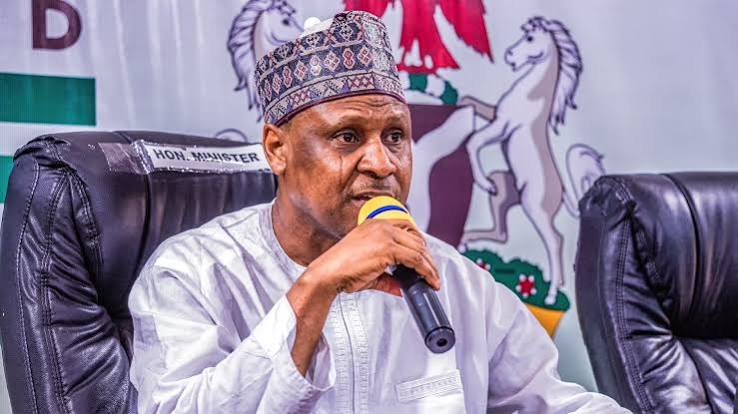
The Minister of State for Industry, Trade and Investment, John Enoh said this at the 8th annual induction and conference of the Chartered Institute of Project Managers of Nigeria (CIPMN).
He explained that abandoned projects continue to lock up public funds that could have been used for infrastructure development, industrial growth, job creation and essential social services.
Represented by the ministry’s Permanent Secretary, Chris Osa Isokpunwu, he said the impact goes beyond financial losses, as incomplete projects affect communities and limit access to important public services
He cited examples of that remain unopened, schools that cannot accommodate students, roads that fail to connect communities and electricity projects that have not delivered their intended benefits.
The Registrar-General and Chief Executive Officer of CIPMN, Henry Ifeanyi Mbadiwe, also identified poor project management as a major challenge affecting development in Nigeria.
He revealed that the institute had developed a project management curriculum for Nigerian universities, which has received approval from the National Universities Commission (NUC). The programme is expected to enable universities to offer project management as a bachelor’s degree.
Mbadiwe further referenced findings by the Presidential Projects Assessment Committee, which identified 11,886 ongoing federal capital projects in 2011, with an estimated financial commitment of ?7.78 trillion.
He noted that inadequate planning, supervision, accountability and implementation were among the factors contributing to the abandonment of projects across the country.
The minister called for stronger project management structures across ministries, departments and agencies to improve planning, monitoring and evaluation.
He added that the Federal Ministry of Industry, Trade and Investment had introduced a 90-day implementation reporting cycle to strengthen transparency and monitor the progress of government programmes.

Ikenga said the company remained committed to Nigeria’s power sector and would continue investing in its operations despite the challenging business environment.
He spoke in Lagos at the third edition of the Shell Power Conference, themed “Powering Nigeria’s Progress: Turning Ambition and Action into Sustainable Impact”.
The Transcorp Power chief said the company would sustain electricity generation, invest in its facilities and deliver value to shareholders.
“Transcorp Power is a long-term player, not a short-term player. This year has been challenging, but what is important is getting power to schools, hospitals and businesses to power progress,” he said.
Ikenga said the company’s focus on operational efficiency and investment had strengthened its contribution to Nigeria’s electricity supply.
He disclosed that since acquiring the Ughelli Power Plant in Delta State in 2013, Transcorp Power had quadrupled its available generation capacity.
He also said the company became the first privatised power generation firm to receive a post-privatisation discharge certificate after fulfilling all its privatisation obligations.
The company’s unaudited results for the nine months ended September 30, 2026, showed a profit before tax of N83.1 billion, while its profit-before-tax margin rose to 31.2 per cent from 29.6 per cent recorded in the corresponding period of 2025.
Its total assets rose to 11.7 per cent amounting to N629.5 billion, while shareholders’ funds grew 8.9 per cent to N199.8 billion. Cash and cash equivalents also rose to N10.3 billion, supported by improved collections.
On the company’s contribution to grid stability, Ikenga said Transcorp Power’s black-start capability enabled it to restart operations without relying on electricity from the national grid.
He explained that the capability allowed the company to support power restoration following grid disturbances, helping to restore electricity supply to homes, businesses and industries.
Ikenga noted that Nigeria had an installed electricity generation capacity of about 13,000 megawatts, with an estimated potential of 50 gigawatts, adding that realising the potential would require effective coordination across the entire value chain.
“Everything in the value chain has to work,” he said.
He called for stronger collaboration among federal and state governments, regulators and private-sector operators, alongside increased private investment, to build a sustainable electricity market.
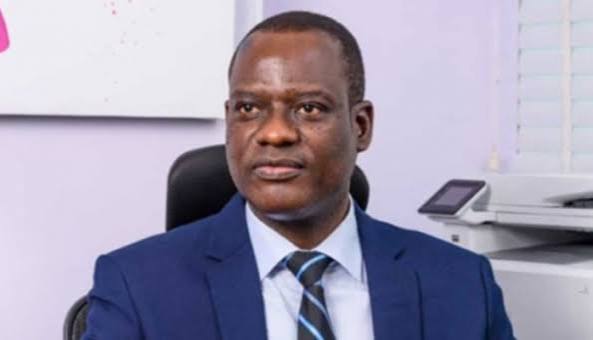
This was contained in a statement issued on Thursday by his Senior Special Assistant on Communications and Press Secretary, Maryann Duke.
The statement said Oyedele pointed to “improved digital systems, including electronic invoicing, as a key driver behind a record of N33tn in government revenue collected between January and October 2026.”
The minister said the performance demonstrated the potential of technology to improve revenue administration, strengthen compliance and increase efficiency across government institutions.
Speaking on the theme, ‘Digital Sovereignty and Ethics: Guarding the Economy for the Next Generation,’ Oyedele warned that Nigeria risked losing substantial economic opportunities if it continued to depend heavily on foreign digital infrastructure.
Citing Nigerian Communications Commission figures, he disclosed that the country recorded more than 157 million active internet subscriptions as of May 2026.
He explained that these connections generated significant volumes of information through financial transactions, healthcare, education and taxation.
However, citing estimates from the Nigeria Data Protection Commission, Oyedele said as much as 90 per cent of the country’s data was hosted abroad.
According to him, the situation has implications for foreign exchange expenditure, employment opportunities, technological skills and Nigeria’s control over information generated by its citizens.
He compared the country’s reliance on foreign digital infrastructure with its historical dependence on imported refined petroleum products, warning against a situation where Nigerian data would be processed abroad and the resulting services sold back to domestic users.
The minister consequently advocated greater investment in local data infrastructure, technical expertise, cybersecurity and predictable regulations to enable Nigerian businesses to capture more value from the digital economy.
He clarified that digital sovereignty should not translate into technological isolation but should strengthen Nigeria’s capacity to participate competitively in international markets.
Addressing graduating students, Oyedele urged young Nigerians to become developers of technological solutions rather than remain primarily consumers of products created elsewhere.
He identified artificial intelligence as both a disruptive force and an opportunity for innovation, advising graduates to acquire relevant digital skills alongside critical thinking, creativity, sound judgement and integrity.
The minister also cautioned against irresponsible online behaviour, explaining that digital footprints increasingly influence employment prospects, commercial relationships and professional credibility.
Oyedele outlined five priorities for graduates, including continuous learning, value creation, integrity, responsible digital citizenship and active participation in national development.
“Your degree is evidence of what you have learned. Your competence will demonstrate what you can do. Your character will reveal who you truly are,” he told the graduating students.
-

 Politics3 days ago
LG CITY BOY COORDINATOR HAILS WIKE’S SUPPORT FOR ONYESOH, TINUBU
-
Politics3 days ago
DIRI INAUGURATES APC CAMPAIGN COUNCIL, SETS MILLION VOTES TARGET FOR TINUBU
-

 Politics3 days ago
NDC Candidate Urges Oborevwori To Probe Asaba Political Violence
-

 News4 days ago
Army Recovers X Account After Hack Attempt
-
 Business4 days ago
Nigeria Loses N17tr Yearly To Abandoned Projects
-
Politics3 days ago
2027: Oborevwori Tasks Media On Fair, Accurate Reporting
-
Politics3 days ago
2027: AKPABIO ENVISAGES TINUBU’S VICTORY IN SOUTH SOUTH REGION
-
Politics3 days ago
Asaba Political Violence: Police Confirm One Dead, Delta Govt Urges Probe