
Oil & Energy
No Plan To Pull Out Of NIPCO, Says IPMAN

The Independent Petroleum Marketers Association of Nigeria (IPMAN) says it has no plan to pull out of the joint ownership of the Nigerian Independent Petroleum Company (NIPCO).
IPMAN National President, Alhaji Abdulkadri Aminu, who gave the undertaking, told newsmen in Lagos on Sunday that the association had major shares in NIPCO.
“The IPMAN is still a major shareholder of NIPCO and we have considered the company as the only one that can protect our interest,’’ he said.
Aminu said that the purported Memorandum of Understanding (MoU) signed by some former members of the association led by Alhaji Musa Felande-Mohammed with Capital Oil and Gas Limited was not done on behalf of the association.
The IPMAN national president said that only the national body of the association had the right to sign the document and make such a pronouncement.
Alhaji Musa Felande-Mohammed, who led other group, on March 24, said that his group had signed MoU with the Capital Oil and Gas Limited.
Felande-Mohammed said that his group signed the agreement based on the difficulty they faced at the depots in accessing petroleum products for loading and distribution to consumers.
Aminu urged the management of Capital Oil and Gas not to sign any MoU without the official confirmation from the national body of the association.
He said that the Felande-Mohammed led group ceased to be members of the association based on a court judgment since 2008.
IPMAN chief said that the MoU signed with the Capital Oil by Felande-Mohammed group without the consent of the national body was wrong and fraudulent.
Commenting, Alhaji Taofeek Lawal, NIPCO Manager, Corporate Affairs Department, said that there was no crisis between NIPCO and IPMAN since they signed an agreement in 2001.
Lawal said that the purported MoU signed by Felande-Mohammed group awith Capital Oil has no effect on the company, adding, “IPMAN and NIPCO are good partners”.
NAN reports that NIPCO, formerly IPMAN Petroleum Marketing Company Limited (IPMCL) was incorporated by IPMAN members on Jan. 8, 2001 as a limited liability company.



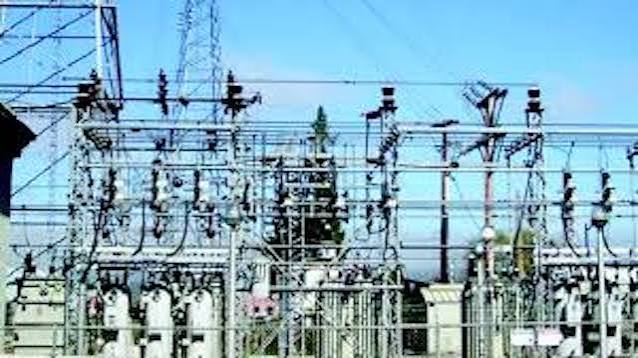
Utilities built a total of over 21,000 km of new transmission lines last year, the International Renewable Energy Agency reported this week at COP31, citing data from a group called the Utilities for Net Zero Alliance. This is 50% more than the new transmission lines installed during the previous year, IRENA noted in its report.
“Power grids will make or break not only the energy transition but also the world’s ambition to raise global electrification to 35% by 2035, as championed by the Turkish COP31 Presidency,” said the director-general of IRENA, Francesco La Camera. “IRENA’s analysis shows that global grid investment must more than double, reaching a cumulative USD 10 trillion by 2035,” he added, noting that ambition would not be enough and that “We must move from targets to implementation, from individual projects to system-wide transformation, and from commitments to delivery at scale.”
Transmission line capacity has become one of the biggest obstacles in the path of the energy transition. Due to their weather-dependent, variable output nature, wind and solar installations generate electricity intermittently. Because the best locations for such installations are often far from electricity demand centers, having to waste output in times of low demand is a frequent occurrence with both. Called curtailment, wind and solar electricity waste increases costs for the alternative energy sources.
The solution, net-zero proponents such as the International Energy Agency believe, is to expand the grid by building new transmission lines connecting wind and solar installations with demand centers. Back in 2023, the IEA said utilities needed to add or replace some 50 million km of transmission lines by 2040 if Paris Agreement signatories were to meet their commitments.
Forecasting how many millions of kilometers of cable need to be built or replaced, however, is one thing, while paying for it is quite another. Last year, the European Commission estimated that the European Union alone needs to cough up between $2 trillion and $2.3 trillion on grid upgrades by 2050 to achieve the Commission’s climate goals. For context, EU investment in the grid in 2024 stood at $90.5 billion. This would need to rise to over $100 billion annually, according to energy think tank Bruegel.
$100 billion in grid buildout investment is no small potatoes, yet some believe this investment would be inevitable as energy security takes priority over climate change concerns. Wood Mackenzie said this week that countries that prioritize energy security over emission-reduction plans could achieve lower emissions through faster electrification, replacing hydrocarbon import dependence.
“The energy transition has arrived at a genuine crossroads,” Prakash Sharma, Wood Mackenzie’s head of scenarios and technologies, said. “The world is no longer moving in one direction. Nations are making fundamentally different choices about how to power their economies, and those choices are producing outcomes that confound conventional wisdom.”
Energy security has indeed come to the fore since February, with emission reduction taking the back seat as governments struggle to keep energy relatively affordable without emptying state coffers and slipping into a recession. This has proven hard for many that depend on imports of oil and gas, with the effects of this dependence especially obvious in most of Asia and the European Union.
Reducing this dependence on imports has become an obvious path for many of these governments, as much as it is possible. And the most obvious way of reducing this dependence has been electrification, wherever possible. According to Wood Mackenzie, the impact of the war in Iran on energy prices would drive a shift to electrification, a wind and solar buildout, and nuclear generation expansion to produce more energy locally. This, in turn, would inevitably lead to lower emissions, even though, ironically, these lower emissions are not the priority.
COP31 host Turkey has proposed that participants commit to electrification, aiming for electricity to account for 35% of final energy. That would be up from some 20% today, with most of the world’s final energy still coming from hydrocarbons despite the net-zero rush from the last ten years. What is interesting, however, is that the proposal does not include a stipulation for reducing the use of hydrocarbons. Based on Wood Mackenzie’s scenario for inadvertent emission reduction, the lower use of hydrocarbons would happen organically rather than by means of government regulation enforcement.
Such developments would be an interesting departure from what has become the standard modus operandi of pro-transition governments: regulation, emission-cutting mandates, and penalties for using hydrocarbons, such as credit offsets. Instead, the energy ramifications of geopolitical events could lead to what one could describe as an organic shift away from imported hydrocarbons, while countries with their own mineral resources exploit those more fully. Whether such an organic shift would indeed reduce the consumption of oil, gas, and coal, however, remains to be seen.
By: Irina Slav
-
News4 days ago
RSG Reaffirms Commitment To STEM Education, Technological Advancement
-
Business4 days ago
‘NUJ, NPA’s Partnership Would Boost Port Producrivity, Economic Growth’
-

 News4 days ago
IGP Warns Police Officers Against Partisanship …Directs Regular Engagement With Journalists
-

 Oil & Energy16 hours ago
FG To Double Oil, Gas Reserves, Moves To Intensified fresh Exploration
-
Business4 days ago
Fire Threat Interrupts Asaba Air Peace Flight
-
 News4 days ago
Customs To Deploy AI, Scanners Against Snuggling
-
Business4 days ago
Fish Production Deficit, A Major Investment Opportunity – Minister
-
Sports4 days ago
CAF Awards 2026 Gets A New Date