
Business
S’ Africa’s Auto Industry Still Owned By Whites

South Africa’s Deputy President Kgalema Motlanthe last Thursday said that racial transformation in the auto industry was slow and ownership still lay with the country’s white minority.
Almost 16 years after apartheid and despite ambitious policies, the government has struggled to ensure South Africa’s business sector reflects the country’s black majority.
“At least one per cent of business in the metals and engineering industry is black owned,” Motlanthe said, at the opening of Volkswagen South Africa’s new parts and automotive distribution centre outside Johannesburg.
“This paints a less than rosy picture… in this industry.”
The auto industry, the biggest within the manufacturing sector, has recovered since the start of this year.
The industry has gradually be in reversing trend for more than two years of decline during which consumers grappled with high borrowing costs and an economic downturn.
Companies operating in South Africa have to meet black economic empowerment (BEE) targets on ownership, procurement and employment, to give the country’s black majority an opportunity to do business.
Firms that failed to meet BEE requirements cannot do business with the government.
Motlanhe said training programmes were failing to address the country’s need for high level skills, especially in management, citing a study conducted at Wits University’s Corporate Strategy and Industrial Development Research Unit.
“It also found no link between training initiatives and translation of these into a change in the structure of employment equity such that training holds out the prospect of upward job mobility,” he said.
The auto industry contributes more than a quarter of South Africa’s gross domestic product.



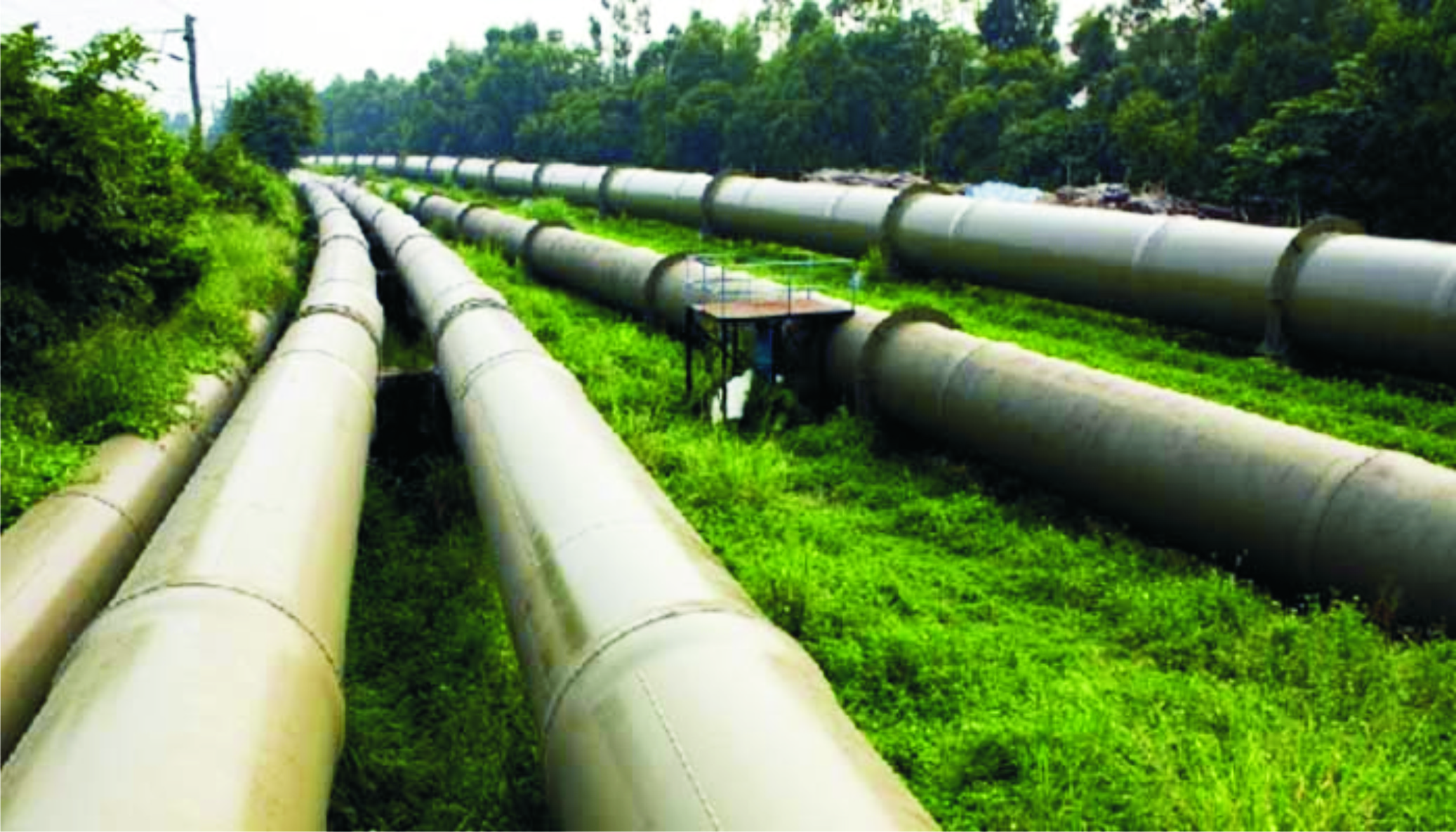
This figure is against the already released 40 slots by the company.
Consequently, the youths have moved to convene a national congress of youths to address issues relating to the oil exploration, which has sparked palpable divisions in the area.
Speaking during the inauguration of the Planning Committee for the Congress, in PortHarcourt, at the weekend, the President-General of OYF, Worldwide, Engr. Legborsi Yamaabana, described the congress as urgent, and targetted at addressing all issues arising from the planned oil resumption.
He said “The Ogoni nation stands at a critical crossroads in its history. We acknowledge the renewed political attention of the Federal Government of Nigeria under the leadership of His Excellency, President Bola Ahmed Tinubu (GCFR), particularly regarding the proposed resumption of oil and gas exploration in Ogoniland after more than three decades of suspension.
“While we recognize this development as a significant national conversation, we emphasize that any engagement concerning Ogoniland must be anchored on the principles of environmental justice, equitable benefit-sharing, and the protection of the dignity, rights, and future of the Ogoni people especially our youth, who remain the custodians of tomorrow.
“The Ogoni struggle is not merely historical; it is living, evolving, and central to the future of sustainable development in the Niger Delta and Nigeria at large.”
He called for calm over the 40 job opportunity given to the area by the NNPCL, insisting that such allocation was insufficient compared to the contribution of Ogoni to the economy.
Yamaabana rather requested that NNPCL, as a matter of importance, give 500 job slots to youths of the area,
In the interim, the leadership of OYF Worldwide has observed the unnecessary tension and uproar surrounding the reported 40 slots of employment opportunity allocated to Ogoni youths in NNPCL and its subsidiaries, as part of Federal Government confidence-building measure toward the resumption of oil and gas activities in Ogoniland.
“We strongly appeal to all Ogoni political, traditional, and community leaders to sheath their swords, maintain calm, and refrain from unnecessary squabbles over crumbs.
“Without preempting the sovereign deliberations of the upcoming Congress, let it be noted that Ogoni youth will not settle for tokenism.
“At the upcoming Congress, we shall formally demand a minimum of 500 direct employment opportunities within the Nigerian National Petroleum Company Limited (NNPCL) and its subsidiaries for qualified Ogoni youths, who have been economically sidelined and left inactive throughout this 33-year stalemate.”
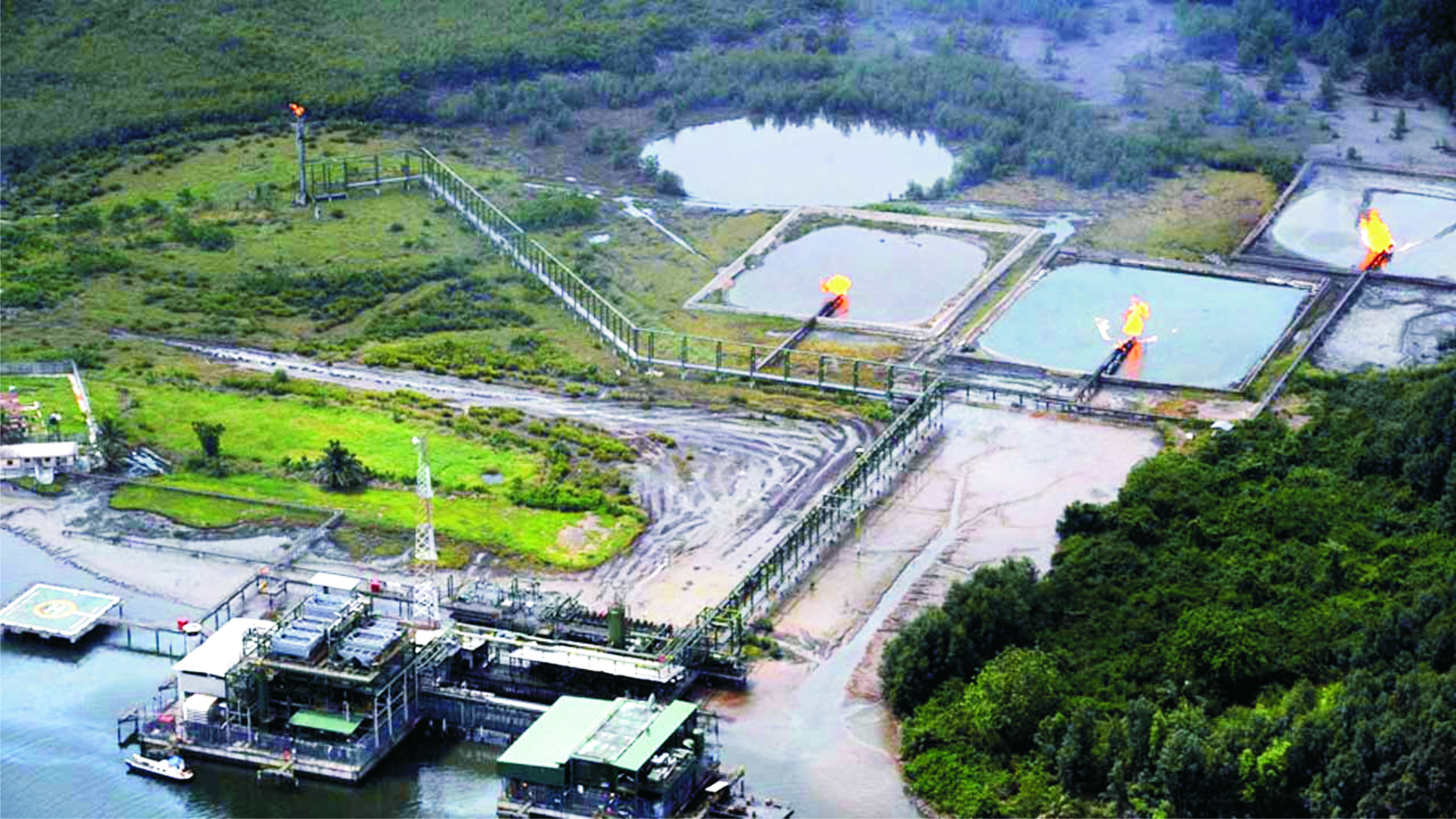
Minister of State for Petroleum Resources (Oil), Senator Heineken Lokpobiri, made the pledge while speaking in his keynote address at the just-concluded OGTAN Human Capital Development Conference and Expo, held in Warri, Delta State.
Lokpobiri said Nigeria was well-positioned to build a world-class oil and gas workforce, backed by growing investor confidence and an unprecedented pipeline of major projects heading towards Final Investment Decisions.
He described Nigeria as an emerging global investment hub, attributing the development to the incentive-driven reforms of President Bola Tinubu, which he said had improved the country’s competitiveness for international capital.
According to him, the pipeline of projects moving towards final investment decisions would require professionals trained to globally competitive standards, with much of the training expected to be delivered through OGTAN’s more than 400 members.
“Those human beings are members of the public who must have been trained by OGTAN, who are expected to have the competence to deliver those projects, not just for Nigeria, but for the entire world,” he said.
Lokpobiri noted that many lecturers and resource persons across Nigerian universities and tertiary institutions were still working with materials that had not kept pace with a modern, AI-driven industry.
He stressed the need to retrain trainers to equip the next generation of engineers, technicians and other professionals with the skills demanded by the industry.
“If the training system underpinning that capital is still operating on a 50-year-old blueprint, the risk is that Nigeria’s newly de-risked capital arrives faster than its newly-promised workforce can be built,” he said.
“As government, what we do is see how we can support OGTAN members. The government is committed to this, and we are doing it through NCDMB and the NOGICD Act,” he said.
Lokpobiri urged OGTAN to expand its focus across the continent, noting that countries such as Angola, Congo and Gabon already depended on Nigerian-trained oil and gas professionals.
“The rest of Africa is depending on human resources from Nigeria, and someone must be responsible for training that human capital, not just for Nigeria,” he said.
-
Sports2 hours ago
NSC Celebrates Historic Beach Volleyball Olympic Qualification
-
Politics1 hour ago
No Propaganda’ll Stop Rivers Voters From Supporting Tinubu – Dike
-

 Sports2 hours ago
Prof. Zeb-Obipi Congratulates Port Harcourt Arsenal Community
-
Politics1 hour ago
APC Group Vows To Mobilise 50 Votes Per Unit In Rivers
-
Sports2 hours ago
Nnadozie, Osimhen Lead Highest-Rated Nigerian Players
-
 Oil & Energy38 minutes ago
NCDMB, Renaissance, Lee, Engage 24 Youths On Oil, Gas Human Capital Dev’t Training
-
Education2 hours ago
FG Pledges Education Overhaul, Says Debate Builds Democratic Citizenship At 2026 Democracy Day Championship
-

 Oil & Energy38 minutes ago
PENGASSAN Tasks FG On Stable Policies, Faster Approvals To Boost Oil, Gas Investment