
Oil & Energy
More Opportunities For Rivers People In Oil Industry …As Shell, RSG Strengthen Partnership

It is becoming increasingly clear that Rivers people would now begin to enjoy more opportunities and the full benefits of the lucrative oil and gas industry, which they have craved for in the past, almost without success, courtesy of strengthened partnership between Shell Petroleum Development Company of Nigeria (SPDC) and the Rivers State Government.
SPDC’s Managing Director, Mr Mutiu Sunmonu, who gave this hint last Thursday in a goodwill message at the first ever Port Harcourt International Oil and Gas Conference, organized by the Rivers State House of Assembly Committee on Energy and Natural Resources, said the company’s co-sponsorship and active participation in the conference and exhibition give glowing impetus to the new vista of opportunities for strengthening existing partnerships for mutual benefit of both parties.
Represented at the event by the Government and Community Relations Manager, SPDC, East, Mr Theo Wellington, the managing director stressed that Shell was keying into the laudable programmes and policies of the state government that were in line with its business principles, and at the same time, promote the company’s corporate social responsibility, as a veritable means of providing more opportunities for Rivers people to tap in and improve their livelihoods.
According to him, the huge presence of Shell at the exhibition shows its interest and desire to impact more positively on the lives of the people by bringing the opportunities available in the industry closer to the grassroots, saying that SPDC was particularly elated that the famous oil and gas conference and exhibition has been brought to the hub of oil and gas exploration and production in the Niger Delta for the very first time in history, and charged participants to visit the Shell stand at the exhibition.
He restated the preparedness and commitment of SPDC to strengthen existing partnerships, open more windows of opportunities and create avenues for the people in the catchment area to benefit maximally from the critical industry that drives the nation’s economy, noting that the people of the state would be better for it.
Meanwhile, The Tide notes that the Shell stand at the Port Harcourt International Oil and Gas Conference and Exhibition witnessed a deluge of visitors, who thronged the pavilion to get first-hand information on the business operations and social performances of the multinational company in the region.
With a large concentration of staff from different portfolios to take on visitors, the Shell pavilion had, on display, various landmarks in the company’s operations and activities, and the opportunities they provide for stakeholders.
The SPDC personnel also provided some important healthcare services, including HIV and TB tests and counseling, blood pressure and hypertension checks, and administration of drugs for various ailments, including deworming and malaria, as well as distribution of insecticide-treated bed nets, to visitors, who lined up to be part of the beneficiaries.
Nelson Chukwudi



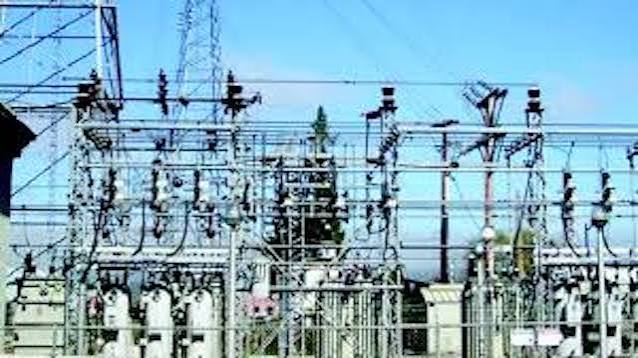
Utilities built a total of over 21,000 km of new transmission lines last year, the International Renewable Energy Agency reported this week at COP31, citing data from a group called the Utilities for Net Zero Alliance. This is 50% more than the new transmission lines installed during the previous year, IRENA noted in its report.
“Power grids will make or break not only the energy transition but also the world’s ambition to raise global electrification to 35% by 2035, as championed by the Turkish COP31 Presidency,” said the director-general of IRENA, Francesco La Camera. “IRENA’s analysis shows that global grid investment must more than double, reaching a cumulative USD 10 trillion by 2035,” he added, noting that ambition would not be enough and that “We must move from targets to implementation, from individual projects to system-wide transformation, and from commitments to delivery at scale.”
Transmission line capacity has become one of the biggest obstacles in the path of the energy transition. Due to their weather-dependent, variable output nature, wind and solar installations generate electricity intermittently. Because the best locations for such installations are often far from electricity demand centers, having to waste output in times of low demand is a frequent occurrence with both. Called curtailment, wind and solar electricity waste increases costs for the alternative energy sources.
The solution, net-zero proponents such as the International Energy Agency believe, is to expand the grid by building new transmission lines connecting wind and solar installations with demand centers. Back in 2023, the IEA said utilities needed to add or replace some 50 million km of transmission lines by 2040 if Paris Agreement signatories were to meet their commitments.
Forecasting how many millions of kilometers of cable need to be built or replaced, however, is one thing, while paying for it is quite another. Last year, the European Commission estimated that the European Union alone needs to cough up between $2 trillion and $2.3 trillion on grid upgrades by 2050 to achieve the Commission’s climate goals. For context, EU investment in the grid in 2024 stood at $90.5 billion. This would need to rise to over $100 billion annually, according to energy think tank Bruegel.
$100 billion in grid buildout investment is no small potatoes, yet some believe this investment would be inevitable as energy security takes priority over climate change concerns. Wood Mackenzie said this week that countries that prioritize energy security over emission-reduction plans could achieve lower emissions through faster electrification, replacing hydrocarbon import dependence.
“The energy transition has arrived at a genuine crossroads,” Prakash Sharma, Wood Mackenzie’s head of scenarios and technologies, said. “The world is no longer moving in one direction. Nations are making fundamentally different choices about how to power their economies, and those choices are producing outcomes that confound conventional wisdom.”
Energy security has indeed come to the fore since February, with emission reduction taking the back seat as governments struggle to keep energy relatively affordable without emptying state coffers and slipping into a recession. This has proven hard for many that depend on imports of oil and gas, with the effects of this dependence especially obvious in most of Asia and the European Union.
Reducing this dependence on imports has become an obvious path for many of these governments, as much as it is possible. And the most obvious way of reducing this dependence has been electrification, wherever possible. According to Wood Mackenzie, the impact of the war in Iran on energy prices would drive a shift to electrification, a wind and solar buildout, and nuclear generation expansion to produce more energy locally. This, in turn, would inevitably lead to lower emissions, even though, ironically, these lower emissions are not the priority.
COP31 host Turkey has proposed that participants commit to electrification, aiming for electricity to account for 35% of final energy. That would be up from some 20% today, with most of the world’s final energy still coming from hydrocarbons despite the net-zero rush from the last ten years. What is interesting, however, is that the proposal does not include a stipulation for reducing the use of hydrocarbons. Based on Wood Mackenzie’s scenario for inadvertent emission reduction, the lower use of hydrocarbons would happen organically rather than by means of government regulation enforcement.
Such developments would be an interesting departure from what has become the standard modus operandi of pro-transition governments: regulation, emission-cutting mandates, and penalties for using hydrocarbons, such as credit offsets. Instead, the energy ramifications of geopolitical events could lead to what one could describe as an organic shift away from imported hydrocarbons, while countries with their own mineral resources exploit those more fully. Whether such an organic shift would indeed reduce the consumption of oil, gas, and coal, however, remains to be seen.
By: Irina Slav
-
News3 days ago
Parents Protest Scholarship Scheme Suspension At PAMO Varsity
-
 News3 days ago
US Hails Nigerian Military For Rescuing 125 Kidnap Victims
-
Business3 days ago
Reps Raise Alarm Over N2trn Agricultural Loan Diversion
-
 Featured3 days ago
Presidents Xi, Trump, Putin Commit To Global Stability, Denuclearisation
-
Politics3 days ago
ADC Faults INEC’s Alleged Limited Capacity To Upload Election Result On IREV
-
Politics3 days ago
Tinubu Expands 2027 Campaign Tour To 19 States
-
Politics3 days ago
Rivers INEC Set To Begin PVCs Distribution Amidst Residents’ Complaints
-
Business3 days ago
Ibom Airlines Hits 52 Percent Of N147.03billion Financial Year, -FAAN