
Politics
Electoral Reforms Top Constitution Review Hearing

The need for electoral reforms in the country took the front burner at the just-concluded South-South Zonal Public Hearing on the proposed alterations to the provisions of the Constitution held in Port Harcourt. Most of the stakeholders who presented papers at the two day exercise picked holes in the country’s electoral process, saying the way the constitution presently operates would not guarantee a free and fair elections. Representative of Coalition of Democrats for Electoral Reform, Prince Ebitimi Agbani noted that the only way to move the country forward was to reorganise the process of elections. In his view, the Justice Uwais Electoral Reform Report should be thoroughly studied such that the salient parts should be tapped for the betterment of the country. Prince Agbani submitted that the federalism demands the need for the country to have State Electoral Commissions to exist side-by-side with the federal body. In the light of this, he argued that instead of scrapping them as canvassed in some quarters, the authorities should establish a Judicial Commission that would screen and appoint the chairman of INEC instead of the federal government. Also, he recommend that political parties be made members of the Independent Electoral Commission (INEC) so that their interests and view would be considered before and major electoral policy. In order to punish offenders during elections, Prince Agbani said the government should institutionalise the Electoral Offences Commission, “they would properly address the issue of violence because we have discovered that most times the Attorney-General do not make any strong case against such people”. In the same vein, Mr. Patrick Chiekwe of the Save Earth Nigeria called for the need to expunge Chapter Six, Section D of the 1999 Constitution, to give room for more women participation in politics. He observed that the political process as it exists now denies women enough room to participate, stressing that women serve as a healthy check in the system. Mr. Chiekwe noted that this can be achieved through the implementation of Affirmative Action and the establishment of a special fund for women to draw four.



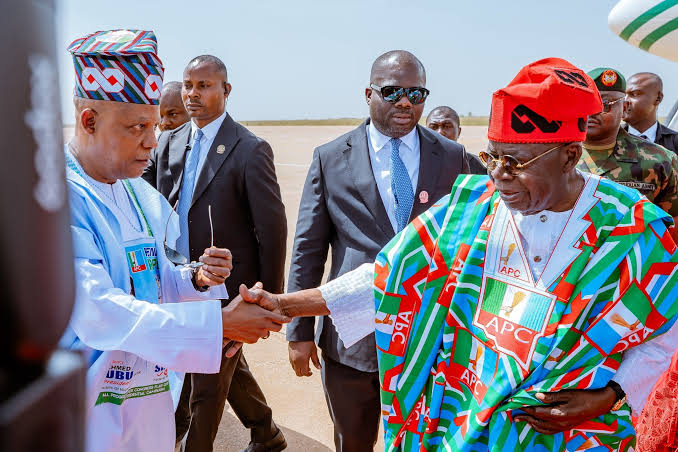
The campaign rally, held at the Kaduna Township Stadium, attracted Vice-President Kashim Shettima, APC governors, party leaders, federal and state lawmakers, political stakeholders and supporters from across the country.
The flag-off marks the beginning of the APC’s drive to secure a second presidential term for President Tinubu, with the party expected to promote its achievements, defend its economic reforms and outline its policy priorities under the proposed Renewed Hope 2.0 agenda.
Kaduna’s selection for the campaign launch underscores the strategic importance of the North-West, a region with a substantial voting population and considerable influence on presidential election outcomes.
The APC faces a significant challenge in Kaduna, where the Peoples Democratic Party’s presidential candidate, Alhaji Atiku Abubakar, defeated President Tinubu in the 2023 election. The rally therefore provides the ruling party an opportunity to strengthen its grassroots structures and regain electoral support in the state.
Addressing supporters, Vice-President Shettima appealed to Northern voters, highlighting President Tinubu’s political relationships with prominent Northern leaders, including Alhaji Abubakar, Mallam Nuhu Ribadu and the late President Muhammadu Buhari.
The Vice-President’s appeal reflects the APC’s determination to consolidate its support in the North as the party intensifies preparations for the presidential contest.
The Renewed Hope 2.0 agenda is expected to feature prominently in the campaign, providing a platform for President Tinubu to explain his administration’s economic policies and outline plans for another term.
However, the President’s record on economic reforms, rising living costs, petrol prices, employment, infrastructure and insecurity is expected to attract considerable scrutiny during the electioneering period.
-

 Education1 day ago
FCE Yola Graduates 3,555 Teachers , Seeks Upgrade to University
-

 Sports1 day ago
Nigerian Trio Target Titles At PFL Africa Finals
-

 Niger Delta1 day ago
Diri Restates Stance On Lagos-Calabar Coastal Highway
-

 Niger Delta1 day ago
C’River, NUJ Pay Tribute To Late Guardian Editor
-

 News1 day ago
NDLEA Recovers Tons Of Illicit Drug Consignments In Nine States
-

 Opinion1 day ago
Checking Voter Apathy In Nigeria’s Electoral Process
-

 Politics1 day ago
2027: DICKSON’S EX-ALLY VOWS TO WORK AGAINST NDC INTEREST IN BAYELSA
-

 Politics1 day ago
2027: GROUP PLEDGES 40,000 SUPPORTERS FOR COALITION CANDIDATES IN RIVERS