
Nation
THE STATES

Benue
The Conference at Nigerian Political Parties (CNPP), Benue State chapter, has described as unfortunate the passage into law of a bill giving Governor Gabriel Suswan un-fettered powers to seek credit borrowings from the capital market and other sources.
Speaking with journalists at the weekend, Benue State chairman of the CNPP, Baba Agan, stated that the action at the state House of Assembly, was a negation of members responsibility to their constituents, which is to protect them from the exploitative actions of the state government. But Deputy Speaker, Benue State House of Assembly, William Edor, who presided over the passage of the law, said the House had to pass the bill in record time to assist the government complete on-going projects stalled by funding.
Again he said the passage of the bill did not come as a surprise to the opposition, alleging that there is a plot to mortgage the future of the state.
According to him, when the House in September passed a resolution permitting the state government to borrow N13.1 billion, the CNPP had written letters of protest to the lending institutions informing them that the Benue State Government did not enjoy the legal support of the people, which led to the creditors demanding the passage of a bill to that effect to protect their funds.
Plateau
The Plateau State Government has signed an agreement with Akintola Williams Deloitte, an accounting firm, to resuscitate Jos International Breweries (JIB) Plc.
The managing director of JIB, Mr Albert Kattlems, told news men recently in Lagos that Deloitte would not only restructure the firm, but review the company’s strategic options for growth.
The JIB, one of Nigeria’s blue chips in the past, is owned by the Plateau State Government. According to Katlems the agreements, which will last for six months with an option of renewal also includes the recruitment of a competent technical partner/core investor for the firm.
He said that the core investor, which will acquire the state government’s 63 per cent stake in the company, also had the opportunity of increasing its equities from the issued share capital the company.
Abuja
The Federal Government will today make public the final report of the 2008 National Health Demographic Survey after the last one conducted in 2003.
The report is expected to provide details of the nations health indicators as the trend occurs in the rural and urban communities.
Wife of the president, Hajia Turai Yar’Adua is to launch the 2008 NDHS report in Abuja. The document captured fertility, Human Immune Deficiency Syndrome (HIV/AIDS) and other sexually-transmitted infections, family planning, woman status and household trends in the country.
The survey was jointly conducted by the National Population Commission (NPC), United State Agency for International Development (USAID) and the United Nations Population Funds (UNPF), with support from Macro International.
It is expected to provide insight into the statistics on health and population.
Lagos
The federal government has been urged to employ exterior vector control specialist in the roll back malaria programme.
The call was made recently at a day seminar titled “Management of Pest in Stored Products and in food industry” by the pest control association of Nigeria (PECAN), at the Nigeria Education Research and Development Council (NERC), Agidingbi Lagos.
The association noted that since the federal government has approved the use of treated net to combat malaria, efforts should be made to involve exterior vector control specialists.
PECAN noted that there is need for National Agency for Food and Drug Administration and Control (NAFDAC), Federal Ministry of Heath and Environment as well as health managers to work together to manage and control pest and regulate hazardous effects of pesticides.
Earlier, the Association president Dr. Tokunbo Coker, emphasised that since PECAN provide services mainly in the industrial institutions on health related issues and for the association to give effective services, practical knowledge needs to be acquired on a wide variety of pests, their life – span, pesticidal formation appropriated for their management and methods, to avoid contamination of goods and pollution of the environment.
In another development, Tom Williams, an expert in tropical diseases from the Kenya Medical Research Institute (KEMRI), has said that 90 percent of children born with sickle cell anaemia in Africa die before they are diagnosed and can get treatment and half of those lives could be saved if sufferers were protected from bacterial infections.
Williams said that sickle cell anaemia kills more children in Africa than HIV, stressing that HIV commands vast attention from the international community, sickle cell anaemia is “Virtually Invisible”.
Sickle- cell anaemia affects millions of people worldwide, but more than 50 percent of the cases are in Africa, where around 200,000 children are born with the disease every year, he said.
Borno
To prevent fresh outbreak and further spread of cholera and other water-borne diseases in Borno, the state and local councils have procured and distributed N100 million worth of drugs, drips and other hospital consumables to the 27 councils.
The cholera treatement camps at biu, Gwoza, Ngaram-Bulabuli, Konduga and Dikwa have been provided with drugs and doctors to bring an end to further spread of water born diseases, Governor Ali Modu Sheriff has stated.
Sheriff, who spoke on the further spread of cholera and measures taken by government to contain the situation at the Maiduguri Government House, said the outbreak of cholera in August in Adamawa State spread to Borno through the Madube community of Gwoza council.
Ondo
President, Nigeria Labour Congress (NLC), Abdulwaheed Omar, has restated the readiness of the labour movement to resist any attempt by the government to deregulate the downstream sector of the nation’s petroleum industry.
Omar, who spoke in Ikaram-Akoko, Ondo State at the weekend, disclosed that the NLC had reached out to the federal government to stop the deregulation policy and that “for now, we are expecting the government to announce that the proposed deregulation has been cancelled.”
However, he added: “If government continues with the planned deregulation, we will call out our members and we will take necessary steps to frustrate the exercise. We will invoke the full power of organised labour to protest and we will frustrate it.”
The NLC chief, who spoke at the burial of Prince Samuel Kayode, father of Labour Minister, Adetokunbo Kayode, blamed the current scarcity of petroleum products on the proposed deregulation policy.
Osun
The nation’s health institutions may witness yet another round of strike following a threat issued last weekend by the Association of Medical Laboratory Scientists to withdraw their services unless it demands were met by the authorities.
Rising from its National Executive Council (NEC) meeting in Osogbo, Osun State capital, the association expressed surprise that the federal government, having recently met the demands of medical doctors, was yet to release a circular to facilitate the implementation of reviewed salaries and allowances of laboratory scientists.
Briefing journalists on the outcome of the meeting, first vice president of the group, Godswill Okara, said the association would no longer stand by and watch while the authorities treat members as second class citizens when the welfare of other stakeholders in the health sector were given prompt attention.
Oyo
The Minister of State for Finance, Mr Remi Babalola, has advised the three tiers of government to look inwards to generate sustainable resources to meet the minimum requirements and needs of their economies, particularly the infrastructural development.
He gave the advice in Ibadan, Oyo State at the 2009 Ibadan week conference organised by the Jericho Businessmen club at the Banquet Hall of Premier Hotel.
The Minister, who was represented by his Special Assistant, Mr. Bode Agunbiade, advised the tiers of government not to solely depend on the monthly allocations from the federation account.
Delivery a paper on the theme of the conference “Infrastructural Development of Ibadanland,” Babalola explained that the provisions of infrastructures require further increase in government spending, especially in these modern times.
Katsina
Dana Steel Limited, the core investor in Katsina Steel Rolling Company, has recorded a milestone in its privatisation Post Acquisition Plan (PAP) with the commissioning of its new 180,00 metric tons billet manufacturing plant.
The N5.4 billion plant (Steel Melt Shop) is a major step in the company’s backward integration strategy and is sure to boost the operations of the steel mill significantly.
Excited by the development, managing director of Dana Steel Jacky Hathiramani expressed appreciation to the Federal Government, and people of Katsina State, for their belief in Dana Steel, and their support in ensuring that the plant comes on steam.
Sokoto
The Sokoto state chapter of the Judicial Staff Union has called off the strike action embarked upon two weeks ago in the sate.
The judiciary workers had 19 days ago embarked on the strike action demanding improved welfare and condition of service to their members.
A communiqué at the end of its meeting signed by its chairman Malam Isa Saidu said the union is satisfied with the recent measures adopted by the state government towards improving judicial workers condition of service, which is expected to commence this week.
It regretted the inconvenience and suffering it subjected members of the public, during the strike action. It also commended the various workers in the state for their resilience and maturity through out the period of strike.
Kaduna
The Federal Government has said that it will establish the Universal Internet Service and viewing centre across tertiary institutions in the state.
This is said is aimed at tackling the problem of how access to cutting edge Information and Communication Technology (ICT) resources among Nigerian students.
Minister of state for Information and Communication Idris Bibis announced this at the weekend while commissioning a public viewing centre built by the Ministry in collaboration with the Universal Service Provision Fund (USPF) in Kaduna.
He said the importance of information technology cannot be our emphasised, adding that the idea aims at putting information at the finger trips of the Nigerian students and their school communities in order to equip them to meet global challenges.



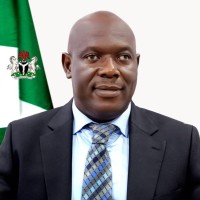
The Hydrocarbon Pollution Remediation Project (HYPREP) has commemorated the 15th anniversary of the release of the United Nations Environment Programme (UNEP) Environmental Assessment Report on Ogoniland, reaffirming its commitment to restoring the environment and improving the livelihoods of affected communities.
In a statement signed by the Project Coordinator, Prof Nenibarini Zabbey, to commemorate the anniversary, HYPREP described the anniversary as a significant milestone in Nigeria’s environmental restoration efforts, noting that the project has made remarkable progress in implementing the recommendations of the landmark UNEP report released on August 4, 2011.
The UNEP report had revealed extensive oil pollution across Ogoniland, severe environmental degradation, and serious public health risks resulting from decades of petroleum operations. It also recommended an initial $1 billion fund to commence the cleanup of the affected communities.
According to HYPREP, the Federal Government formally launched the Ogoni clean-up in 2016, while the Project Coordination Office was established in 2017 to drive the implementation of UNEP’s recommendations.
Zabbey said the current administration has continued to prioritise the project under the Renewed Hope Agenda.
Providing an update on the cleanup, the Project Coordinator disclosed that 30 of the 65 contaminated sites identified by UNEP have been fully remediated, while work is ongoing at several medium- and high-risk locations. It also stated that more than 1.5 million mangrove seedlings have been planted as part of what it described as the world’s largest restoration of oil-degraded mangroves, with over 1,000 hectares of shoreline already rehabilitated.
Zabbey further revealed that 49 Ogoni communities have been connected to potable water schemes through multiple water projects and booster stations aimed at providing safe drinking water across the region.
In the health sector, he said the 100-bed Ogoni Specialist Hospital in Kpite and the 43-bed Cottage Hospital in Buan are nearing completion, adding that several existing health facilities have been upgraded with modern medical equipment, while five ambulances have been donated to improve emergency healthcare services. The Project Coordinator also disclosed that a three-year human health biomonitoring study is being conducted in collaboration with the World Health Organization’s International Agency for Research on Cancer (IARC).
On economic empowerment, Zabbey stated that the Project has created more than 8,000 direct jobs and trained thousands of Ogoni youths and women in various vocational and technical skills, including software development, cybersecurity, aviation, commercial diving, seafaring, mechatronics, and creative arts. The project also reported awarding scholarships to more than 1,000 students, providing grants to small businesses, and supporting persons living with special needs through skills acquisition programmes.
The statement further highlighted ongoing legacy projects, including the Ogoni Power Project and the Centre of Excellence for Environmental Restoration, which it said is about 96 per cent complete. HYPREP also welcomed the recent designation of the Ogoni Wetland as a Ramsar Site of International Importance and pledged to continue promoting biodiversity conservation and sustainable management of the ecosystem.
Marking the anniversary, Zabbey said the progress achieved over the past 15 years demonstrates the collective commitment of government, development partners, stakeholders, and local communities to restoring Ogoniland. He called for renewed collaboration to sustain the cleanup effort, promote environmental sustainability, and support the long-term development of the region. 3
-

 News2 days ago
RSG Targets Nine Million Residents in Mosquito Net Distribution Campaign
-

 Oil & Energy2 days ago
Aiyedatiwa Signs New Electricity Bill
-

 Maritime2 days ago
Marine Minister Commends President Tinubu On NPERA Bill Assent
-

 Oil & Energy2 days ago
NLNG Commissions Research And Innovation Centre In RSU
-

 News2 days ago
KenPoly Holds Eight Convocations, August 29
-

 News2 days ago
RSG Begins Another Phase of Projects Commissioning Today
-

 News2 days ago
RMAFC Completes Revenue Sharing Review, Proposes New Pay
-

 Maritime2 days ago
NAGAFF Petitions IGP Over Alleged Maritime Police Harassment