
Nation
The State

Kano
Kano State Government has urged the State board of Internal Revenue to find ways of generating more funds to augment its receipts from the Federal Government.
The State Commissioner for projects, monitoring and evolution, Alhaji Ibrahim Garba said at a meeting with officials of the board that the effort became necessary in the light of short falls in funds that the state received from the federation account.
Speaking through a statement from the office of the Project Monitoring and Evaluation Directorate in Kano the commissioner urged the board to support the government to successfully execute its programme.
Sokoto
Sokoto state government has sacked Alhaji Isa Bajini the ‘Galadima Garri who is a senior councilor in the sultanate councilor Bajini was also relieved of his membership of the state council of chiefs.
This information was contained in a statement signed by Malam Sani Umar the Media Assistant to Governor Aliyo Wamakko.
The statement said the state government and the sultanate council were only responding to the yearnings and aspiration of the people.
Taraba
Shelter Development Nigeria Limited has called on Taraba State Government to ensure adequate maintenance of the Jolly Nyame International Sprots Complex in Jalingo.
The call was made by a representative of the company’s managing director, Engr. Mohammed Tahir, at the finale handing over of the sports complex to the state Government by the company.
According to him, the complex has modern sporting facilities, and can seat 16,000 people. He said with the finale completion and handing over, of the project to the state government, Taraba can now serve as a hosting centre to any international sports event in the country.
Zamfara State
The Zamfara State Zakkat Endowment board has set aside N91 million for the construction of 28 schools to facilitate educational development among less privileged communities in the state.
The Executive Secretary of the board, Alhaji Atiku Sani Maradun, said on Thursday in Bungudu during presentation of cash donations to some less privileged that five out of the 28 schools have been completed at a cost of N16.2 million.
He gave the benefitting communities, as Madidi in Bungudu, Yargadaje in Zurmi, Jangeru in Shinkafi, Abarma in Gusau and Mabangala in Talata Mafara Local Government councils of the state.
He said the second phase of the project would cover Tsafe, Kauran Namoda, Maru Maradun and Anka Local Governments and is expected to be completed with in the next six months.
He said that the project was conceived out of the desire to encourage indigent communities to learn both Islamic and western education through the conventional school system.
The schools he said would be handed over to the communities under the supervision of the Ministry for Religious Affairs after completion, for proper co-ordination and guidance.
He also said that the board has contributed N15m to orphans and physically challenged persons under its small scale business support scheme across the state.
Speaking at the occasion, Governor Mahmuda Shinlkafi commended the board for its commitment to the welfare of their professional responsibility to the society.
While speaking at the occasion, senior environmental officer with KEPA, Mrs Maureen Oyedoja, expressed satisfaction and commended the ACPN members for willingly destroying the expired drugs.
Ogun
Pro Chancellor of the Olabisi Onobanjo University (DOU), Ago Iwoye Ogun State otunba Alex Onabanjo has attributed the rot in the university system to the lack of managerial exposure and training of successive vice chancellors.
Speaking as the guest lecturer in the maiden public lecture of the correspondents chapel of the Nigerian Union of Journalists (NUJ) in Ibadan, Onabonjo decried the politicisation and ethnicisation in the appointments of vice chancellors and the constitution of governing councils of the nation universities stating that merit and vision have been sacrificed.
In the lecture entitled “Taking the public universities to the next level, the managerial challenged, Onabonjo said that politicisation of the appointments have robbed many universities of purposeful leadership.
He advised both the federal and state governments to always look for individuals who are successful in the business world to complement whatever theoretical knowledge academic and non academic members possess.
According to him, the primordial considerations has led to the emergence of universities leadership that lacked managerial abilities, purpose and vision complement the ideal of the founding fathers of tertiary education in the country.
Kaduna
Association of Community Pharmacists of Nigeria (ACPN) in partnership with the National Agency for Food, Drug Administration and Control (NAFDAC) and the Kaduna State Environmental Protection Authority (KEPA) have destroyed expired drugs and related products worth N2.9 million.
Speaking shortly after the destruction the chairman of ACPN, Kaduna State chapter, Mr Alphonsus Okoye said that the products destroyed included anti-cancer drugs, anti-biotics, anti-malaria, cough preparations and analgesics, among others.
He further explained that the expired drugs and related products were submitted to the association by its members to be destroyed based on the demands of pharmacy ethics.
According to him “this is an annual exercise aimed at safeguarding the health of the public by preventing them from accessing expired drug products.”
Okoye appealed to the government at all levels of always patronize registered pharmacies for their drugs so as to avoid buying expired ones and also called on the management of the National Health Insurance Scheme (NHIS) to ensure that Nigerians access drugs only from NHIS accredited pharmacies.
He also advised pharmacist to continue to submit expired drugs to the association for destruction as part of their professional responsibility to the society.
While speaking at the occasion, senior Environmental officer with KEPA, Mrs Maureen Oyedoja, expressed satisfaction and commended the ACPN members for willingly destroying the expired drugs.
Lagos
Worried by the menance of land speculators (Omonile), the Lagos State House of Assembly has urged the State Security Service (SSS) to assist the government in arresting the trend, especially around Ikorodu.
Speaking at the weekend when he and other members of the House Committee on Information, Strategy and Security, visited the Director of SSS, Alhaji Mohammed Abubakar, the committee chair, Hon. Ipoola Omisore, said the activities of the land speculators could throw the state into chaos.
“We need to look at the Ikorodu axis on the Omonile issue; it is very explosive and capable of causing crisis in the state,” Omisore said.
He spoke on the need for state police to enhance security.
Replying, Abubakar said the service recognised the importance of legislature and was prepared to enhance security.
“We share information with various states and federal agencies to aid the security situation not only in Lagos but throughtout the country,” Abubakar said.
On land speculators, the Director said it was within the purview of the outfit and “and we have been doing a lot about that and we are sure that by God’s grace we shall surmount”.
Abubakar praised the state government for its support for the security agencies, adding “we will continue to do our best to improve the situation.
Oyo
Oyo State Commissioner for establishment and poverty Alleviation, Jeleel Agboola has stressed the need for skill acquisition among women, describing it as a veritable tool for driving away hunger and creating sustainable employment among the womenfolk.
Agboola who said this at a poverty reduction workshop also urged for attitudinal change among the womenfolk, if the effort of the government to reduce poverty must have the desired effect.
The commissioner also urged the womenfolk and the youths to embrace acquisition and thus become self reliant, stressing that the focus on women was deliberate due to their sensitive nature and home support.
“Women constitute a large percentage of the population of this state and playing significant economic roles in the family as opposed to the past when they are limited to just taking care of children.”
In her goodwill message, of the event, the wife of the Oyo State Governor Mrs Oluwakami Alao-Alala lamented the second class role being conferred on the women by political office holders in the country, insisting that they constitute an important stake in the democratic project of the country.
“Clearly, empowering women through capacity building is on essential step to confronting the challenges of poverty and hunger” she said.
Abuja
The South South parliamentary caucus in the House of Representatives, has urged the federal Government not be in a haste to withdraw the Joint Military Taskforce ( JTF) deploy to the Niger Delta until it has been fully ascertained that there were no armed groups anymore in the region.
Secretary to the caucus Hon. Daniel Reyenieja said there should be a limit to the amount of pressure interest groups can bring upon government when it comes to issue of national security.
Reyenieju who spoke to newsmen in Abuja said that every Nigerian should applaud the amnesty programme and the success achieved so for, stressing that urging for the immediate withdrawal of the military from the region w’re doing so move out of the euphoria of the moment than out of the knowledge of the red security situation in the region.
“This is a national security issue and we cannot force the federal government to take certain decisions without considering their implications.
The decision to disown the militant groups was taken by the government in the best interest of the citizenry and as such when the peace has been achieved, to a relative height, government knows what to do.
He also said that the Niger Delta is so vast and so polarized that there are certain parks of the region that would not want the military to move out yet, because of the peculiar security situation prevalent in such places over the years.



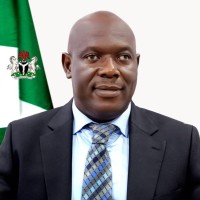
The Hydrocarbon Pollution Remediation Project (HYPREP) has commemorated the 15th anniversary of the release of the United Nations Environment Programme (UNEP) Environmental Assessment Report on Ogoniland, reaffirming its commitment to restoring the environment and improving the livelihoods of affected communities.
In a statement signed by the Project Coordinator, Prof Nenibarini Zabbey, to commemorate the anniversary, HYPREP described the anniversary as a significant milestone in Nigeria’s environmental restoration efforts, noting that the project has made remarkable progress in implementing the recommendations of the landmark UNEP report released on August 4, 2011.
The UNEP report had revealed extensive oil pollution across Ogoniland, severe environmental degradation, and serious public health risks resulting from decades of petroleum operations. It also recommended an initial $1 billion fund to commence the cleanup of the affected communities.
According to HYPREP, the Federal Government formally launched the Ogoni clean-up in 2016, while the Project Coordination Office was established in 2017 to drive the implementation of UNEP’s recommendations.
Zabbey said the current administration has continued to prioritise the project under the Renewed Hope Agenda.
Providing an update on the cleanup, the Project Coordinator disclosed that 30 of the 65 contaminated sites identified by UNEP have been fully remediated, while work is ongoing at several medium- and high-risk locations. It also stated that more than 1.5 million mangrove seedlings have been planted as part of what it described as the world’s largest restoration of oil-degraded mangroves, with over 1,000 hectares of shoreline already rehabilitated.
Zabbey further revealed that 49 Ogoni communities have been connected to potable water schemes through multiple water projects and booster stations aimed at providing safe drinking water across the region.
In the health sector, he said the 100-bed Ogoni Specialist Hospital in Kpite and the 43-bed Cottage Hospital in Buan are nearing completion, adding that several existing health facilities have been upgraded with modern medical equipment, while five ambulances have been donated to improve emergency healthcare services. The Project Coordinator also disclosed that a three-year human health biomonitoring study is being conducted in collaboration with the World Health Organization’s International Agency for Research on Cancer (IARC).
On economic empowerment, Zabbey stated that the Project has created more than 8,000 direct jobs and trained thousands of Ogoni youths and women in various vocational and technical skills, including software development, cybersecurity, aviation, commercial diving, seafaring, mechatronics, and creative arts. The project also reported awarding scholarships to more than 1,000 students, providing grants to small businesses, and supporting persons living with special needs through skills acquisition programmes.
The statement further highlighted ongoing legacy projects, including the Ogoni Power Project and the Centre of Excellence for Environmental Restoration, which it said is about 96 per cent complete. HYPREP also welcomed the recent designation of the Ogoni Wetland as a Ramsar Site of International Importance and pledged to continue promoting biodiversity conservation and sustainable management of the ecosystem.
Marking the anniversary, Zabbey said the progress achieved over the past 15 years demonstrates the collective commitment of government, development partners, stakeholders, and local communities to restoring Ogoniland. He called for renewed collaboration to sustain the cleanup effort, promote environmental sustainability, and support the long-term development of the region. 3
-

 News2 days ago
RSG Targets Nine Million Residents in Mosquito Net Distribution Campaign
-

 Oil & Energy1 day ago
Aiyedatiwa Signs New Electricity Bill
-

 Maritime1 day ago
Marine Minister Commends President Tinubu On NPERA Bill Assent
-

 Oil & Energy1 day ago
NLNG Commissions Research And Innovation Centre In RSU
-

 News2 days ago
KenPoly Holds Eight Convocations, August 29
-

 News2 days ago
RSG Begins Another Phase of Projects Commissioning Today
-

 News2 days ago
RMAFC Completes Revenue Sharing Review, Proposes New Pay
-

 Maritime1 day ago
NAGAFF Petitions IGP Over Alleged Maritime Police Harassment