Connect with us

Business

Minister Allays Fear Of Workers’ Sack … Hints On Merger Of Agencies

Published

on

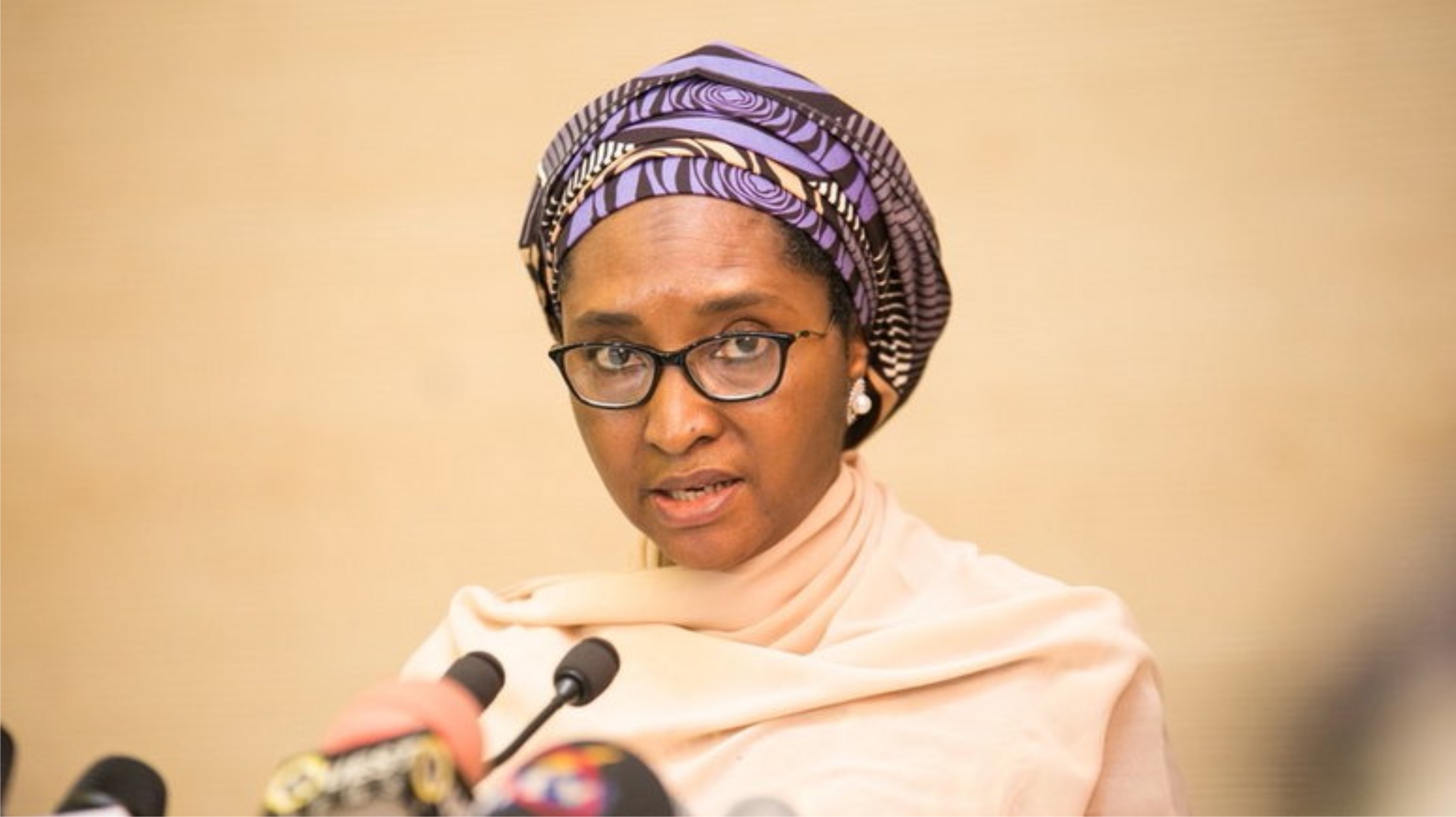
The Minister of Finance, Budget and National Planning, Zainab Ahmed, has stated that the Federal Government has no plan to lay off its workers.
Ahmed, who disclosed this on a monitored television programme aired by the NTA, also hinted on the proposed merger of some agencies.
She denied claims and rumours that the Federal Government  was planning on sacking workers, in order to save funds.
The Minister also said President Muhammadu Buhari had said repeatedly that no worker would be sacked, but added that government would encourage people to leave government jobs by giving them incentives.
According to her, government would reduce overheads by ensuring that government agencies are merged.
“Mr President doesn’t want to disengage staff. That is what he has directed from the beginning of his administration. He also directed that we pay salaries. The Federal Government has never failed in paying salaries and he said we must always pay pensions.
“So, he has been consistent in those directives and we have followed those directives to the letter”, she explained.
On how the government would cut personnel costs, Ahmed said,  some agencies will be merged and it will cut down operational costs at the end of the exercise.
“We will be able to come up with some incentives and packages to retrain people and redeploy them in some areas where they are useful. For example, we still have a very high need for teachers so we can retrain people and send them to teach, but also with incentive packages to exit. Again, that is also money. If you want people to exit you have to pay them.
“That is an incentive package so that they can go. That is why it is taking a lot of time because it is not easy to decide on this. Everything centres on resources. We need resources and if we had a lot of money, we would just give very beautiful incentive packages and people would exit and go and start their businesses and we would reduce the size of the personnel cost”, she posited.

By: Chinedu Wosu

Continue Reading

Business

Private sector gets N2.2tr credit in 30 days — CBN

Published

on

Private sector secured loans worth N2.22 trillion in 30 days ended June 30, the Central Bank of Nigeria (CBN) economic data for the month has shown.

Credit to Nigeria’s private sector rose to N83.26 trillion in June 2026 from N81.04 trillion in May, signifying a positive balance of N2.22 trillion month-on-month.

Year-on-year, the figure represents a nine per cent increase compared with the N76.13 trillion recorded in June 2025. The latest figures come as the CBN continues to balance efforts to control inflation with the need to support economic growth and expand credit to businesses.

The CBN data shows that credit to Nigeria’s private sector increased by approximately 2.74 per cent month-on-month between May and June 2026. Also, the CBN data noted that credit to the government fell slightly to N40.03 trillion from N40.38 trillion. Other assets, net, dropped to N10.76 trillion from N12.63 trillion.

The credit surge signifies sustained growth in lending to businesses and other private-sector borrowers during the month. The rise in private sector credit was recorded alongside an increase in net domestic credit, despite declines in credit to government and other assets.

Further analysis of the report says that compared with June 2025, private sector credit rose by about N7.13 trillion yea-on-year but net domestic credit increased by approximately N1.87 trillion during the month.

The CBN’s relatively tight monetary policy stance notwithstanding, more banks still loaded funds to the private sector within the period.  The Monetary Policy Committee (MPC) of the Central Bank of Nigeria (CBN) held its 306th meeting on July 20 and 21.

The Committee reviewed recent developments in the global and domestic economies, assessed emerging risks to the outlook and considered their implications for monetary policy and retained all rates.

The Committee decided to retain the Monetary Policy Rate at 26.5 per cent; the Standing Facilities Corridor around the MPR at +50/-450 basis points and retain the Cash Reserve Requirement (CRR) for Deposit Money Banks at 45.00 per cent, Merchant Banks at 16.00 per cent, and non-TSA public sector deposits at 75.00 per cent.

The MPC decision means that credit extension in the private sector will likely continue to rise because of rising confidence in the sector and calls by stakeholders for banks to invest in the private scetor instead of government securities.

Continue Reading

Business

Solar Power: Host Communities Trust, Partner PIND  To Light Up Ikwerre Communities

Published

on

The Rivers 3 Host Communities Development Trust (RV3HCDT), in collaboration with the Partnership Initiatives in the Niger Delta (PIND), has launched stakeholder engagements across six host communities in Ikwerre Local Government Area as part of efforts to provide sustainable solar-powered electricity to communities that have remained without public power supply for over a decade.
The Chairman of the Board of Trustees of RV3HCDT, Dr. Kerian Wobodo, disclosed this during a two-day sensitisation and consultation tour of Ipo, Omademe, , Ozuaha, Ubima and Omerelu communities in Ikwerre Local Government Area over the week.
 Wobodo led members of the Trust and representatives of PIND to engage traditional rulers and other stakeholders on the proposed project.
Addressing the gatherings, he  said the engagements were designed to familiarise the host communities with the objectives of the project and win their understanding, cooperation and ownership before implementation.
The leader of the delegation, also stressed that  Trust considered it imperative to carry the people along from the planning stage to ensure transparency, inclusiveness and sustainability, noting that meaningful development can only be achieved through active collaboration with host communities.
Officials of PIND, while making their presentations, outlined the operational framework of the proposed solar-powered electricity scheme, describing it as a clean, reliable and environmentally friendly energy solution capable of transforming socio-economic activities in the benefiting communities.
According to the PIND representatives, the project will expand electricity access to homes, schools, healthcare facilities, markets and small businesses, boosting economic activities, improving livelihoods and accelerating overall community development.
They observed that the six communities have endured years of inadequate electricity supply, a situation they said has slowed economic growth, hampered educational advancement and limited access to essential social services.
The meetings featured interactive sessions during which community members sought clarifications on project implementation, maintenance, sustainability, community participation and the protection of the proposed facilities.
Members of the delegation addressed the concerns and assured stakeholders that all issues raised would receive adequate attention.
Youth representatives underscored the need to involve young people throughout the implementation process, calling for employment opportunities for qualified youths, skills acquisition programmes, ICT training, entrepreneurship development, capacity building and other empowerment  to complement the electrification project.
Responding, the delegation, leader reaffirmed that local content participation, youth inclusion, peacebuilding, security collaboration and human capacity development would remain integral components of the initiative, adding that the project is designed to deliver long-term socio-economic benefits to the host communities.
The consultation tour ended at Omerelu Community, where the Paramount Ruler, His Royal Highness Eze (Engr.) Ben O. Ugo, Elumuoha VIII, alongside members of the Council of Chiefs, elders, Ohas, youth and women representatives, commended the Rivers 3 Host Communities Development Trust and PIND for the initiative.
They described the proposed solar-powered electrification project as timely and transformative and pledged their communities’ full commitment and support towards its successful implementation.
By:  King Onunwor
Continue Reading

Business

NDDC Intensifies Women Empowerment Initiative Across Niger Delta

Published

on

The Niger Delta Development Commission (NDDC) has reaffirmed its commitment to empowering women and the girl-child across the Niger Delta through expanded entrepreneurship, skills acquisition and sustainable livelihood programmes aimed at boosting economic independence and regional development.
The Managing Director of the Commission, Dr Samuel Ogbuku, made this known during the 2026 International Women’s Day celebration held in Calabar, Cross River State, recently.
Represented by the Assistant Director, Youths, Sports, Culture and Women Affairs, Dr Esther Philip Ogbuku said the Commission had continued to implement impactful programmes that equip women with practical skills, promote entrepreneurship and improve their socio-economic well-being.
He assured that the NDDC would sustain initiatives that encourage wealth creation, self-reliance and community development.
He said the Commission’s interventions are in line with its statutory mandate and the Renewed Hope Agenda of President Bola Ahmed Tinubu, expressing confidence that the training would provide participants with the knowledge and skills needed to establish sustainable businesses and improve their productivity.
Also speaking, the Cross River State Representative on the NDDC Board, Mr Orok Duke, said women and the girl-child possess enormous potential to excel in all fields of human endeavour, stressing that they remain vital partners in the socio-economic transformation of the Niger Delta.
Represented by his Special Assistant on Administration, Mr Bassey-Ita Duke, he reaffirmed the Commission’s commitment to promoting gender equality and creating opportunities that would enable women to attain their full potentials.
According to him, the Board, under the chairmanship of Mr Chiedu Ebie, and the management led by Dr Ogbuku, recognise agriculture as a key driver of economic growth, food security and sustainable livelihoods, adding that the Commission has continued to invest in animal husbandry, fisheries and crop production to improve household incomes across the region.
In a keynote lecture entitled, “Best Practices for Packaging Certified Products for Export,” a resource person from the Nigerian Export Promotion Council (NEPC), Mrs Christiana Ekeng, urged entrepreneurs to ensure that all non-oil products intended for export obtain the required certification before shipment.
Ekeng explained that certification enhances product credibility, facilitates access to international markets and ensures compliance with global export standards, while proper packaging helps preserve product quality throughout the distribution chain.
She identified the three stages of packaging as primary, secondary and tertiary, explaining that products must be properly packaged and arranged in cartons to minimise damage and meet export .
requirements
The Consultant to the Ukpai Empowerment Foundation, Dr Boma Nathan, commended the NDDC for sustaining programmes that promote women’s economic empowerment, describing the Commission’s intervention as a significant boost to inclusive development in the Niger Delta.
Nathan urged beneficiaries to take advantage of the opportunities provided by the Commission, noting that empowering women enables them to discover their potential, pursue their aspirations, improve their livelihoods and contribute meaningfully to the economic growth and development of their communities.
By: King Onunwor
Continue Reading

Trending