
Featured
Anambra Poll: 17 Guber Candidates Sign Peace Pact …INEC Vows To Prosecute Electoral Offenders, Vote Buyers …

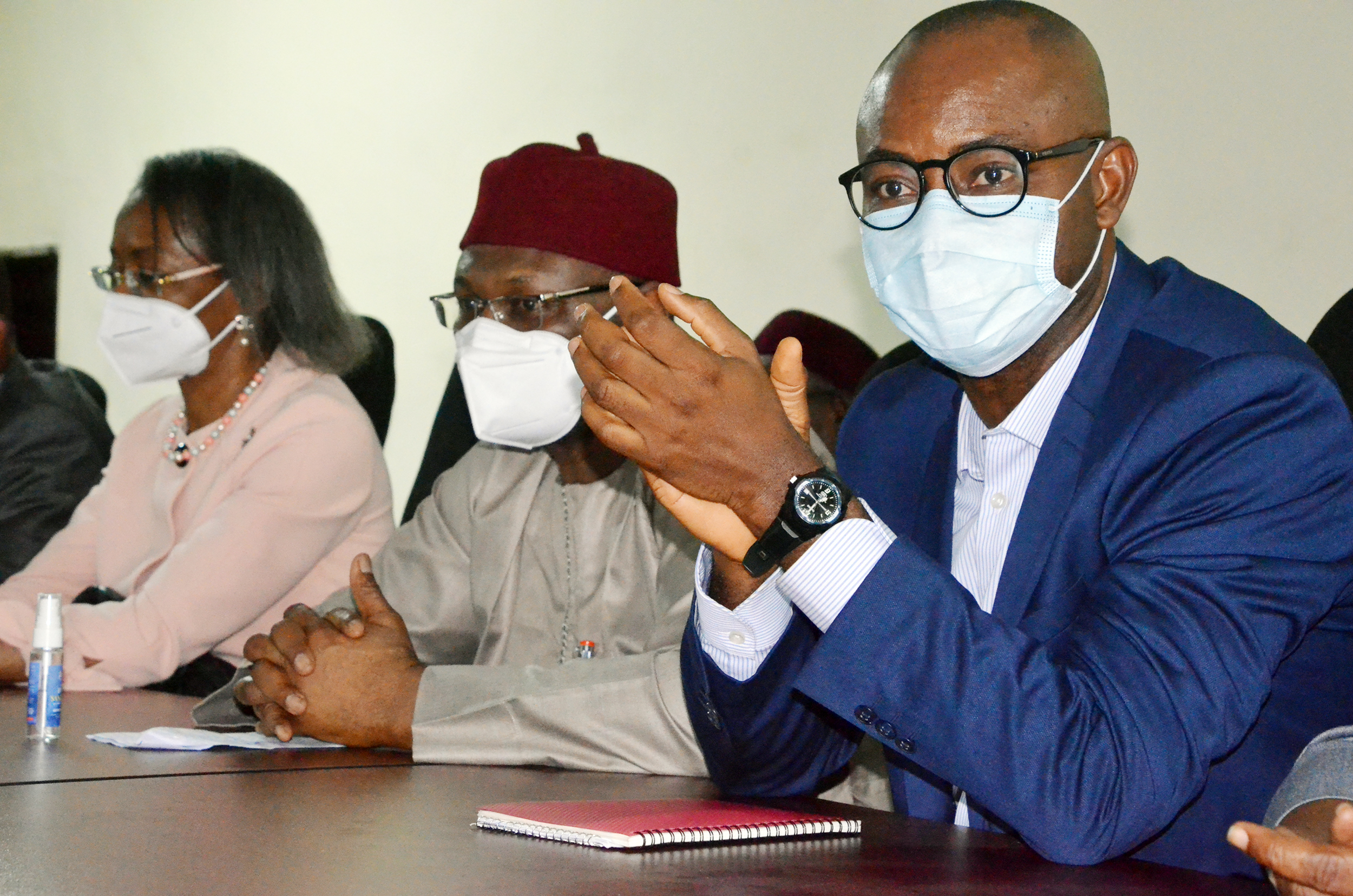
Candidates for Saturday’s Anambra State governorship election, yesterday, signed a peace accord in Awka, the state capital, just as INEC has warned the people of Anambra State that it would prosecute any electoral offender including its staff in this weekend’s governorship election.
This is as the Inspector General of Police; Usman Alkali Baba has ordered the restriction of vehicular movement in and out of Anambra from 11:59pm on Friday, November 5, 2021 to 11:59pm on Saturday, November 6, 2021 as part of measures aimed at protecting the sanctity of the electoral process in the November 6, 2021.
Also, following the genuine intervention of elders, esteemed traditional rulers and religious leaders, and after due consideration of the positive impacts of their engagement, the leadership of IPOB has immediately called off the one-week sit-at-home earlier declared to commence today to November 10, 2021.
The Chairman of the Independent National Electoral Commission (INEC), Prof. Mahmood Yakubu, was present at the ceremony, which was facilitated by the National Peace Committee.
Also present at the ceremony were the National Peace Committee Chairmanship, former Head of State, Gen. Abdulsalami Abubakar (rtd); and the Bishop of Sokoto Catholic Diocese, Dr Mathew Kukah.
In his speech, Yakubu, warned the people of Anambra State that INEC would prosecute any electoral offender including its staff in this weekend’s governorship election.
The chairman reiterated the determination of the commission to deploy technology for the poll, assuring that the electoral body was mentally, physically, logistically ready for the poll.
He reminded the electorate that vote buyers would also face the full wrath of the law, urging the electorate to be rest assured that their votes will count in the free, fair and credible election.
Mahmood equally reiterated that the ban on the use of smart phone or other photographic devices in the voting cubicles is still in force.
Reading the riot act to the electorate, candidates and official, he said: “I want to assure all voters in Anambra State that in designing the sensitive materials for the election, the commission has introduced additional visible and invisible security features, including different colour codes.”
Speaking earlier, National Commissioner and Chairman, Information and Voter Education Committee, Barrister Festus Okoye, said that it would be in the interest of democracy, people of Anambra State and Nigeria to conduct an acceptable election in Anambra State.
He argued that having conducted the Edo and Ondo governorship elections under very difficult circumstances occasioned by the COVID-19 pandemic, the commission will conduct the Anambra poll despite the security challenges.
Also speaking, the Bishop of Sokoto Catholic Diocese, Mathew Kukah urged the good people of Anambra to remember ‘Cain and Abel’ in the holy bible and avoid bloodshed during Saturday’s governorship election.
Kukah disclosed this while speaking in Awka during the ceremony of the signing of the peace accord by candidates for Saturday’s Anambra governorship election.
He said, “First of all, I want to thank the Chairman of INEC, Prof. Mahmood Yakubu. His tenacity and commitment has made the credibility of the institution he represents quite easy for many of us. Let me use the word: follow him and support him.
“I want to thank the staff of INEC for their dedication, commitment. I am mighty convinced that in a few years, we will turn the corner. Let us remain in this part and to the good people of Anambra.
“I stand here as a catholic priest. This environment is predominantly catholic, Anglican and predominantly Christian. We have a duty, we have a responsibility to access the fact that blood, bloodshed has no biblical justification that is the story of Cain and Abel, and I just hope and pray that the young people of Anambra and the people of Anambra, in general, will do what needs to be done.
“The DIG has already told you the level of their preparedness. Let it be that for this election, police are not a threat to the facilitators. May God bring peace to Anambra and we plead and plead that nobody would lose his life in the course of just going out to do what is taken for granted in other parts of the world. Please, if you don’t want to vote, it is not by force, you can stay at home.”
However, as part of measures aimed at protecting the sanctity of the electoral process in the November 6, 2021, Anambra State Gubernatorial Elections, the Inspector General of Police, Usman Alkali Baba has ordered the restriction of vehicular movement in and out of Anambra State.
That will be from 11:59 PM on Friday, November 5, 2021 to 11:59 PM on Saturday, November 6, 2021.
The IGP noted that the restriction order became necessary following pointers from the Election Security Threats Assessments conducted by the Force.
It revealed a high likelihood of infiltration by criminally-minded individuals to Anambra State, before, during and after the polls.
The IGP further noted that the measure would also avail security forces a firm grip of the state to checkmate the movement of political thugs and touts.
It would also prevent the free flow, circulation and use of illicit arms and hard drugs throughout the period and beyond.
The IGP enjoined INEC officials, accredited observers and journalists, and other authorized officials to go about their lawful duties as it relates to the elections, provided they observe all relevant rules guiding their deployment, including the visible display of their accreditation tags.
He acknowledged that police officers and other security personnel deployed for the election would be appropriately supervised.
This is to ensure that they carry out their responsibilities in the most humane, firm and professional manner, especially to emergency service providers such as fire-fighters and ambulance services.
The IGP enjoined citizens particularly motorists and travellers who may want to use the routes within Anambra State during the period of the restrictions to seek alternatives and see the inconveniences as part of sacrifices toward the collective sustenance of our democracy.
He called on citizens in the state to go out en-masse on Election Day and exercise their franchise without any fear or apprehension as the force and other security agencies are already on the ground to ensure a safe and conducive environment for the elections.
Meanwhile, the United States looks forward to a gubernatorial election in Anambra State on November 6 that is peaceful and transparent, with results that accurately reflect the will of the state’s residents.
We will be paying close attention to actions of individuals who interfere with the democratic process or instigate violence against civilian populations before, during, or after the elections.
We will not hesitate to consider consequences – including visa restrictions – for those found to be responsible for election-related violence or undermining the democratic process.
Under U.S. immigration law, certain violations also may lead to restrictions on family members.
We call on citizens, electoral officials, party members, and security force personnel to do their part in ensuring a credible and secure electoral process.
Earlier, Anambra and other South-East states have witnessed several ‘gunmen’ attacks recently, casting doubts on the safety of the elections.
The proscribed Indigenous People of Biafra (IPOB) had also threatened the sanctity of the Anambra election, if its leader, Nnamdi Kanu, was not released from the detention of the Department of State Services (DSS).
It would be recalled that the IPOB in the South-East had declared a seven-day sit-at-home protest in the South-East starting from November 5, if Kanu was not released.
The sit-at-home was expected to start on the eve of the Anambra State governorship election.
However, the Federal Government has beefed up security in the state, promising a free and fair election.
On Tuesday, the Senate Minority Leader, Enyinnaya Abaribe, urged voters to show up at the polls, insisting that the elections will be safe.
Also, the Inspector-General of Police, Usman Baba, has since assured of the commitment of the Nigeria Police Force (NPF), to securing electoral processes, protection of personnel, critical national infrastructure, and materials of INEC ahead of the November 6, 2021, governorship election in Anambra State.
Meanwhile, IPOB has cancelled its one-week sit-at-home order initially planned to take effect from today in Anambra.
IPOB announced the cancellation in a statement signed by its Media and Publicity Secretary, Comrade Emma Powerful, yesterday.
The statement reads: “Following the genuine intervention of our elders, esteemed traditional institutions/rulers and religious leaders, and after due consideration of the positive impacts of their engagement, and sequel to the fact that our elders have spoken in our terms, the leadership of IPOB ably lead by Mazi Nnamdi Kanu hereby and immediately calls off the one-week sit-at-home earlier declared to commence today, November 5 to November 10, 2021.
“We have equally considered several appeals by our mothers who earn their living based on their daily economic activities which will obviously be affected if Biafra land is locked down for one whole week. It’s never our intention to add to the pains of our people, hence our decision to suspend the sit-at-home.
“IPOB leadership is only interested in our referendum and peaceful agitation for self-determination, and cannot by under any guise be seen to be interfering with any electoral process.
“The people of Anambra State should go out enmasse and peacefully exercise their franchise come November 6, 20121, and accordingly, chose a leader of their choice and should not be intimidated by anybody, group of persons or security agents.
“Credible intelligence available to us confirmed that the Nigeria DSS has concluded arrangement to deploy a branch of their trained terrorist group to Anambra State come 6th Day 2021, to unleash mayhem on our people and attribute the killing to peaceful IPOB members.
“Anambrarians should vote and standby to protect their votes. No rigging of any kind will be tolerated on the Anambra State governorship election. It must be transparent, free and fair to all.
“We wish to thank Biafrans, IPOB members worldwide, friends of Biafra and lovers of freedom for their continued support for our dogged struggle for independence.
“May we, therefore, warn detractors, traitors and enemies of Biafra not to cause confusion by imputing motives to our decision. IPOB doesn’t expect anybody to observe, monitor or enforce the suspended order otherwise such action will be considered a rebellion to the highest leadership of our global movement.
“On the other hand, our oppressors should not take our decision as an act of cowardice. IPOB still believes that our elders, religious leaders, political leaders and various stakeholders will live up to their promises in their engagements and efforts towards securing the unconditional release of our leader.
“We, therefore, urge all Biafrans and residents of Biafra to go about their lawful businesses without fear of any molestations. All agents of darkness recruited by our enemies to inflict pains on our people under the guise of enforcing the sit-at-home are hereby warned to steer clear or brace up for the consequences of their evil action.
“IPOB will not relent in our pursuit for Biafra freedom. Nigeria government must give us date for Biafra referendum to decide where we want to belong”.















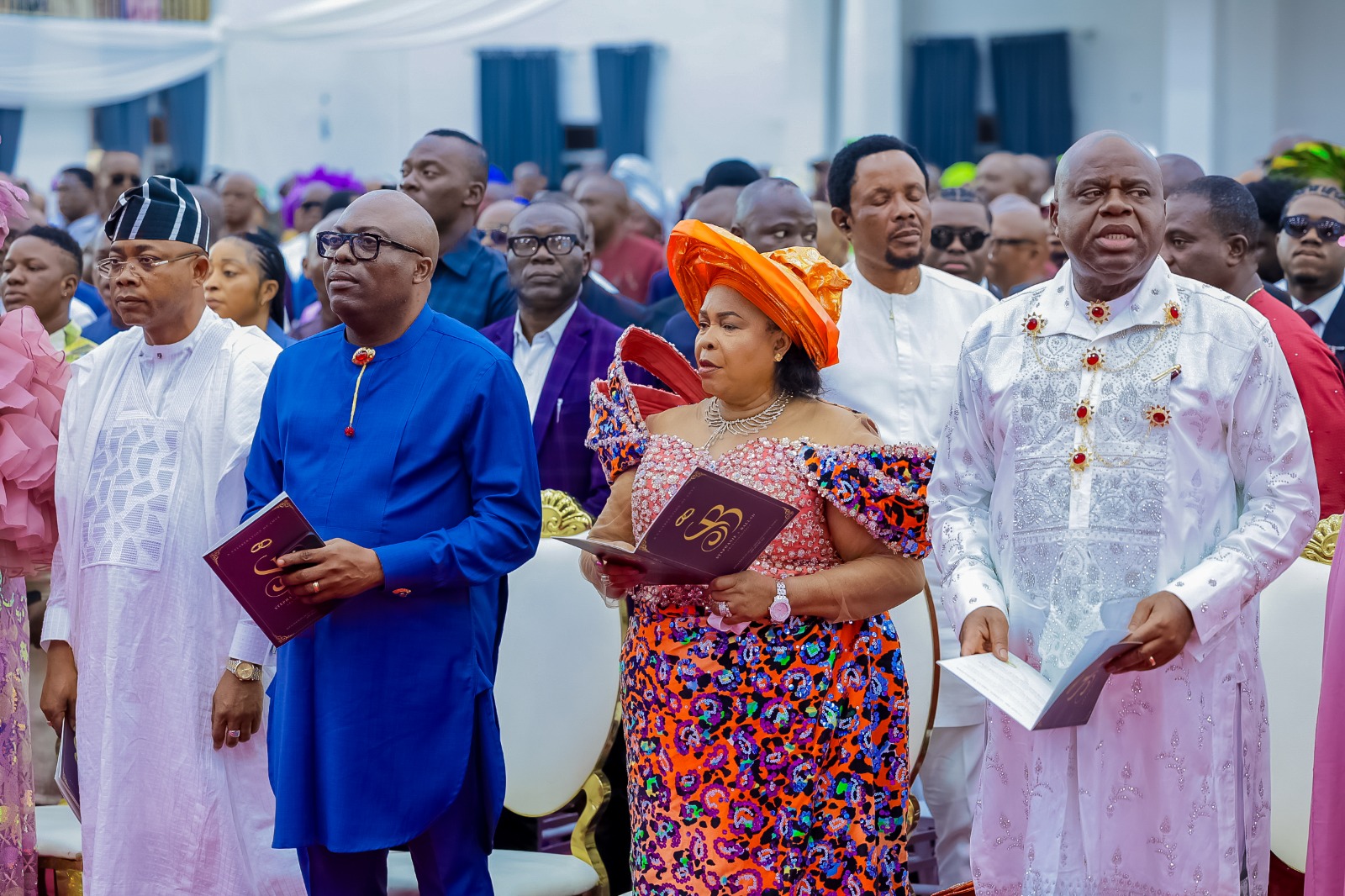
Fubara gave the assurance last Friday at the NYSC permanent orientation camp, Nonwa-Gbam, Tai Local Government Area in the State, during the swearing-in ceremony of 2026 Batch B Stream II orientation course.
Represented by the Permanent Secretary, Cabinet Bureau, Office of the Secretary to the State Government, Dr. Promise Oguzie, the governor said the State Government would remain intentional in providing the necessary support to improve the NYSC scheme and enhance the experiences of corps members deployed to the state.
He charged the corps members to be role models and quality nation-builders in their service to the good people of Rivers State in particular, and Nigeria at large.
“I charge you to be exemplary, dedicated and committed in all you do. Take full advantage of all the camp programmes and activities to enrich yourselves”, he said.
In his welcome address, the State Coordinator of NYSC in Rivers State, Mr. Moses Oleghe, urged corps members to see their deployment to Rivers State as a “veritable opportunity to make meaningful contribution to the growth of the State in particular and Nigeria at large.”
He further charged them to serve with all sense of “integrity, discipline, and the fear of God, especially when they will be engaged as INEC ad-hoc staff that will conduct the 2027 general elections.”
A total of 3,584 corps members composed of 1,421 males and 2,163 females were sworn in by the Chief Judge of Rivers State, who was represented by Justice Godspower Aguma.

The Governor stated this yesterday when he received in audience, the World President of the Seventh Day Adventist Church, Pastor Erton Kohler; his wife, Andriene Marques Kohler; daughter Mariana Marques Kohler and a retinue of ministers of the church at Government House, Port Harcourt.
Fubara who hailed the Seventh Day Adventist Church for its contributions to education and the grooming of future leaders in Nigeria, expressed delight that the Church had over the years, been investing in education at various levels and currently runs two universities in the country.
He commended the church for not only using its institutions to spread the gospel of Christianity but to groom future leaders for the country.
According to him, religion should not be just about defending one’s faith, but also making meaningful impact on the lives of the people.
He said that by floating these educational institutions, the church has demonstrated capacity to support Nigeria in the task of producing not only educated people but a breed of God-fearing leaders.
“Our country is where it is today because we lack the fear of God. If you have the fear of God, there should be a limit to what you can do because you understand the supremacy of God. But when God is not in your equation, you’ll go beyond the line and that is what has brought us to where we are today.
“So, I feel very happy that you are contributing to the development of our future leaders in this country. We need the right people being in the right place; prepared properly with good minds; that is what we need, not just in Nigeria but round the whole world.,” he said.
Governor Fubara further observed that the absence of God-fearing people in high places to take the right decisions that could impact positively on the society, has also given rise to other problems such as social inequality, poverty, corruption and criminality. According to him, Nigeria needs a system where the average parent could afford quality education for their children and a guarantee that upon graduation, the average child will have the capacity to compete favourably with anybody, anywhere in the world.
“If we have a situation where the little money that you’re being paid as wage can also afford you quality healthcare and after working at least for 15-20 years, you have a roof over your head, tell me why you should be involved in any kind of crime? At that point, you’ll feel secured and this attitude of insecurity about the future that leads to all the social vices we have today won’t be there,” he said.
Governor Fubara expressed appreciation to the delegation for the visit and for their prayers for Rivers State, assuring them of his continued support for their programmes in the state.
Leader of the delegation and World President of the Seventh Day Adventist Church, Pastor Erton Kohler said he was in Nigeria for a special conference of the church during which thousands of the church’s ministers will be undergoing an empowerment programme to further equip them for the task of herding their flocks and serving the society.
He expressed gratitude to the Governor for the warm reception accorded his entourage, saying the memory of the visit will linger in his mind for a lifetime.
Kohler disclosed that the Church has over twenty -four million (24,000,000) members and more than 182,000 places of worship, spread across 212 countries of the world.

This reaffirms the lawmakers’ commitment to enacting laws and taking legislative actions geared towards the overall development of the State.
The Assembly gave the approval during its Second Legislative Sitting of the Fourth Session held last Friday.
Speaking on the MTEF document during plenary, the House Speaker, Rt. Hon. Martin Amaewhule, noted that by the provision of Section 10(1)(b) of the Rivers State Fiscal Responsibility Law No. 8 of 2010, the MTEF ought to have been laid before the House in September 2025.
Amaewhule explained that traditionally, the document is expected to be presented four months before the commencement of the next financial year and immediately after the expiration of every three-year fiscal cycle.
He, however, stated that in the interest of the State and its people, the House considered it necessary to deliberate on the document, describing it as a precursor to the 2026 Budget Estimates.
The Speaker expressed concern that the year had already progressed significantly before the presentation of the framework.
During deliberations on the document, members examined the assumptions and projections contained in the MTEF and observed that strict adherence to the outlined fiscal parameters would ultimately serve the interest of Rivers people.
The lawmakers maintained that effective implementation of the framework would promote prudent financial management and enhance developmental planning across the State.
Following the debate and positive consideration by members, the Speaker put the question to the House and members voted overwhelmingly in support of the approval of the MTEF.
Meanwhile, during the same sitting last Friday, the House also received a petition from the Chairman of Obio/Akpor Local Government Council, Dr. Gift Worlu.
The petition was presented by the member representing Obio/Akpor Constituency II, Hon. Emilia Amadi.
According to the petition, concerns were raised over an imminent security breach, threats to lives, destruction of property and alleged forceful takeover of property by some lawless persons within parts of the Local Government Area.
Presenting the petition before the House, Hon. Amadi appealed to the lawmakers to revisit the matter and take necessary steps aimed at safeguarding lives and property in the affected communities.
The House is expected to further deliberate on the petition and consider measures to address the concerns raised in order to sustain peace and security in the area.
King Onunwor
-

 News2 days ago
RSG Targets Nine Million Residents in Mosquito Net Distribution Campaign
-

 Oil & Energy2 days ago
Aiyedatiwa Signs New Electricity Bill
-

 Maritime2 days ago
Marine Minister Commends President Tinubu On NPERA Bill Assent
-

 Oil & Energy2 days ago
NLNG Commissions Research And Innovation Centre In RSU
-

 News2 days ago
KenPoly Holds Eight Convocations, August 29
-

 News2 days ago
RSG Begins Another Phase of Projects Commissioning Today
-

 News2 days ago
RMAFC Completes Revenue Sharing Review, Proposes New Pay
-

 Maritime2 days ago
NAGAFF Petitions IGP Over Alleged Maritime Police Harassment