Connect with us

Oil & Energy

Oriental Energy Resources Announces New Managing Director

Published

on

Mustafa Indimi has been appointed the new Managing Director of Oriental Energy Resources Limited.
Mustafa takes over from Mr Ignatius Ifelayo, who served the company meritoriously for seven years.
Prior to the new appointment, Mustafa was the Executive Director (Technical) and a member of the company’s Board of Directors. He brings with him an in depth knowledge of the business and he is well positioned to drive the company forward.
A Master’s Degree Holder in Petroleum Production engineering from Robert Gordon University, Aberdeen, Mustafa has an impressive track record of leading teams to deliver outstanding performance and results.
On his new challenge, Mustafa commented: “It is an exceptional privilege to be appointed as Managing Director at a time that provides great opportunity to take the company to new heights. I am looking forward to working with the board, management and staff to strengthen and grow the company by building on the solid foundation to generate significant value for all stakeholders.”
“Underpinning everything is my commitment to the company’s vison to set the standards that all other E&P companies in the Nigerian oil and gas industry will be compared against.’’


Continue Reading

Oil & Energy

‘Gas Penetration, Energy Security’s Our Major Priority’

Published

on

The Nigeria Midstream and Downstream Petroleum Regulatory Authority (NMDPRA) has said that gas penetration, energy security and operational efficiency remain the major priorities of the authority.
The Authority Chief Executive, Rabiu Abdullahi Umar, stated this during his visit to the Nigerian Liquefied Natural Gas (NLNG) plant and Train 7 project site in Bonny, at the weekend.
He said that the priorities aligned with President Bola Tinubu’s agenda to deepen gas utilisation, improve access to natural gas and expand infrastructure across the country.
Umar pointed out that increased domestic gas supply and improved distribution would help reduce cooking gas prices and strengthen Nigeria’s energy security.
The chief executive said the authority was committed to ensuring the adequate availability of cooking gas and natural gas, particularly in underserved areas, through infrastructure development and increased supply.
He cited the ongoing Ajaokuta-Kaduna-Kano (AKK) gas pipeline project as part of efforts to expand gas infrastructure and extend supply to more locations.
Umar said cooking gas prices had started declining by between N300 and N400 per kilogramme following increased supply and interventions to address distribution challenges.
He attributed fluctuations in cooking gas prices to demand and supply dynamics, as well as logistical challenges associated with product transportation, shipping and vessel availability.
Umar said although some of the gas consumed in Nigeria was produced locally, domestic supplies were also affected by global shipping challenges, adding that the authority was working with operators to address the constraints.
He said the engagement with NLNG was aimed at increasing the volume of cooking gas available in the domestic market to ease supply pressure and moderate prices.
Umar urged NLNG to expand its production capacity through additional LNG trains, assuring the company of the authority’s commitment to providing an enabling regulatory environment.
Earlier, the Managing Director and Chief Executive Officer of NLNG, Adelaye Falade, said the company was working to increase gas production and the domestic supply of Liquefied Petroleum Gas (LPG) to improve availability and address price distortions.
Falade said NLNG’s major priority was to operate its production facilities at full capacity noting however that inadequate feed gas supply had affected optimal utilisation of the plant.
The NLNG chief executive said the ongoing Train 7 project would increase the company’s LNG production capacity by an additional 7.5 MTPA, bringing its total installed capacity to approximately 30 MTPA.
He added that the project would also increase NLNG’s domestic LPG supply capacity by 50 per cent, from the current 500,000 tonnes to about 750,000 tonnes annually.
Falade said the additional capacity would help bridge the gap between domestic LPG supply and national demand, reducing the country’s dependence on imported cooking gas.
He said improved domestic production, efficient distribution and continued collaboration with the regulator would help reduce the disparity between loading and retail prices.
He also commended the NMDPRA for its interventions in addressing logistical bottlenecks affecting LPG discharge at NLNG’s terminal in Lagos, saying the measures would enable the company to increase domestic supply.
Mr Falade described the engagement as historic, noting that effective regulation should not only ensure compliance but also create an enabling environment for businesses to thrive.
He expressed confidence that stronger collaboration between NLNG and NMDPRA would promote industry growth, improve domestic gas utilisation and deliver greater benefits to Nigerians.
Also speaking, NLNG’s General Manager, Production, Nnamdi Anowi, highlighted some of the company’s success stories, including the loading of 6.485 LNG cargoes in November 2026 and the supply of 500,000 tonnes of LPG annually to the Nigerian market.
Other achievements included six LNG trains with a combined capacity of 22 MTPA, Train 7+, 22 dedicated LNG vessels and LPG vessels, an asset base of 22.9 billion dollars, revenue of 149.6 billion dollars, dividends of 47.2 billion dollars and tax payments of 10.8 billion dollars.
Anowi called for greater collaboration between NLNG and NMDPRA to promote more effective and efficient economic growth in the country.
Continue Reading

Oil & Energy

Global Oil Market May Witness Supply Surplus Before The End Of 2026 …… Report 

Published

on

The International Energy Agency (IEA), has forecast that global oil market may witness supply surplus before the end of 2026
In it’s monthly market report released on November 13, the IEA revised its projections stating that global production reached 105.4 million barrels per day (bpd) in October, up 2.3 million bpd from September.
This followed an increase of 3 million bpd the previous month, bringing the total gain since August to 5.3 million bpd. As a result, the IEA raised its estimate of fourth-quarter oil supply by 3.3 million bpd.
The increase in production comes at a difficult time for oil consumption, when High fuel prices have weighed on demand, while disruptions to refined petroleum products and liquefied petroleum gas (LPG) supplies have added to the pressure.
The IEA now expects global demand to fall by 2.7 million bpd in 2026 to 102.3 million bpd. The projected decline is slightly larger than the agency estimated in October.
The imbalance is set to continue next year. Although the IEA expects demand to recover by 2 million bpd in 2027, it forecasts a much larger increase in supply.
According to the report, Global production is projected to rise by 6.6 million bpd to 108.1 million bpd, leaving room for a substantial recovery in inventories after months of withdrawals since the conflict began. October already provided evidence of that recovery.
Observed global oil stocks increased by 52 million barrels after several consecutive months of declines. The improvement came mainly from oil held at sea, which rose by 86 million barrels as Gulf exports recovered.
The report noted that the situation on land remains different. While stating that Onshore inventories continued to decline and have reached their lowest level since at least 2016, it said however, that the increase in oil available at sea has not yet translated into a broader recovery across storage facilities.
It said a much improved recovery in Gulf oil exports, combined with weaker consumption, may have influenced the change, the balance between supply and demand and supported the Agency’s forecast shift that marks a sharp departure from its October forecast, which anticipated a deficit through December.

Excluding Oman, their oil exports reached 18.4 million bpd in October, although shipments remained 26 per cent below prewar levels. Crude oil exports alone totaled 15 million bpd, equivalent to 82 per cent of their volume before the conflict.

Despite the prospect of excess supply, the IEA continues to identify two major sources of uncertainty: depleted onshore inventories and the security of maritime transport.

Its latest projections indicate that the recovery in global oil supplies has outpaced its earlier expectations. The market now faces the prospect of a surplus before the end of 2026, although low inventories on land and risks to shipping routes remain unresolved.
By: Lady Godknows Ogbulu
Continue Reading

Oil & Energy

Hormuz Oil Exports Could Decline Amid Inbound Tanker Shortage

Published

on

The oil market reflects the bearish sentiment, with Brent Crude prices sliding in the past weeks to around $92 per barrel, down from a recent peak of over $118 per barrel in late October.
The market and most analysts assume that the steady flow of crude oil from the Strait of Hormuz and the entire Middle Eastern region will continue into the next months, rebalancing supply and demand and even tipping the balance into a large surplus next year.
However, in the volatile situation in and around the Strait of Hormuz, with no recent rapprochement for potential U.S.-Iran talks, nothing is given, and no forecast has more than 50/50 odds of panning out.
The Iran war has reshuffled trade routes and patterns and tied up more tankers in inefficient and lengthy voyages.
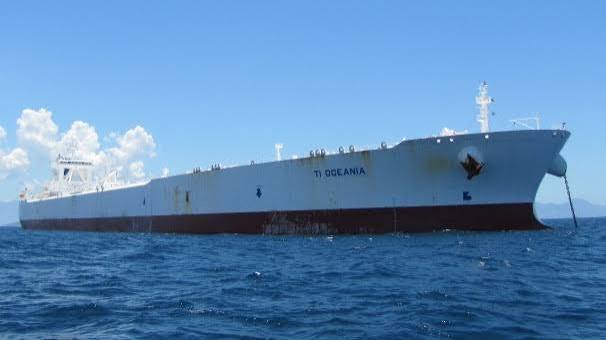
The increased flows of oil from the Strait of Hormuz, mostly thanks to ship-to-ship (STS) transfers in the Gulf of Oman, are tying up supertankers for weeks waiting for the transfers outside the Strait, limiting the availability of very large crude carriers (VLCCs) for the other global key oil trade routes, such as the U.S. Gulf Coast to Asia.
The inefficient shuttle shipping is tying up a growing number of smaller vessels, Suezmaxes and Aframaxes, too, on the Hormuz trade.
This leaves fewer available empty tankers globally willing to travel to the Middle East to pick up cargoes in the Gulf of Oman.
The total capacity of the empty tankers going to the Middle East has slumped by some 40% since the end of August, per data from Tankertrackers.com cited by Bloomberg.
There are “not enough vacant tankers to take oil out of the region,” Tankertrackers.com’s co-founder, Samir Madani, told the publication.
“It’s one thing to bring the oil out into the Gulf of Oman via the Strait of Hormuz, but it seems like there isn’t enough to take the oil out of the Gulf of Oman,” the analyst said.
As of November 16, the combined capacity of ballasting supertankers and Suezmaxes en route to the Gulf of Oman has slumped to 71 million barrels, down from 130 million barrels capacity at the end of August, according to data compiled by Tankertrackers.com.
To be sure, flows from the Middle East remain elevated, albeit somewhat lower so far in November compared to October. Crude oil exports from the Strait of Hormuz have held so far despite the worst month for attacks on tankers in the area since the war began.
The high crude oil export levels despite increased security risks give the market and many analysts confidence that the only path forward is continuous recovery and, ultimately, an oil glut within months.
Tanker rates have dropped from the record highs seen in early October, but they remain above historical norms and pre-war levels amid heightened war insurance premiums and security risks.
“Security risks continue to weigh on tanker operations in the Gulf,” Maria Bertzeletou, Senior Market Analyst at Signal Group, wrote in an analysis this week.
“Repeated attacks continue to restrict the pool of owners willing to accept Gulf employment, while elevated war-risk insurance costs and operational delays add to voyage expenses and limit effective vessel availability.”
So far this month, Iran has been reporting nearly daily incidents of tankers hitting naval mines in corridors that Iran has designated as “unauthorized” in the Strait of Hormuz.
Non-Iranian observers and organizations also report more frequent attacks on tankers in and near the Strait of Hormuz.
Five tankers have been struck near Hormuz in the week between November 11 and 18, according to remote-sensing intelligence by Windward.
“This highlights Iran’s continued strategy of maritime attrition, and it is unlikely to ease unless diplomatic conditions change,” the maritime intelligence firm said on Wednesday.
Despite the threat to tanker shipping in the Strait of Hormuz, investment banks and the International Energy Agency (IEA) expect the crude oil market to be in a surplus as early as this quarter.
“We continue to expect the oil balance to loosen as supply recovers, limiting the scope for a sustained rebound in prices,” ING’s commodities strategists Ewa Manthey and Warren Patterson said in a Wednesday note.
In its November monthly report, the IEA said that the global oil market will return to a surplus this quarter, with a more substantial build in 2027.
“As always, downside risks to the forecast persist, as attacks on shipping undermine maritime security, which is pivotal to a sustained recovery,” the agency noted.
Goldman Sachs Research’s latest forecast calls for oil prices easing gradually in 2027 as suppliers in the Middle East adapt to disruption from the war in Iran.
Goldman’s commodities analysts expect Brent Crude to average $88 per barrel in 2027 under their base case assumption of no definitive diplomatic breakthrough in Iran and no re-escalation with major long-term damage to oil infrastructure.
Under the same base case scenario, Goldman Sachs forecasts that Brent will fall from around $92 per barrel today to $78 by early December 2027 “as a sizable surplus decreases Brent’s fair value from $90 per barrel today to the high $70s by the end of 2027.”
By: Tsvetana Paraskova
Continue Reading

Trending