Connect with us

Environment

Stakeholders Seek Govt’s Support For Cleanup Nigeria Campaign

Published

on

Some stakeholders in Rivers State are urging for the support of the state government and multinational companies for the success of the on going Cleanup Nigeria Campaign.
The campaign, funded by the United States Mission in Nigeria is being implemented by a team of young African Leaders Initiative (YALI) and its Alumni in four states, of southern Nigeria.
The states are Lagos, Oyo, Enugu and Rivers.
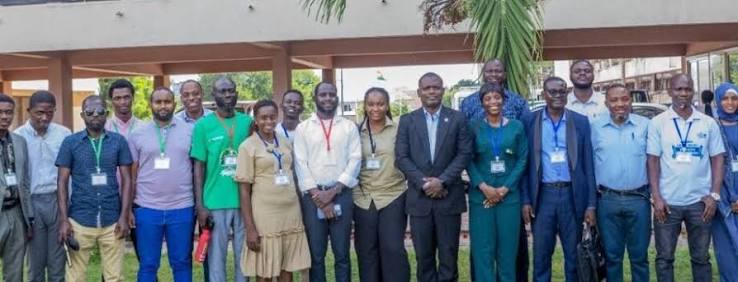
Speaking with newsmen at a stakeholders and volunteers training programme in Port Harcourt, they said the programme needs the support of government to succeed in the state.
Speaking with The Tide, one of the stakeholders, Mr Kingdom Nwanyanwu said the campaign was part of the effort by the group to stop the habit of indiscriminate refuse disposal which is common in the urban area.
According to him, “the objectives of the CNC project are: to stop the habit of indiscriminately littering the environment, change the behaviour of Nigerians permanently by spotlighting the problem of littering and offering solutions to the waste problems of Nigeria.”
He said the team aims to build the campaign into a national civic movement and groups to make the country waste free.
Nwanyanwu said it is the wish of the group to organise and implement a national clean-up campaign that will involve community members, schools and government institutions with a view to inspiring and educating Nigerians on the importance of clean environment to human health and a strong economy.
He said, the group aims to achieve this through regular sensitisation programmes in market places and other places of importance.
He said the campaign will also be taken to both public and private schools in form of quiz competitions, adding that prizes will be given to participating schools.
Nwanyanwu who is the team leader, said the success of the campaign will depend on the support of the government, public spirited individuals as well as corporate organisations.
He said the first phase of the campaign will end on the 5th of June, 2021 with a cleanup exercise.


Continue Reading

Environment

Etche Community Blames Erosion on poor conditions of its Road

Published

on

Some stakeholders in Okoroagu community in the Etche Local Government Area of Rivers state have blamed the perennial erosion in the community on the poor conditions of their road.
They are therefore calling for the rehabilitation of their road.
They said this in an interview with The Tide, at okoroagu.
Speaking to The Tide,the Ochimba of Okoroagu community, Eze Marcus Amadi said the poor conditions of their road has retarded the growth and development of the community.
According to Eze Amadi,”The government has neglected us, they have forgotten about us, we have been writing letters to the government, both to the NDDC to come and repair our road for us, we are on our knees pleading to them to come help us out, at least they should just dredge the road for us”
Continuing he said”If the government comes today to repair our road, nobody will say they shouldn’t.
“Nobody will obstruct them. We have been shouting and crying that our road is not good, the road is affecting the community economically and socially in the sense that, there is no way we can carry our crops out because of erosion.
“Erosion have taken over the road, making it difficult for us to access other communities especially during rainfall you see people falling down and getting injured inside the river which we call Mmiri Ehe in our language, which reaches our waist line during raining season. Our people can not go to other market to sell their products due to the bad road”he said
Also speaking,Chairman Community Development Committee( CDC )Okoroagu , Hon. Elvis Nwaobasi decried the situation of the road, stressing that economic activities are being affected as movement of goods and services have gradually slowed down in the area.
”  The road have affected our women so badly, they are no  longer going to the other neighboring markets to sell their Agric produce because of the nature of the road.
“This road has also affected us in many ways, it has affected our educational system, security system, it has also affected our health system, because with the nature of that road, people cannot access our health facilities in the community, with the nature of that road, people cannot access our school, with nature of the road, people cannot come in and do business in our community, we cannot access the road because of the neglect of the road.
“People are using our road for excuses to come in and invest and do businesses. People who come to our market to buy our  products are no longer coming because of the nature of the road.
” I am pleading with the Rivers State  Governor, Siminalayig Fubara to  please come to the aid of Okoroagu and repair our road. I am pleading with the Rivers State House of Assembly, we are suffering too much because of this road. We have been neglected and abandoned for years, the government should please come to our aid” he said.
Also the women leader of Okoroagu community, Mrs. Anthonia Nweke blamed some politicians from the area for abandoning the people of Okoroagu
“Our road has been abandoned, overlooked, with no attention, mostly the higher politicians of the place, we have been abandoned for years”
She also called on the Niger Delta Development Commission NDDC to come to their aid.
The Youth Leader of Okoroagu community, Comr. Ezekiel Michael Ikeh who also spoke to The Tide correspondent said the community has suffered so much losses because of the poor conditions of the road.
He said despite Okoroagu’s contributions to the wealth of the state and the nation, government has continued to neglect the people “Okoroagu as oil producing community shouldn’t have been suffering what they are suffering today”
By: Omasirichi Ogechi
Continue Reading

Environment

UNEP REPORT: FG MOVES TO DESIGNATE OGONI WETLAND RAMSAR SITE

Published

on

In furtherance to the commitment of the Federal Government through the Hydrocarbon Pollution Remediation (HYPREP) to the full implementation of the recommendations of the UN Environment Programme Report on Ogoni Environment, the Project has commenced processes to designating Ogoni Wetland as a Ramsar Site.
Labaran Ahmed, National Focal Point for Ramsar Convention on Wetlands of International Importance and Assistant Director in the Federal Ministry of Environment, who is leading the process for collection of field samples, said the move will converse biodiversity, enhance livelihood, attract ecotourism and further earn global recognition for Ogoni Wetlands.
The UNEP Report envisages that this would provide the Government with a roadmap for restoration and sustainable management of the Ogoni wetland, bring the site unto international among others.
Project Coordinator, Professor Nenibarini Zabbey, represented by Director Technical Services, Professor Damien-Paul Aguiyi said the project further attests to the Federal government’s commitment through HYPREP to implementing the UNEP Report simultaneously.
Nigeria is a signatory to the Biodiversity Beyond National Jurisdiction(BBNJ) Agreement for how research on marine genetic resources must be conducted and documented, ensuring transparency and the equitable distribution of benefits.
Continue Reading

Environment

Tribunal Acknowledges losses in Rare species Across the globe  …urges for government Action 

Published

on

The international Right Tribunal has expressed concerned over the continuous loss of rare species across the world.
This was part of a declaration at the just concluded  COP30  in Brazil to mark the close of its 6th international tribunal
. Governments and everyday people have been charged to acknowledge that nature has rights just as humans do, and that ecosystems deserve to exist, thrive, and bounce back.
The Tribunal noted that the loss of species is occurring at an alarming rate and that it is time to stop exploiting nature and start protecting it.
The Tribunal urged nations to write laws that protect rivers, forests, oceans, and to end ecocide, recognise and support Indigenous communities, who have always been the best caretakers of the land.
According to the declaration “We are all part of the Earth, an indivisible and living community of interrelated and interdependent beings with a common destiny but with different existential conditions and rights.
“The multiple crises we are experiencing are rooted in the economic, political, legal and social systems established by the industrial and growth-oriented cultures that dominate the world today, including capitalism, along with patriarchy, sexism, racism, and anthropocentrism.”

It was noted that the choice by the Brazilian government to host COP30 serves as a symbol of the importance of the Amazon. They denounced the current and future impacts of the expansion of the extractivist frontier, deforestation, fossil fuels and large-scale mining. It was urged that the Amazon, with its ecosystems, animal, plant species, and rich biodiversity, natural medicines and its vital and reproductive cycles, should be considered as a subject of rights together with the Indigenous Peoples, and other communities that inhabit it.

The co-president and judge of the tribunal, Nnimmo Bassey, while delivering the verdict, noted that the defence of the rights of Nature is the right way to carry out real climate action and that there is no climate justice without the rights of Nature.

The tribunal stressed the need to phase out fossil fuels and quickly move to renewable energy as a way that protects both communities and ecosystems from false solutions that merely benefit financial speculators and compound climate injustices. The Tribunal also urged the United Nations to adopt the pledge as a blueprint for international environmental law.

A copy of the declaration obtained by The Tide revealed that,Judges at the Tribunal included Ana Alfinito of Brazil, Nnimmo Bassey ( Nigeria), Enrique Viale (Argentina), Shannon Biggs (USA), Casey Camp Horinek (Ponca Nation, USA), Tom Goldtooth (USA), Princes Esmeralda (Belgium), Cormac Cullinan (South Africa), Patricia Gualings (Ecuador), Francesco Martone (Italy) Tzeporah Berman (USA), Ashish Katharine (India), Osprey Orielle Lake (USA), Pooven Moodley (South Africa) and Felicio Pontes (Brazil)

Continue Reading

Trending